Cocoa Process from Bean to the Finest Chocolate
August 21, 2026
Choosing the Right Cocoa Powder for Industrial Use
August 27, 2026
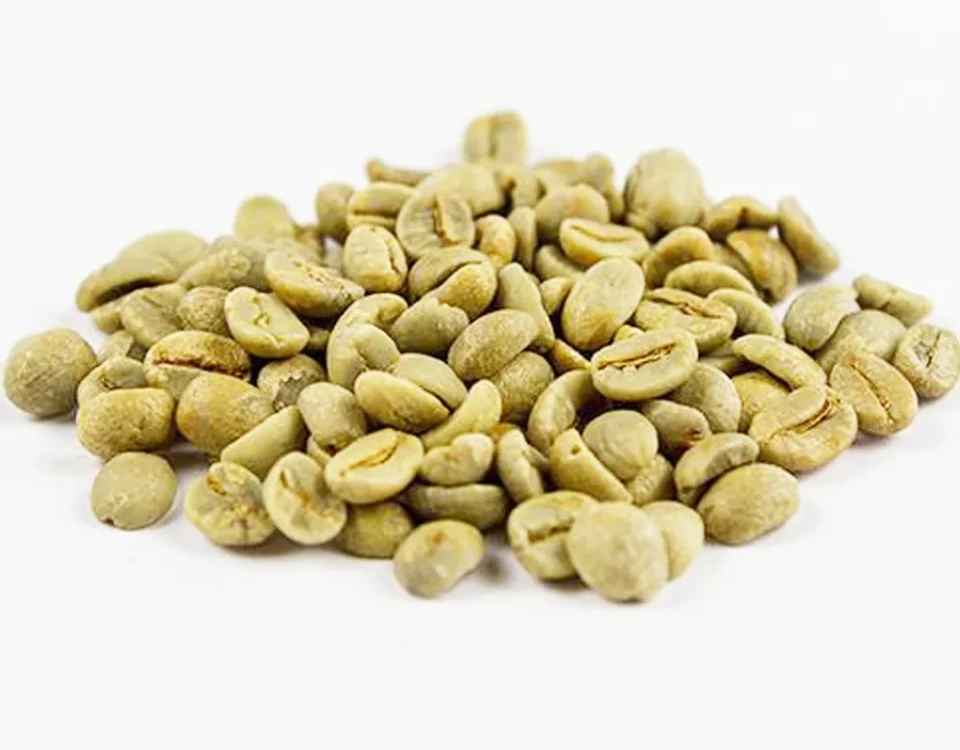
What Are Green Coffee Beans?
Every cup of coffee begins long before roasting. At the center of the global coffee supply chain are green coffee beans — the raw, unroasted seeds of coffee cherries that connect farms and producing origins with roasters, coffee manufacturers, importers, distributors, and ultimately consumers around the world.
For professional coffee buyers, green coffee is much more than an agricultural commodity. Origin, species, variety, processing method, bean size, moisture, density, defects, crop year, and cup profile can all influence how a coffee behaves during roasting and how it performs in the final product.
At LATAMARKO, green coffee is approached from this commercial and quality-focused perspective: selecting coffees according to the requirements of professional buyers, from widely traded Arabica and Robusta coffees to origin-specific and premium selections.
LATAMARKO Coffee Product Portfolio

Green Coffee Beans
What Exactly Are Green Coffee Beans?
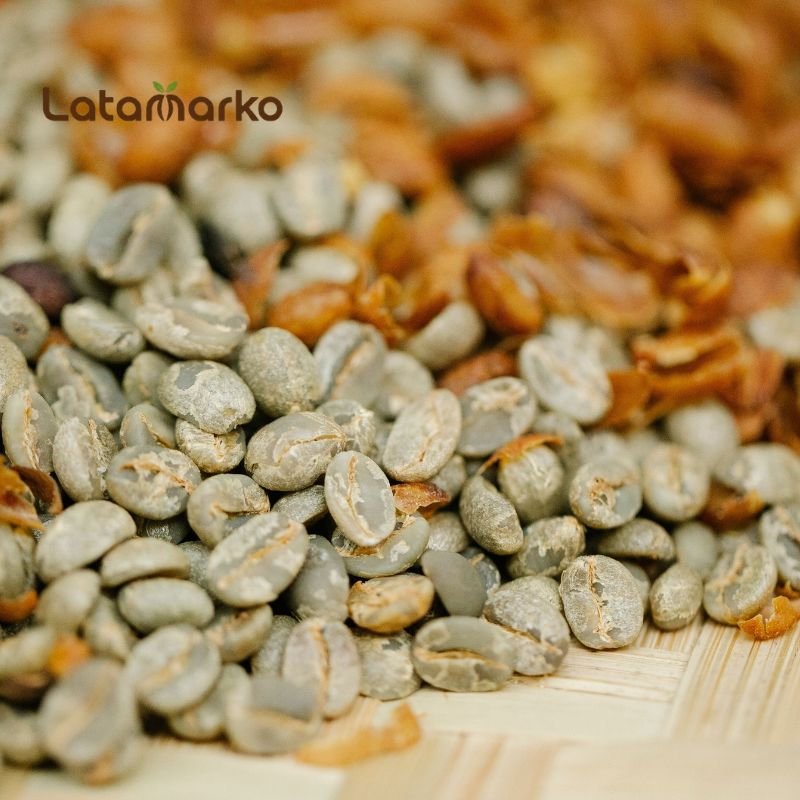
Green coffee beans are coffee seeds that have been processed and dried after harvesting but have not yet been roasted.
Coffee grows as a fruit commonly known as the coffee cherry. Inside the cherry are usually two seeds. After ripe cherries are harvested, the surrounding fruit layers are removed through different processing methods. The beans are then dried to an appropriate moisture level, prepared, sorted, graded, packed, and supplied as green coffee.
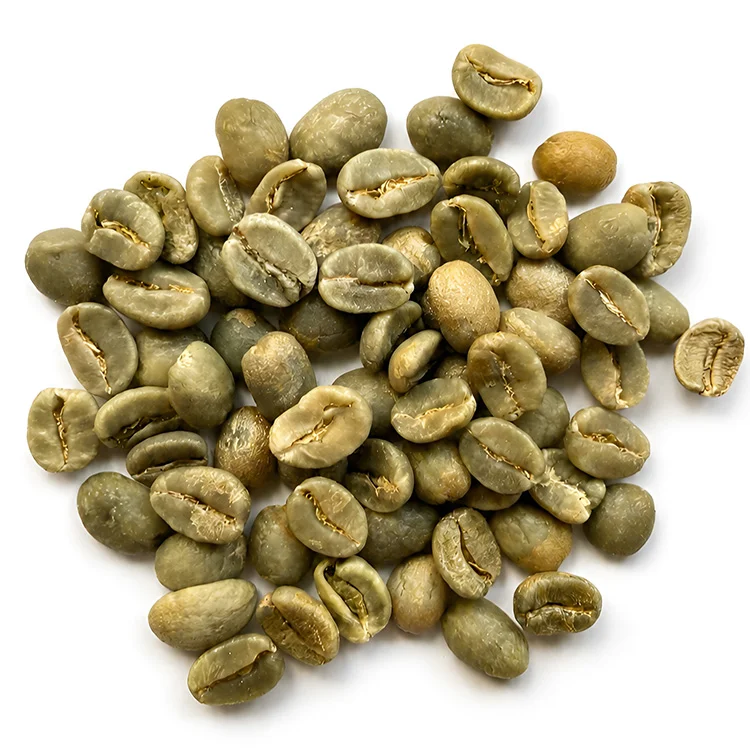
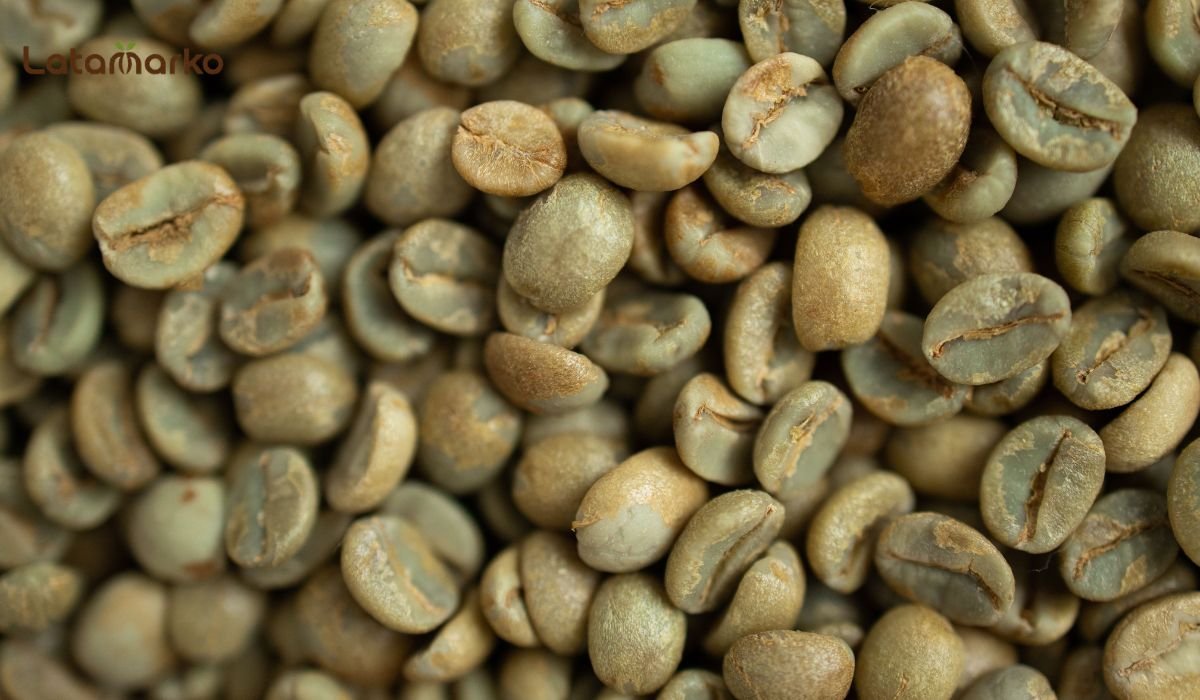
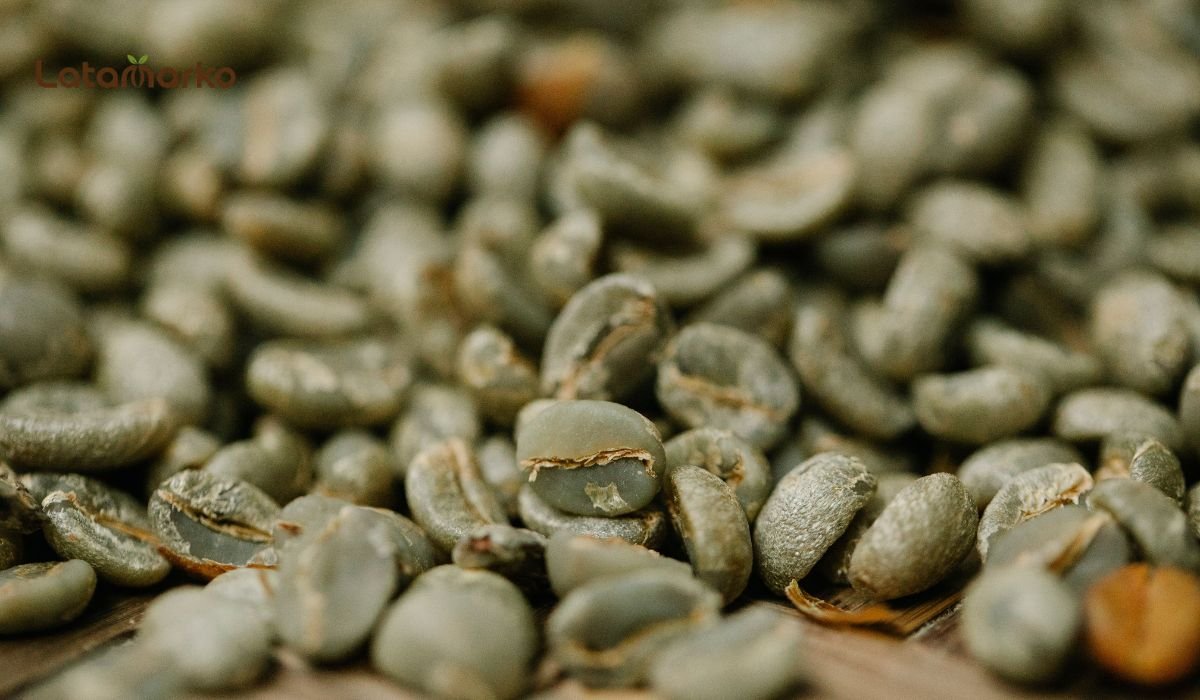
At this stage, the beans normally have a pale green, greenish-blue, yellow-green, or similar appearance depending on their origin, processing method, age, and other characteristics.
This is the form in which coffee is commonly traded internationally between producing countries and professional buyers.
Green coffee can differ substantially according to:
- Species: Arabica, Robusta/Canephora, Liberica and others
- Origin: Brazil, Colombia, Ethiopia, Vietnam, India, Indonesia, Uganda and many more
- Region: such as Cerrado, Huila, Yirgacheffe or Gayo
- Variety: Bourbon, Caturra, Catuai, Typica, Geisha, SL28 and others
- Processing: washed, natural, honey, pulped natural, wet-hulled and other methods
- Bean characteristics: screen size, density, moisture and physical uniformity
- Quality: defect profile, preparation and sensory performance
This is why the term green coffee beans describes an enormous international product category rather than one standardized product.
A Brazil Santos Arabica, Colombia Supremo, Ethiopia Yirgacheffe and Vietnam Robusta may all be green coffee beans, yet they can differ significantly in physical characteristics, flavor potential, roasting behavior, commercial positioning and price.
For buyers, therefore, the real question is rarely simply “Do you need green coffee beans?”
It is:
Which green coffee is right for your product, roasting profile, target market and price position?
Green Coffee Beans vs Roasted Coffee Beans
The most obvious difference between green and roasted coffee is heat treatment, but commercially the distinction goes much further.
Green coffee beans are the raw material. Roasted coffee beans are the transformed product.
During roasting, green beans undergo major physical and chemical changes. Heat develops the aromas, flavors and colors associated with coffee while changing the structure, mass and volume of the beans.
Green coffee therefore gives the roaster something extremely valuable: control.
A professional roaster can select a green coffee according to origin, variety, process and physical characteristics and then develop a roasting profile suited to the desired final application.
For example, a buyer developing an espresso blend may prioritize body, consistency and crema, while a specialty roaster may search for a distinctive single-origin Arabica with pronounced floral or fruit characteristics.
A large coffee manufacturer may have another priority entirely: repeatability across substantial production volumes.
This makes green coffee particularly important for:
Coffee roasters • industrial coffee manufacturers • espresso producers • private-label coffee companies • specialty roasters • importers • distributors • wholesalers
Buying roasted coffee means buying a product whose roasting decisions have already been made. Buying green coffee beans allows professional buyers to make those decisions themselves.
The difference begins before roasting
Two green coffees roasted to a similar color will not necessarily taste alike.
Their potential has already been influenced by factors such as:
genetics → altitude → climate → soil → harvest → cherry maturity → processing → drying → storage → preparation
Roasting develops that potential; it does not create the raw material from nothing.
That is why professional green coffee sourcing begins with understanding the bean itself.
Why Green Coffee Is the Starting Point of the Coffee Industry
For much of the professional coffee industry, green coffee is where product design begins.
Before choosing a roasting curve, packaging format or finished coffee positioning, manufacturers and roasters first need to determine what raw coffee can deliver the required result.
Consider three very different commercial objectives.
A company producing a high-volume espresso blend may seek reliable Robusta and Arabica components that can be sourced consistently.
A premium coffee brand may want a Brazilian Arabica with chocolate, nut and caramel characteristics.
A specialty roaster may instead search for an Ethiopian coffee offering floral, citrus or fruit-driven complexity.
The requirements are different, so the green coffee selection must also be different.
Green coffee influences the economics of the finished product
Selection is not only about flavor.
For commercial buyers, the right green coffee needs to balance several variables:
quality + consistency + availability + roasting performance + target flavor + price
A remarkable coffee that cannot be supplied consistently may not be appropriate for a large industrial program. Conversely, selecting solely on the lowest price can create problems with defects, inconsistency, roasting behavior or the finished cup.
Professional sourcing therefore asks a broader question:
What is the most suitable green coffee for the intended product and market?
This is particularly important when purchasing significant quantities. Differences that appear small in a sample can become commercially significant across multiple bags, pallets or containers.
Origin matters — but origin alone is not enough
Brazilian coffee is not one coffee. Neither is Colombian, Ethiopian, Vietnamese or Indian coffee.
Within a single producing country, buyers can encounter different:
- growing regions
- varieties
- processing methods
- screen sizes
- preparations
- quality levels
- cup profiles
- harvest periods
For example, a buyer searching for Brazilian green coffee may eventually specify something considerably more precise, such as a Brazil Santos Arabica with a particular screen preparation and cup profile.
The transition from a broad requirement to a precise specification is one of the most important parts of professional green coffee procurement.
From Coffee Cherry to Green Coffee Bean
The journey from a coffee tree to an exportable green coffee bean involves a sequence of decisions that can influence both quality and commercial value.
1. Growing
Coffee is cultivated across tropical and subtropical producing regions, with growing conditions varying dramatically between origins.
Altitude, temperature, rainfall, soil, shade and agricultural practices all contribute to the development of the coffee cherry.
The two species of greatest commercial importance are Arabica and Robusta (Canephora), although other coffee species and varieties are also produced.
2. Harvesting
When coffee cherries reach maturity, they are harvested.
Harvesting practices vary by origin and production system. Some coffees are selectively hand-picked, while other production systems use strip picking or mechanical harvesting.
Cherry maturity matters because uneven harvesting can affect the consistency and sensory potential of the final coffee.
3. Processing
After harvesting, the coffee must be separated from the surrounding fruit and prepared for drying.
Three of the best-known processing families are:
Washed Process — fruit is removed and the coffee is processed before drying, generally emphasizing clarity and cleanliness in the cup.
Natural Process — cherries are dried with the fruit surrounding the seeds before removal, often producing greater fruit intensity and body.
Honey Process — part of the mucilage remains on the coffee during drying, creating a processing style between fully washed and natural approaches.
Other methods include pulped natural, wet-hulled and various controlled-fermentation processes.
Processing is not merely a technical step. It can substantially influence how a particular origin expresses itself in the cup.
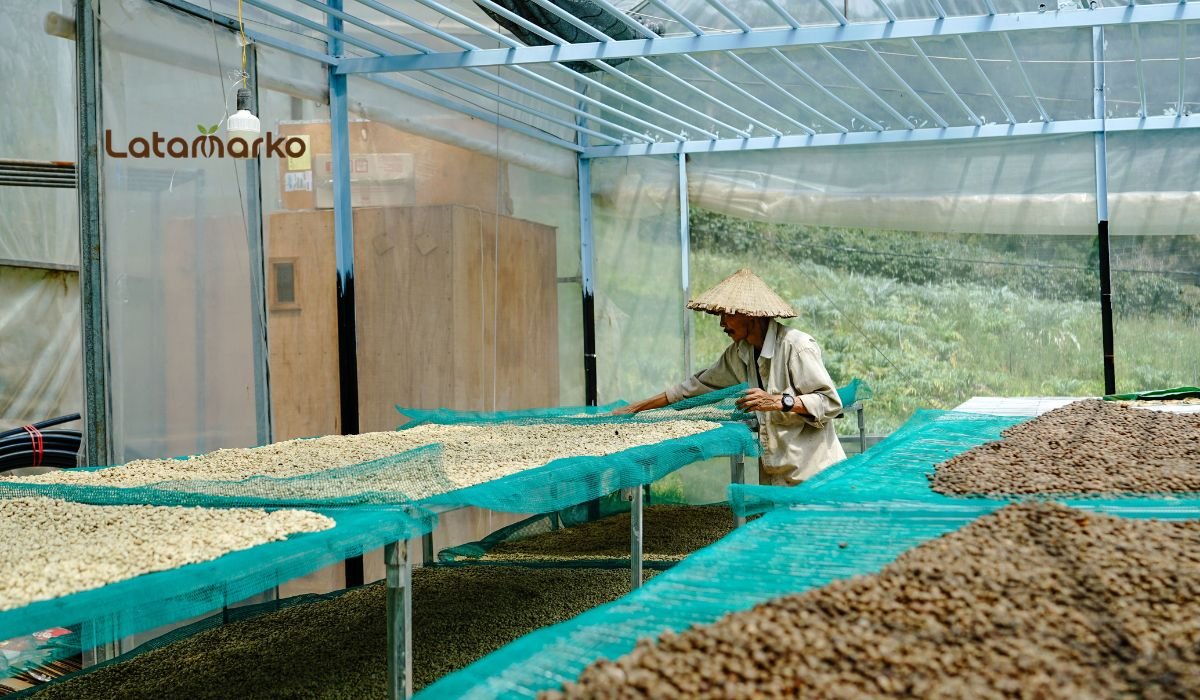
4. Drying
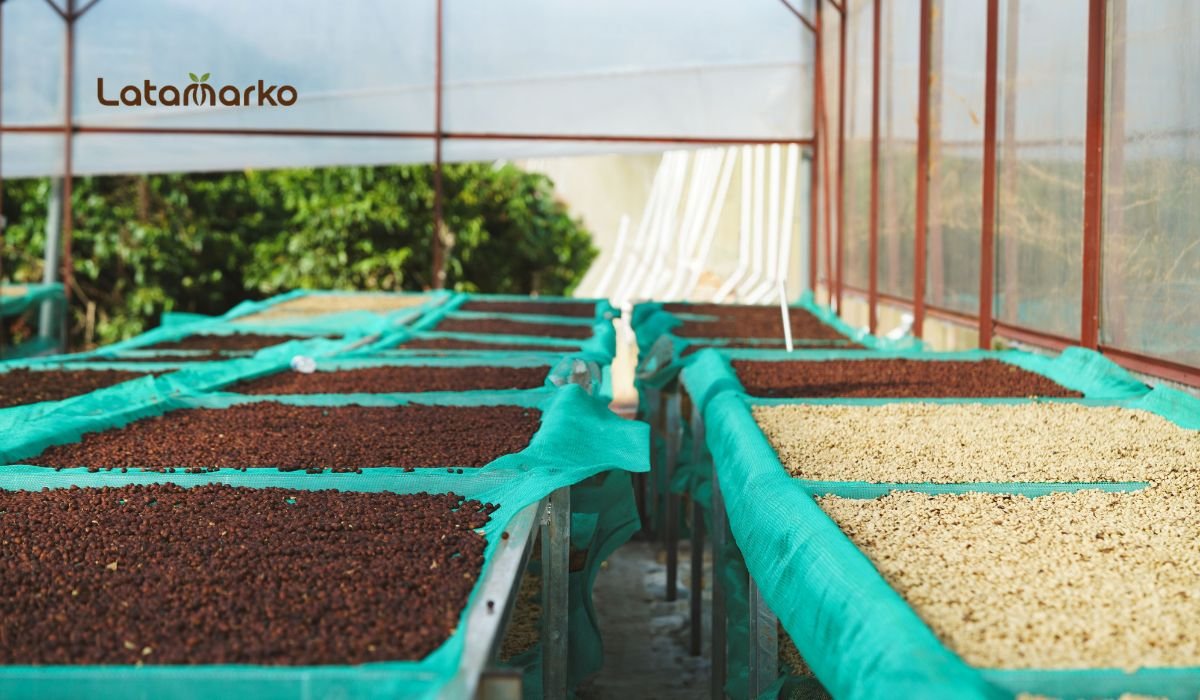
Coffee is dried until it reaches an appropriate condition for stable storage and further preparation.
Drying must be carefully controlled. Excessive or uneven moisture can negatively affect stability and quality, while improper drying may introduce defects.
For commercial buyers, moisture content and storage condition are therefore important elements of green coffee evaluation.
5. Hulling and preparation
After drying, remaining parchment or dried fruit layers are removed as required by the processing system.
The coffee can then undergo cleaning and preparation to remove foreign material and undesirable beans.
6. Sorting and classification
Green coffee may be evaluated and separated according to characteristics such as:
bean size • density • physical defects • color • preparation • origin • quality • cup profile
Screen sizing is particularly common in international coffee trading. Terms such as Screen 17/18 describe a physical size classification rather than a flavor grade.
Different producing countries also have their own commercial grading and preparation systems, which is why buyers should not assume that a grade designation from one origin is directly equivalent to a grade from another.
7. Quality evaluation and cupping
Physical analysis tells only part of the story.
Professional buyers may also roast a representative sample and perform cupping to evaluate aroma, flavor, acidity, body, sweetness, balance, aftertaste, uniformity and potential defects.
This connects the physical green bean to its ultimate purpose: producing coffee with the desired sensory and commercial performance.
8. Packing and export
Once prepared, green coffee can be packed for commercial shipment.
Depending on origin, quality and buyer requirements, packaging may include traditional export bags as well as inner hermetic liners such as GrainPro-type protection. Premium and specialty coffees may use additional protective packaging systems.
The coffee is then ready to enter the international supply chain.
Farm → Harvest → Processing → Drying → Hulling → Sorting → Grading → Quality Control → Packing → Export → Roasting → Finished Coffee
That chain explains why green coffee sourcing is so important. Every stage before roasting contributes to what eventually reaches the consumer’s cup.
Green Coffee Is Where Quality, Origin and Industry Meet
A green coffee bean may appear simple, but behind it lies an entire chain of agriculture, processing, quality control, international trade and industrial production.
For professional buyers, understanding green coffee makes it possible to move beyond simply purchasing “coffee” and instead specify the raw material required for a particular product.
That may mean selecting a consistent Brazilian Arabica for a commercial roast, Colombian coffee for a premium blend, Ethiopian coffee for a distinctive specialty profile, or Robusta from Vietnam, India or Uganda for specific espresso and industrial applications.
LATAMARKO works with green coffee as an industrial ingredient and commercial product — connecting origin selection, product specifications and international supply with the requirements of professional coffee buyers.
The next step is therefore to understand the fundamental differences between the world’s major green coffee species, origins, varieties, processing methods and quality characteristics — and how each one can influence the coffee you ultimately produce.
Green Coffee Beans
Understanding the Green Coffee Bean
For professional coffee buyers, a green coffee bean is not simply an unroasted seed. Its physical structure, chemical composition, moisture, density, size, uniformity and defect profile provide valuable information about how the coffee may behave during storage, roasting and final cup preparation.
Two lots may come from the same country and even the same region, yet perform very differently. This is why professional green coffee sourcing goes beyond origin names. Understanding the bean itself helps roasters, manufacturers, importers and quality teams select coffees that match their roasting requirements, flavor targets, production scale and commercial positioning.
At LATAMARKO, these characteristics are important because selecting the right green coffee begins with understanding what is inside the bean — and how its physical quality can translate into industrial performance.
Green Coffee Bean Structure
A green coffee bean is the seed found inside the coffee cherry. Although it appears solid, it has a complex biological structure that influences processing and roasting.
A coffee cherry typically contains two seeds positioned with their flat sides facing one another. In some cherries, however, only one seed develops. This creates the rounded bean commonly known as a Peaberry.
The coffee seed includes several important structural components, including the endosperm, embryo and thin outer layers surrounding the seed.
The endosperm represents most of what we recognize as the green coffee bean. It stores many of the compounds that later participate in the transformations occurring during roasting.
Before reaching exportable green-coffee form, the seed is surrounded by several fruit layers:
Outer Skin → Pulp → Mucilage → Parchment → Silver Skin → Coffee Seed
These layers are progressively removed depending on the processing and preparation method.
Why bean structure matters commercially
Physical structure affects the way heat penetrates the bean during roasting.
Beans with different densities, sizes, moisture conditions or internal structures may respond differently to the same roast profile. This is one reason professional roasters value lot uniformity.
A shipment containing highly inconsistent beans can make it more difficult to achieve uniform roasting at industrial scale.
For the buyer, appearance is therefore not merely cosmetic. Physical characteristics can provide early indications about processing consistency, preparation and potential roasting behavior.
Chemical Composition of Green Coffee
Green coffee contains a complex mixture of naturally occurring compounds. These compounds form the raw chemical foundation from which many of coffee’s familiar aromas, flavors and colors develop during roasting.
Major components include:
- carbohydrates
- proteins and amino acids
- lipids
- chlorogenic acids
- caffeine
- minerals
- organic acids
- water
- volatile and non-volatile precursor compounds
Their concentrations vary according to species, variety, origin, growing conditions, maturity, processing and storage.
This helps explain why Arabica and Robusta can behave and taste differently even when roasted under similar conditions.
Caffeine
Caffeine is one of coffee’s best-known natural compounds.
Robusta generally contains substantially more caffeine than Arabica. This is one of several reasons the two species have different sensory and commercial characteristics.
However, caffeine alone does not determine coffee quality.
For a professional buyer, species selection should consider the entire intended application — including body, aroma, acidity, bitterness, crema, blend composition, cost and target consumer.
Chlorogenic acids
Green coffee naturally contains chlorogenic acids, a group of compounds that undergo substantial transformations during roasting.
Their concentration and transformation can contribute to bitterness, acidity and other sensory characteristics.
Arabica and Robusta generally differ in their chlorogenic-acid profiles, adding another layer to their different roasting and sensory behaviors.
Carbohydrates and sugars
Carbohydrates represent a significant part of the green coffee bean.
During roasting, sugars and other compounds participate in complex reactions responsible for the development of many characteristic coffee aromas, flavors and colors.
This is an important concept:
Many of the flavors we associate with roasted coffee do not exist in the same form inside the green bean. They are developed through transformations of compounds already present in the raw material.
Green coffee quality therefore establishes the chemical foundation upon which the roaster works.
Lipids
Coffee beans also contain oils and other lipids.
Arabica generally contains more lipids than Robusta, contributing to differences between the two species in aroma retention, mouthfeel and overall sensory characteristics.
Again, this demonstrates why purchasing green coffee based solely on price or country name can be overly simplistic.
The raw material itself is chemically different.
Moisture Content in Green Coffee Beans
Moisture content is one of the most important measurable characteristics of green coffee.
After processing, coffee must be properly dried before storage and export. Coffee that contains excessive moisture can be more vulnerable to deterioration and storage problems, while excessively dry coffee may also lose desirable characteristics and behave differently during roasting.
For internationally traded green coffee, buyers commonly encounter moisture specifications around the 10–12% range, although acceptable limits depend on the coffee, specification, contract and applicable standards.
Professional buyers should therefore evaluate moisture according to the specific lot rather than assuming that every coffee should have exactly the same number.
Why moisture matters to buyers
Moisture can affect:
Storage stability
Improper moisture increases the risk of quality deterioration during storage and transportation.
Roasting behavior
Water must absorb energy and evaporate during roasting. Differences in moisture can therefore influence heat transfer and roast development.
Consistency
Large differences among beans within the same lot can contribute to uneven roasting.
Commercial quality
Moisture is commonly included in green coffee specifications and quality-control documentation.
For large-volume buyers, it is therefore useful to confirm moisture before committing to commercial quantities.
Green Coffee Bean Density
Density describes how much mass is contained within a given volume of green coffee.
In practical coffee evaluation, density can provide useful information about bean structure and can influence roasting decisions.
Growing altitude is often associated with bean density because coffee grown under cooler conditions may mature more slowly and develop a denser cellular structure. However, altitude is not the only factor. Variety, climate, nutrition, cherry maturity, processing and moisture can all influence density.
High-density vs lower-density beans
Denser beans can require different heat management from softer, lower-density beans.
This becomes particularly important when a roaster moves between origins.
For example, applying exactly the same roasting profile to a dense high-altitude Arabica and a lower-density commercial coffee may not produce equivalent results.
Professional roasters therefore consider density alongside:
moisture + bean size + processing + origin + target roast
Rather than asking whether higher density is always “better,” the more useful commercial question is:
Is this density appropriate and sufficiently consistent for the intended roasting application?
That distinction matters for industrial buyers.
Bean Size & Screen Size
Green coffee beans are frequently sorted according to physical size.
In international trade, screen size is commonly used to describe this classification.
Screens are perforated sieves through which beans are separated according to their dimensions. Screen numbers are based on increments of 1/64 of an inch.
For example:
Screen 18 = 18/64 inch
Screen 17 = 17/64 inch
Screen 16 = 16/64 inch
Commercial descriptions may therefore include terms such as:
Screen 15/16
Screen 16+
Screen 17/18
Screen 18
The exact commercial interpretation and tolerance can vary by origin and contract.
Does a larger coffee bean mean better coffee?
Not necessarily.
This is an important misconception.
Large bean size can be desirable for particular products and may command a commercial premium in some markets, but size alone does not determine cup quality.
A smaller, carefully processed specialty coffee can produce a superior cup to a larger bean of lower quality.
Screen size is therefore primarily a physical classification tool, not a universal quality score.
Why screen uniformity matters
For roasters, however, uniformity of size can be extremely useful.
If very small and very large beans are roasted together, they can absorb heat differently. Greater size uniformity can therefore support more predictable roasting.
This becomes especially relevant for industrial production, where consistency across large batches is essential.
For this reason, a professional buyer may specify not merely:
Brazil Green Coffee
but:
Brazil Santos Arabica Screen 17/18
The second description communicates a much more precise raw-material requirement.
Defects and Physical Quality
Not every harvested coffee bean reaches export quality.
Green coffee can contain physical defects resulting from agricultural conditions, harvesting, processing, drying, storage or preparation.
Common examples include:
- full or partial black beans
- full or partial sour beans
- broken or chipped beans
- insect-damaged beans
- immature beans
- shells
- parchment
- foreign matter
- stones or sticks
- mold-related damage
- abnormal discoloration
Different grading systems assign different importance and values to defects, so defect classifications should always be interpreted according to the applicable origin or grading protocol.
Why defects matter commercially
Defects can affect far more than appearance.
Some may negatively influence flavor. Others can affect roasting consistency, sorting efficiency or overall product uniformity.
For a coffee manufacturer buying significant volumes, defect control is therefore both a quality issue and a production issue.
This is why professional green coffee evaluation commonly combines physical inspection with sensory assessment.
A coffee can look attractive but fail in the cup.
Conversely, a visually imperfect coffee should not automatically be judged without understanding its grading system and intended commercial application.
Physical Quality: What Professional Buyers Should Examine
When evaluating a green coffee sample, buyers should look at the complete physical picture rather than one isolated measurement.
Important considerations include:
Appearance — Are the beans visually clean and properly prepared?
Color — Does the color appear appropriate for the origin, process and crop condition?
Uniformity — Are bean size and appearance reasonably consistent?
Moisture — Is the coffee within the agreed specification?
Density — Is its physical structure appropriate for the intended roast?
Screen Size — Does the lot meet the required sizing specification?
Defects — What types and quantities of physical defects are present?
Foreign Matter — Is the coffee properly cleaned?
Odor — Does the green coffee have any unusual or undesirable smell?
Crop Condition — Does the coffee display the expected freshness and stability?
No single measurement provides the entire answer.
Professional selection comes from combining physical analysis, specifications, sample roasting and cupping.
How Green Coffee Quality Influences the Final Cup
The quality of roasted coffee cannot be separated from the quality of its green raw material.
Roasting is an extraordinary transformation process, but it cannot correct every problem created during cultivation, harvesting, processing or storage.
A skilled roaster can develop the potential contained within a good green coffee.
It is much more difficult to roast quality into a fundamentally poor raw material.
Green coffee influences aroma
The chemical precursors contained in green coffee participate in the reactions that create hundreds of aromatic compounds during roasting.
Different origins, species, varieties and processing methods therefore provide different aromatic potential.
Green coffee influences acidity
High-quality Arabica coffees from certain origins may deliver bright, complex acidity, while other coffees are selected specifically for softer, lower-acidity profiles.
Neither is automatically better.
The correct choice depends on the product being developed.
Green coffee influences body
Some green coffees are valued for a fuller, heavier mouthfeel, making them attractive components for espresso and commercial blends.
Others are selected for clarity and delicacy.
Green coffee influences sweetness
Cherry maturity, variety, processing and overall raw-material quality can contribute to the potential sweetness developed during roasting.
Green coffee influences consistency
For industrial buyers, this can be just as important as flavor.
A coffee may produce an excellent first sample, but if subsequent shipments vary significantly, maintaining a consistent finished product becomes difficult.
For this reason, professional buyers increasingly evaluate not only:
“How good is this coffee?”
but also:
“Can this quality be supplied consistently at the volume our business requires?”
From Physical Specification to Commercial Performance
For a professional roaster or coffee manufacturer, the best green coffee is not necessarily the rarest, largest or most expensive bean.
It is the coffee that performs correctly for the intended product.
A specialty roaster may prioritize traceability, distinctive sensory characteristics and exceptional cup quality.
An espresso producer may prioritize body, sweetness, crema and blend compatibility.
A large industrial manufacturer may place greater emphasis on consistency, availability, specification stability and scalable supply.
This is why green coffee purchasing should connect physical specifications directly to the final application:
Origin → Species → Variety → Processing → Moisture → Density → Screen Size → Defects → Cupping → Roasting Performance → Final Product
At LATAMARKO, green coffee selection is approached from this buyer-focused perspective. The objective is not simply to offer a long list of origins, but to help professional buyers identify green coffee beans that match their quality requirements, production needs and commercial objectives.
Because in professional coffee production, the final cup does not begin at the roaster.
It begins with the green bean.
Green Coffee Beans
Main Types of Green Coffee Beans
Choosing the right green coffee beans begins with understanding that not all coffee is the same. Different coffee species offer different flavor profiles, caffeine levels, physical characteristics, roasting behavior, availability and commercial value.
For professional buyers, the four names most frequently encountered when discussing coffee species and market types are Arabica, Robusta, Liberica and Excelsa. However, their commercial importance is very different. Arabica and Robusta dominate global coffee production and international trade, while Liberica and Excelsa occupy much smaller, more specialized market segments.
For coffee roasters, manufacturers, importers and distributors, understanding these differences is essential. The objective is not simply to determine which coffee is “better,” but which green coffee is best suited to the product you want to manufacture and the market you want to serve.
Arabica Green Coffee Beans
Arabica green coffee beans (Coffea arabica) represent the premium foundation of a large part of the global coffee industry.
Arabica is cultivated across many of the world’s best-known coffee origins, including Brazil, Colombia, Ethiopia, Honduras, Peru, Guatemala, Costa Rica and Kenya.
What makes Arabica commercially important is its enormous diversity. Depending on origin, variety, altitude and processing, Arabica coffees can deliver dramatically different sensory profiles.
Buyers may encounter notes ranging from:
Chocolate • Caramel • Nuts • Citrus • Berries • Stone Fruit • Flowers • Spices
This diversity makes Arabica suitable for everything from high-volume commercial blends to some of the world’s most exclusive specialty coffees.
What professional buyers look for in Arabica
The term “Arabica” alone is not enough to define a purchasing specification.
A professional buyer may need to consider:
- Country of origin
- Growing region
- Variety
- Processing method
- Screen size
- Crop year
- Moisture
- Defect tolerance
- Cup profile
- Required volume
- Price positioning
For example, Brazilian Arabica may be selected for chocolate, nut and caramel characteristics that work particularly well in espresso blends.
Colombian Arabica is widely used for balanced commercial and premium coffees.
Ethiopian Arabica can offer more distinctive floral, citrus and fruit-driven profiles suitable for specialty applications.
The buyer therefore moves from:
Arabica Green Coffee Beans
to something more specific:
Origin → Region → Variety → Process → Grade/Preparation → Screen → Cup Profile
That is where professional sourcing begins.
Arabica for commercial coffee production
Arabica should not be viewed exclusively as specialty coffee.
Large volumes of Arabica are used in:
Espresso blends • Whole-bean coffee • Ground coffee • Premium commercial coffee • Private-label products • Single-origin ranges • Specialty coffee
This gives manufacturers considerable flexibility.
A business can select a reliable commercial Arabica for a high-volume product or move toward more distinctive origins and varieties for premium positioning.
Popular Arabica varieties
The Arabica family includes numerous commercially important varieties and cultivars, such as:
Typica, Bourbon, Caturra, Catuai, Mundo Novo, Catimor, Castillo, Pacas, Pacamara, SL28, SL34 and Geisha.
These should not be treated as interchangeable products. Variety can influence plant characteristics and cup potential, but the final quality also depends heavily on growing conditions, harvesting and processing.
Robusta Green Coffee Beans
Robusta green coffee beans, produced from Coffea canephora, form the second major pillar of the international coffee industry.
Vietnam is the world’s best-known large-scale Robusta origin, while important volumes also come from countries such as Brazil, Indonesia, Uganda and India.
Robusta plays an essential role in global coffee manufacturing because it offers characteristics that can be commercially valuable for specific applications.
Compared with Arabica, Robusta generally has:
higher caffeine • stronger bitterness • heavier body • lower perceived acidity • more intense roast character
Its sensory profile can include cocoa, dark chocolate, woody, earthy, nutty and spice-like characteristics, although quality varies enormously between origins and preparations.
Robusta is not simply “cheap coffee”
This distinction is important.
The market contains everything from basic commodity Robusta to carefully cultivated and processed Fine Robusta.
Therefore, evaluating Robusta only as a lower-cost substitute for Arabica overlooks its real industrial function.
A well-selected Robusta can contribute desirable characteristics to a blend, particularly body, intensity and crema.
For some products, those characteristics are not compromises — they are part of the intended formulation.
Where Robusta is used
Robusta is particularly important in:
- Espresso blends
- Italian-style coffee blends
- Strong commercial coffees
- Instant coffee manufacturing
- High-caffeine formulations
- Cost-optimized blends
- Products requiring stronger body and intensity
For industrial manufacturers, its availability and commercial scalability can also be significant advantages.
Not all Robusta is equal
Just as “Arabica” does not define one quality, “Robusta” does not define one product.
A buyer may encounter specifications such as:
Vietnam Robusta • India Robusta Cherry • India Robusta Parchment • Uganda Robusta • Brazil Conilon • Fine Robusta
Within these categories, preparation, defects, screen size and cup quality can create substantial differences.
A professional Robusta purchase should therefore be based on a defined specification rather than species name alone.
Liberica Green Coffee Beans
Liberica green coffee beans (Coffea liberica) represent a much smaller segment of the global coffee market but offer characteristics that make them interesting for niche and differentiated products.
Liberica is particularly associated with parts of Southeast Asia, including the Philippines and Malaysia.
The beans are often noticeably larger and more irregular in shape than typical Arabica or Robusta beans.
From a sensory perspective, Liberica can be highly distinctive.
Depending on origin and processing, profiles may include:
woody • smoky • fruity • floral • spicy • dark-fruit characteristics
This unusual profile means Liberica is unlikely to replace Arabica or Robusta in mainstream industrial production. Its strength lies elsewhere.
Commercial opportunity for Liberica
Liberica can be attractive for:
Specialty roasters • limited editions • origin-focused products • premium experimental blends • differentiated coffee ranges
For importers and distributors, it can also provide portfolio differentiation.
However, buyers should consider an important commercial factor:
availability.
Compared with Arabica and Robusta, international volumes are significantly smaller. Maintaining large, continuous programs can therefore be more challenging.
For this reason, Liberica should generally be approached as a specialized green coffee opportunity, rather than a universal industrial raw material.
Excelsa Green Coffee Beans
Excelsa coffee occupies another specialized position in the coffee market.
One important technical point is that Excelsa has historically been discussed as a separate coffee species, but modern botanical classification generally places it within Coffea liberica. Nevertheless, the name Excelsa remains widely used commercially because its sensory identity and market recognition are distinct.
Excelsa is cultivated primarily in parts of Southeast Asia and represents only a small portion of global coffee supply.
Its sensory character can be particularly interesting.
Depending on the coffee, buyers may encounter:
tart fruit • dark fruit • complex acidity • spice • woody notes • distinctive aromatic characteristics
Where Excelsa can add value
Excelsa is particularly relevant when the objective is differentiation rather than mass-market volume.
Potential applications include:
- Specialty coffee
- Experimental blends
- Limited-edition products
- Distinctive single-origin offerings
- Premium niche portfolios
A small proportion in a blend can sometimes contribute an unusual sensory dimension.
However, as with Liberica, sourcing consistency and commercial availability should be carefully considered before building a large-volume product around Excelsa.
Arabica vs Robusta: Which Is Right for Your Business?
This is one of the most important questions in commercial green coffee purchasing.
And the answer is not:
Arabica is good and Robusta is bad.
That oversimplification can lead to poor purchasing decisions.
The correct choice depends on what you are manufacturing, who will buy it, what sensory profile you want, what price segment you target and what volumes you require.
Choose Arabica when…
Arabica is generally the stronger candidate when the priority is:
Aromatic complexity
Arabica offers an enormous range of sensory possibilities.
Premium positioning
100% Arabica remains a powerful consumer-facing proposition in many markets.
Specialty coffee
Most specialty portfolios are heavily centered around Arabica.
Single-origin products
The diversity of Arabica-producing regions provides extensive opportunities for origin-focused ranges.
Greater acidity and clarity
Certain Arabicas can deliver the bright, clean profiles sought by specialty roasters.
But Arabica itself spans a very wide price and quality spectrum. “100% Arabica” does not automatically mean exceptional quality.
Choose Robusta when…
Robusta may be the stronger choice when your product requires:
More body
Robusta can contribute substantial weight and intensity to the cup.
Stronger crema performance
This makes it particularly valuable in many espresso formulations.
Higher caffeine
Robusta naturally contains more caffeine than Arabica.
Powerful flavor
It can support products designed around a stronger coffee experience.
Commercial efficiency
Depending on market conditions and specification, Robusta can help manufacturers manage raw-material costs.
Large-scale industrial applications
Its role in commercial blends and soluble coffee makes Robusta strategically important to major manufacturers.
Why Many Coffee Manufacturers Use Both
The choice does not always need to be Arabica OR Robusta.
For many successful coffee products, the answer is:
Arabica + Robusta.
Blending allows manufacturers to use the strengths of each component.
Arabica may contribute:
aroma + sweetness + acidity + complexity
while Robusta can contribute:
body + intensity + caffeine + crema + cost balance
The exact ratio depends on the target product.
An espresso manufacturer might develop formulations such as:
90% Arabica / 10% Robusta
80% Arabica / 20% Robusta
70% Arabica / 30% Robusta
50% Arabica / 50% Robusta
These are not universal formulas. They illustrate how manufacturers can build different sensory and commercial positions by changing the raw-material composition.
The best blend is not the one with the highest percentage of Arabica.
It is the blend that delivers the intended cup consistently and profitably.
Species Is Only the First Purchasing Decision
For a professional buyer, deciding between Arabica and Robusta is only the beginning.
Consider these two descriptions:
Arabica Green Coffee Beans
and:
Brazil Santos Arabica, Screen 17/18, Natural Process, selected for a chocolate-forward espresso profile
The second specification provides considerably more useful information.
The same applies to Robusta.
Compare:
Robusta Green Coffee Beans
with:
Vietnam Robusta, defined screen and defect specification, selected for body and espresso blend performance.
Professional procurement progressively narrows the requirement:
Species → Origin → Region → Variety → Process → Grade → Screen → Physical Specification → Cup Profile → Volume → Price
This prevents purchasing decisions from being based on a single label.
Choosing Green Coffee by Business Model
Different businesses should approach green coffee differently.
Specialty Roaster
Focus on traceability, cup score, variety, processing, microclimate and sensory differentiation.
Commercial Coffee Roaster
Prioritize consistency, price-to-quality ratio, roasting performance and reliable supply.
Espresso Manufacturer
Evaluate body, crema, sweetness, bitterness, roast behavior and blend compatibility.
Industrial Coffee Manufacturer
Prioritize scalable supply, repeatable specifications, cost control and lot-to-lot consistency.
Importer or Distributor
Build a portfolio covering different price levels, origins, species and customer applications.
Private-Label Coffee Producer
Select green coffees according to the target consumer, required positioning and finished-product price.
This is where green coffee sourcing becomes a commercial strategy rather than simply purchasing a commodity.
Green Coffee Beans
From Arabica and Robusta to the Right LATAMARKO Green Coffee
The global green coffee market offers enormous diversity, but most professional purchasing decisions begin with one fundamental choice:
What type of green coffee does your business actually need?
Arabica offers extraordinary diversity and premium potential.
Robusta provides body, intensity and major industrial value.
Liberica creates opportunities for differentiated niche products.
Excelsa can bring unusual sensory characteristics to specialized coffee programs.
At LATAMARKO, the objective is not simply to present green coffee by species. Professional buyers need to move from a broad requirement toward a commercially useful specification based on origin, processing, screen size, quality, cup profile, volume and final application.
Because the right question is not simply:
“Which coffee species is best?”
It is:
“Which green coffee beans will produce the right coffee for your market?”
Where Do the World’s Green Coffee Beans Come From?
Coffee is one of the world’s most geographically diverse agricultural commodities. Although coffee is consumed almost everywhere, commercial green coffee beans are produced primarily within a tropical zone surrounding the equator, where temperature, rainfall, altitude and growing conditions allow coffee trees to thrive.
For professional buyers, understanding where green coffee comes from is much more than knowing a country name. Origin can influence flavor profile, acidity, body, bean density, processing style, availability, seasonality and price.
A Brazilian Arabica selected for a high-volume espresso program serves a very different commercial purpose from an Ethiopian specialty lot or a Vietnamese Robusta selected for body and intensity.
This is why origin is one of the first specifications professional buyers consider when sourcing green coffee.
The Global Coffee Belt
Most of the world’s coffee is cultivated within a geographical area commonly known as the Coffee Belt, extending roughly between the Tropic of Cancer and the Tropic of Capricorn.
This belt crosses parts of:
South America • Central America • the Caribbean • Africa • Asia • the Pacific
Yet being located inside the Coffee Belt does not automatically create the same coffee.
Coffee-growing environments differ dramatically in:
- Altitude
- Temperature
- Rainfall
- Soil composition
- Sun exposure
- Shade
- Variety
- Agricultural practices
- Harvesting methods
- Processing traditions
These differences help explain why two green coffees belonging to the same species can have completely different physical and sensory characteristics.
The world’s major green coffee producing regions
From a commercial sourcing perspective, the global green coffee map can broadly be divided into four major regions:
South America → Central America → Africa → Asia-Pacific
Each provides a different combination of volume, flavor diversity, species, processing methods and commercial positioning.
For buyers, this creates an enormous sourcing spectrum — from high-volume commercial coffees to rare microlots.
South American Green Coffee Beans
South America is fundamental to the global coffee industry.
Most importantly, it is home to Brazil and Colombia, two origins with enormous influence on international green coffee supply.
Other producing countries include Peru, Ecuador, Bolivia and Venezuela, each with its own production characteristics and market position.
Brazil Green Coffee Beans
Brazil is one of the most important origins for any professional green coffee buyer.
Its importance is not based only on production volume. Brazil offers an unusually broad spectrum of coffees suitable for different market segments.
Buyers can source:
Arabica • Conilon/Robusta • commercial coffees • premium coffees • specialty coffees • natural coffees • pulped-natural coffees
Important commercial names and producing regions include:
Santos • Cerrado • Sul de Minas • Mogiana
Brazilian Arabicas are frequently associated with profiles such as:
Chocolate • Nuts • Caramel • Sweetness • Balanced Acidity • Full Body
These characteristics make many Brazilian coffees particularly useful for espresso, commercial blends and high-volume roasting programs.
For an industrial buyer, Brazil also offers another major advantage: scale.
When a manufacturer needs not only quality but also repeatability and commercial volumes, Brazilian green coffee often becomes an important part of the sourcing strategy.
Colombia Green Coffee Beans
Colombia has built one of the strongest origin identities in the international Arabica market.
Commercial buyers frequently encounter names such as:
Colombia Supremo • Colombia Excelso
while important producing regions include:
Huila • Antioquia • Nariño • Tolima • Cauca
Colombian green coffees are often valued for their balance between:
Acidity • Sweetness • Body • Aroma • Clean Cup
This versatility allows Colombian coffee to operate across several market segments.
It can be used in:
Single-origin coffee • espresso blends • premium retail coffee • specialty programs • commercial Arabica blends
For manufacturers, Colombia can therefore provide an effective bridge between large-scale commercial coffee and more premium positioning.
Peru and Other South American Origins
Peru has become particularly relevant to buyers interested in Arabica, certified coffees, organic programs and traceable supply chains.
Ecuador and Bolivia have smaller international footprints but can provide distinctive coffees for specialty and origin-focused portfolios.
This illustrates an important principle of green coffee sourcing:
The largest origin is not automatically the right origin for every product.
Large origins can provide scale and broad specifications, while smaller origins can create differentiation.
A professional portfolio may need both.
Central American Green Coffee Beans
Central America occupies a particularly important position in the premium and specialty Arabica market.
Major producing origins include:
Honduras • Guatemala • Nicaragua • Costa Rica • El Salvador • Panama
The region’s combination of mountainous terrain, volcanic soils, microclimates and established coffee-processing traditions creates considerable diversity.
Central American coffees are frequently associated with:
Clean cups • sweetness • balanced acidity • citrus • chocolate • caramel • fruit • floral characteristics
But these descriptions should never be treated as guarantees. Country, region, farm, variety, altitude and processing can all change the result substantially.
Honduras
Honduras is an important Arabica producer capable of supplying both commercial and specialty markets.
Its scale makes it relevant not only for small specialty roasters but also for buyers requiring larger programs.
Guatemala
Guatemala offers highly differentiated regional coffees, with well-known producing areas such as:
Antigua • Huehuetenango • Atitlán
Guatemalan coffees can be particularly attractive for premium roasters seeking structure, sweetness, acidity and origin identity.
Nicaragua
Nicaragua provides a broad range of Arabica coffees from commercial preparations through to specialty lots.
Important producing areas include Jinotega, Matagalpa and Nueva Segovia.
Costa Rica
Costa Rica has a strong reputation for quality-focused Arabica production and sophisticated processing.
The country is particularly interesting for buyers exploring washed coffees, honey processing and specialty microlots.
El Salvador
El Salvador is especially interesting for buyers exploring varieties such as Bourbon, Pacas and Pacamara, as well as differentiated specialty coffees.
Panama
Panama occupies a very different commercial position.
Although its production volume is relatively small, it has achieved exceptional international recognition in the premium specialty market, particularly through Geisha coffees.
Panama demonstrates perfectly that:
production volume and market value are not the same thing.
African Green Coffee Beans
Africa is central to both the history and future of coffee.
The continent offers extraordinary genetic, sensory and commercial diversity, ranging from distinctive specialty Arabicas to large-scale Robusta production.
Important origins include:
Ethiopia • Uganda • Kenya • Tanzania • Rwanda • Burundi • Democratic Republic of Congo • Côte d’Ivoire
Ethiopia Green Coffee Beans
Ethiopia occupies a unique position in the coffee world and is widely recognized as the birthplace of Coffea arabica.
For buyers, Ethiopia offers extraordinary sensory diversity.
Major coffee names include:
Yirgacheffe • Sidamo/Sidama • Guji • Harrar • Limu
Depending on region and processing, Ethiopian coffees may present:
Floral • Jasmine • Citrus • Bergamot • Berry • Stone Fruit • Tropical Fruit
Both washed and natural Ethiopian coffees have strong international markets.
For specialty roasters, Ethiopia can provide differentiation that is difficult to reproduce with more conventional commercial origins.
Uganda Green Coffee Beans
Uganda is especially important as a producer of Robusta, while also producing Arabica in selected regions.
For commercial buyers, Ugandan Robusta can be relevant for:
Espresso blends • commercial roasting • industrial coffee • soluble coffee
At the same time, higher-quality Arabicas and differentiated Robusta lots create opportunities beyond conventional commodity applications.
Kenya Green Coffee Beans
Kenya has developed an international reputation for distinctive Arabica.
Commercial classifications such as Kenya AA and Kenya AB are widely recognized, although these terms relate primarily to bean-size grading and should not automatically be interpreted as complete indicators of cup quality.
High-quality Kenyan coffees can display vibrant acidity and fruit-driven characteristics, making them particularly attractive to specialty roasters.
Rwanda, Burundi and Tanzania
These origins have become increasingly important to buyers seeking differentiated African Arabicas.
They can provide opportunities for:
Single origins • specialty roasting • traceable coffees • microlots • premium blends
For a green coffee portfolio, Africa therefore offers both ends of the commercial spectrum: large-volume industrial coffees and highly differentiated specialty lots.
Asia-Pacific Green Coffee Beans
Asia-Pacific is indispensable to the global green coffee industry, particularly for Robusta.
Major origins include:
Vietnam • Indonesia • India • Papua New Guinea • Laos • Thailand • Timor-Leste • Philippines
The region offers both enormous commercial volumes and highly distinctive specialty coffees.
Vietnam Green Coffee Beans
Vietnam is one of the world’s most important coffee-producing countries and a major force in global Robusta green coffee supply.
For industrial buyers, Vietnam is particularly relevant because it can combine:
Volume • Competitive commercial positioning • Robusta availability • Multiple preparations • International export infrastructure
Vietnamese Robusta is extensively used in:
Espresso blends • commercial coffee • instant coffee • industrial formulations
Buyers may encounter different screen sizes, defect specifications and preparations, making it important to define requirements precisely rather than purchasing simply as “Vietnam Robusta.”
Vietnam also produces Arabica, although Robusta remains its dominant commercial identity.
Indonesia Green Coffee Beans
Indonesia is one of the most diverse origins in Asia.
Important coffee-producing areas include:
Sumatra • Java • Sulawesi • Bali
Indonesia produces both Arabica and Robusta and is particularly known for processing traditions such as wet-hulling (Giling Basah).
Certain Indonesian coffees can provide:
Heavy body • earthy complexity • spice • herbal characteristics • dark chocolate
These characteristics can make them valuable for espresso blends and distinctive single-origin products.
India Green Coffee Beans
India is particularly interesting to professional buyers because it produces both commercially significant Arabica and Robusta.
Common trade categories include:
Plantation Arabica • Arabica Cherry • Robusta Cherry • Robusta Parchment • Monsooned Malabar
This gives buyers considerable flexibility.
Indian coffees can serve:
Espresso manufacturers • commercial roasters • specialty programs • Arabica-Robusta blends • premium products
For businesses building an espresso portfolio, India can be especially interesting because of the range of Robusta preparations available.
Papua New Guinea and Other Asia-Pacific Origins
Papua New Guinea is primarily associated with Arabica and can provide distinctive coffees for specialty and premium applications.
Laos is increasingly relevant for both Arabica and Robusta.
Timor-Leste has developed a market around traceable and specialty Arabica.
The Philippines is particularly interesting because its coffee landscape includes Arabica, Robusta, Liberica and Excelsa, creating unusual opportunities for differentiated portfolios.
How Origin Changes Flavor, Quality and Price
One of the biggest mistakes in green coffee purchasing is treating origin as simply a country printed on a bag.
Origin can have direct commercial consequences.
Origin influences flavor
Growing environment contributes to the sensory potential of coffee.
Altitude, temperature, rainfall, soil, variety and agricultural conditions interact with harvesting and processing to create different results.
This is why buyers may associate certain origins with broad tendencies:
Brazil → chocolate, nuts, caramel, body
Colombia → balance, sweetness, acidity
Ethiopia → floral, citrus and fruit complexity
Kenya → vibrant acidity and fruit
Indonesia → body, spice and earthy complexity
Vietnam → strong Robusta character, body and intensity
These should be understood as general tendencies, not fixed flavor guarantees.
A country can produce many different cup profiles.
Origin Influences Physical Quality
Growing conditions can also influence:
Bean density • size • moisture behavior • maturity • physical appearance
High-altitude coffees, for example, may develop differently from coffees grown at lower elevations.
Processing practices at origin can further influence uniformity and physical preparation.
For roasters, these differences matter because they can require different approaches to heat application and roast development.
Origin Influences Availability
A beautiful coffee is commercially useful only if it fits the buyer’s supply requirements.
Large producing countries such as Brazil and Vietnam can support substantial international programs.
Smaller origins may provide exceptional coffees but more limited volumes.
Therefore, a manufacturer planning a large annual contract should evaluate:
Required volume → harvest calendar → available lots → consistency → replacement options → logistics
This is why industrial sourcing and specialty sourcing sometimes lead to very different origin decisions.
Origin Influences Price
The price of green coffee is not determined by origin alone.
However, origin can have a significant impact through factors such as:
- Production cost
- Harvest size
- Supply and demand
- Species
- Quality
- Processing
- Grade
- Screen size
- Certification
- Traceability
- Cup profile
- Availability
- Logistics
- Market differentials
Two coffees from the same country can therefore have dramatically different prices.
A commercial Brazilian Arabica and a rare Brazilian microlot are both “Brazil coffee,” but they are not economically comparable products.
The same applies across virtually every producing origin.
There Is No Single “Best” Coffee Origin
For professional buyers, asking “Which country produces the best coffee?” is often the wrong starting point.
The better question is:
Which origin provides the right combination of flavor, quality, consistency, availability and price for my product?
A specialty roaster may select Ethiopia for an expressive single-origin coffee.
An espresso manufacturer may combine Brazil Arabica with India or Vietnam Robusta.
A premium brand may build a product around Colombia.
A large industrial roaster may require several origins to reduce supply risk and maintain consistency throughout the year.
Each decision can be correct because each buyer has a different commercial objective.
From Origin to the Right Green Coffee
Origin should therefore be treated as the beginning of selection — not the end.
A professional green coffee specification becomes progressively more precise:
Country → Region → Species → Variety → Processing → Grade → Screen Size → Physical Quality → Cup Profile → Volume → Commercial Terms
This is the difference between buying “coffee from Brazil” and sourcing a green coffee designed for a specific industrial application.
At LATAMARKO, the green coffee portfolio is built around this principle: helping professional buyers move beyond country names and identify green coffee beans according to origin, specifications, intended application and commercial requirements.
Whether the requirement is a scalable Brazilian Arabica, Colombian Supremo, distinctive Ethiopian coffee, Vietnamese Robusta, Indian coffee or another origin, the objective remains the same:
select the right origin, define the right specification, and build a reliable green coffee supply for the product you want to create.
Green Coffee Beans
Brazil Green Coffee Beans
Brazil is one of the most important origins in the global green coffee beans market, not only because of the scale of its production but also because of the extraordinary range of coffees it can offer to professional buyers.
From high-volume commercial coffees for industrial roasting to carefully selected specialty lots, Brazil can serve almost every major segment of the coffee industry. Its portfolio includes Arabica and Canephora coffees, multiple growing regions, different processing methods, screen preparations and cup profiles.
For roasters, coffee manufacturers, importers and distributors, this diversity creates an important advantage: Brazilian green coffee can be selected according to the finished product, rather than simply according to country of origin.
A buyer looking for a dependable espresso base may have completely different requirements from a specialty roaster searching for a traceable microlot. Both can potentially find suitable coffees in Brazil.
Brazil Santos Green Coffee Beans
Brazil Santos is one of the most recognized commercial names in international green coffee trading.
An important distinction, however, is that Santos is not a coffee variety. Historically, the name is associated with the Port of Santos, one of Brazil’s major coffee export gateways, and it has become widely used in international trade descriptions for Brazilian coffee.
Professional buyers may encounter specifications such as:
Brazil Santos Arabica
Brazil Santos NY 2
Brazil Santos Screen 17/18
Brazil Santos Fine Cup
Brazil Santos Strictly Soft
The exact specification matters considerably.
Two products both described as “Brazil Santos” can differ in screen size, defect tolerance, cup preparation, crop, region and overall quality.
This is why a professional buyer should never evaluate a Brazil Santos offer from the name alone.
For many commercial roasting applications, selected Brazil Santos coffees are attractive because they can provide a familiar profile built around characteristics such as:
Chocolate • Nuts • Caramel • Sweetness • Moderate Acidity • Balanced Body
These characteristics can make Brazil Santos particularly suitable for:
- Espresso blends
- 100% Arabica products
- Commercial whole-bean coffee
- Ground coffee
- Private-label coffee
- Medium and dark roast programs
Its broad international recognition also makes Brazil Santos green coffee beans an important product category for importers and wholesalers building a core green coffee portfolio.
Cerrado Green Coffee Beans
Cerrado Mineiro is one of Brazil’s most internationally recognized coffee-producing regions, located in the state of Minas Gerais.
For professional buyers, Cerrado coffees can be attractive because the region is associated with organized production, traceability and the ability to produce both larger commercial lots and higher-value specialty coffees.
Depending on variety, farm, process and lot, Cerrado Arabicas may offer profiles centered around:
Chocolate • Caramel • Nuts • Sweetness • Balanced Acidity • Full or Creamy Body
These characteristics make selected Cerrado coffees highly versatile.
They can work particularly well in:
Espresso • Premium blends • Single-origin products • 100% Arabica ranges • Specialty roasting
Cerrado is therefore interesting to buyers seeking a Brazilian coffee with both commercial usability and stronger regional identity.
For larger buyers, another important consideration is consistency. When building a coffee product that must remain stable across repeated production cycles, sensory quality alone is not enough. The ability to reproduce the required specification can be equally important.
Sul de Minas Green Coffee Beans
Sul de Minas, or Southern Minas Gerais, is another major Brazilian coffee-producing area and an important source of Arabica.
The region includes diverse elevations, microclimates, farms and production systems, meaning that “Sul de Minas coffee” should not be interpreted as a single cup profile.
Nevertheless, many coffees from the region can offer commercially attractive combinations of:
Chocolate • Nuts • Caramel • Sweetness • Soft Fruit • Balanced Acidity • Rounded Body
This versatility makes Sul de Minas particularly relevant to roasters that need Brazilian coffee for both standalone products and blends.
For example, a buyer may select one Sul de Minas coffee as a dependable base for a medium-roast espresso while selecting another, more differentiated lot for a premium single-origin range.
This illustrates why region is only one part of the specification.
The buyer should continue to evaluate:
Variety → Process → Screen → Preparation → Physical Quality → Cup Profile
Mogiana Green Coffee Beans
Mogiana is another established Brazilian coffee origin associated with areas around São Paulo and Minas Gerais.
For buyers, Mogiana coffees can provide an appealing balance of sweetness, body and familiar Brazilian flavor characteristics.
Depending on the lot, profiles may include:
Chocolate • Caramel • Hazelnut • Almond • Sweet Fruit • Balanced Acidity
These characteristics can make Mogiana green coffee suitable for:
Espresso blends • Premium commercial coffee • Medium roasts • 100% Arabica products • Single-origin programs
Mogiana can be especially interesting when a roaster wants a coffee that remains approachable to a broad consumer audience while still carrying a recognizable regional identity.
Again, the regional name should not replace actual quality evaluation. Sample roasting and cupping remain essential when selecting a commercial lot.
Brazilian Arabica Green Coffee Beans
Brazil is a major producer of Arabica green coffee beans, and the diversity within Brazilian Arabica is enormous.
Important Arabica varieties cultivated in Brazil include examples such as:
Mundo Novo • Catuai • Bourbon • Yellow Bourbon • Acaiá • Catucaí
Brazilian Arabica is particularly valuable to the global coffee industry because it can serve many different price and quality positions.
At one end are large-volume commercial Arabicas designed for consistent roasting programs.
At the other are highly traceable specialty coffees, distinctive varieties, microlots and carefully controlled processing experiments.
Between those two extremes is a large premium-commercial segment that is particularly important to manufacturers.
Why Brazilian Arabica is important for espresso
Brazilian Arabica is frequently used as a foundation for espresso blends.
A suitable Brazilian component can provide:
Sweetness + Body + Chocolate Character + Nutty Notes + Balance
A roaster can then introduce other origins to modify the blend.
For example, another Arabica might contribute greater acidity or fruit complexity, while selected Robusta may contribute additional body, intensity and crema.
Brazilian Arabica can therefore function as more than a single-origin product.
It can become the structural foundation of a coffee formulation.
Brazilian Conilon Green Coffee Beans
Brazil is not exclusively an Arabica producer.
The country also produces substantial volumes of Coffea canephora, particularly the type widely known in Brazil as Conilon. Canephora production is especially important in states such as Espírito Santo and Rondônia.
For international buyers, Brazilian Conilon creates another sourcing option within the broader Robusta/Canephora market.
Depending on quality and preparation, it can be relevant for:
- Espresso blends
- Commercial roasted coffee
- Industrial coffee production
- Soluble coffee
- High-body formulations
- Products requiring stronger intensity
- Cost and formulation management
Conilon generally occupies a different sensory and commercial position from Brazilian Arabica.
It can provide greater intensity, body and caffeine, while selected higher-quality Canephora lots can move beyond conventional commodity applications.
This distinction is important because Brazilian Arabica and Brazilian Conilon should not be compared simply as “better” and “worse.”
They are different raw materials capable of serving different product objectives.
Brazil Fine Cup Green Coffee
The term Fine Cup appears frequently in commercial descriptions of Brazilian green coffee.
For buyers, it is important to understand that cup terminology forms part of a broader specification and should be considered alongside physical preparation, defect limits, screen size and the seller’s agreed quality parameters.
A Brazil Fine Cup offer may therefore be further defined as, for example:
Brazil Arabica + defined preparation + Screen 17/18 + Fine Cup + crop specification
rather than simply:
Brazil Fine Cup Coffee
The more precise specification provides the buyer with considerably greater control.
Fine Cup Brazilian coffees can be attractive to businesses positioned between basic commodity coffee and high-end specialty coffee.
This is a commercially important segment because not every roaster requires an exceptional microlot.
Many businesses need something different:
A clean, dependable and commercially scalable coffee that delivers the required cup consistently.
For these buyers, a properly selected Brazilian Fine Cup can be highly relevant.
Commercial vs Specialty Brazilian Coffee
One of Brazil’s greatest advantages is its ability to serve both commercial and specialty coffee markets.
But the distinction should not be reduced to “cheap coffee versus expensive coffee.”
The actual difference involves several variables.
Commercial Brazilian Green Coffee
Commercial coffee is typically selected with priorities such as:
Volume • consistency • defined physical specification • predictable cup • competitive pricing • continuous availability
For an industrial roaster producing thousands of kilograms of the same product, these characteristics can be more valuable than rarity.
Commercial Brazilian coffees can therefore be excellent raw materials when they meet the intended specification.
Specialty Brazilian Green Coffee
Specialty-focused purchasing places greater emphasis on characteristics such as:
Traceability • sensory distinction • farm or regional identity • variety • processing • lot separation • cup quality
These coffees may originate from specific farms, producers, microregions or individual lots.
They may also use distinctive processing methods or varieties to create more differentiated sensory profiles.
Specialty coffee can command substantially higher prices, but it also serves a different consumer and product strategy.
Which Brazilian Green Coffee Is Right for Your Business?
There is no single Brazilian coffee suitable for every buyer.
The correct selection depends on what you intend to produce.
A large commercial roaster may prioritize availability, repeatable specifications and price stability.
An espresso producer may search for sweetness, body, chocolate character and blend compatibility.
A premium coffee brand may choose a regional Arabica from Cerrado, Sul de Minas or Mogiana.
A specialty roaster may focus on farm-level traceability, variety, processing and distinctive cup characteristics.
An importer or distributor may need several Brazilian coffees covering different customer segments and price points.
The purchasing process should therefore move from a broad search:
Brazil Green Coffee Beans
toward a precise commercial requirement:
Species → Region → Variety → Process → Grade/Preparation → Screen Size → Defects → Cup Profile → Crop → Volume
This is where a country name becomes a usable purchasing specification.
Sourcing Brazilian Green Coffee Beans with LATAMARKO
For LATAMARKO, Brazilian green coffee should not be presented as a single generic product.
The objective is to connect professional buyers with Brazilian coffees according to their roasting application, required quality, physical specifications, volume and target market.
Whether the requirement is Brazil Santos, Brazilian Arabica, selected regional coffee, Fine Cup, commercial coffee or Brazilian Canephora/Conilon, buyers should evaluate the complete specification before moving to commercial quantities.
For roasters and manufacturers, the most valuable Brazilian coffee is ultimately not necessarily the most expensive one.
It is the one that provides the right combination of:
Cup Quality + Roasting Performance + Consistency + Availability + Commercial Viability
And that is precisely why Brazil remains one of the most strategically important origins in the global green coffee beans industry.
Green Coffee Beans
Colombia Green Coffee Beans
Colombia holds a distinctive position in the global green coffee beans market. It is one of the world’s best-known Arabica origins and supplies coffees ranging from dependable commercial lots to traceable specialty selections.
For professional roasters, manufacturers, importers and distributors, the strength of Colombian coffee is not simply its reputation. Colombia offers a valuable combination of Arabica production, diverse growing regions, established grading and export infrastructure, recognizable cup profiles and broad international demand.
Colombian green coffee is commonly associated with a balanced sensory structure:
Sweetness • Clean Acidity • Caramel • Chocolate • Citrus • Red Fruit • Balanced Body
However, there is no single “Colombian flavor.” Coffee from Huila can differ substantially from coffee grown in Nariño or Antioquia, and processing, variety, altitude, harvest conditions and preparation create further differences.
For a professional buyer, Colombia is the origin; the real purchasing decision begins after that.
Colombian Green Coffee
Colombia Supremo Green Coffee Beans
Colombia Supremo is one of the most recognized Colombian green coffee trade descriptions internationally.
A key point for buyers is that Supremo is primarily associated with bean-size preparation rather than being a coffee variety or a guarantee of superior cup quality.
This distinction matters.
The term is commonly associated with larger Colombian Arabica beans, but exact screen tolerances and commercial specifications should always be confirmed between buyer and supplier.
Therefore:
Supremo ≠ coffee variety
and
larger bean ≠ automatically better cup
A professional buyer should evaluate Colombia Supremo according to the complete specification:
Origin + Region + Screen + Defects + Moisture + Processing + Crop + Cup Profile
Why buyers choose Colombia Supremo
Supremo is attractive to many roasters because larger, relatively uniform beans can provide desirable physical consistency and strong visual presentation.
Depending on the lot and origin, cup characteristics may include:
Caramel • Chocolate • Citrus • Red Fruit • Sweetness • Balanced Acidity
This makes selected Supremo coffees suitable for:
- Premium whole-bean coffee
- 100% Arabica products
- Espresso
- Premium blends
- Private-label coffee
- Single-origin programs
For businesses selling visible whole beans, the physical appearance and uniformity of Supremo can also provide commercial value.
Colombia Excelso Green Coffee Beans
Colombia Excelso is another major trade description encountered by international green coffee buyers.
Like Supremo, Excelso should not be mistaken for a botanical variety. The distinction is primarily associated with commercial preparation and bean sizing.
Excelso generally includes smaller bean sizes than Supremo, but that does not mean it should automatically be considered lower-quality coffee.
Cup quality depends on many additional factors:
Cherry maturity • Variety • Altitude • Processing • Drying • Storage • Defects • Freshness • Roasting
An excellent Excelso can outperform a poorly prepared larger coffee in the cup.
Why Colombia Excelso matters commercially
For many roasters, Excelso can provide a highly useful balance between:
Quality + Consistency + Availability + Cost
This makes it particularly relevant to:
Commercial roasters • industrial coffee manufacturers • espresso producers • wholesalers • private-label manufacturers
It can also provide manufacturers with greater flexibility when developing products that need recognizable Colombian Arabica character without relying exclusively on larger-screen preparations.
Colombia Supremo vs Excelso: Which Should a Buyer Choose?
The answer depends on the application.
A buyer focused on premium whole-bean presentation may prefer a larger, more uniform Supremo preparation.
A manufacturer focused primarily on cup performance and commercial efficiency may find an appropriate Excelso specification more attractive.
The decision should therefore not be:
“Is Supremo better than Excelso?”
It should be:
“Which Colombian preparation delivers the physical quality, cup profile and commercial performance required for our product?”
This is a much more useful purchasing question.
Huila Green Coffee Beans
Huila is one of Colombia’s most internationally recognized coffee-producing departments and an important source of high-quality Arabica.
Its mountainous geography, diverse microclimates and extensive smallholder production contribute to substantial variation between lots.
Depending on producer, altitude, variety and processing, Huila coffees can display characteristics such as:
Caramel • Citrus • Red Fruit • Tropical Fruit • Chocolate • Floral Notes • Bright Acidity • Sweetness
Huila is particularly relevant for:
Specialty roasting • premium single origins • high-quality blends • traceable coffee programs
For buyers, however, “Huila” should still be treated as the beginning of the specification.
A more complete purchase may identify:
Huila → Municipality/Producer → Variety → Process → Preparation → Cup Profile
This level of detail becomes increasingly important as a product moves toward specialty positioning.
Nariño Green Coffee Beans
Nariño is another highly regarded Colombian coffee origin.
Coffee is cultivated in mountainous environments, and many lots are associated with high elevations and distinctive cup characteristics.
Selected Nariño coffees may offer:
Bright Acidity • Citrus • Floral Notes • Sweetness • Red Fruit • Caramel • Complex Aromatics
These characteristics can make Nariño particularly attractive to specialty and premium roasters.
From a commercial perspective, Nariño can help a brand move beyond the broad designation “100% Colombian Coffee” toward a more specific regional proposition.
That distinction can create value for premium retail products where origin storytelling and sensory differentiation matter.
Antioquia Green Coffee Beans
Antioquia is historically one of Colombia’s major coffee-producing areas and remains commercially significant.
Its scale and diversity allow it to contribute to different segments of the market.
Depending on lot and preparation, Antioquia coffees may display profiles centered around:
Chocolate • Caramel • Nuts • Soft Fruit • Balanced Acidity • Medium-to-Rounded Body
Such characteristics can be highly useful in approachable commercial and premium coffee products.
For an espresso manufacturer, for example, a balanced Colombian component can add sweetness and acidity without dominating the blend.
For a private-label producer, Antioquia can provide recognizable Colombian origin combined with broad consumer appeal.
For an importer, it can offer another option when building a diversified Colombian portfolio.
Colombian Arabica Green Coffee Beans
Colombia is overwhelmingly associated with Arabica coffee, but “Colombian Arabica” remains an extremely broad description.
Colombia grows numerous Arabica varieties and cultivars, including examples such as:
Caturra • Castillo • Colombia • Typica • Bourbon • Tabi
Different varieties interact with altitude, climate, processing and agricultural practices to create different physical and sensory results.
This is why buyers should avoid treating:
100% Colombian Arabica
as a complete quality specification.
For consumer packaging, it may be a powerful marketing statement.
For professional procurement, it is only the starting point.
A buyer should continue toward:
Region → Variety → Processing → Preparation → Screen → Physical Quality → Cup Profile
Washed Colombian Green Coffee
Washed processing has historically played an important role in Colombian coffee production.
Properly executed washed processing can support characteristics valued by many buyers, including:
Cup cleanliness • defined acidity • sweetness • clarity • consistency
This has contributed to Colombia’s strong position in international Arabica markets.
However, the Colombian specialty sector has also expanded into other approaches, including natural, honey and controlled-fermentation coffees.
For buyers, this creates two distinct opportunities.
Colombia can supply the recognizable clean and balanced profile required by established coffee programs while also offering highly differentiated coffees for experimental and specialty ranges.
Colombia Green Coffee for Espresso
Colombian Arabica can be particularly useful in espresso formulation because it can provide balance.
Depending on the coffee, a Colombian component may contribute:
Sweetness + Acidity + Aroma + Caramel Character + Fruit Complexity
A roaster can then combine it with a Brazilian coffee for additional chocolate, nut and body characteristics or with selected Robusta when greater intensity and crema are required.
For example, the objective might not be to make Colombian coffee dominate the blend.
Its role may instead be to provide brightness and balance.
This is why professional blending should focus on the function of each green coffee rather than simply the prestige of its origin.
Colombia Green Coffee for Single-Origin Products
Colombia is also particularly suitable for single-origin programs because consumers already recognize the country’s strong coffee identity.
There are several possible levels of positioning:
Colombian Coffee
→ Colombian Arabica
→ Huila Colombian Coffee
→ Specific Variety / Process
→ Farm or Microlot
Each step increases specificity.
A commercial brand may need only the first or second level.
A specialty roaster may go much deeper.
This allows Colombian green coffee to support products across a broad range of price points.
Commercial vs Specialty Colombian Green Coffee
Colombia should not be treated exclusively as a specialty origin.
Its commercial significance is equally important.
Commercial Colombian Coffee
Buyers typically prioritize:
Reliable volume • consistent preparation • predictable cup • competitive commercial positioning • repeatability
Colombia Excelso and other defined commercial preparations can be particularly relevant in this segment.
Premium Colombian Coffee
Premium products may place greater emphasis on:
larger bean preparation • regional identity • improved cup selection • traceability
Supremo and selected regional coffees can play important roles here.
Specialty Colombian Coffee
Specialty buyers may go considerably deeper:
Region → Municipality → Farm → Producer → Variety → Altitude → Process → Lot → Cup
This allows Colombia to serve everything from industrial production to highly differentiated microlots.
Why Colombian Coffee Is Important to Global Roasters
Colombia’s importance is ultimately based on its versatility.
A single origin can provide solutions for very different buyers.
A large manufacturer can source Colombian Arabica for a repeatable commercial blend.
An espresso roaster can use it to introduce sweetness and acidity.
A premium brand can build a 100% Colombian product.
A specialty roaster can select a distinctive Huila or Nariño lot.
An importer can offer Supremo, Excelso and regional coffees to customers with different requirements.
This breadth makes Colombia commercially powerful.
But professional buyers should remember one principle:
Buy the specification, not only the origin name.
“Colombian Green Coffee” tells you where the journey begins.
It does not tell you everything about the coffee.
Sourcing Colombian Green Coffee Beans with LATAMARKO
At LATAMARKO, Colombian green coffee should be selected according to the intended application rather than presented as one generic product.
Professional buyers may require Colombia Supremo, Colombia Excelso, Huila, Nariño, Antioquia or another Colombian Arabica specification, depending on their quality target, roasting application, required volume and commercial positioning.
The selection process should connect:
Origin + Region + Preparation + Screen + Physical Quality + Cup Profile + Volume + Application
For a commercial roaster, the priority may be repeatability.
For a premium brand, it may be bean appearance and recognizable Colombian character.
For a specialty buyer, it may be traceability and sensory distinction.
The objective is therefore not simply to source Colombian coffee.
It is to source the right Colombian green coffee for the coffee you intend to produce.
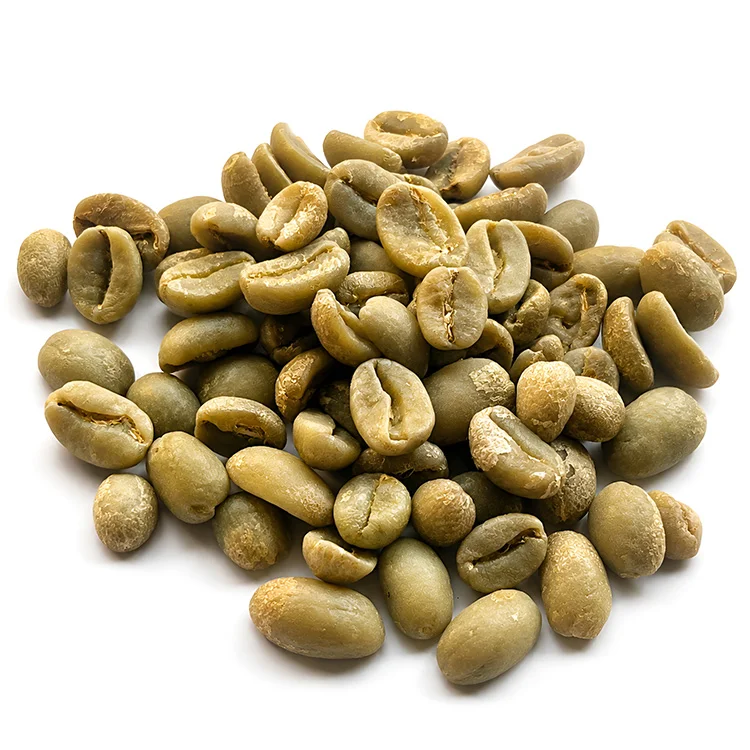
Green Coffee Beans
Ethiopia Green Coffee Beans
Ethiopia occupies a unique position in the global green coffee beans market. Widely recognized as the birthplace of Coffea arabica, the country is home to extraordinary coffee genetic diversity and some of the most distinctive flavor profiles found in the international specialty coffee market.
For professional roasters, importers and coffee manufacturers, Ethiopia offers something different from many high-volume origins. While countries such as Brazil can be particularly attractive for scale, consistency and classic espresso profiles, Ethiopian green coffee is often selected for aromatic complexity, fruit character, floral notes, bright acidity and origin differentiation.
Some of the most internationally recognized Ethiopian coffee names include:
Yirgacheffe • Sidamo/Sidama • Guji • Harrar • Limu
Yet these names alone do not define the coffee. Variety or local genetic material, altitude, processing, producer, harvest, preparation and lot quality can create major differences even within the same producing area.
For professional sourcing, the objective is therefore not simply to buy “Ethiopian coffee,” but to identify which Ethiopian green coffee provides the sensory profile and commercial performance required for the final product.
Yirgacheffe Green Coffee Beans
Yirgacheffe is one of Ethiopia’s most internationally recognized coffee origins and has become strongly associated with high-quality specialty Arabica.
Selected Yirgacheffe coffees are known for elegant, aromatic profiles that can include:
Jasmine • Floral Notes • Bergamot • Lemon • Citrus • Tea-Like Character • Stone Fruit • Sweetness
However, Yirgacheffe should not be treated as a single flavor profile.
Processing makes a major difference.
Washed Yirgacheffe
Washed Yirgacheffe coffees can be particularly attractive to buyers looking for:
Clarity • Floral Aromatics • Citrus Acidity • Clean Finish • Delicate Sweetness
These characteristics make them highly suitable for:
- Specialty filter coffee
- Light-roast programs
- Premium single origins
- Pour-over applications
- High-end retail coffee
Natural Yirgacheffe
Natural processing can move the sensory profile in another direction.
Depending on the lot, natural Yirgacheffe may offer:
Berry • Tropical Fruit • Floral Notes • Greater Sweetness • Fuller Body • Fruit Intensity
For specialty roasters, this means Yirgacheffe can support more than one product concept.
A washed lot may be selected for elegance and clarity, while a natural lot may be chosen for a more expressive fruit-driven experience.
Sidamo / Sidama Green Coffee Beans
Sidama — also widely encountered commercially as Sidamo — represents another major Ethiopian coffee identity.
The region covers a broad coffee-growing area, so buyers should avoid assuming that every Sidama coffee will taste the same.
Depending on location, altitude, processing and lot, selected coffees may display:
Citrus • Berries • Floral Notes • Chocolate • Stone Fruit • Sweetness • Bright Acidity
Both washed and natural Sidama coffees are internationally traded.
Why Sidama matters commercially
Sidama’s diversity allows it to serve several levels of the market.
A roaster may select a dependable washed coffee for a premium Ethiopian blend, while another buyer may choose a more distinctive natural lot for a specialty single-origin product.
This makes Sidama relevant for:
Specialty roasters • premium coffee brands • single-origin programs • differentiated blends • importers and distributors
As always, the regional name should be supported by a complete specification and sample evaluation.
Guji Green Coffee Beans
Guji has become one of the most sought-after names in contemporary Ethiopian specialty coffee.
Located in southern Ethiopia, Guji produces coffees across numerous districts, elevations and microclimates, creating substantial sensory diversity.
High-quality Guji coffees can offer exceptionally expressive profiles such as:
Jasmine • Peach • Berries • Tropical Fruit • Citrus • Floral Aromatics • Honey-Like Sweetness
Natural Guji coffees can be especially fruit-forward, while washed selections may emphasize clarity, florality and structured acidity.
Why Guji is attractive to specialty roasters
Guji offers several characteristics valuable to premium coffee businesses:
Strong origin identity
The name has become recognizable within the specialty coffee community.
Sensory differentiation
Selected lots can deliver profiles substantially different from mainstream commercial coffees.
Processing diversity
Washed, natural and increasingly more experimental processing styles create multiple product possibilities.
Premium positioning
Traceable Guji coffees can support high-value single-origin and limited-edition products.
For an importer or distributor, Guji can therefore occupy the higher-value part of an Ethiopian green coffee portfolio.
Harrar Green Coffee Beans
Harrar is one of Ethiopia’s historic coffee names and is strongly associated with naturally processed coffee.
Traditional Harrar coffees can offer profiles very different from washed Yirgacheffe or Limu.
Depending on lot and preparation, buyers may encounter:
Blueberry • Dried Fruit • Dark Fruit • Cocoa • Spice • Wine-Like Character • Heavy Body
This distinctive combination has made Harrar particularly interesting for roasters seeking coffees with a strong identity.
Harrar in blends
Harrar does not necessarily need to be used only as a single origin.
Its fruit, body and cocoa characteristics can add complexity to selected blends.
A roaster might combine an Ethiopian natural coffee with a chocolate-forward Brazilian Arabica to create an espresso with both traditional sweetness and a distinctive fruit dimension.
However, such formulations should be developed through sample roasting and cupping rather than assumptions based solely on origin.
Limu Green Coffee Beans
Limu is another important Ethiopian Arabica origin and is particularly associated with washed coffees.
Selected Limu coffees may provide a balanced combination of:
Citrus • Floral Notes • Sweetness • Spice • Chocolate • Clean Acidity • Balanced Body
Compared with some highly expressive natural Ethiopian coffees, Limu can offer a more structured and approachable profile.
This can make it commercially useful for roasters seeking Ethiopian character without excessive fruit intensity.
Potential applications include:
- Premium single-origin coffee
- Filter coffee
- 100% Arabica blends
- Specialty espresso
- Premium retail products
For buyers building an Ethiopian portfolio, Limu can therefore complement more aromatic Yirgacheffe or fruit-driven natural Guji and Harrar selections.
Ethiopian Coffee Grades and Physical Specifications
When purchasing Ethiopian green coffee, professional buyers may encounter grade descriptions such as:
Grade 1 • Grade 2 • Grade 3 • Grade 4 • Grade 5
These classifications form part of Ethiopia’s coffee quality and commercial preparation system.
However, a buyer should not select coffee from grade alone.
A professional evaluation should also consider:
Region • Processing • Physical defects • Moisture • Bean preparation • Crop • Cup quality • Traceability
A Grade 1 specialty lot and a commercial Grade 4 or Grade 5 coffee are designed for very different market segments.
This is commercially important because Ethiopia is not exclusively a source of expensive specialty coffee.
The country can supply specialty, premium and commercial green coffees, depending on specification.
Natural vs Washed Ethiopian Coffee
One of the most important purchasing decisions when sourcing Ethiopian green coffee is the choice between natural and washed processing.
The same origin can produce dramatically different sensory results depending on how the coffee is processed.
Natural Ethiopian Green Coffee
In the natural process, coffee cherries are dried with the fruit surrounding the seed before the dried fruit is removed.
When executed well, this can contribute:
Higher fruit intensity • Berry notes • Tropical fruit • Greater sweetness • Fuller body • Fermentation complexity
Natural Ethiopian coffees can be particularly attractive for roasters seeking an immediately recognizable and expressive cup.
They are commonly used for:
Specialty espresso • fruit-driven single origins • premium filter coffee • distinctive blends
However, processing consistency matters greatly. Poorly controlled natural processing can produce undesirable fermentation characteristics or inconsistency.
Therefore, buyers should evaluate the actual lot rather than assuming that “natural” automatically means higher quality.
Washed Ethiopian Green Coffee
In washed processing, the fruit is removed and the coffee undergoes wet processing before drying.
Selected washed Ethiopian coffees are often valued for:
Clean Cup • Clarity • Floral Aromatics • Citrus Acidity • Tea-Like Character • Defined Sweetness
This can make them particularly attractive for light roasting and filter applications where clarity and origin expression are priorities.
Yirgacheffe, Sidama and Limu all offer important examples of washed Ethiopian coffee.
Natural or Washed: Which Should a Buyer Choose?
Neither method is universally superior.
The correct choice depends on the target product.
Choose a natural Ethiopian coffee when the desired profile emphasizes:
Fruit + Sweetness + Body + Intensity
Choose a washed Ethiopian coffee when the desired profile emphasizes:
Clarity + Florality + Acidity + Clean Finish
For an importer or distributor, offering both can be commercially valuable because the two processing styles address different customer preferences.
Ethiopian Green Coffee for Espresso
Ethiopian coffee can add a powerful differentiating element to espresso.
A natural Ethiopian component may contribute:
Berry + Fruit + Sweetness + Aroma
while a washed Ethiopian component may contribute:
Floral character + Citrus + Brightness + Complexity
These characteristics can be combined with other origins.
For example:
Brazilian Arabica → chocolate, nuts, body
Colombian Arabica → balance, sweetness, acidity
Ethiopian Arabica → fruit, floral complexity, aromatics
Selected Robusta → intensity, body, crema
This demonstrates an important principle of professional blending:
Each green coffee should have a purpose in the formulation.
Adding an expensive Ethiopian coffee simply because it is prestigious does not necessarily improve a blend. It should contribute a sensory characteristic the product actually needs.
Ethiopian Green Coffee for Specialty Roasters
Ethiopia is particularly important to specialty roasters because it allows very deep product segmentation.
A buyer can move from:
Ethiopia Green Coffee
to:
Ethiopia Yirgacheffe
then:
Yirgacheffe + Washed
and eventually toward:
Region/Station or Producer + Variety/Local Landrace + Process + Grade + Lot + Cup Profile
This level of specificity creates opportunities for storytelling, traceability and premium positioning.
But it also requires more sophisticated purchasing.
The smaller and more distinctive the lot, the more important it becomes to evaluate:
Sample quality • lot availability • consistency • harvest timing • replacement possibilities • commercial volume
Commercial vs Specialty Ethiopian Green Coffee
Although Ethiopia is famous for specialty coffee, professional buyers should understand the entire market.
Commercial Ethiopian Coffee
Commercial preparations may be appropriate for:
Blends • industrial roasting • price-sensitive products • regional coffee products
The priorities are generally:
acceptable cup + defined preparation + availability + commercial viability
Specialty Ethiopian Coffee
Specialty buyers typically prioritize:
Cup quality • traceability • region • processing • variety/genetics • producer or washing station • lot separation
These coffees can command significant premiums but can also create substantially greater product differentiation.
For an importer, having both segments can make an Ethiopian portfolio more commercially useful.
Which Ethiopian Green Coffee Is Right for Your Business?
A buyer looking for floral elegance and clarity might explore washed Yirgacheffe.
A buyer looking for intense fruit and sweetness might consider natural Guji or another carefully selected natural lot.
A brand looking for balanced Ethiopian character may explore Sidama or Limu.
A roaster seeking dark fruit, cocoa and a more traditional natural profile may investigate Harrar.
But these are starting points — not guarantees.
The final decision should always be based on:
Origin → Subregion → Process → Grade → Physical Quality → Sample Roast → Cupping → Volume → Price
Sourcing Ethiopian Green Coffee Beans with LATAMARKO
At LATAMARKO, Ethiopian green coffee should be approached as a diverse portfolio rather than a single origin product.
Professional buyers may require Yirgacheffe, Sidama, Guji, Harrar, Limu, washed Ethiopian Arabica, natural Ethiopian Arabica, commercial grades or specialty selections, depending on their target market and roasting application.
For a specialty roaster, sensory differentiation may be the priority.
For an importer, portfolio diversity may matter more.
For an espresso manufacturer, the objective may be finding an Ethiopian component that adds a precise amount of fruit or floral complexity without destabilizing the blend.
The most valuable Ethiopian coffee is therefore not automatically the highest grade or most expensive lot.
It is the coffee that provides the right combination of:
Origin Character + Cup Quality + Processing + Consistency + Availability + Commercial Value
And this extraordinary range of possibilities is precisely what makes Ethiopia one of the most important and distinctive origins in the global green coffee beans market.
Vietnam Green Coffee Beans
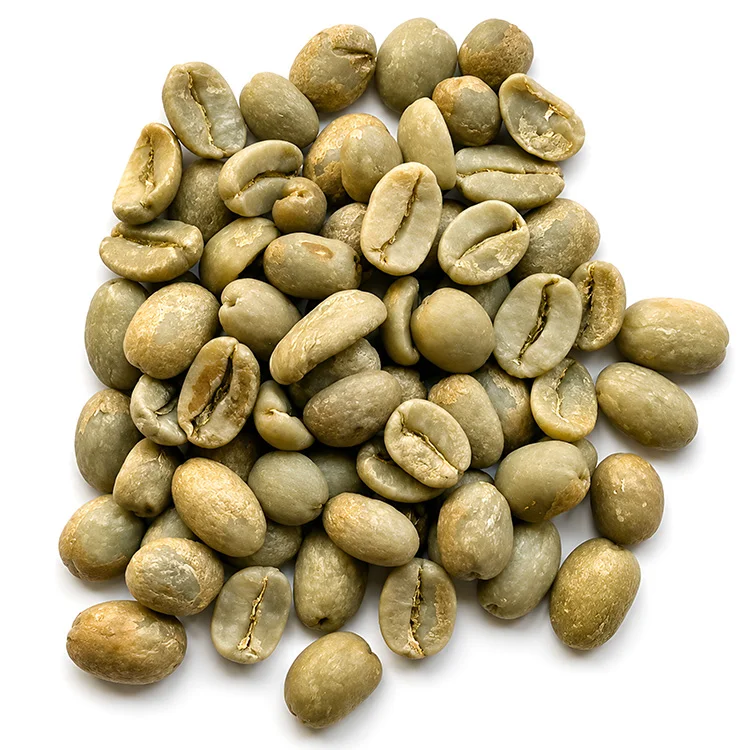
Green Coffee Beans
Vietnam is one of the most strategically important origins in the global green coffee beans trade and a major reference point for buyers sourcing Robusta at commercial and industrial scale. The country is particularly important to coffee roasters, soluble coffee manufacturers, espresso producers, importers, distributors and large-volume buyers that require a combination of availability, defined specifications and competitive commercial positioning.
Vietnam’s global coffee identity is strongly associated with Robusta (Coffea canephora). However, Vietnamese coffee should not be treated as one standardized commodity. The market includes different screen sizes, defect preparations, processing methods and quality levels, from conventional commercial Robusta to more carefully prepared Fine Robusta lots. Vietnam also produces Arabica, particularly in higher-altitude areas.
For professional buyers, the right question is therefore not simply:
“Do you supply Vietnam coffee?”
A useful purchasing specification goes further:
Species → Region → Process → Screen Size → Defect Specification → Moisture → Physical Preparation → Cup Profile → Volume
This distinction becomes increasingly important when the coffee is intended for continuous industrial production.
Vietnamese Robusta Green Coffee Beans
Vietnamese Robusta green coffee beans are among the country’s most important agricultural exports and form a major component of the international Robusta supply chain.
Vietnamese Robusta is widely used in:
- Espresso blends
- Commercial roasted coffee
- Ground coffee
- Instant and soluble coffee
- Private-label coffee
- High-caffeine products
- Industrial coffee formulations
Compared with many Arabicas, Robusta generally provides higher caffeine, stronger intensity, greater bitterness and heavier body. Depending on quality and preparation, Vietnamese Robusta can offer characteristics such as:
Cocoa • Dark Chocolate • Nuts • Woody Notes • Earthy Notes • Spice • Strong Body
However, these descriptions vary substantially according to the actual lot.
Why Vietnam Robusta is important to industrial buyers
One of Vietnam’s greatest strengths is scale.
For an industrial manufacturer, finding a good sample is only the beginning. The more important question may be whether comparable quality can be supplied repeatedly in significant volumes.
This makes Vietnamese Robusta especially relevant when buyers need:
Large quantities + defined specifications + continuity + competitive cost + international availability
A professional buyer should nevertheless avoid purchasing solely on the description “Vietnam Robusta.”
Screen size, defect count, processing, moisture and cup quality can create meaningful differences between offers.
Vietnam Robusta Screen Sizes and Commercial Preparations
Vietnamese Robusta is frequently traded with specifications based on screen size and defect tolerance.
Buyers may encounter commercial descriptions referring to preparations such as:
Screen 18 • Screen 16 • Screen 13 • Screen 12
as well as different defect specifications, for example commercial references expressed as percentages of black and broken beans.
The exact terminology and tolerance should always be confirmed in the contract and product specification.
This is particularly important because two Vietnam Robusta offers can appear similar by name while representing significantly different physical quality.
For professional procurement, specifications should clearly define relevant parameters such as:
Screen → Defects → Moisture → Foreign Matter → Processing → Crop → Cup Requirements
Price comparisons without aligning these specifications can be misleading.
Vietnamese Arabica Green Coffee Beans
Although Vietnam is predominantly known for Robusta, it also produces Arabica green coffee beans.
Arabica production is concentrated in cooler, higher-altitude areas where environmental conditions are more suitable for Coffea arabica. Da Lat and parts of Lam Dong, along with other highland areas, are particularly associated with Vietnamese Arabica production.
Depending on variety, process and origin, Vietnamese Arabica may offer:
Chocolate • Caramel • Nuts • Citrus • Fruit • Mild Acidity • Sweetness
Vietnamese Arabica occupies a different commercial position from the country’s Robusta.
Potential applications include:
100% Arabica products • espresso blends • single-origin products • premium retail coffee • specialty programs
For importers, Vietnamese Arabica can also provide portfolio differentiation by presenting a side of Vietnamese coffee that many consumers do not immediately associate with the country.
Fine Robusta Green Coffee Beans
One of the most interesting developments within the Robusta market is the growing attention given to Fine Robusta.
The traditional assumption that all Robusta is simply low-cost commodity coffee is increasingly inadequate.
Quality-focused Canephora can involve greater attention to:
Cherry maturity • harvesting • processing • drying • defect control • storage • traceability • sensory quality
The objective is to produce a cleaner, sweeter and more distinctive Robusta cup.
Depending on the lot, Fine Robusta may exhibit characteristics such as:
Cocoa • Dark Chocolate • Nuts • Caramel • Spice • Fruit • Sweetness • Clean Finish
Why Fine Robusta matters commercially
Fine Robusta creates an interesting middle ground.
A buyer may want the body, caffeine and crema characteristics associated with Robusta without the undesirable sensory characteristics sometimes associated with lower-quality commercial preparations.
This can make Fine Robusta relevant for:
- Premium espresso blends
- Specialty Canephora products
- Higher-quality commercial coffee
- 100% Robusta concepts
- Premium instant coffee
- Differentiated private-label products
For roasters, Fine Robusta can therefore be treated as a deliberate quality component rather than simply a cost-reduction ingredient.
Clean Robusta Green Coffee Beans
The term Clean Robusta is commonly used commercially to describe Robusta that has undergone additional preparation and cleaning to improve physical consistency and reduce undesirable material or defects.
However, buyers should be careful with the terminology.
“Clean Robusta” should not be accepted as a complete technical specification on its own.
A professional buyer should still request measurable parameters such as:
Screen Size • Black/Broken Bean Limits • Foreign Matter • Moisture • Processing • Cup Requirements
The commercial advantage of cleaner preparation can include improved:
Physical uniformity • roasting consistency • appearance • production efficiency • cup cleanliness
This can be particularly valuable to industrial roasters operating continuous production lines.
When thousands of kilograms are roasted, small improvements in raw-material consistency can become operationally significant.
Wet-Polished Robusta Green Coffee Beans
Wet-polished Robusta is another preparation encountered in Vietnamese green coffee trading.
Polishing is a post-processing step used to alter the external appearance of green beans by removing portions of the silverskin and surface material.
Wet-polished coffee can have a cleaner and more uniform visual appearance than conventionally prepared commercial Robusta.
This may be desirable in markets where physical presentation forms part of the purchasing specification.
However, an important distinction must be made:
A more polished-looking bean does not automatically mean a better cup.
Visual appearance and sensory quality are related only indirectly.
Professional buyers should therefore evaluate wet-polished Robusta according to both:
Physical Specification + Cup Performance
rather than appearance alone.
When Wet-Polished Robusta can be useful
Depending on buyer requirements, it can be relevant for:
Commercial roasting • export programs requiring specific physical preparation • espresso blends • industrial coffee • markets emphasizing bean appearance
As with other Vietnam Robusta products, the complete specification should be agreed before purchase.
Natural and Washed Vietnamese Coffee
Vietnamese coffee can also be differentiated according to processing.
Commercial Robusta has historically been strongly associated with dry/natural processing, while washed processing is also used for selected Robusta and Arabica coffees.
The processing method can influence:
Cleanliness • sweetness • body • acidity • fruit character • consistency
For a commercial buyer, processing should therefore be considered alongside screen and defects rather than treated as a secondary detail.
A washed or carefully processed Robusta may serve a very different product objective from a conventional commercial natural Robusta.
Vietnam Green Coffee for Espresso
Vietnamese Robusta can play a particularly important role in espresso formulation.
A carefully selected Robusta component can contribute:
Body + Intensity + Caffeine + Crema + Roast Character
This can complement Arabica coffees that provide greater sweetness, aroma or acidity.
For example, a roaster might build an espresso around:
Brazilian Arabica → chocolate, nuts and sweetness
Colombian Arabica → balance and acidity
Vietnamese Robusta → body, intensity and crema
The exact percentage should be determined through roasting and sensory testing.
A premium espresso might contain a relatively small amount of high-quality Robusta, while a stronger commercial formulation may use considerably more.
The important point is that Robusta should have a defined function in the blend.
Vietnam Coffee for Commercial Blends
Vietnam’s importance becomes particularly clear in the commercial blend market.
Large coffee manufacturers need to manage several objectives simultaneously:
Flavor + Consistency + Raw-Material Cost + Availability + Production Scale
Vietnamese Robusta can help manufacturers balance these requirements.
It can be used to build:
Strong espresso blends • mass-market coffee • traditional dark roasts • private-label products • soluble coffee formulations
But successful commercial blending should never be reduced to adding the cheapest available Robusta.
The buyer should determine exactly what the Vietnamese component is expected to achieve.
Is the objective:
More body?
More crema?
Higher caffeine?
Greater intensity?
A lower raw-material cost?
A specific sensory profile?
Only after defining that objective should the specification be selected.
Vietnamese Robusta vs Brazilian Conilon
Professional buyers may also compare Vietnamese Robusta with Brazilian Conilon, since both belong to Coffea canephora and are important to international commercial coffee markets.
They should not automatically be treated as interchangeable.
Differences in:
Genetic material • growing conditions • processing • preparation • harvest • physical specifications • cup profile
can affect performance.
For industrial buyers, having access to more than one Canephora origin can also provide strategic value by increasing sourcing flexibility and reducing dependence on a single supply region.
Vietnamese Robusta vs Indian Robusta
India provides another important alternative for Robusta buyers.
Indian trade categories such as Robusta Cherry and Robusta Parchment can occupy different sensory and commercial positions from conventional Vietnamese Robusta.
A buyer developing an espresso portfolio may therefore compare:
Vietnam Robusta → scale, intensity and commercial efficiency
with:
India Robusta → alternative preparations and different cup possibilities
The correct decision should be based on actual samples, specifications and commercial requirements rather than country reputation alone.
Commercial vs Fine Vietnamese Robusta
Vietnam’s green coffee market can broadly serve two very different purchasing strategies.
Commercial Robusta emphasizes:
Volume • defined preparation • availability • competitive pricing • industrial usability
Fine Robusta emphasizes:
Cleaner cup • improved processing • sensory quality • traceability • differentiation
Neither category is inherently the correct choice.
A soluble coffee manufacturer producing very large volumes may have little reason to purchase an expensive specialty Canephora.
A premium espresso roaster, however, may find that investing in a cleaner Fine Robusta significantly improves the final product.
The correct quality is the quality appropriate to the application.
What Should Buyers Check Before Purchasing Vietnam Green Coffee?
Before placing a commercial order, professional buyers should define more than origin and price.
A purchasing specification should consider:
Species — Robusta or Arabica?
Processing — Natural, washed or another preparation?
Screen Size — What size distribution is required?
Defects — What limits apply?
Moisture — Does the lot meet the agreed specification?
Foreign Matter — What tolerance is accepted?
Crop — Which harvest is being supplied?
Cup Profile — What sensory performance is required?
Packaging — Standard export bags or additional protective liner?
Volume — Sample, pallet, container or contract quantity?
Consistency — Can comparable quality be supplied repeatedly?
This prevents the buyer from comparing products that share the same name but not the same quality.
Choosing the Right Vietnamese Green Coffee for Your Business
Different buyers require different Vietnamese coffees.
A large industrial manufacturer may prioritize commercial Robusta with stable specifications and scalable supply.
An espresso producer may prioritize body, crema and blend performance.
A premium roaster may investigate Fine Robusta or selected Vietnamese Arabica.
An instant coffee manufacturer may prioritize consistent Canephora supply and industrial economics.
An importer or distributor may need several specifications covering different customer and price segments.
The selection process should therefore move from:
Vietnam Green Coffee Beans
to:
Species → Process → Screen → Defect Specification → Moisture → Physical Quality → Cup Profile → Volume → Price
Sourcing Vietnam Green Coffee Beans with LATAMARKO
At LATAMARKO, Vietnamese green coffee should be approached according to its intended commercial function.
Depending on buyer requirements, the portfolio may include Vietnamese Robusta, selected screen preparations, cleaner commercial qualities, Fine Robusta, wet-polished preparations or Vietnamese Arabica.
For professional buyers, the objective is not simply to find the lowest price per metric ton.
The objective is to identify the specification that provides the right balance of:
Quality + Body + Roasting Performance + Consistency + Availability + Price
For espresso manufacturers, that may mean a Robusta selected specifically for crema and body.
For industrial manufacturers, it may mean repeatable specifications across large volumes.
For premium roasters, it may mean moving toward Fine Robusta or higher-quality Arabica selections.
This combination of scale, product diversity and industrial relevance is what makes Vietnam one of the most important origins in the global green coffee beans supply chain.
India Green Coffee Beans
India occupies a distinctive position in the global green coffee beans market because it is an important origin for both Arabica and Robusta, while also offering trade preparations and processing traditions that give buyers a broad range of options for espresso, commercial roasting, specialty coffee and industrial production.
Unlike origins strongly identified with a single species, India’s green coffee portfolio allows professional buyers to source multiple categories from the same country. Important commercial descriptions include Plantation Arabica, Arabica Cherry, Robusta Cherry, Robusta Parchment and Monsooned Malabar.
India is also unusual because much of its coffee is traditionally grown under shade in regions of southern India. Important producing states include Karnataka, Kerala and Tamil Nadu, alongside production in several non-traditional coffee-growing areas.
For professional buyers, Indian green coffee can be particularly valuable when the objective is to balance:
Body + Aroma + Intensity + Crema + Low-to-Moderate Acidity + Commercial Performance
This makes India especially relevant to espresso roasters, industrial coffee manufacturers, importers, distributors and private-label coffee producers.
Plantation Arabica Green Coffee Beans
Plantation coffee is an important commercial term in the Indian green coffee trade and generally refers to washed Arabica.
This distinction is useful for international buyers because India’s terminology differs from that used by some other producing origins.
In simplified terms:
Plantation → Washed Arabica
while:
Arabica Cherry → Natural/Dry-Processed Arabica
However, the commercial name alone is not a complete purchasing specification. Plantation coffees are available in different grades and physical preparations.
Buyers should therefore evaluate:
Grade • Screen Size • Defects • Moisture • Region • Crop • Cup Profile
Plantation Arabica flavor profile
Depending on region, grade and lot, Indian Plantation Arabica can offer characteristics such as:
Chocolate • Caramel • Nuts • Spice • Mild Fruit • Balanced Acidity • Medium Body
These profiles can make selected Plantation coffees useful for:
- 100% Arabica products
- Espresso blends
- Premium commercial coffee
- Private-label products
- Filter coffee
- Selected single-origin programs
For espresso manufacturers, Indian Arabica can be especially interesting when a balanced coffee is required without excessively sharp acidity.
Indian Plantation Arabica Grades
Professional buyers may encounter different commercial grades within Indian Plantation Arabica.
These can include designations based on bean size and preparation, such as Plantation A and other recognized grade categories.
The precise grade specifications should always be checked against the applicable Indian grading standard and the seller’s contract specification.
This is important because a grade name should not be interpreted simply as a sensory score.
A professional purchasing decision should combine:
Grade + Physical Analysis + Sample Roast + Cupping
rather than relying on the grade designation alone.
Arabica Cherry Green Coffee Beans
Arabica Cherry generally refers to Indian Arabica prepared using the natural or dry process.
In this method, coffee cherries are dried before the dried fruit layers are removed.
This creates a different raw material from washed Plantation Arabica.
Depending on the lot, Indian Arabica Cherry may provide:
Sweetness • Chocolate • Fruit • Spice • Fuller Body • Lower Perceived Acidity
The distinction between Plantation and Cherry is therefore commercially important.
A buyer comparing two Indian Arabicas should ask:
Washed or Natural?
because processing can materially influence both roasting behavior and final cup profile.
Applications for Arabica Cherry
Selected Arabica Cherry coffees can be suitable for:
Espresso • commercial Arabica blends • medium-to-dark roasting • private-label products • origin-focused coffee
Natural processing can provide body and sweetness that work particularly well in espresso-oriented formulations.
Robusta Cherry Green Coffee Beans
India Robusta Cherry is one of the country’s important commercial Canephora products.
“Cherry” again indicates dry/natural processing rather than a coffee variety.
Therefore:
Robusta Cherry = Natural/Dry-Processed Robusta
India Robusta Cherry can be commercially attractive for buyers requiring:
Strong body • intensity • caffeine • dark roast character • blend functionality
Depending on quality and preparation, cup characteristics may include:
Cocoa • Dark Chocolate • Nuts • Spice • Woody Notes • Earthy Character • Heavy Body
Quality can vary substantially, making physical specification and cup evaluation particularly important.
Robusta Cherry for industrial coffee
Commercial Robusta Cherry can be relevant to:
- Espresso blends
- Commercial roasted coffee
- Industrial coffee manufacturing
- Instant coffee
- Strong traditional blends
- Cost-optimized formulations
For high-volume manufacturers, India can also provide an alternative or complementary Robusta origin to Vietnam, Uganda and Brazil.
This can help diversify supply while allowing the manufacturer to select different Canephora characteristics for different formulations.
Robusta Parchment Green Coffee Beans
Robusta Parchment is one of the most important Indian coffees for buyers seeking a more carefully processed Robusta.
In Indian trade terminology, Robusta Parchment generally refers to washed Robusta.
This gives us another useful distinction:
Robusta Cherry → Natural Robusta
Robusta Parchment → Washed Robusta
This difference can be extremely important for espresso buyers.
Properly processed Robusta Parchment may offer a cleaner and more refined cup than conventional commercial natural Robusta.
Depending on the lot, buyers may find:
Cocoa • Chocolate • Nuts • Spice • Clean Bitterness • Strong Body • Controlled Intensity
Why Robusta Parchment is valuable for espresso
A high-quality Robusta does not need to function merely as a cheap filler.
In espresso, selected Robusta Parchment can contribute:
Crema + Body + Intensity + Caffeine + Structure
while a suitable Arabica component contributes:
Aroma + Sweetness + Acidity + Complexity
This allows roasters to formulate espresso according to the desired market position.
For premium espresso blends, using a cleaner Robusta preparation can be particularly important because undesirable flavors become more noticeable as product quality increases.
Indian Robusta Parchment Grades
Robusta Parchment is also traded in different physical grades and preparations.
Professional buyers may encounter specifications differentiated according to bean size and permitted defects.
Rather than treating the commercial grade as sufficient information, buyers should request the complete specification:
Grade → Screen → Defects → Moisture → Foreign Matter → Crop → Cup
This is especially important when comparing prices from multiple suppliers.
A lower price per ton may simply reflect a different physical preparation.
Commercial offers are only truly comparable when the specifications are comparable.
Monsooned Malabar Green Coffee Beans
Monsooned Malabar is one of India’s most distinctive and internationally recognized coffee products.
Its identity comes from a unique post-harvest conditioning process known as monsooning.
Historically, coffee transported from India to Europe by sailing ship spent long periods exposed to humid maritime conditions. During the journey, the beans changed physically and sensorially.
Modern monsooning intentionally recreates aspects of this transformation under controlled conditions in India.
Green coffee is exposed to humid monsoon air over an extended period, causing significant changes in:
Color • Size • Moisture behavior • Density • Acidity • Cup profile
The beans typically become larger and paler, while the sensory profile changes considerably.
What Does Monsooned Malabar Taste Like?
Depending on the lot and preparation, Monsooned Malabar may exhibit:
Low Acidity • Heavy Body • Earthy Notes • Spice • Nuts • Woody Character • Chocolate-Like Tones
Its profile is very different from bright washed East African Arabicas.
That difference is precisely why it has commercial value.
Monsooned Malabar is not designed to imitate conventional washed Arabica.
It provides a distinctive sensory tool for roasters.
Monsooned Malabar for espresso
Monsooned Malabar can be particularly interesting in espresso blends because of its:
Body + Low Acidity + Intensity + Distinctive Character
A roaster can use it to modify the structure of an espresso without relying entirely on Robusta.
However, its strong personality means blend percentages should be carefully tested.
Too much of a distinctive component can overwhelm other coffees.
Sample roasting and blend development are therefore essential.
Indian Arabica vs Indian Robusta
India gives professional buyers the opportunity to work with both major commercial coffee species.
Indian Arabica can contribute:
Aroma • Sweetness • Balance • Mild Acidity • Complexity
Indian Robusta can contribute:
Body • Intensity • Crema • Caffeine • Structure
This makes India particularly useful for businesses developing espresso.
A manufacturer may potentially source multiple components of a blend from the same origin while still obtaining very different raw-material characteristics.
Plantation vs Cherry: Why Processing Matters
Indian trade terminology makes processing particularly visible.
For Arabica:
Plantation = Washed
Cherry = Natural
For Robusta:
Parchment = Washed
Cherry = Natural
Understanding this terminology can prevent purchasing mistakes.
A buyer requesting simply “Indian Arabica” or “Indian Robusta” has not yet provided enough information.
The processing style should be specified because it can affect:
Body • acidity • sweetness • cleanliness • flavor • roasting behavior
This is another example of why professional green coffee purchasing requires more than country and species.
Indian Green Coffee for Espresso
India is particularly well positioned for espresso green coffee sourcing because its portfolio offers several useful formulation components.
Consider the possible roles:
Plantation Arabica
→ balance, aroma, sweetness
Arabica Cherry
→ sweetness, body, natural-process character
Robusta Parchment
→ crema, body, intensity with cleaner preparation
Robusta Cherry
→ strength, body and commercial efficiency
Monsooned Malabar
→ low acidity, body and distinctive character
A professional roaster can therefore select Indian coffee according to the exact function required in the blend.
The objective should not be to add origins randomly.
Each component should solve a formulation requirement.
Indian Green Coffee for Industrial Blends
For industrial manufacturers, sensory quality is only one part of procurement.
The coffee must also work commercially.
Important considerations include:
Price • volume • consistency • availability • specification • roasting performance • logistics
Indian Arabica and Robusta can serve different industrial applications, including:
Roasted whole bean • ground coffee • espresso • private label • instant coffee • commercial blends
A manufacturer may also use India as part of a multi-origin sourcing strategy.
For example, Robusta requirements could potentially be distributed among:
Vietnam + India + Uganda + Brazil
depending on quality requirements, pricing and availability.
This reduces dependence on one origin and gives purchasing teams greater flexibility when market conditions change.
India vs Vietnam Robusta
For Robusta buyers, India and Vietnam are often relevant comparison points.
Vietnam has enormous importance in global Robusta supply and can be particularly attractive for scale and broad commercial availability.
India, however, offers distinctive preparations such as Robusta Parchment, which may be attractive for buyers seeking cleaner washed Robusta characteristics.
The decision should therefore not simply be:
India or Vietnam?
Instead:
Which specification from which origin performs best in our product at the required volume and cost?
Both can have a place within a professional sourcing strategy.
What Should Buyers Check Before Purchasing Indian Green Coffee?
A professional request should clearly define:
Species — Arabica or Robusta?
Preparation — Plantation, Cherry, Parchment or Monsooned?
Grade — Which commercial preparation?
Screen Size — What bean-size specification is required?
Defects — What limits are acceptable?
Moisture — Does the coffee meet specification?
Crop — Which harvest is being offered?
Cup Profile — What sensory characteristics are required?
Application — Espresso, filter, industrial blend or soluble coffee?
Volume — Bags, pallets, containers or annual contract?
This allows suppliers to quote the correct product and makes commercial offers easier to compare.
Choosing the Right Indian Green Coffee for Your Business
Different buyers should approach India’s portfolio differently.
A 100% Arabica brand may prioritize Plantation or selected Arabica Cherry.
An espresso roaster may combine Indian Arabica with Robusta Parchment.
A traditional espresso producer may investigate Monsooned Malabar for body and low acidity.
A large industrial manufacturer may prioritize commercial Robusta Cherry and dependable specifications.
A premium roaster may explore higher-quality Plantation, specialty Arabica or selected Robusta Parchment.
An importer or distributor may benefit from carrying several Indian preparations because they address different customer requirements.
Sourcing India Green Coffee Beans with LATAMARKO
At LATAMARKO, Indian green coffee should be presented according to the actual commercial language of the origin rather than under a single generic “India Coffee” category.
Depending on buyer requirements, sourcing can focus on Plantation Arabica, Arabica Cherry, Robusta Cherry, Robusta Parchment, Monsooned Malabar and other defined Indian green coffee preparations.
The selection should connect:
Species → Processing → Grade → Screen → Physical Quality → Cup Profile → Application → Volume
For an espresso producer, the priority may be crema and body.
For a commercial manufacturer, it may be repeatability and price-to-performance.
For a premium roaster, it may be cleaner processing and greater sensory distinction.
For an importer, it may be building a portfolio that covers several customer segments.
This combination of Arabica, Robusta, distinctive processing traditions and industrial versatility is what makes India an important and highly useful origin in the international green coffee beans market.
Other Important Green Coffee Origins
Beyond Brazil, Colombia, Ethiopia, Vietnam and India, the global green coffee beans market includes a diverse group of producing countries that play important roles in commercial roasting, specialty coffee, espresso blending and international green coffee trade.
For professional buyers, these origins should not be viewed simply as alternatives to the world’s largest producers. Each can serve a different commercial purpose. Some provide scalable Arabica or Robusta for larger roasting programs, while others are particularly valuable for specialty coffee, single-origin products, premium blends and differentiated retail concepts.
Understanding these origins allows roasters, manufacturers, importers and distributors to build a more diversified sourcing strategy based on:
Flavor + Quality + Processing + Availability + Volume + Price + Application
Indonesia Green Coffee Beans
Indonesia is one of the world’s important coffee-producing origins and is particularly valuable because it produces both Arabica and Robusta green coffee beans.
Its coffee landscape is highly diverse, with major origins including:
Sumatra • Java • Sulawesi • Bali • Flores
One of Indonesia’s most distinctive processing traditions is Giling Basah, commonly translated as wet-hulled processing. This method is strongly associated with certain Indonesian coffees, particularly from Sumatra.
Depending on region and preparation, Indonesian coffees may present characteristics such as:
Full Body • Dark Chocolate • Spice • Herbs • Earthy Notes • Tobacco-Like Notes • Low-to-Moderate Acidity
Higher-quality Arabicas can also offer fruit, sweetness and more refined acidity.
Well-known commercial and specialty names include Sumatra Mandheling, Sumatra Gayo, Java and Sulawesi/Toraja.
For buyers, Indonesian green coffee can be particularly attractive for espresso blends, full-bodied single origins and products requiring distinctive low-acidity profiles.
Uganda Green Coffee Beans
Uganda is particularly important in the international market as a producer of Robusta green coffee, although the country also produces Arabica.
Robusta has deep botanical significance in Uganda and remains central to the country’s coffee industry.
Commercial buyers may encounter Ugandan Robusta preparations identified by screen size and quality specifications, while Arabica production is associated with areas such as Bugisu and the Rwenzori region.
Depending on specification, Ugandan Robusta may offer:
Strong Body • Cocoa • Dark Chocolate • Nuts • Earthy Notes • High Intensity
making it useful for:
Espresso blends • commercial roasting • industrial coffee • soluble coffee
Higher-quality Ugandan Arabicas can occupy a completely different position, providing fruit, acidity and specialty potential.
For importers, Uganda therefore offers access to both commercial Canephora and differentiated Arabica.
Honduras Green Coffee Beans
Honduras is an important Central American Arabica green coffee origin and can supply both substantial commercial volumes and high-quality specialty lots.
Important producing regions include:
Copán • Montecillos • Agalta • Opalaca • Comayagua • El Paraíso
Depending on region, variety and processing, Honduran coffees may offer:
Chocolate • Caramel • Nuts • Citrus • Red Fruit • Sweetness • Balanced Acidity
This broad sensory range makes Honduras suitable for:
Commercial 100% Arabica • espresso • premium blends • single-origin coffee • specialty roasting
For larger buyers, Honduras can be particularly interesting because it combines recognizable Central American quality with meaningful export volumes.
Peru Green Coffee Beans
Peru is an important Arabica-producing origin and has developed a particularly strong position in organic and certified green coffee markets.
Major producing areas include:
Cajamarca • Junín • Cusco • Amazonas • San Martín
Selected Peruvian coffees may offer:
Chocolate • Caramel • Nuts • Citrus • Floral Notes • Red Fruit • Balanced Acidity
Peru can be attractive for buyers developing:
Organic coffee • certified products • premium Arabica • single origins • traceable coffee programs
It can also provide more accessible profiles suitable for broader commercial roasting.
For buyers, Peru’s value therefore extends beyond specialty coffee; it can combine traceability, certification opportunities and commercially useful Arabica profiles.
Guatemala Green Coffee Beans
Guatemala has one of the strongest origin identities in Central American specialty coffee.
Major coffee-growing areas include:
Antigua • Huehuetenango • Atitlán • Cobán • Fraijanes
The country’s diverse altitude, volcanic soils and microclimates create considerable variation.
Selected Guatemalan coffees can present:
Chocolate • Caramel • Citrus • Stone Fruit • Floral Notes • Spice • Structured Acidity
This makes Guatemala particularly attractive for:
Premium single origins • specialty coffee • espresso • high-quality blends
For buyers, regional identity can be commercially important. Guatemala Huehuetenango communicates a much more specific product proposition than simply “Central American Arabica.”
Mexico Green Coffee Beans
Mexico is an important Arabica producer with coffee cultivation concentrated particularly in southern regions.
Important origins include:
Chiapas • Veracruz • Oaxaca • Puebla
Mexican green coffees can range from approachable commercial Arabicas to higher-quality specialty and certified coffees.
Depending on region and preparation, profiles may include:
Chocolate • Nuts • Caramel • Citrus • Mild Fruit • Balanced Acidity
Mexico is also relevant to buyers seeking organic and certified coffees.
For commercial roasters, selected Mexican Arabicas can provide an approachable, balanced profile suitable for broad consumer markets.
For specialty buyers, specific regions and producer lots offer considerably greater differentiation.
Kenya Green Coffee Beans
Kenya holds an important position in the premium specialty Arabica market and is known for coffees with highly distinctive sensory characteristics.
Professional buyers frequently encounter classifications such as:
Kenya AA • Kenya AB • PB (Peaberry)
An important distinction is that AA and AB primarily relate to physical bean-size classifications, not automatic guarantees of sensory quality.
High-quality Kenyan coffees may display:
Blackcurrant • Berries • Citrus • Floral Notes • Sweetness • Bright Acidity • Complex Fruit
Varieties such as SL28 and SL34 are strongly associated with Kenya’s specialty coffee identity.
Kenya can therefore be particularly attractive for:
Specialty filter coffee • premium single origins • limited editions • high-end retail coffee
For commercial buyers, its role is generally more about differentiation and cup character than low-cost industrial volume.
Tanzania Green Coffee Beans
Tanzania produces both Arabica and Robusta, although premium international attention is often focused on its Arabica.
Important growing areas include regions around:
Kilimanjaro • Arusha • Mbeya
Tanzania is also widely associated in international trade with Peaberry coffee, although peaberry is a bean formation rather than a separate coffee species.
Selected Tanzanian Arabicas may offer:
Citrus • Berries • Chocolate • Floral Notes • Bright Acidity • Medium Body
These coffees can work well in:
Single origins • premium blends • specialty filter coffee • espresso
For buyers seeking East African character with alternatives to Ethiopia or Kenya, Tanzania can provide interesting opportunities.
Costa Rica Green Coffee Beans
Costa Rica has developed a strong international reputation for quality-focused Arabica green coffee.
Major producing regions include:
Tarrazú • West Valley • Central Valley • Tres Ríos • Brunca
Costa Rican coffees can display:
Citrus • Caramel • Honey • Stone Fruit • Floral Notes • Chocolate • Clean Acidity
The country is also strongly associated with Honey processing, including variations commonly described as yellow, red and black honey.
This processing diversity makes Costa Rica particularly attractive for specialty roasters looking to compare how post-harvest methods influence cup profile.
Applications include:
Premium single origins • specialty espresso • filter coffee • experimental coffee ranges
Nicaragua Green Coffee Beans
Nicaragua is an important Central American Arabica origin offering both commercial and specialty coffees.
Major producing areas include:
Jinotega • Matagalpa • Nueva Segovia
Depending on region, variety and processing, profiles may include:
Chocolate • Caramel • Nuts • Citrus • Fruit • Floral Notes • Balanced Acidity
Nicaragua is also associated with varieties such as Caturra, Bourbon, Maracaturra and Pacamara, among others.
For buyers, Nicaragua can offer an attractive balance between commercial usability and specialty differentiation.
This makes it relevant to espresso roasters, premium brands and importers building diversified Central American portfolios.
Rwanda Green Coffee Beans
Rwanda has developed a strong reputation for high-quality washed Arabica coffee, supported by the expansion of washing stations and quality-focused processing.
Important producing areas are found across several parts of the country, including the regions surrounding Lake Kivu.
Selected Rwandan coffees may display:
Red Fruit • Citrus • Floral Notes • Caramel • Tea-Like Characteristics • Bright Acidity
Rwanda is particularly relevant for:
Specialty roasters • traceable sourcing • single-origin programs • premium filter coffee
For brands interested in origin storytelling and traceability, Rwanda can provide considerable value beyond cup quality alone.
Burundi Green Coffee Beans
Burundi is another important East African Arabica origin with strong specialty potential.
Coffee is produced predominantly by smallholders and is frequently processed through washing stations.
Selected Burundi coffees may offer:
Red Berries • Citrus • Floral Notes • Caramel • Sweetness • Bright Acidity
For specialty buyers, Burundi can provide profiles that share certain East African characteristics while maintaining a distinct origin identity.
It can be particularly useful for:
Single origins • specialty filter coffee • premium seasonal offerings • traceable coffee programs
Because production volumes are smaller than those of major global origins, availability and lot continuity should be considered when planning larger programs.
Panama Green Coffee Beans
Panama represents one of the clearest examples of how value and production volume are not the same thing.
The country produces relatively limited volumes compared with major coffee origins, but it has achieved exceptional recognition in the high-end specialty market.
Important producing areas include:
Boquete • Volcán • Renacimiento
Panama is particularly famous for Geisha/Gesha coffee.
Exceptional Panama Geisha lots may display:
Jasmine • Bergamot • Tropical Fruit • Citrus • Tea-Like Character • Exceptional Aromatic Complexity
These coffees occupy a very different commercial category from mainstream industrial green coffee.
Panama can be relevant for:
Luxury coffee • competition coffee • exclusive microlots • premium specialty brands • limited editions
For professional buyers, Panama demonstrates that green coffee purchasing can range from commodity-scale raw material to extremely scarce premium products.
Yemen Green Coffee Beans
Yemen holds extraordinary historical importance in the global coffee trade.
The port of Mocha (Al Mokha) played a major role in the early international coffee trade, and the name remains deeply embedded in coffee history.
Yemeni coffee is traditionally cultivated under challenging conditions and often produced by smallholders using long-established methods.
Selected coffees can offer highly distinctive profiles:
Dried Fruit • Cocoa • Spice • Wine-Like Notes • Dark Fruit • Complex Sweetness
Well-known regional and trade names may include coffees associated with areas such as Haraz.
Yemen’s limited production, difficult logistics and distinctive character can result in premium pricing.
It is therefore generally more relevant for:
Specialty roasters • rare coffee programs • luxury products • origin-focused collections
rather than large industrial supply.
Papua New Guinea Green Coffee Beans
Papua New Guinea (PNG) is an important Pacific Arabica origin with a coffee industry that includes both smallholder production and larger estates.
Major coffee-growing areas include the country’s highland regions, particularly areas such as:
Eastern Highlands • Western Highlands • Simbu
Selected PNG coffees may offer:
Chocolate • Tropical Fruit • Citrus • Caramel • Floral Notes • Balanced Acidity • Medium-to-Full Body
These characteristics can make Papua New Guinea useful for:
Single-origin coffee • specialty roasting • espresso • premium blends
For buyers seeking to expand beyond traditional Latin American and African origins, PNG can provide a distinctive Pacific component.
Comparing Green Coffee Origins by Commercial Application
For professional buyers, having dozens of origins available is useful only if each origin has a clear role in the portfolio.
A simplified sourcing logic might look like this:
For body and espresso intensity:
Indonesia • Uganda Robusta • selected Asian and African Canephora
For balanced commercial Arabica:
Honduras • Peru • Mexico • Nicaragua
For bright and fruit-driven specialty coffee:
Kenya • Rwanda • Burundi
For clean premium Central American profiles:
Guatemala • Costa Rica
For rare and high-value specialty positioning:
Panama • Yemen
For differentiated Pacific Arabica:
Papua New Guinea
But these are broad tendencies rather than fixed rules. Individual lots should always be evaluated on their own specifications and cup performance.
Building a Multi-Origin Green Coffee Portfolio
A professional green coffee portfolio does not need every origin to perform the same function.
In fact, the strongest portfolio does the opposite.
One origin can provide volume.
Another can provide body.
Another can provide acidity.
Another can provide aromatic differentiation.
And another can provide a premium story and exclusivity.
For an importer, distributor or manufacturer, this creates a logical portfolio structure:
Core Commercial Origins → Premium Origins → Specialty Origins → Limited & Rare Origins
This approach also reduces dependence on a single producing country and gives buyers greater flexibility when crop availability, freight, quality or market prices change.
Choosing the Right Origin for Your Business
The objective should never be to buy a coffee simply because its country of origin is famous.
A professional buyer should move progressively from:
Country
to:
Region → Species → Variety → Process → Grade → Screen → Physical Specification → Cup Profile → Crop → Volume → Price
For example:
Kenya Green Coffee
is a starting point.
Kenya Arabica, defined preparation and screen, washed process, selected cup profile
is a purchasing specification.
The same principle applies whether sourcing Indonesia, Uganda, Honduras, Peru, Guatemala, Mexico, Kenya, Tanzania, Costa Rica, Nicaragua, Rwanda, Burundi, Panama, Yemen or Papua New Guinea.
At LATAMARKO, the objective of a multi-origin green coffee portfolio is therefore not simply to offer a long list of countries. It is to connect each origin with the requirements of roasters, manufacturers, importers and distributors and identify the coffee that makes commercial sense for the intended product.
Because in professional green coffee sourcing, origin creates possibilities — but the specification determines what you are actually buying.
Green Coffee Varieties Explained
When professional buyers evaluate green coffee beans, country of origin and species are only the beginning. Within Coffea arabica there are numerous varieties and cultivars, each with different genetic backgrounds, agronomic characteristics and potential sensory qualities.
Names such as Typica, Bourbon, Caturra, Catuai, Mundo Novo, Castillo, Pacamara, Geisha, SL28 and SL34 are therefore much more than labels on a coffee bag. Variety can influence plant productivity, disease resistance, bean characteristics and, under the right growing and processing conditions, the sensory potential of the final cup.
For commercial buyers, however, one principle is essential:
Variety creates potential. It does not guarantee quality.
A prestigious variety grown, harvested or processed poorly may produce an inferior coffee, while a less fashionable variety handled exceptionally well can deliver excellent results.
The professional approach is therefore to evaluate:
Variety + Origin + Terroir + Altitude + Processing + Physical Quality + Cup Profile + Availability + Price
Typica Green Coffee Beans
Typica is one of the historically important Arabica genetic groups and has contributed to the development of numerous coffee varieties around the world.
Typica plants are traditionally associated with relatively tall growth and can produce coffees with excellent sensory potential under suitable conditions.
Depending on origin, altitude and processing, high-quality Typica coffees may exhibit:
Sweetness • Floral Notes • Citrus • Clean Acidity • Delicate Fruit • Elegant Cup Structure
Typica and Typica-related coffees can be found across several producing regions, including parts of Latin America and Asia-Pacific.
For specialty roasters, Typica can be attractive because of its heritage and cup potential.
From an industrial perspective, however, buyers should also consider agronomic productivity and availability. A coffee with excellent cup quality but limited production may not be suitable for a product requiring large and continuous annual volumes.
Bourbon Green Coffee Beans
Bourbon is another foundational Arabica genetic group with enormous importance in coffee history.
Bourbon-derived coffees are cultivated across multiple producing countries, particularly in Latin America and parts of Africa.
Depending on growing conditions and processing, Bourbon can offer:
Sweetness • Caramel • Chocolate • Red Fruit • Citrus • Balanced Acidity • Complex Aromatics
Several recognized selections or mutations are associated with the broader Bourbon family, including Red Bourbon, Yellow Bourbon and Pink Bourbon—although the genetic identity of coffees sold under some color-based names can be more complex than the commercial label suggests.
Why Bourbon is commercially attractive
Bourbon can support strong premium positioning because buyers and specialty consumers increasingly recognize the name.
It is particularly relevant for:
Specialty single origins • premium espresso • microlots • traceable coffee programs
However, variety name alone should never justify a substantial premium.
Professional buyers should confirm the actual origin, producer, processing, lot identity and cup quality.
Caturra Green Coffee Beans
Caturra is a natural mutation of Bourbon and became commercially important because of its more compact plant structure.
Its smaller stature can allow denser planting and more practical farm management compared with traditional tall Arabica types.
Caturra has played an important role in coffee production across Latin America, including countries such as Colombia, Costa Rica, Nicaragua and other Central and South American origins.
Selected Caturra coffees can offer:
Caramel • Citrus • Sweetness • Red Fruit • Balanced Acidity • Clean Cup
For buyers, Caturra can occupy an attractive position between agronomic practicality and cup potential.
It can be found in both commercial-quality coffees and high-end specialty lots, reinforcing the principle that variety does not determine quality category by itself.
Catuai Green Coffee Beans
Catuai was developed from a cross involving Mundo Novo and Caturra and has become particularly important in countries such as Brazil and across parts of Central America.
The variety is valued agriculturally for its relatively compact structure and suitability for intensive coffee production systems.
Commercially recognized types include:
Red Catuai • Yellow Catuai
Depending on origin and processing, selected Catuai coffees may present:
Chocolate • Caramel • Nuts • Sweet Fruit • Balanced Acidity • Good Body
For roasters and manufacturers, Catuai can be especially interesting because it can exist across a broad quality spectrum.
A commercial Brazilian Catuai and a carefully processed specialty Catuai microlot may share a variety name while occupying completely different market positions.
Mundo Novo Green Coffee Beans
Mundo Novo is an important Brazilian Arabica cultivar derived from a natural cross between Typica- and Bourbon-related coffee populations.
It became commercially significant because of its vigor, productivity and adaptation to Brazilian growing conditions.
Mundo Novo is particularly relevant to buyers sourcing Brazilian Arabica.
Depending on region, processing and preparation, cup characteristics may include:
Chocolate • Nuts • Caramel • Sweetness • Balanced Acidity • Full Body
These characteristics can make selected Mundo Novo coffees attractive for:
Espresso • commercial 100% Arabica • premium blends • single-origin Brazil products
From a B2B perspective, Mundo Novo demonstrates how variety can connect agricultural performance with commercial coffee production.
Castillo Green Coffee Beans
Castillo is an important Colombian Arabica cultivar developed with disease resistance—particularly resistance to coffee leaf rust—as a major breeding objective.
It is now widely encountered within Colombian coffee production.
Depending on terroir, harvest quality and processing, well-produced Castillo coffees can provide:
Caramel • Chocolate • Citrus • Red Fruit • Sweetness • Balanced Acidity
For professional buyers, Castillo is particularly interesting because it challenges the assumption that only older traditional varieties can produce high-quality coffee.
Modern cultivars can combine agronomic resilience with strong sensory performance when properly grown and processed.
For manufacturers seeking Colombian Arabica at meaningful scale, varieties such as Castillo also highlight the importance of agricultural sustainability and supply continuity.
Pacamara Green Coffee Beans
Pacamara is a hybrid developed from Pacas and Maragogipe and is particularly associated with El Salvador, although it is cultivated in other Central American origins.
Pacamara is known for producing unusually large beans and, in high-quality lots, highly distinctive cup profiles.
Depending on origin and process, characteristics can include:
Tropical Fruit • Citrus • Floral Notes • Chocolate • Spice • Complex Sweetness
Its large physical appearance can also make it visually distinctive.
Pacamara is primarily attractive for:
Specialty coffee • premium single origins • microlots • competition-oriented coffees • limited editions
For commercial buyers, however, large bean size should not be confused with guaranteed cup quality.
A Pacamara lot still requires physical evaluation and cupping.
Geisha Green Coffee Beans
Few variety names have achieved as much recognition in modern specialty coffee as Geisha, also commonly spelled Gesha.
The variety has historical roots in Ethiopia but became internationally famous through exceptional coffees produced in Panama, particularly in high-altitude specialty production.
Outstanding Geisha coffees can display remarkable sensory characteristics:
Jasmine • Bergamot • Floral Aromatics • Citrus • Tropical Fruit • Tea-Like Elegance • Complex Sweetness
Exceptional Panama Geisha lots have achieved extraordinary prices in specialty auctions, turning the variety into a symbol of ultra-premium coffee.
But professional buyers should make an important distinction:
The word “Geisha” does not automatically mean exceptional coffee.
Variety, genetics, terroir, altitude, agricultural management, processing and lot quality all matter.
A poorly produced Geisha should not command a premium simply because of its name.
Commercial role of Geisha
Geisha is generally most suitable for:
Luxury coffee • competition coffee • microlots • high-end specialty retail • exclusive single origins
It is usually not an appropriate raw material for conventional high-volume industrial products.
Its commercial value lies in differentiation, rarity and exceptional sensory potential.
SL28 Green Coffee Beans
SL28 is one of the most internationally recognized Arabica cultivars associated with Kenya.
It was selected during historical coffee breeding work in East Africa and became strongly linked with the distinctive sensory identity of high-quality Kenyan coffee.
Selected SL28 coffees can exhibit:
Blackcurrant • Berries • Citrus • Floral Notes • Juicy Acidity • Intense Sweetness
Today, SL28 is also cultivated in some other producing countries because specialty growers value its cup potential.
For professional specialty buyers, SL28 can be commercially attractive because the variety itself carries recognition.
However, as with Geisha, the name should support—not replace—actual cup evaluation.
SL34 Green Coffee Beans
SL34 is another important cultivar strongly associated with Kenyan Arabica production.
It is frequently encountered alongside SL28 and can contribute to the complex profiles associated with premium Kenyan coffees.
Depending on growing conditions and processing, high-quality SL34 lots may present:
Dark Fruit • Citrus • Sweetness • Structured Acidity • Full Body • Complex Aromatics
SL34 can be particularly relevant for:
Kenya single origins • premium filter coffee • specialty espresso • high-end microlots
For buyers, SL28 and SL34 demonstrate why variety information becomes increasingly valuable as coffee moves from commodity purchasing toward specialty sourcing.
Catimor Green Coffee Beans
Catimor refers broadly to a group of Arabica breeding lines derived from crosses involving Caturra and Timor Hybrid genetic material.
A major objective behind these coffees has been improved resistance to coffee leaf rust combined with commercially useful productivity.
Catimor-related coffees are cultivated across multiple origins, particularly in parts of Asia and Latin America.
Historically, some specialty buyers viewed certain Catimor types primarily through the lens of disease resistance and productivity rather than exceptional cup quality.
That view is too simplistic.
With appropriate genetics, terroir, cherry selection and processing, Catimor-related coffees can achieve very good sensory quality.
For commercial coffee production, they also illustrate an increasingly important issue:
cup quality must coexist with agricultural resilience.
Climate pressure and plant disease mean future green coffee sourcing cannot focus only on sensory prestige.
Heirloom Ethiopian Coffee Varieties
The term Ethiopian Heirloom is widely used in international coffee trading, but professional buyers should understand its limitations.
Ethiopia contains extraordinary Arabica genetic diversity. Many coffees historically marketed internationally as “Heirloom” may actually represent numerous local landraces, farmer selections or formally recognized varieties rather than one identifiable variety.
Therefore:
Ethiopian Heirloom is not one single coffee variety.
For buyers, more precise information is preferable whenever available.
Depending on genetics, region and processing, Ethiopian coffees within this broad category can produce:
Jasmine • Bergamot • Citrus • Berries • Tropical Fruit • Floral Notes • Tea-Like Characteristics
The extraordinary diversity behind these coffees is one reason Ethiopia remains so important to specialty coffee.
Traditional Varieties vs Modern Cultivars
Professional buyers sometimes assume that traditional varieties are always superior to modern cultivars.
The reality is more complex.
Traditional varieties such as Typica and Bourbon can offer outstanding cup potential but may have limitations related to yield or disease susceptibility.
Modern cultivars may be developed to improve:
Disease Resistance • Productivity • Climate Adaptation • Farm Economics
while maintaining desirable cup characteristics.
For the coffee industry, this balance is increasingly important.
A variety that produces an extraordinary cup but cannot remain economically or agronomically viable may create long-term supply challenges.
How Variety Influences Roasting
Different varieties can produce beans with different:
Size • Density • Structure • Chemical Composition
However, variety is only one of several variables influencing these characteristics.
Altitude, moisture, processing and growing conditions can be equally important.
Professional roasters should therefore avoid creating roast profiles based solely on the variety name.
Instead, evaluate:
Variety + Density + Moisture + Screen Size + Processing + Sample Roast
Two Bourbon coffees from different origins may require substantially different roasting approaches.
How Variety Influences Flavor
Genetics influence the sensory potential available to the producer and roaster.
Certain varieties have become associated with particular characteristics:
Geisha → floral complexity and tea-like elegance
SL28 → fruit intensity and vibrant acidity
Bourbon → sweetness and balance
Pacamara → complex fruit and distinctive structure
But these are tendencies—not guaranteed outcomes.
The final cup is created through the interaction of:
Genetics × Terroir × Agriculture × Harvest × Processing × Storage × Roasting
This is why professional buyers should never purchase a coffee solely because a famous variety appears on the offer.
How Variety Influences Commercial Value
Variety can have a major impact on the commercial positioning of green coffee.
But the effect differs according to the market segment.
Commercial Coffee
For high-volume commercial manufacturing, buyers may prioritize:
Consistency • Yield • Availability • Price • Roasting Performance
Variety can matter, but it may not be the primary purchasing criterion.
Premium Coffee
In premium products, variety can add differentiation.
Names such as Yellow Bourbon, Pacamara or SL28 can strengthen origin storytelling and help distinguish one product from another.
Specialty Coffee
In specialty coffee, variety can become a major value driver.
A highly traceable Geisha or SL28 lot with exceptional cup quality may command a substantial premium.
Ultra-Premium and Competition Coffee
At the highest end of the market, the combination of:
Variety + Producer + Terroir + Process + Exceptional Cup
can create extraordinary commercial value.
This is particularly visible with selected Geisha lots.
Does a Famous Variety Always Justify a Higher Price?
No.
A professional buyer should ask:
Is the variety verified?
Is the coffee traceable?
Does the cup justify the premium?
Is the processing appropriate?
Is the quality repeatable?
Is sufficient volume available?
Does our customer actually value this differentiation?
This final question is especially important.
Paying significantly more for a rare variety makes commercial sense only when the finished product can capture that additional value.
Choosing Green Coffee Varieties for Your Business
Different business models require different variety strategies.
A large industrial roaster may prioritize consistent, scalable cultivars rather than rare varieties.
A premium brand may use Bourbon, Yellow Bourbon or selected regional varieties to create differentiation.
A specialty roaster may actively seek Typica, Pacamara, SL28, SL34 or other distinctive varieties.
A luxury coffee brand may build limited releases around exceptional Geisha lots.
An importer or distributor may need all of these categories to serve customers at different price points.
The sourcing decision should therefore move beyond the variety name:
Species → Variety → Origin → Region → Altitude → Processing → Physical Quality → Cup Profile → Availability → Price
From Variety to Commercial Green Coffee Selection
Understanding coffee varieties allows professional buyers to go deeper than simply purchasing Arabica green coffee beans.
Compare:
Arabica Green Coffee
with:
Panama Geisha, defined origin, process and lot
or:
Kenya SL28, washed, selected specialty preparation
or:
Brazil Yellow Bourbon, natural process, defined screen and cup profile
Each additional layer makes the product more specific—and potentially more commercially valuable.
At LATAMARKO, variety should therefore be treated as part of a complete green coffee sourcing strategy rather than an isolated marketing term.
For professional buyers, the goal is not to purchase the most fashionable variety.
It is to find the combination of:
Variety + Origin + Processing + Quality + Cup Performance + Availability + Commercial Value
that best serves the intended product.
Because in the global green coffee beans market, genetics can create potential — but quality execution and the right commercial application are what turn that potential into value.
Green Coffee Processing Methods
The journey of green coffee beans does not end when ripe coffee cherries are harvested. One of the most important stages begins immediately afterward: processing.
Processing determines how the coffee seed is separated from the surrounding fruit and prepared for drying, storage and export. This stage can significantly influence the coffee’s sweetness, acidity, body, aroma, fruit character, consistency and commercial value.
For professional roasters and green coffee buyers, processing method is therefore not a minor technical detail. Two coffees grown on the same farm, from the same variety and during the same harvest can produce noticeably different cup profiles when processed differently.
The major methods buyers commonly encounter include:
Washed • Natural • Honey • Pulped Natural • Wet-Hulled • Anaerobic and other controlled-fermentation processes
Understanding these methods helps buyers select green coffee according to the final product they intend to create.
Washed Process Green Coffee Beans
The washed process, also known as the wet process, is one of the most widely recognized coffee processing methods.
After harvesting, the outer fruit is removed from the coffee cherries. The remaining mucilage is then removed through fermentation and/or mechanical methods before the coffee is washed and dried.
The objective is to separate much of the fruit material from the seed relatively early in processing.
As a result, washed coffees are often associated with greater sensory clarity.
Typical characteristics can include:
Clean Cup • Defined Acidity • Citrus • Floral Notes • Clear Fruit Character • Structured Sweetness
These are general tendencies rather than guarantees.
Where washed coffee is common
Washed processing is particularly important in origins such as:
Colombia • Ethiopia • Kenya • Guatemala • Costa Rica • Honduras • Rwanda • Burundi
India also uses terminology that directly reflects washed processing:
Plantation → Washed Arabica
Robusta Parchment → Washed Robusta
Why roasters choose washed coffee
Washed coffees can be attractive when a roaster wants the inherent characteristics of the coffee’s origin and variety to remain clearly identifiable.
They are particularly suitable for:
- Specialty filter coffee
- Premium single origins
- 100% Arabica products
- Specialty espresso
- Clean and balanced blends
For industrial buyers, well-prepared washed coffees can also provide desirable consistency.
Natural Process Green Coffee Beans
The natural process, also known as the dry process, is one of the oldest methods of coffee processing.
Instead of removing the fruit immediately, whole coffee cherries are dried with the seed still inside.
During drying, interaction between the fruit and seed contributes to the development of a different sensory profile.
Once the cherries reach the appropriate condition, the dried fruit layers are mechanically removed to obtain green coffee.
Natural coffees are often associated with:
Higher Fruit Intensity • Berry Notes • Tropical Fruit • Sweetness • Fuller Body • Fermented Fruit Complexity
Again, these characteristics depend heavily on how well the process is controlled.
Important natural coffee origins
Natural processing plays an important role in countries such as:
Brazil • Ethiopia • Yemen
and is also used across numerous other producing origins.
In India, the term Cherry commonly indicates dry/natural processing:
Arabica Cherry → Natural Arabica
Robusta Cherry → Natural Robusta
This terminology is particularly important for professional buyers sourcing Indian coffee.
Natural Coffee: Opportunity and Risk
Natural processing can create spectacular coffees, but it also requires careful management.
If cherries are harvested at appropriate maturity, dried evenly and carefully controlled, natural processing can produce extraordinary sweetness and fruit complexity.
If processing is poorly controlled, however, the coffee may develop undesirable characteristics.
Potential problems can include:
Over-Fermentation • Unclean Flavors • Mold Risk • Inconsistent Drying • Excessive Fermented Character
For this reason:
“Natural processed” should never automatically be interpreted as “specialty quality.”
The buyer must evaluate the actual lot.
Honey Process Green Coffee Beans
The honey process occupies a position between fully washed and natural processing.
The coffee cherry is depulped, but some of the mucilage surrounding the seed is intentionally retained during drying.
Despite the name, no honey is added to the coffee.
The term refers to the sticky, honey-like texture of the mucilage.
Depending on how the coffee is processed and dried, honey coffees can combine characteristics associated with both washed and natural coffees.
Potential sensory characteristics include:
Sweetness • Caramel • Ripe Fruit • Balanced Acidity • Rounded Body • Clean Fruit Character
Honey processing is particularly associated with Central American specialty coffee, including Costa Rica, although it is used in other origins as well.
Yellow, Red and Black Honey Coffee
Buyers may encounter descriptions such as:
Yellow Honey • Red Honey • Black Honey
These terms generally relate to differences in how the coffee is processed and dried, including factors such as mucilage retention and drying conditions. However, exact practices and terminology can vary between producers.
As a broad tendency, greater fruit/mucilage influence and slower drying may contribute to increased sweetness, body and fruit complexity.
But professional buyers should not assume that:
Black Honey > Red Honey > Yellow Honey
automatically represents a quality hierarchy.
These are processing styles, not universal quality scores.
The actual coffee must still be cupped.
Pulped Natural Green Coffee Beans
Pulped natural processing is particularly important in Brazil.
In this method, the coffee cherry’s outer skin and part of the fruit are removed before drying, but the coffee is not necessarily subjected to the same complete mucilage-removal approach associated with fully washed processing.
The result can offer an attractive balance between natural and washed characteristics.
Selected pulped-natural coffees may provide:
Sweetness • Chocolate • Caramel • Nuts • Moderate Acidity • Balanced Body
This profile can be highly useful for espresso.
Why pulped natural matters commercially
For Brazilian green coffee buyers, pulped natural processing can provide a valuable combination of:
Cleanliness + Sweetness + Body + Consistency
This makes selected coffees suitable for:
Espresso blends • premium commercial coffee • 100% Arabica products • specialty Brazil programs
A buyer comparing Brazilian green coffee should therefore consider processing alongside region and screen size.
Brazil Natural and Brazil Pulped Natural are not necessarily interchangeable raw materials.
Wet-Hulled Green Coffee Beans
The wet-hulled process, widely known in Indonesia as Giling Basah, is strongly associated with Indonesian coffee production.
It should not be confused with conventional washed processing.
In wet-hulling, parchment is removed while the coffee still contains substantially more moisture than coffee that has completed conventional drying.
The beans are then dried further after hulling.
This processing approach developed partly in response to local environmental and production conditions.
It can create distinctive physical and sensory characteristics.
Wet-hulled Indonesian coffees, particularly from Sumatra, may offer:
Heavy Body • Earthy Complexity • Herbs • Spice • Dark Chocolate • Low-to-Moderate Acidity
These profiles have become part of the recognizable identity of certain Indonesian coffees.
Wet-hulled coffee for espresso
The substantial body of selected wet-hulled coffees can make them useful in espresso blends.
A roaster may use an Indonesian component to add:
Body + Depth + Spice + Low-Acid Character
to coffees from brighter origins.
As always, the quality of wet-hulled coffee varies considerably, so processing terminology should not replace sample evaluation.
Anaerobic Process Green Coffee Beans
Anaerobic processing has become increasingly prominent in specialty coffee.
Rather than describing one single standardized process, the term generally refers to fermentation conducted in a low-oxygen or oxygen-restricted environment, often using sealed tanks or containers.
Variables may include:
Fermentation Time • Temperature • Cherry Condition • Pressure • Microbial Activity • Whole Cherry vs Depulped Coffee
Because producers can manipulate multiple variables, anaerobic processing can generate a very wide spectrum of sensory results.
Selected coffees may exhibit:
Intense Fruit • Tropical Notes • Wine-Like Character • Spices • Floral Aromatics • High Sweetness • Fermentation-Driven Complexity
Some can be extraordinary.
Others can be highly polarizing.
Is Anaerobic Coffee Better?
Not automatically.
Anaerobic processing can increase differentiation, but greater intensity does not necessarily mean greater quality.
A poorly controlled fermentation can overwhelm the coffee’s inherent character.
Professional buyers should therefore ask:
Is the fermentation clean?
Is the profile balanced?
Can the process be repeated consistently?
Does the flavor suit our target consumer?
Is the premium commercially justified?
For specialty roasters, anaerobic coffees can create exciting limited releases.
For large industrial manufacturers, however, consistency, scalability and price may make conventional processes more practical.
Experimental Green Coffee Processing
Modern specialty coffee producers increasingly experiment beyond traditional washed, natural and honey processing.
Buyers may encounter terms such as:
Anaerobic Natural • Anaerobic Washed • Carbonic Maceration • Extended Fermentation • Controlled Fermentation • Thermal Fermentation
These techniques can create highly distinctive coffees.
But terminology is not always standardized across producers.
This means buyers should ask for actual processing information instead of purchasing based solely on an attractive process name.
The key commercial question remains:
What measurable value does this processing method add to the finished coffee?
Washed vs Natural vs Honey Coffee
For buyers, understanding the broad sensory tendencies can simplify initial selection.
Washed Coffee
Often emphasizes:
Clarity + Acidity + Clean Finish + Origin Character
Natural Coffee
Often emphasizes:
Fruit + Sweetness + Body + Intensity
Honey Coffee
Can provide a middle ground:
Sweetness + Fruit + Balance + Rounded Body
Pulped Natural
Can be particularly useful for:
Sweetness + Chocolate + Body + Commercial Espresso Performance
Wet-Hulled
Can emphasize:
Body + Earthy/Spicy Complexity + Lower Perceived Acidity
Anaerobic
Can emphasize:
Intense Aromatics + Fermentation Complexity + Differentiation
These descriptions are useful for orientation, but they should never replace actual cupping.
How Processing Changes Green Coffee Flavor
Processing does not simply add a predefined flavor to coffee.
Instead, it changes the biological and chemical environment surrounding the seed during post-harvest development.
This can influence the expression of:
Sweetness • Acidity • Aroma • Body • Fruit Character • Fermentation Notes • Aftertaste
The final result is still influenced by:
Variety + Terroir + Cherry Maturity + Processing + Drying + Storage + Roasting
This explains why two natural coffees can taste completely different.
Processing is one variable within a much larger quality system.
How Processing Influences Green Coffee Price
Processing can also influence the commercial value of green coffee beans.
However, a more complicated process does not automatically justify a higher price.
Price may increase when processing requires:
More Labor • Additional Equipment • Greater Quality Control • Longer Drying • Lot Separation • Higher Risk • Traceability • Specialized Fermentation
Rare or highly differentiated experimental coffees may command significant premiums.
But the buyer should always determine whether the finished product can recover that additional raw-material cost.
For example, paying a substantial premium for an experimental anaerobic microlot can make sense for a specialty roaster selling limited-edition coffee at a premium retail price.
It may make little economic sense for a large commercial blend where the distinctive characteristics disappear after dark roasting or blending.
How Processing Influences Roasting
Processing method can also influence roasting behavior.
Natural, washed, honey and experimental coffees can differ in:
Moisture • Density • Structure • Sugar-related composition • Physical Uniformity
Roasters should therefore evaluate processing alongside the physical characteristics of the actual green coffee.
The same roast profile should not automatically be applied simply because two coffees come from the same country.
For professional roasting, the more useful approach is:
Process + Moisture + Density + Screen Size + Sample Roast → Roast Profile
Which Processing Method Is Best for Espresso?
There is no universal answer.
For a clean, bright specialty espresso, a roaster may prefer a washed Arabica.
For greater sweetness and fruit intensity, a natural Arabica may work better.
For sweetness with controlled fruit character, a honey or pulped-natural coffee may be attractive.
For body and depth, selected wet-hulled Indonesian coffee may contribute useful characteristics.
For an unconventional specialty espresso, an anaerobic coffee may provide dramatic aromatic differentiation.
The processing method should therefore be selected according to the intended espresso rather than according to trends.
Which Processing Method Should a Roaster Choose?
The correct processing method depends primarily on the target cup and business model.
A large commercial roaster generally needs consistency, availability, repeatable flavor and controlled raw-material cost. Conventional washed, natural and pulped-natural coffees may therefore be particularly practical.
A premium espresso producer may combine processing styles—for example, using a natural Brazilian Arabica for sweetness and body alongside a washed Colombian coffee for balance and clarity.
A specialty roaster may build a portfolio containing washed, natural, honey and anaerobic coffees to offer customers clearly differentiated sensory experiences.
An importer or green coffee distributor may benefit from offering several processing categories so customers can select according to roasting style and target market.
Processing Method Should Follow the Final Product
For professional buyers, processing should never be selected simply because one method is currently fashionable.
The correct sequence is:
Define the Final Product
→ Define the Target Cup Profile
→ Select Suitable Origins and Varieties
→ Choose the Appropriate Processing Method
→ Evaluate Physical Specifications
→ Sample Roast
→ Cup
→ Evaluate Commercial Viability
This transforms processing from a marketing label into a genuine procurement tool.
Selecting Processed Green Coffee Beans with LATAMARKO
At LATAMARKO, processing method should form part of the complete green coffee specification.
Depending on buyer requirements, sourcing can include washed, natural, honey, pulped-natural, wet-hulled and selected specialty or controlled-fermentation green coffees from different producing origins.
A professional request should therefore go beyond:
“We need Arabica green coffee beans.”
A more useful requirement might be:
Brazilian Arabica + Natural Process + Screen 17/18 + defined cup profile
or:
Ethiopian Arabica + Washed Process + floral/citrus profile
or:
Indian Robusta + Parchment/Washed + espresso application
The more precisely the buyer defines the intended application, the easier it becomes to select the appropriate raw material.
Ultimately, there is no single processing method that produces the world’s best coffee.
There is only the processing method that best reveals the potential of a particular coffee and delivers the flavor, consistency and commercial performance required by the buyer.
Green Coffee Grades Explained
Green Coffee Grades Explained
When professional buyers source green coffee beans, the word grade appears constantly in offers, contracts and product specifications. Yet green coffee grading is one of the most misunderstood areas of international coffee trading.
A grade is not simply a number that tells a buyer whether a coffee is “good” or “bad.”
Depending on the producing country and grading system, green coffee may be classified according to a combination of:
Bean Size • Screen Size • Defect Count • Physical Appearance • Density • Altitude • Processing • Cup Quality
This is why terms such as Brazil NY2, Colombia Supremo, Kenya AA, Ethiopia Grade 1, India Plantation A or Vietnam Robusta Screen 18 cannot be compared directly as though they belong to one universal grading scale.
They do not.
For importers, roasters, manufacturers and wholesalers, understanding these differences is essential because the green coffee grade directly influences purchasing decisions, roasting consistency, finished-product quality and price.
What Does Green Coffee Grade Mean?
A green coffee grade is a commercial and/or quality classification used to describe particular characteristics of an unroasted coffee lot.
Depending on the system, grading can evaluate factors such as:
- Screen size
- Number and type of defects
- Bean uniformity
- Moisture
- Physical condition
- Origin or growing conditions
- Processing quality
- Cup characteristics
The critical point is that there is no single worldwide grading system covering every green coffee origin.
For example:
Kenya AA primarily communicates information about bean size.
Colombia Supremo is associated largely with a larger-bean commercial preparation.
Ethiopia Grade 1 is part of Ethiopia’s own quality classification framework.
Brazil NY2 relates to Brazil’s defect-based commercial classification.
These names provide useful information, but none describes the coffee completely.
Why Grading Systems Differ by Country
Coffee developed as an export commodity across countries with different production structures, varieties, processing traditions and commercial practices.
As a result, producing origins developed their own ways of describing coffee.
Brazilian exporters may communicate coffee through a combination of type/defect classification, screen and cup description.
Colombian coffee commonly uses commercial preparations such as Supremo and Excelso.
Kenyan coffee commonly uses size classifications including AA, AB and PB.
Ethiopian coffee uses numbered grades alongside origin and processing information.
India uses commercial categories such as Plantation, Arabica Cherry, Robusta Parchment and Robusta Cherry, together with individual grades.
Vietnamese Robusta is frequently traded using screen size and defect specifications.
Therefore, a buyer cannot simply ask:
“What grade is this coffee?”
A better question is:
“Under which grading system is this coffee classified, and what does that grade actually specify?”
This distinction is extremely important when comparing offers from different origins.
Screen Size in Green Coffee Grading
Screen size is one of the most widely used physical classifications in the green coffee trade.
Green coffee is passed through perforated screens to separate beans according to size.
Screen numbers generally correspond to increments of 1/64 of an inch.
For example:
Screen 18 = 18/64 inch
Screen 17 = 17/64 inch
Screen 16 = 16/64 inch
Buyers may therefore encounter specifications such as:
Screen 18
Screen 17/18
Screen 16+
Screen 15/16
The exact tolerance should always be confirmed in the specification.
Why screen size matters
Screen size can influence:
Bean Uniformity • Physical Appearance • Sorting • Roasting Consistency • Commercial Positioning
For a roaster, a more uniform bean-size distribution can make heat application easier to manage.
For a whole-bean retail product, larger and visually consistent beans may also contribute to premium presentation.
But one important misconception should be avoided:
Bigger beans do not automatically mean better coffee.
Screen size is a physical characteristic—not a universal cup-quality score.
A smaller-screen specialty coffee can easily outperform a larger commercial coffee in sensory quality.
Understanding Country-Specific Size Terms
Different origins may express bean sizing differently.
Colombia
Buyers commonly encounter:
Supremo • Excelso
Supremo is generally associated with larger bean preparation, while Excelso covers other exportable size preparations.
This does not mean Supremo automatically cups better than Excelso.
Kenya
Common terms include:
AA • AB • PB
AA is associated with larger screen preparation, AB with another size grouping, while PB means Peaberry.
Again:
Kenya AA ≠ automatic specialty quality
The cup must still be evaluated.
Brazil
Brazilian offers frequently combine screen information with other commercial descriptors.
A buyer may encounter:
Brazil Santos NY2 Screen 17/18 Fine Cup
This communicates far more information than simply:
Brazil Coffee
Vietnam
Vietnam Robusta is frequently offered using screen specifications such as:
Screen 18 • Screen 16 • Screen 13
together with defect tolerances.
This is particularly important for industrial buyers comparing large-volume offers.
Defect Count in Green Coffee
Another fundamental part of green coffee grading is defect analysis.
Green coffee lots can contain defects resulting from:
Agricultural Conditions • Immature Harvesting • Insect Damage • Processing Errors • Drying Problems • Storage • Handling
Examples can include:
- Black beans
- Sour beans
- Broken beans
- Immature beans
- Insect-damaged beans
- Shells
- Parchment
- Foreign matter
- Stones or sticks
Different grading systems assign different weights to these defects.
Some defects are considered more serious because they can have a greater impact on cup quality.
Why defects matter to buyers
Defects can influence:
Flavor • Roast Uniformity • Appearance • Sorting Efficiency • Production Loss • Finished-Product Consistency
For an industrial manufacturer processing hundreds or thousands of tons, even relatively small differences in defect levels can have significant operational consequences.
This is why defect tolerance should be clearly defined in commercial contracts rather than assumed from the origin name.
Bean Uniformity
Professional buyers should evaluate not only individual bean quality but also uniformity across the entire lot.
Uniformity can refer to:
Bean Size • Color • Moisture • Density • Physical Development • Defect Distribution
Why does this matter?
Because a roasting machine does not roast the origin name written on the bag.
It roasts the physical beans entering the drum or roasting chamber.
If one batch contains very small, very large, dense, soft and differently developed beans together, achieving uniform roast development becomes more difficult.
This makes uniformity particularly important for large-scale roasting operations, where repeatability is essential.
Green Coffee Bean Density
Density provides useful information about the physical structure of green coffee.
Coffee grown under cooler conditions at higher elevations may develop more slowly and can produce denser beans, although altitude is only one of several factors affecting density.
Variety, temperature, nutrition, maturity, processing and moisture also matter.
Denser coffees can behave differently during roasting compared with softer, lower-density coffees.
Professional roasters therefore often evaluate density when designing roast profiles.
However:
Higher density should not automatically be interpreted as higher quality.
The relevant question is whether the coffee’s density and structure are appropriate and sufficiently uniform for the intended application.
Moisture Content in Green Coffee Grading
Moisture content is another critical quality parameter for green coffee.
Proper drying is necessary to prepare coffee for stable storage and international transportation.
Commercial green coffees are often encountered with moisture levels roughly around 10–12%, although exact acceptable ranges depend on origin, contract, processing and buyer requirements.
Moisture that is too high can increase storage and quality risks.
Coffee that becomes excessively dry can also lose desirable characteristics and behave differently during roasting.
For professional buyers, moisture therefore affects:
Storage Stability • Shelf Life • Weight • Roasting Behavior • Quality Preservation
This is particularly important for containerized shipments that may spend weeks in international transit.
Water Activity and Green Coffee Stability
For more sophisticated quality-control programs, water activity can complement conventional moisture measurement.
Moisture percentage tells the buyer how much water is present.
Water activity provides different information related to how available that water is for chemical and microbiological activity.
This can be valuable when assessing storage stability and quality risk.
For specialty importers and industrial quality teams, combining:
Moisture + Water Activity + Physical Inspection
can provide a more complete picture than moisture alone.
Cup Quality
Physical grading cannot tell the entire story.
A coffee can look beautiful and still produce an undesirable cup.
This is why cupping remains essential.
Professional sensory evaluation can assess characteristics such as:
Aroma • Flavor • Acidity • Sweetness • Body • Aftertaste • Balance • Cleanliness • Uniformity • Defects
For specialty coffee, sensory evaluation becomes particularly important because the commercial value may depend heavily on cup performance.
A physically impressive coffee should therefore never bypass sensory evaluation.
Physical Grade vs Cup Quality
Professional buyers should distinguish between two concepts:
Physical Quality
and
Sensory Quality
Physical quality includes:
Screen • Defects • Uniformity • Moisture • Appearance • Density
Sensory quality includes:
Aroma • Flavor • Acidity • Sweetness • Body • Balance • Aftertaste • Cleanliness
The best procurement systems evaluate both.
A coffee intended for premium whole-bean retail may require exceptional physical appearance as well as cup quality.
A coffee intended for grinding before sale may place slightly less emphasis on bean appearance but still require excellent sensory performance.
An industrial blend may prioritize consistency and defined cup characteristics over visual perfection.
The intended application determines which parameters matter most.
Commercial Grade Green Coffee
Commercial grade green coffee is produced and traded primarily for scalable, repeatable coffee manufacturing.
This category should not automatically be interpreted as poor-quality coffee.
Professional commercial roasters often require very precise specifications.
Their priorities may include:
Large Volume • Consistent Supply • Defined Screen • Controlled Defects • Stable Cup • Predictable Roasting • Competitive Price
Commercial coffees are widely used in:
- Espresso blends
- Ground coffee
- Whole-bean retail coffee
- Private-label products
- Instant coffee
- Industrial coffee production
For these buyers, consistency may be more commercially valuable than an unusually high cup score.
A manufacturer producing the same coffee every day needs the product to taste the same next month and next year.
Premium Commercial Green Coffee
Between conventional commercial coffee and specialty coffee lies an extremely important segment: premium commercial green coffee.
These coffees may offer:
Better Physical Preparation • Cleaner Cup • More Uniform Screen • Regional Identity • Improved Traceability
while still being available in commercially meaningful volumes.
This segment can be highly attractive to:
Premium supermarket brands • private-label manufacturers • espresso brands • café chains • medium-to-large roasters
Not every buyer needs a rare microlot.
Many need a better-quality coffee that can still be purchased by the container.
Specialty Grade Green Coffee
Specialty green coffee places significantly greater emphasis on sensory quality and traceability.
In specialty trading, buyers may evaluate:
Origin • Region • Producer • Farm • Variety • Altitude • Processing • Harvest • Physical Defects • Cup Score • Sensory Profile
Under widely used specialty evaluation frameworks, coffees reaching 80 points or above on a 100-point scale have traditionally been associated with specialty quality, although modern specialty-coffee assessment is increasingly broader than relying on a single score.
Higher-scoring coffees may command increasing premiums when their sensory quality, rarity, traceability and market demand justify them.
Specialty green coffee is particularly relevant for:
Independent specialty roasters • premium single origins • microlots • limited releases • competition coffee
Commercial Grade vs Specialty Grade
The difference is not simply:
Commercial = bad
and
Specialty = good
They serve different business models.
A commercial manufacturer may need 20 containers of consistent coffee.
A specialty roaster may need 20 bags of an exceptional lot.
The first buyer values:
Scale + Consistency + Price + Repeatability
The second may prioritize:
Cup Quality + Traceability + Rarity + Differentiation
Both are legitimate professional requirements.
The right green coffee is the coffee that meets the intended product specification.
How Grade Influences Green Coffee Price
Green coffee price can change substantially as specifications become more demanding.
Factors that can increase commercial value include:
Lower Defect Count
More Uniform Screen
Better Physical Preparation
Superior Cup Quality
Traceability
Rare Variety
Special Processing
Certification
Limited Availability
High Market Demand
However, buyers should be careful not to pay for specifications that provide no commercial return.
For example, a manufacturer grinding coffee immediately after roasting may gain less value from exceptionally large, visually perfect beans than a premium whole-bean brand where consumers can see the product.
Procurement should therefore connect quality specifications directly to the finished product.
Why Comparing Green Coffee Prices Without Grades Is Dangerous
Suppose Supplier A offers:
Brazil Green Coffee – USD X/MT
while Supplier B offers:
Brazil Santos NY2, Screen 17/18, Fine Cup – USD Y/MT
Simply comparing X and Y does not establish which offer is cheaper.
The specifications are not yet equivalent.
The same problem occurs when comparing:
Vietnam Robusta
with:
Vietnam Robusta Screen 18 with defined defect limits
or:
Colombia Arabica
with:
Colombia Supremo
The lowest quoted price can become the more expensive raw material if it produces greater sorting loss, inconsistent roasting or an inferior finished product.
Professional purchasing therefore compares:
Specification against specification — not price against price.
How Professional Buyers Should Evaluate a Green Coffee Grade
Before approving a commercial purchase, a buyer should ideally connect several layers of information:
1. Origin
Where was the coffee produced?
2. Species & Variety
Arabica, Robusta/Canephora, and which variety where relevant?
3. Processing
Washed, natural, honey, pulped natural, wet-hulled or another process?
4. Grade
Which country’s grading system is being used?
5. Screen Size
What bean-size distribution is specified?
6. Defects
What type and quantity are permitted?
7. Moisture & Physical Condition
Is the coffee suitable for storage and roasting?
8. Cup Quality
Does the sample deliver the required sensory profile?
9. Consistency
Can comparable quality be supplied repeatedly?
10. Commercial Value
Does the quality justify the price for the intended application?
Only after these questions are answered can a buyer properly compare offers.
From Green Coffee Grade to Purchasing Specification
The difference between basic and professional green coffee procurement can be seen in the way the product is described.
A basic inquiry might say:
“We need Brazilian green coffee.”
A better inquiry:
“We need Brazil Santos Arabica.”
A professional purchasing specification might define:
Brazil Santos Arabica + NY2 + Screen 17/18 + defined cup specification + moisture limits + crop + packaging + required volume
The same principle applies to other origins:
Colombia Supremo
Ethiopia Grade 1 Washed
Kenya AA
India Plantation A
Vietnam Robusta Screen 18
Each term tells the buyer something different.
Understanding exactly what it tells you—and what it does not tell you—is essential.
Selecting the Right Green Coffee Grade with LATAMARKO
At LATAMARKO, green coffee grades should be treated as part of a complete B2B purchasing specification rather than as isolated quality labels.
For a roaster, the objective may be uniform roasting performance.
For an industrial manufacturer, it may be repeatable quality across container-scale shipments.
For a wholesaler, it may be offering several price and quality levels.
For a specialty roaster, it may be traceability, physical quality and exceptional cup performance.
The sourcing process should therefore connect:
Origin → Species → Process → Grade → Screen → Defects → Moisture → Cup Quality → Application → Volume → Price
Because the most expensive grade is not automatically the best purchasing decision.
The best green coffee grade is the one that provides the quality your product needs, the consistency your production requires and the commercial value your business can sustain.
Green Coffee Screen Sizes
Green coffee screen size is one of the most common physical specifications used in the international trade of green coffee beans. For roasters, importers, wholesalers and industrial coffee manufacturers, understanding screen size is important because bean dimensions and size uniformity can influence sorting, roasting behavior, visual appearance, purchasing specifications and price.
Buyers frequently encounter descriptions such as:
Screen 14 • Screen 15 • Screen 16 • Screen 17 • Screen 18 • Screen 17/18 • Screen 16+
These numbers may appear simple, but they should not be interpreted as universal quality scores.
A Screen 18 coffee is not automatically better than a Screen 16 coffee, and a smaller bean can produce an exceptional cup.
Screen size primarily tells the buyer something about the physical dimensions and preparation of the green coffee lot. It should be evaluated together with:
Origin + Species + Variety + Process + Defects + Density + Moisture + Cup Quality
What Does Green Coffee Screen Size Mean?
Green coffee beans are sorted using screens or sieves containing precisely sized openings.
The traditional screen-number system is based on increments of 1/64 of an inch.
For example:
Screen 18 = 18/64 inch ≈ 7.14 mm
Screen 17 = 17/64 inch ≈ 6.75 mm
Screen 16 = 16/64 inch ≈ 6.35 mm
Screen 15 = 15/64 inch ≈ 5.95 mm
Screen 14 = 14/64 inch ≈ 5.56 mm
During grading, beans are passed through screens to determine which openings they pass through and on which screen they are retained.
In commercial contracts, however, buyers should always confirm the exact screen distribution and tolerance, because a screen description does not necessarily mean that 100% of every bean is exactly one size.
Why Is Screen Size Important?
Screen size provides several useful pieces of information to professional buyers.
It can help evaluate:
Physical Uniformity
A narrow size distribution can provide a more consistent raw material.
Roasting Behavior
Beans with very different dimensions may absorb and transfer heat differently during roasting.
Appearance
Large, uniform beans can be desirable for premium whole-bean products.
Sorting Efficiency
Defined sizing can simplify quality control and production.
Commercial Classification
Many coffee origins incorporate bean size into their export and trade terminology.
This is why screen size frequently appears in B2B offers alongside grade, defects and cup description.
Screen 14 Green Coffee Beans
Screen 14 corresponds to openings of approximately 5.56 mm.
Beans around this size can appear in various commercial preparations and origins.
Screen 14 should not automatically be classified as low quality. Bean size is influenced by:
Genetics • Variety • Growing Conditions • Altitude • Cherry Development • Origin
Some coffees naturally produce smaller beans.
For commercial roasting, Screen 14 coffee may be perfectly suitable when:
cup quality is acceptable + physical preparation is consistent + price matches the application.
The important question is not whether Screen 14 is “good” or “bad.”
It is whether it meets the manufacturer’s specification.
Screen 15 Green Coffee Beans
Screen 15 corresponds to approximately 5.95 mm.
Screen 15 coffees may be encountered as part of individual or combined screen preparations.
A buyer might, for example, purchase a lot specified around:
Screen 15/16
rather than one individual screen.
Screen 15 can be commercially useful for roasted and ground coffee where very large bean appearance is not a primary requirement.
If the coffee is immediately ground after roasting, a manufacturer may prioritize:
Cup Quality + Consistency + Yield + Price
over exceptionally large bean size.
This is a good example of why purchasing specifications should reflect the final product.
Screen 16 Green Coffee Beans
Screen 16 corresponds to approximately 6.35 mm and is an important size in commercial green coffee trading.
Buyers may encounter specifications such as:
Screen 16
or:
Screen 16+
The “+” generally indicates coffee retained at the stated screen and/or larger screens according to the agreed specification, but the exact tolerance should be confirmed with the supplier.
Screen 16 can provide an attractive balance between:
Bean Size • Availability • Roasting Performance • Commercial Cost
depending on origin and quality.
It can therefore be relevant for:
Commercial Arabica • Espresso • Roasted and Ground Coffee • Private Label • Industrial Roasting
Screen 17 Green Coffee Beans
Screen 17 corresponds to approximately 6.75 mm.
Beans in this range are relatively large and may be particularly attractive for premium whole-bean products where physical appearance matters.
Screen 17 coffees can also offer good size uniformity when properly prepared.
Potential applications include:
Premium Commercial Coffee • Espresso • Whole Bean Retail • 100% Arabica Products
But again, screen size must be separated from sensory quality.
A beautifully uniform Screen 17 lot with poor processing or undesirable cup characteristics remains a poor purchasing choice.
Screen 18 Green Coffee Beans
Screen 18 corresponds to approximately 7.14 mm and represents a relatively large green coffee bean size.
Large-screen coffees may command commercial premiums in certain markets because of:
Visual Appearance • Sorting Requirements • Availability • Buyer Preference
Screen 18 is particularly relevant where customers associate large beans with premium physical presentation.
However:
Screen 18 describes size—not flavor.
It does not tell the buyer whether the coffee is sweet, acidic, chocolatey, fruity or clean.
It also does not tell the buyer the defect count or cup quality.
A complete offer should therefore contain substantially more information than simply:
“Screen 18 Green Coffee.”
Screen 17/18 Green Coffee Beans
Screen 17/18 is one of the most commercially recognizable combined screen preparations, particularly in origins such as Brazil.
Rather than demanding beans from only one exact screen, a combined preparation allows coffee within a defined larger-size range according to the agreed specification.
A common commercial example is:
Brazil Santos Arabica Screen 17/18
This type of coffee can be attractive to professional roasters because it can provide:
Large Bean Appearance + Size Uniformity + Commercial Availability + Predictable Roasting
Depending on the full specification, Brazil Screen 17/18 can be particularly suitable for:
- Espresso
- 100% Arabica products
- Whole-bean coffee
- Premium commercial blends
- Private-label coffee
- Medium and dark roasting
For large-volume buyers, Screen 17/18 can offer a useful balance between premium physical preparation and industrial scalability.
Screen Size in Brazilian Green Coffee
Brazil provides one of the clearest examples of how screen size becomes part of a complete commercial coffee description.
A buyer may encounter:
Brazil Santos Screen 17/18
But a more professional specification might include:
Brazil Santos Arabica + NY2 + Screen 17/18 + Fine Cup + crop and moisture specification
Each element answers a different question.
Brazil Santos → commercial origin/trade description
NY2 → physical defect/type classification
Screen 17/18 → bean-size preparation
Fine Cup → cup description
This demonstrates why no individual specification should be interpreted in isolation.
Screen Size in Colombian Green Coffee
Colombia often uses commercial size preparations such as Supremo and Excelso.
Supremo is generally associated with larger bean preparations, while Excelso includes other exportable size categories.
This creates a common misconception:
Supremo = better coffee
Excelso = lower-quality coffee
That conclusion is incorrect.
Bean size and cup quality are different variables.
A well-prepared Excelso coffee can produce a superior cup to a larger Supremo lot.
For professional buyers, the choice should depend on:
Physical Requirements + Cup Performance + Application + Price
Screen Size in Kenyan Green Coffee
Kenyan coffee provides another important example.
Buyers frequently encounter:
Kenya AA • Kenya AB • Kenya PB
AA and AB relate substantially to physical sizing classifications, while PB refers to Peaberry.
Kenya AA has a strong premium reputation, but buyers should avoid assuming that the letters themselves guarantee exceptional sensory quality.
A Kenyan coffee still needs to be evaluated for:
Processing • Defects • Cup Profile • Freshness • Lot Quality
The screen classification tells only part of the story.
Screen Size in Vietnamese Robusta
Screen size is particularly important in commercial Vietnamese Robusta green coffee trading.
Buyers may encounter:
Vietnam Robusta Screen 18
Vietnam Robusta Screen 16
Vietnam Robusta Screen 13
These specifications may then be combined with defect limits and other quality parameters.
For example, simply comparing the price of:
Vietnam Robusta Screen 18
with:
Vietnam Robusta Screen 16
without considering defects, moisture, processing and cup quality does not provide a complete commercial comparison.
For industrial buyers purchasing container volumes, all specifications should be aligned before price is evaluated.
Does Bigger Bean Mean Better Coffee?
No.
This is one of the most important concepts for buyers to understand.
Larger beans can offer advantages such as:
Better Visual Presentation • Greater Size Uniformity • Specific Market Preference
But size does not independently determine sensory quality.
Cup quality depends on a much broader combination:
Genetics + Terroir + Cherry Maturity + Processing + Drying + Storage + Roasting
A smaller Ethiopian Arabica can produce an extraordinary floral and complex cup.
A large Screen 18 coffee can produce a completely ordinary cup.
Therefore:
Bean size is a specification. Cup quality is performance.
Professional buyers need both pieces of information.
Does Larger Screen Size Increase Green Coffee Price?
Sometimes—but not always.
Within otherwise comparable lots, larger and more uniform beans may command a premium because additional sorting is required and the desired size fraction may represent a smaller proportion of production.
But green coffee pricing is influenced by many other factors:
Origin • Species • Grade • Defects • Cup Quality • Processing • Crop • Certification • Supply and Demand • Market Differentials
Therefore, comparing Screen 18 from one origin with Screen 16 from another and assuming the larger bean should cost more would be misleading.
The coffees may belong to completely different quality and market categories.
Screen Size and Roasting
Screen size matters to roasters primarily because uniformity supports control.
Imagine a roasting batch containing a wide mixture of very small and very large beans.
The beans may respond differently to heat because their physical dimensions and structures differ.
This can contribute to uneven development.
A more uniform screen distribution can make roasting behavior more predictable.
However, screen size should never be considered alone.
Professional roast planning should evaluate:
Screen Size + Density + Moisture + Processing + Bean Structure
A dense Screen 16 high-altitude Arabica may require a very different roast strategy from a softer Screen 18 coffee.
Screen Size and Whole-Bean Coffee
Screen size can have additional commercial importance when coffee is sold as whole bean.
Consumers can see the product.
Large, uniform roasted beans may contribute to a perception of premium quality.
This means a whole-bean brand may have commercial reasons to purchase a larger, more visually uniform screen preparation even when a smaller-screen coffee produces a similar cup.
For ground coffee, the situation changes.
Once the product is roasted and ground, consumers no longer evaluate individual bean appearance.
A manufacturer may therefore place greater emphasis on:
Cup Quality + Roasting Performance + Yield + Cost
This illustrates an important procurement principle:
Buy the physical specification your final product actually needs.
Choosing Screen Size for Espresso
There is no universal “best screen size” for espresso.
For a premium whole-bean espresso, a roaster may prefer relatively large and uniform beans for both roasting consistency and visual presentation.
For an industrial ground espresso, slightly smaller screens may provide better commercial economics while still delivering the required cup profile.
For blends, uniformity within each component can be more important than forcing every origin to have exactly the same screen size.
A professional espresso formulation may include coffees with different physical characteristics, provided the roaster understands how to manage them.
Choosing Screen Size for Commercial Roasting
For commercial roasters, the ideal screen size should balance quality and economics.
The buyer should ask:
Will the coffee be sold whole bean or ground?
Does physical appearance matter to the customer?
How uniform must roasting be?
What screen sizes are naturally available from this origin?
What price premium is required for a larger screen?
Does that premium improve the finished product enough to justify it?
For many commercial applications, the largest possible bean is not the most profitable choice.
A well-selected medium-to-large screen with good uniformity and cup performance may provide better overall value.
Choosing Screen Size for Industrial Coffee Manufacturing
Industrial manufacturers should pay particular attention to repeatability.
If a specification is built around a particular screen distribution, future shipments should remain reasonably consistent.
This becomes important because changing bean dimensions can affect:
Roast Development • Production Settings • Color • Finished Cup • Blend Consistency
For large annual programs, the buyer should therefore consider not only whether a supplier can provide the desired screen today, but whether the specification can be maintained across future shipments.
What Should Buyers Specify When Ordering by Screen Size?
Instead of requesting:
“Green Coffee Screen 18”
a professional inquiry should define the complete product.
For example:
Origin: Brazil
Species: Arabica
Commercial Preparation: Santos
Screen: 17/18
Grade/Type: Defined specification
Process: Natural
Moisture: Agreed limit
Defects: Agreed tolerance
Cup: Required profile
Crop: Required harvest
Quantity: Container or annual volume
Packaging: Agreed export packing
This prevents misunderstandings and allows suppliers to quote genuinely comparable products.
Selecting Green Coffee Screen Sizes with LATAMARKO
At LATAMARKO, screen size should be treated as one component of the complete green coffee beans specification, not as a standalone measure of quality.
Professional buyers may require different screen preparations depending on origin, roasting system, product format and target market.
A whole-bean premium brand may prioritize large, visually uniform beans.
An espresso manufacturer may prioritize consistent roasting and blend performance.
An industrial ground-coffee producer may prioritize the best combination of cup quality, uniformity and cost.
The purchasing decision should therefore connect:
Origin → Species → Process → Grade → Screen Size → Defects → Moisture → Density → Cup Quality → Application → Price
The goal is not to buy the biggest green coffee bean available.
It is to select the screen size that delivers the right roasting performance, finished-product quality and commercial value for your business.
How Is Green Coffee Quality Evaluated?
How Is Green Coffee Quality Evaluated?
Professional evaluation of green coffee beans is much more than looking at bean color or tasting a roasted sample. For roasters, importers, distributors and industrial coffee manufacturers, quality evaluation is a structured process designed to answer a practical question:
Will this coffee perform consistently from purchase to production and ultimately deliver the required cup?
A complete green coffee quality assessment can include:
Visual Inspection • Moisture Analysis • Water Activity • Defect Analysis • Screen Analysis • Density • Cupping • Traceability • Crop Information • Shipment-to-Shipment Consistency
These parameters should be considered together. A coffee can look excellent but perform poorly in the cup. Another can have an impressive sensory profile but be commercially unsuitable if the quality cannot be repeated across future shipments.
For B2B buyers, quality therefore means more than exceptional flavor.
It means:
Physical Quality + Sensory Quality + Stability + Traceability + Consistency + Commercial Reliability
Visual Inspection of Green Coffee Beans
Visual inspection is one of the first steps in evaluating a green coffee sample.
Before roasting or laboratory analysis, experienced buyers can obtain useful information simply by examining the beans.
Important characteristics include:
Color • Uniformity • Bean Size • Shape • Surface Condition • Visible Defects • Foreign Matter • General Cleanliness
Healthy green coffee generally has a color appropriate to its origin, processing method, age and storage conditions. However, there is no single ideal shade that applies to every coffee.
For example, processing methods can naturally produce different appearances.
This is why color should be interpreted in context rather than used as an isolated quality test.
What can visual inspection reveal?
Buyers may detect:
- Black or partially black beans
- Sour or discolored beans
- Broken or chipped beans
- Insect damage
- Immature beans
- Shells
- Parchment
- Stones
- Sticks
- Foreign material
- Excessive size variation
- Abnormal coloration
Visual inspection can quickly identify potential problems, but it cannot determine cup quality by itself.
A beautiful green bean can still produce a disappointing cup.
Green Coffee Moisture Analysis
Moisture content is one of the most important measurable parameters in green coffee quality control.
Coffee must be dried sufficiently after processing to support stable storage and transportation without being excessively dried.
Professional green coffees are commonly encountered around the 10–12% moisture range, although the required specification varies according to origin, processing, contract and buyer requirements.
Why moisture matters
Moisture can influence:
Storage Stability
Excessive moisture can increase quality and storage risks.
Roasting Behavior
Water absorbs energy during roasting, meaning moisture differences can influence heat transfer and roast development.
Weight
Green coffee is traded by weight, making moisture commercially relevant.
Quality Preservation
Improper moisture conditions can accelerate deterioration during storage.
For containerized international trade, this becomes especially important because green coffee may spend weeks in transit before reaching the buyer.
Is Lower Moisture Always Better?
No.
Excessively dry coffee is not necessarily desirable.
Over-dried green coffee can lose physical and sensory characteristics and may behave differently during roasting.
The objective is therefore not:
minimum moisture
but:
appropriate and stable moisture.
Professional buyers should define acceptable moisture specifications in purchasing agreements where necessary and verify the received lot.
Water Activity in Green Coffee
Water activity, often expressed as aw, provides another way of evaluating the condition and stability of green coffee.
Moisture content measures the amount of water present in the coffee.
Water activity evaluates something different: the availability of water for various chemical and microbiological processes.
This distinction can be valuable.
Two coffee samples can potentially show similar moisture percentages while having different water-activity characteristics.
Why water activity matters
Water activity can help quality teams evaluate:
Storage Stability • Microbiological Risk • Aging Risk • Lot Condition
For professional specialty importers and larger industrial quality-control departments, combining:
Moisture + Water Activity
can provide a more complete understanding of green coffee stability than relying on moisture percentage alone.
Defect Analysis
Defect analysis is a fundamental component of green coffee grading and quality evaluation.
A representative sample is examined and physical defects are identified according to the grading system being applied.
Common defects may include:
Black Beans • Sour Beans • Immature Beans • Insect-Damaged Beans • Broken Beans • Shells • Parchment • Foreign Matter
Different origins and grading protocols classify and weight defects differently.
This means buyers should always know:
Which defect standard is being used?
A defect specification cannot be properly interpreted without understanding the grading framework behind it.
Why defects matter commercially
Physical defects can influence:
Cup Quality • Roast Uniformity • Appearance • Sorting Loss • Production Efficiency
For a small specialty roaster, defects can damage the sensory quality of a premium lot.
For an industrial manufacturer processing hundreds of tons, defect levels can also become a significant economic issue because additional sorting and product loss can accumulate at scale.
Screen Analysis
Screen analysis evaluates the size distribution of green coffee beans.
Beans are passed through sieves with standardized openings and classified according to the screens on which they are retained.
Common commercial descriptions include:
Screen 14 • Screen 15 • Screen 16 • Screen 17 • Screen 18 • Screen 17/18
Screen analysis allows buyers to determine whether the delivered coffee actually matches the contracted size preparation.
Why screen uniformity matters
A lot containing widely different bean sizes may roast less uniformly.
For a whole-bean product, physical appearance can also influence consumer perception.
However:
Large screen size is not proof of high cup quality.
Screen analysis evaluates physical size.
Cupping evaluates sensory performance.
Both can be important, but they answer different questions.
Green Coffee Density
Density provides information about the physical structure of the coffee bean and can be particularly useful to roasters.
Density can be influenced by:
Altitude • Temperature • Variety • Cherry Development • Processing • Moisture • Growing Conditions
High-altitude coffees are often associated with greater density because cooler conditions can slow cherry development, although altitude should never be treated as the only factor.
Why density matters to roasters
Dense and less-dense coffees can respond differently to heat.
Understanding density can therefore help with:
Roast Profile Development • Heat Application • Batch Consistency
But just like screen size:
higher density ≠ automatically better coffee.
Density is a physical characteristic that must be interpreted together with the coffee’s origin, process, moisture and intended application.
Cupping Green Coffee
Physical testing tells buyers what the bean looks like and measures like.
Cupping tells them what the coffee can actually taste like.
This makes sensory evaluation one of the most important stages of professional green coffee purchasing.
Green coffee samples are roasted under controlled conditions and evaluated through standardized sensory procedures.
Depending on the evaluation system, professionals may assess characteristics including:
Fragrance/Aroma • Flavor • Aftertaste • Acidity • Sweetness • Body • Balance • Cleanliness • Uniformity • Overall Impression
Cupping can also reveal undesirable characteristics that are not obvious from physical inspection.
Why Cupping Should Come Before Commercial Purchase
A specification sheet can tell a buyer:
Origin: Colombia
Preparation: Supremo
Moisture: within specification
Screen: defined
Defects: within tolerance
But none of these numbers tells the buyer exactly how the coffee will perform sensorially.
For this reason, professional purchasing often follows a process such as:
Specification Review → Green Sample → Physical Analysis → Sample Roast → Cupping → Commercial Approval
For large-volume contracts, this step can prevent costly purchasing mistakes.
A difference of only a few cents per kilogram can appear important during negotiation.
Buying an entire container of coffee that does not fit the intended product is far more expensive.
Cupping for Commercial Coffee vs Specialty Coffee
The purpose of cupping changes according to the business model.
A specialty roaster may search for:
Complexity • Distinctive Acidity • Floral Character • Fruit • Exceptional Sweetness
A commercial manufacturer may prioritize:
Clean Cup • Consistency • Body • Familiar Flavor • Absence of Defects
An espresso manufacturer may evaluate:
Body • Sweetness • Bitterness • Acidity • Blend Compatibility • Roast Performance
An instant coffee manufacturer may have completely different sensory and technical requirements.
Therefore, the “best” cup is not always the most complex cup.
It is the cup that fits the product.
Traceability in Green Coffee
Traceability has become increasingly important in professional green coffee sourcing.
At its most basic level, traceability may identify:
Country of Origin
More detailed coffee may identify:
Region → Cooperative or Washing Station → Farm → Producer → Lot
Specialty coffees can go even further by documenting:
Variety • Altitude • Processing • Harvest • Lot Number
Traceability provides value in several ways.
It supports:
Quality Control • Supply-Chain Transparency • Product Storytelling • Lot Identification • Complaint Investigation • Repeat Purchasing
For importers and manufacturers, traceability can also make it easier to identify where quality changed if a problem occurs.
Does More Traceability Mean Better Coffee?
Not necessarily.
Traceability tells you where the coffee came from and how specifically it can be identified.
It does not automatically tell you whether it tastes good.
A fully traceable coffee can still cup poorly.
Likewise, a commercially prepared regional blend may produce an excellent and consistent product without farm-level traceability.
The appropriate level depends on the business model.
A specialty microlot may require producer-level information.
A high-volume commercial espresso may require reliable origin and lot traceability rather than individual farm identification.
Green Coffee Crop Year
Crop year provides important information about the harvest period associated with the coffee.
This matters because green coffee does not remain unchanged indefinitely.
During storage, physical and sensory characteristics can gradually evolve.
Depending on storage conditions, packaging and coffee characteristics, older green coffee may lose some freshness and aromatic potential.
Professional buyers should therefore ask:
Which crop is being offered?
But crop year should not be interpreted without context.
A properly stored coffee from an earlier crop can sometimes be in better condition than a newer crop that has been poorly dried, transported or stored.
Therefore:
Crop year indicates age context—not complete quality.
Crop Year and Price
Crop information can also affect commercial pricing.
New-crop coffees may command premiums in certain markets, particularly when buyers value freshness and seasonal availability.
Older crop coffees may sometimes be offered at more competitive prices.
For an industrial buyer, an older crop is not automatically unacceptable.
If:
physical condition is stable + cup quality remains suitable + price is attractive
the coffee may still provide excellent commercial value.
Again, the intended application should determine the decision.
Consistency Between Shipments
For B2B buyers, this may be one of the most important aspects of green coffee quality.
A supplier can send an excellent pre-shipment sample.
But what happens with the second container?
And the fifth?
And the twentieth?
For manufacturers, quality means not only achieving a target once but maintaining it repeatedly.
Shipment-to-shipment consistency can be evaluated through:
Moisture • Screen Distribution • Defects • Density • Color • Cup Profile • Roast Performance
This becomes particularly important for brands whose customers expect the same flavor every time they purchase the product.
Why Consistency Can Matter More Than the Highest Cup Score
Imagine two coffees.
Coffee A delivers an exceptional cup but varies significantly from shipment to shipment.
Coffee B is slightly less complex but performs consistently throughout the year.
For a small specialty roaster selling seasonal lots, Coffee A may be more attractive.
For a manufacturer producing the same branded espresso every day, Coffee B may be commercially superior.
This is why professional green coffee quality cannot be defined by cup score alone.
For industrial buyers:
Repeatability is a quality attribute.
Pre-Shipment Sample vs Arrival Sample
For significant B2B transactions, buyers may evaluate coffee at more than one stage.
A pre-shipment sample can be assessed before the commercial lot is dispatched.
An arrival sample can then be evaluated after the coffee reaches destination.
The buyer can compare:
Physical Appearance • Moisture • Screen • Defects • Cupping Results
This helps verify that the received coffee corresponds to the approved quality and identify possible changes during transportation.
For large-volume green coffee contracts, this type of quality-control procedure can substantially reduce commercial risk.
Green Coffee Packaging and Quality Preservation
Quality evaluation should not stop once the coffee leaves origin.
Packaging and transportation can influence the condition in which green coffee reaches the roaster.
Traditional jute or sisal bags remain widely used, while higher-value coffees may also use protective inner liners such as hermetic bags.
For professional buyers, packaging decisions should consider:
Coffee Value • Transit Time • Climate • Storage Conditions • Required Shelf Stability
Container conditions are also important because excessive humidity, condensation or inappropriate storage can damage otherwise excellent green coffee.
Building a Professional Green Coffee Quality Specification
A strong purchasing specification should combine the most relevant quality parameters for the intended product.
For example:
Origin: Brazil
Species: Arabica
Preparation: Santos
Screen: 17/18
Process: Natural
Defect Specification: Agreed commercial standard
Moisture: Defined tolerance
Crop: Specified
Cup Profile: Defined target
Packaging: Agreed export packaging
Quantity: Commercial lot/container
Quality Approval: Sample before shipment
A specialty purchase might add:
Region • Farm/Producer • Variety • Altitude • Water Activity • Detailed Sensory Profile • Lot Identification
The specification should become more detailed as the value and sensitivity of the product increase.
How Professional Buyers Should Evaluate Green Coffee
The strongest approach is not to depend on a single measurement.
Instead:
Visual Inspection
↓
Moisture & Water Activity
↓
Defect Analysis
↓
Screen Distribution
↓
Density
↓
Sample Roasting
↓
Cupping
↓
Traceability & Crop Verification
↓
Shipment-to-Shipment Comparison
This creates a much more complete picture of the coffee.
Green Coffee Quality Control with LATAMARKO
At LATAMARKO, professional green coffee sourcing should connect physical specifications with sensory and commercial performance.
For a specialty roaster, quality may mean traceability, distinctive sensory character and lot-level selection.
For an espresso manufacturer, it may mean body, sweetness, crema compatibility and predictable roasting.
For a large industrial buyer, quality may mean stable specifications and consistency across repeated container shipments.
For an importer or distributor, it may mean having clearly differentiated products for multiple customer segments.
The most useful quality question is therefore not simply:
“Is this good green coffee?”
It is:
“Does this green coffee consistently meet the physical, sensory and commercial specifications required for our product?”
That is the difference between evaluating a sample and building a professional green coffee beans supply program.
Understanding Green Coffee Defects
Green coffee defects are one of the most important factors professional buyers should evaluate before purchasing green coffee beans. Defects can influence far more than the visual appearance of a shipment. Depending on their type and severity, they may affect roasting consistency, flavor, aroma, production yield, sorting costs and the overall commercial value of the coffee.
For roasters, importers, distributors and industrial coffee manufacturers, defect analysis helps answer several practical questions:
How clean is the lot? How much sorting may be required? Will the beans roast consistently? Could the defects create undesirable flavors? And does the quality justify the price?
Common green coffee defects include:
Black Beans • Sour Beans • Broken Beans • Insect-Damaged Beans • Immature Beans • Shells • Parchment • Foreign Matter
However, not every defect has the same impact.
Professional grading systems therefore distinguish between different defect types and severities, and the permitted number of defects can vary according to origin, grade, contract and quality standard.
What Are Green Coffee Defects?
A green coffee defect is a physical abnormality, damaged bean or foreign material identified during the examination of a green coffee sample.
Defects can develop at different stages of the coffee supply chain:
Growing → Harvesting → Processing → Drying → Hulling → Sorting → Storage → Transportation
Some defects originate on the farm.
Others are caused during processing.
Others may develop because coffee was improperly dried or stored.
This means defect analysis is not simply about removing unattractive beans. It can provide clues about how the coffee was produced and handled before reaching the buyer.
Primary and Secondary Green Coffee Defects
In commonly used specialty green-coffee defect systems, defects are often divided into primary and secondary defects according to their severity and potential impact.
Primary Defects
Primary defects are generally considered more serious because they can have a significant effect on cup quality or indicate major physical contamination.
Examples can include defects such as:
Full Black Beans • Full Sour Beans • Certain Foreign Matter
depending on the grading protocol being applied.
A relatively small number of severe defects may have greater quality significance than several minor physical imperfections.
Secondary Defects
Secondary defects generally represent less severe physical imperfections, although they can still affect quality when present in significant quantities.
Depending on the grading system, examples can include:
Partial Black • Partial Sour • Broken/Chipped Beans • Insect Damage • Shells • Parchment
The exact classification and equivalency of defects depends on the standard being used.
This is why a professional buyer should never accept a statement such as:
“Very low defects”
without asking:
According to which defect standard and sample size?
Black Beans
Black beans are among the most important defects encountered during green coffee inspection.
They can develop due to several factors associated with cherry condition, processing, fermentation, drying or other quality problems.
Depending on severity, buyers may encounter:
Full Black
and
Partial Black
beans.
Black beans are important because they can negatively influence both the physical quality and sensory performance of a coffee lot.
Potential undesirable cup characteristics may include:
Harshness • Bitterness • Dirty Character • Unpleasant Fermented or Off-Flavors
depending on the defect and its concentration.
For premium and specialty coffees, strict control of serious black-bean defects is particularly important.
Sour Beans
Sour beans are another significant green coffee defect.
They are commonly associated with problematic fermentation or handling of the coffee cherry and can appear with abnormal yellowish, brownish or reddish coloration depending on the condition of the bean.
As with black beans, grading systems may distinguish between:
Full Sour
and
Partial Sour
defects.
Sour beans can be particularly problematic because they may introduce undesirable sensory characteristics into the cup.
These can include:
Unpleasant Sourness • Fermented Notes • Acetic Character • Off-Flavors
A buyer should distinguish this type of defective sourness from the desirable acidity found in high-quality Arabica.
They are not the same.
A bright Kenyan or Ethiopian coffee can have vibrant, desirable acidity.
A defective sour bean can create an unpleasant flavor fault.
Broken and Chipped Green Coffee Beans
Broken or chipped beans can occur during mechanical processing, hulling, handling, sorting and transportation.
Compared with severe defects such as full black or full sour beans, broken beans may appear less important.
For a commercial roaster, however, large quantities of broken beans can still create problems.
Smaller fragments have different physical dimensions from intact beans and can therefore react differently to heat during roasting.
This may contribute to:
Uneven Roasting • Overdevelopment of Small Fragments • Color Variation • Reduced Physical Uniformity
Broken beans can also reduce the visual quality of premium whole-bean products.
For large industrial buyers, even a defect with relatively modest sensory impact can become commercially important when multiplied across hundreds of tons.
Insect-Damaged Green Coffee Beans
Coffee beans can also be damaged by insects during cultivation.
One of the best-known examples is damage associated with the coffee berry borer, which can create visible holes or internal damage in the bean.
The commercial significance depends on the extent and severity of the damage.
High levels of insect-damaged beans can negatively affect:
Physical Appearance • Bean Integrity • Roasting Uniformity • Cup Cleanliness • Commercial Grade
For buyers, insect damage should therefore be evaluated as part of the overall defect analysis rather than judged from a few individual beans.
A small amount and a heavily affected lot represent very different quality situations.
Immature Green Coffee Beans
Coffee cherries ideally need to reach appropriate maturity before harvesting.
When immature cherries are harvested, the resulting beans may be insufficiently developed.
Immature beans can differ in:
Color • Density • Chemical Development • Roasting Behavior • Sensory Performance
During roasting, poorly developed beans may not react in the same way as mature, properly developed coffee.
This can contribute to undesirable characteristics in the final cup and reduced batch uniformity.
For quality-focused buyers, cherry maturity therefore begins long before the green coffee reaches the export warehouse.
Quality control starts at harvest.
Shells and Parchment
Buyers may also encounter shells and pieces of parchment during green coffee defect analysis.
Shell-like beans can arise from abnormal bean development, while parchment refers to material that should normally have been removed during coffee preparation.
Small amounts may be tolerated depending on the grade and standard.
However, excessive levels can indicate less effective preparation or sorting.
For industrial buyers, these materials can also increase:
Sorting Requirements • Waste • Production Loss
which means physical defects have an economic impact beyond cup quality.
Foreign Matter in Green Coffee
Foreign matter is particularly important because it is not coffee.
Examples can include materials such as:
Stones • Sticks • Soil or Other Non-Coffee Material
depending on the lot and processing environment.
Foreign matter can create quality and operational concerns and should be controlled through appropriate cleaning and sorting before export and again where necessary during industrial processing.
For large coffee manufacturers, foreign material is not merely a cosmetic problem.
It can potentially interfere with handling and processing equipment and represents unwanted material within purchased weight.
This is one reason industrial green coffee buyers often place significant emphasis on cleaning, sorting and clearly defined foreign-matter tolerances.
Why Some Defects Matter More Than Others
Imagine two green coffee samples.
One contains several minor chipped beans.
Another contains fewer beans, but some are severe full-black or full-sour defects.
Simply counting the total number of abnormal beans would not accurately describe the difference in quality risk.
This is why professional defect systems assign different importance or equivalencies to different defects.
The buyer should therefore understand both:
Defect Quantity + Defect Severity
rather than focusing only on a single total number.
How Green Coffee Defects Affect Roasting
Defects can create significant challenges during roasting because defective beans may differ from normal beans in:
Size • Density • Moisture • Physical Structure • Chemical Composition
Imagine a batch containing properly developed beans together with broken, immature and physically damaged beans.
The roasting machine applies heat to all of them, but they may not respond identically.
Smaller fragments can roast faster.
Poorly developed beans may respond differently.
Beans with abnormal physical structure may develop unevenly.
The result can be greater variation in:
Roast Color • Development • Aroma • Flavor
For commercial roasting, where repeatability is critical, this can become particularly important.
How Green Coffee Defects Affect Cup Quality
Certain defects can introduce undesirable sensory characteristics into roasted coffee.
Depending on the defect, severity and concentration, buyers may encounter characteristics such as:
Harsh Bitterness • Unpleasant Sourness • Fermented Character • Earthy or Dirty Notes • Reduced Sweetness • Reduced Cup Cleanliness
This is why physical defect analysis and cupping should work together.
Physical inspection identifies potential problems.
Cupping determines whether those problems are affecting sensory performance.
A professional quality-control system therefore should not rely exclusively on either one.
Defects and Specialty Green Coffee
Defect tolerance becomes particularly strict when coffee is sold as specialty grade.
Specialty buyers expect both high sensory performance and strong physical preparation.
Serious primary defects can prevent a coffee from meeting particular specialty-grade requirements, while secondary defects are also tightly controlled.
But buyers should remember:
Low defects alone do not create specialty coffee.
A coffee can be physically clean and still produce an ordinary cup.
Specialty quality requires a broader combination of:
Physical Preparation + Sensory Quality + Cleanliness + Consistency + Traceability
Defects in Commercial Green Coffee
Commercial coffee operates under different priorities.
A large manufacturer may accept a different defect specification from a specialty microlot buyer because the product, price and production scale are different.
However:
Commercial grade does not mean uncontrolled defects.
Industrial roasters need predictable raw material.
Excessive defects can increase:
Sorting Loss + Production Waste + Roast Variation + Cup Inconsistency
This can make a seemingly inexpensive coffee more expensive during actual production.
The Hidden Cost of Cheap Green Coffee
Consider two offers.
Coffee A: lower purchase price but higher defect levels.
Coffee B: slightly higher price but cleaner preparation and greater uniformity.
Coffee A may initially appear cheaper.
But if it creates:
More Sorting + More Waste + Uneven Roasting + Greater Quality Variation
its real production cost may be higher.
This leads to an important principle for professional green coffee procurement:
The cheapest price per metric ton is not always the lowest cost per usable kilogram.
For industrial buyers, usable yield can be more commercially meaningful than headline purchase price.
Defect Analysis Before Buying a Container
For significant commercial purchases, buyers should ideally evaluate a representative sample before approving the shipment.
A practical workflow can include:
Green Sample
→ Visual Inspection
→ Defect Count
→ Screen Analysis
→ Moisture / Water Activity
→ Sample Roast
→ Cupping
→ Commercial Approval
The same parameters can then be checked again against an arrival sample when required.
This allows the buyer to determine whether the delivered shipment corresponds to the quality originally approved.
What Should Buyers Specify in a Green Coffee Contract?
Instead of simply writing:
“Good Quality Green Coffee”
a professional purchasing specification should use measurable criteria wherever appropriate.
Depending on the product, this can include:
Origin • Species • Grade • Screen Size • Defect Standard • Defect Tolerance • Moisture • Foreign Matter • Processing Method • Crop • Cup Requirements • Packaging
The more significant the contract volume, the more important clear specifications become.
A vague quality description leaves room for disagreement.
A measurable specification gives both buyer and supplier a common reference.
Defects vs Price: Finding the Right Commercial Balance
The objective is not necessarily to purchase coffee with the absolute lowest possible defect count.
Removing defects and producing increasingly precise physical preparations can increase costs.
A specialty roaster selling premium microlots may willingly pay that premium.
A manufacturer producing high-volume commercial ground coffee may require a different balance.
The correct question is therefore:
What defect level can we accept without compromising our roasting performance, finished cup and brand quality?
This connects quality control directly with commercial strategy.
Evaluating Green Coffee Defects with LATAMARKO
At LATAMARKO, defect evaluation should form part of a complete green coffee beans purchasing specification rather than being considered independently.
For a specialty roaster, the priority may be extremely clean physical preparation and exceptional cup quality.
For an espresso manufacturer, the priority may be consistent roasting, clean flavor and reliable blend performance.
For an industrial coffee producer, the focus may be controlled defect levels, usable yield and consistency across repeated container shipments.
For an importer or distributor, clearly defined grades and defect specifications make it easier to offer customers different quality and price levels.
The professional sourcing process should therefore connect:
Origin → Grade → Screen → Defect Analysis → Moisture → Density → Cupping → Consistency → Price
Because defects are not simply imperfections that make green coffee look less attractive.
They can influence how the coffee roasts, how it tastes, how much usable product remains after sorting and ultimately how profitable that green coffee is for the buyer.
Green Coffee Flavor Profiles
One of the most important questions when buying green coffee beans is not simply:
“Where does this coffee come from?”
It is:
“What flavor profile do we need this green coffee to deliver in the final product?”
For professional roasters, importers, distributors and industrial coffee manufacturers, green coffee flavor profiles provide a practical bridge between raw-material sourcing and the final cup.
Green coffee itself does not taste exactly like the roasted coffee consumers drink. Many recognizable sensory characteristics develop or become more apparent during roasting. However, the green coffee’s genetics, origin, terroir, altitude, cherry maturity, processing and storage establish much of the potential that the roaster later develops.
Professional buyers commonly search for profiles described with terms such as:
Chocolate & Cocoa • Nutty • Caramel • Fruity • Floral • Citrus • Spicy • Earthy • Full-Bodied
These descriptions should not be interpreted as added flavors.
A coffee described as having chocolate notes does not contain added chocolate. A coffee described as fruity has not necessarily been flavored with fruit.
They are sensory descriptors used to communicate characteristics perceived in the cup.
For B2B buyers, understanding these profiles makes it easier to move from:
“We need Arabica green coffee.”
to:
“We need an Arabica with chocolate, caramel, low-to-moderate acidity and good body for espresso.”
That second request is far more useful for professional sourcing.
Chocolate & Cocoa Flavor Profiles
Chocolate and cocoa notes are among the most commercially important flavor characteristics in coffee.
Depending on the coffee and roast, sensory descriptions may range from:
Milk Chocolate • Cocoa • Dark Chocolate • Cacao Nibs • Bittersweet Chocolate
Chocolate-oriented profiles are frequently associated with selected coffees from origins such as:
Brazil • Colombia • Guatemala • Honduras • Indonesia
and can also appear in coffees from many other origins.
These profiles are particularly valuable because they work well across a broad range of consumer products.
They can be suitable for:
- Espresso
- Cappuccino and milk-based beverages
- Commercial roasted coffee
- 100% Arabica blends
- Premium whole-bean products
- Private-label coffee
Why chocolate profiles are commercially important
Chocolate characteristics are generally approachable and familiar to consumers.
For an industrial roaster, this can be extremely valuable.
A highly floral or intensely fermented coffee may appeal strongly to a specific specialty audience but may not fit a mainstream product.
Chocolate-driven coffees can provide a more accessible foundation for products designed for larger markets.
For espresso, chocolate notes can also integrate particularly well with milk.
This makes a profile such as:
Chocolate + Caramel + Nuts + Full Body
one of the most commercially useful targets in green coffee sourcing.
Nutty Green Coffee Profiles
Nutty characteristics are another common and commercially valuable component of coffee flavor.
Sensory descriptors may include:
Almond • Hazelnut • Peanut • Walnut • Roasted Nuts
depending on the coffee and roast development.
Nutty profiles are often encountered in coffees from Brazil and several Central and South American origins, although they are not exclusive to those regions.
These characteristics can work particularly well in:
Espresso • Commercial Blends • Medium Roasts • Dark Roasts • Milk-Based Coffee
A Brazilian Arabica with:
Chocolate + Hazelnut + Caramel + Good Body
can provide an excellent base for a commercially approachable espresso.
Nutty profiles in blends
Nutty coffees can function as a foundation rather than the dominant sensory component.
A roaster may start with a chocolate-and-nut-focused Brazilian Arabica and then introduce another origin to add:
Acidity • Fruit • Aroma • Body • Crema
This demonstrates why green coffee selection should be based on the role of each component in the blend.
Caramel Flavor Profiles
Caramel-like sweetness is highly desirable in many roasted coffee applications.
Related descriptors can include:
Caramel • Brown Sugar • Molasses • Toffee • Honey-Like Sweetness
depending on the coffee and sensory interpretation.
Caramel characteristics can appear in high-quality coffees from numerous origins, including:
Brazil • Colombia • Honduras • Guatemala • Costa Rica
among others.
They can be especially useful for:
Espresso • 100% Arabica • Premium Commercial Coffee • Medium Roast • Milk-Based Beverages
From a commercial perspective, caramel characteristics can help create a cup that feels naturally sweet and balanced without requiring extremely bright acidity or unusual fermentation characteristics.
Fruity Green Coffee Profiles
The word fruity covers an enormous range of sensory possibilities.
A professional green coffee description should ideally go further than simply stating:
“Fruity.”
Fruit characteristics can include:
Red Berries • Blueberry • Strawberry • Peach • Apricot • Plum • Cherry • Tropical Fruit • Pineapple • Mango
Different origins and processing methods can produce very different expressions.
Ethiopian natural coffees, for example, can be associated with intense berry and tropical-fruit characteristics.
Selected Kenyan coffees may provide blackcurrant and other vibrant fruit notes.
Central American specialty coffees can offer stone fruit, red fruit or tropical characteristics depending on origin, variety and processing.
Why Fruity Coffees Are Important
Fruit-driven coffees can provide substantial differentiation.
They are particularly attractive for:
Specialty Coffee • Single Origins • Light Roasts • Filter Coffee • Premium Espresso • Limited Editions
However, more fruit intensity does not automatically mean better commercial performance.
A large mainstream coffee brand may deliberately prefer a balanced chocolate-and-caramel profile.
A specialty roaster may actively seek intense blueberry or tropical-fruit characteristics.
Therefore:
The best flavor profile depends on the customer—not on which descriptor sounds most exotic.
Floral Green Coffee Profiles
Floral characteristics are among the most highly valued sensory attributes in certain premium Arabicas.
Descriptors may include:
Jasmine • Orange Blossom • Rose • Honeysuckle • Floral Perfume
Selected coffees from Ethiopia, particularly some washed coffees, are internationally recognized for floral complexity.
High-quality Geisha/Gesha coffees can also display intense jasmine-like and delicate floral aromatics.
Floral coffees can be particularly attractive for:
Premium Filter Coffee • Specialty Single Origins • Light Roasting • Luxury Coffee • Competition Coffee
Commercial limitations of floral profiles
Floral complexity can be highly valuable, but it is also delicate.
Heavy roasting can reduce or obscure some of these characteristics.
Likewise, blending a delicate floral coffee with strongly roasted commercial components may make the premium paid for that coffee commercially unnecessary.
Therefore, buyers should consider whether the final roasting style can actually preserve the attributes they are paying for.
Citrus Green Coffee Profiles
Citrus characteristics are closely associated with the bright acidity found in many high-quality Arabica coffees.
Common descriptors can include:
Lemon • Lime • Orange • Tangerine • Grapefruit • Bergamot
Citrus notes may be found in coffees from origins such as:
Ethiopia • Kenya • Colombia • Guatemala • Costa Rica • Rwanda • Burundi
depending on the individual lot.
Citrus characteristics can add:
Freshness • Brightness • Complexity • Structure
to the cup.
They are particularly useful for:
Filter Coffee • Light Roasts • Specialty Espresso • Premium Arabica Blends
Acidity vs Sourness
Professional buyers should distinguish between desirable coffee acidity and unpleasant sourness.
Good acidity can be:
Bright • Juicy • Crisp • Structured • Refreshing
while defective or poorly balanced sourness can be:
Sharp • Unpleasant • Fermented • Unbalanced
Therefore, a buyer requesting a “low-acid coffee” should be clear about what is actually required.
Sometimes the objective is genuinely low perceived acidity.
In other cases, the buyer simply wants to avoid sharp or unbalanced acidity.
These are different requirements.
Spicy Green Coffee Profiles
Some coffees can display sensory characteristics described as spicy.
Depending on origin and processing, descriptors might include:
Cinnamon • Clove • Pepper • Cardamom-Like Notes • Sweet Spice
Spice characteristics can be associated with certain coffees from:
Indonesia • Yemen • India
and other origins.
They can be particularly useful when a roaster wants to create:
Complex Espresso • Darker Specialty Coffee • Distinctive Single Origins • Traditional Flavor Profiles
Spicy notes can add depth to blends but should be balanced carefully.
In a blend, even a relatively small component with a strong sensory identity can significantly change the finished cup.
Earthy Green Coffee Profiles
The word earthy requires careful interpretation.
In some coffees—particularly certain traditionally processed or wet-hulled origins—earthy, herbal or rustic characteristics can form part of the expected sensory identity.
Selected Indonesian coffees, for example, may display combinations of:
Earthy • Herbal • Woody • Tobacco-Like • Spicy • Dark Chocolate
These characteristics can be desirable when they are clean and appropriate to the intended profile.
However, “earthy” can also describe an undesirable characteristic associated with poor processing, drying or storage.
Therefore:
Desirable origin character and defective earthy flavor are not the same thing.
Professional buyers should always evaluate these coffees through cupping rather than relying solely on written flavor descriptions.
Full-Bodied Green Coffee Profiles
Body describes the tactile sensation or weight of coffee in the mouth.
A coffee may be perceived as:
Light • Silky • Creamy • Medium-Bodied • Full-Bodied • Heavy
Full-bodied profiles are particularly important in espresso and commercial coffee formulation.
Origins and species frequently considered when body is a priority can include:
Brazil • Indonesia • India • Vietnam Robusta • Uganda Robusta
depending on the exact coffee and preparation.
Why body matters in espresso
Espresso is a concentrated beverage.
A coffee with insufficient structure may taste thin when used in certain espresso formulations.
A fuller-bodied green coffee component can contribute:
Weight + Texture + Intensity + Structure
Robusta can also contribute substantial body and crema, which explains why carefully selected Robusta remains important in many traditional espresso formulations.
Flavor Profiles and Processing Methods
Processing can significantly influence the expression of green coffee flavor potential.
As a broad guide:
Washed Coffee
Often emphasizes clarity, acidity, citrus and floral characteristics.
Natural Coffee
Often emphasizes fruit, sweetness and fuller body.
Honey Coffee
Can combine sweetness, fruit and balanced acidity.
Pulped Natural Coffee
Can provide chocolate, nuts, sweetness and body, particularly in selected Brazilian coffees.
Wet-Hulled Coffee
Can contribute body, spice, herbal or earthy complexity.
Anaerobic / Controlled Fermentation
Can create intense fruit, unusual aromatics and fermentation-driven complexity.
These are tendencies, not guarantees.
Processing should always be evaluated together with origin, variety and actual cup performance.
Flavor Profiles and Roast Level
The flavor profile perceived by the consumer is also strongly influenced by roasting.
A lighter roast may preserve or emphasize:
Floral • Citrus • Fruit • Origin-Specific Acidity
A medium roast may create a balance between:
Origin Character + Caramelization + Sweetness + Body
A darker roast may emphasize:
Roast Character • Dark Chocolate • Bitterness • Body
while reducing some delicate origin characteristics.
This has an important commercial implication:
Do not pay for characteristics your roast profile will intentionally remove.
If a manufacturer produces very dark roasted coffee, purchasing an expensive floral microlot may provide little additional commercial value.
Building Flavor Profiles for Espresso Blends
Professional espresso blending becomes much easier when each green coffee is selected for a specific sensory purpose.
For example:
Brazilian Arabica
→ Chocolate + Nuts + Caramel + Body
Colombian Arabica
→ Sweetness + Balance + Acidity
Ethiopian Arabica
→ Fruit + Floral Aromatics + Complexity
Indonesian Coffee
→ Body + Spice + Depth
Indian Robusta Parchment
→ Body + Crema + Intensity
Vietnamese Robusta
→ Strength + Body + Caffeine + Crema
Instead of asking:
“Which country makes the best espresso?”
the professional question becomes:
“Which combination of green coffees will create our target espresso profile?”
How Buyers Select Green Coffee by Flavor Target
The most effective green coffee sourcing process begins with the finished product, not with the origin.
Target 1: Chocolate & Nutty Espresso
The buyer might look toward:
Brazilian Arabica • selected Colombian coffees • selected Central American coffees
Desired profile:
Chocolate + Hazelnut + Caramel + Medium/Full Body + Controlled Acidity
Target 2: Strong Traditional Espresso
The buyer may combine:
Brazilian Arabica + Indian or Vietnamese Robusta
Desired profile:
Dark Chocolate + Nuts + Strong Body + Crema + High Intensity
Target 3: Fruity Specialty Coffee
The buyer might investigate:
Ethiopia • Kenya • Rwanda • Burundi
Desired profile:
Berry + Citrus + Floral Notes + Bright Acidity + High Sweetness
Target 4: Low-Acid, Full-Bodied Coffee
Potential origins may include:
Brazil • Indonesia • India
Desired profile:
Chocolate + Nuts + Spice + Heavy Body + Lower Perceived Acidity
Target 5: Floral Premium Coffee
Potential sourcing may focus on:
Ethiopian washed coffees • selected Geisha/Gesha lots
Desired profile:
Jasmine + Bergamot + Citrus + Tea-Like Elegance + Complex Sweetness
Flavor Profile vs Price: What Should Buyers Pay For?
A more complex coffee is not automatically a better commercial purchase.
The buyer should ask:
Can our roasting process preserve these characteristics?
Will our target customer recognize and value them?
Will the coffee be used alone or blended?
Can we maintain the same profile across future shipments?
Does the selling price of the final product justify the green coffee cost?
This distinction is essential.
A rare, intensely floral coffee may be excellent for a premium single-origin product but economically unsuitable for a mass-market espresso blend.
Likewise, a stable chocolate-and-caramel commercial Arabica may be far more profitable for a large roaster even if its sensory profile is less exotic.
Buying a Flavor Profile Instead of Just an Origin
One of the biggest differences between basic and professional green coffee procurement is how the purchasing requirement is communicated.
A basic request might be:
“We need Brazilian Arabica.”
A better request would be:
“We need Brazilian Arabica with chocolate, nutty and caramel characteristics for espresso.”
A professional request might define:
Origin + Species + Process + Screen + Grade + Target Flavor + Body + Acidity + Roast Application + Required Volume
For example:
Brazil Arabica + Natural Process + Screen 17/18 + Chocolate/Nut/Caramel Profile + Medium-to-Full Body + Low-to-Moderate Acidity + Espresso Application
Now the supplier understands what the buyer is actually trying to produce.
Selecting Green Coffee by Flavor Profile with LATAMARKO
At LATAMARKO, professional green coffee beans sourcing should begin with the buyer’s final product and desired sensory profile.
A large espresso manufacturer may require:
Chocolate + Caramel + Nuts + Full Body + Consistency
A specialty roaster may require:
Floral + Citrus + Fruit + Complex Acidity
A private-label manufacturer may need:
Balanced + Sweet + Consumer-Friendly + Repeatable
An industrial coffee producer may prioritize:
Body + Intensity + Consistency + Competitive Cost
Once the target is defined, the sourcing process can move backward:
Target Consumer
↓
Final Coffee Product
↓
Desired Flavor Profile
↓
Roast Style
↓
Origin & Species
↓
Variety & Processing
↓
Grade & Physical Specification
↓
Cupping
↓
Commercial Approval
This approach changes green coffee purchasing from simply choosing a country of origin into designing the raw material around the final product.
Because professional buyers are not ultimately purchasing a famous origin, a large screen size or an attractive variety name.
They are purchasing the flavor, roasting performance, consistency and commercial value that those green coffee beans can deliver in the final cup.
Choosing Green Coffee for Different Applications
Choosing the right green coffee beans is not simply about finding a famous origin, the largest screen size or the lowest price per metric ton.
For professional buyers, the most important question is:
What will this green coffee be used to produce?
A coffee selected for a premium single-origin filter product may be completely unsuitable for a high-volume espresso blend. A coffee that delivers excellent economics for an instant coffee manufacturer may not meet the sensory requirements of a specialty roaster.
This is why professional green coffee sourcing should begin with the final application.
At LATAMARKO, we approach green coffee selection from a buyer’s perspective:
Application → Target Flavor → Roast Profile → Required Quality → Origin → Process → Grade → Screen → Volume → Target Price
Whether the requirement is for espresso, commercial roasting, specialty coffee, private label, industrial manufacturing or instant coffee, the objective is the same:
to source the right coffee for the right product at the right commercial value.
Green Coffee for Espresso
Espresso requires more than simply choosing a high-quality Arabica.
The coffee must perform under concentrated extraction and deliver the sensory characteristics expected from the finished espresso.
Depending on the target market, buyers may look for:
Chocolate • Cocoa • Caramel • Nuts • Sweetness • Full Body • Controlled Acidity • Long Aftertaste
For classic commercial and premium espresso, origins such as Brazil, Colombia, India, Indonesia and selected Central American countries can provide useful components.
Brazilian Arabica, for example, can offer a strong foundation when the target is:
Chocolate + Nuts + Caramel + Body
Colombian Arabica can contribute:
Sweetness + Balance + Acidity
Selected Indian or Indonesian coffees can add:
Body + Depth + Spice
The right choice depends on whether the buyer wants an espresso that is smooth, intense, fruity, traditional, low-acid or premium.
This is why buyers contacting LATAMARKO should ideally specify the espresso they want to create—not simply the country they want to buy.
Green Coffee for Espresso Blends
For many commercial roasters, the real opportunity is not finding one perfect coffee.
It is building the right blend.
Each green coffee can perform a specific function.
For example:
Brazil Arabica → chocolate, nuts, sweetness and base body
Colombia Arabica → balance, sweetness and structured acidity
Ethiopia Arabica → fruit and aromatic complexity
Indonesia → body, depth and spice
India Robusta → intensity, body and crema
Vietnam Robusta → strength, body and commercial efficiency
A buyer may therefore build a blend around the target product rather than around origin prestige.
For example, a roaster seeking a premium Italian-style espresso might prioritize:
Chocolate + Caramel + Full Body + Strong Crema + Low-to-Moderate Acidity
while a modern specialty espresso might target:
Fruit + Sweetness + Floral Aromatics + Bright Acidity
These require completely different green coffee selections.
Arabica and Robusta in espresso blends
A 100% Arabica espresso can deliver elegance, sweetness and aromatic complexity.
An Arabica-Robusta blend can provide greater intensity, body and crema while also allowing manufacturers to manage raw-material economics.
Neither formulation is automatically superior.
The correct blend is the one that delivers the desired:
Taste + Body + Crema + Consistency + Cost Position
For commercial buyers, this is where professional green coffee sourcing creates measurable value.
Green Coffee for Filter Coffee
Filter brewing can reveal characteristics that may be less noticeable in darker espresso roasting.
Buyers sourcing green coffee for filter applications may therefore place greater emphasis on:
Clarity • Sweetness • Acidity • Floral Aromatics • Fruit • Clean Aftertaste
Potential origins can include:
Ethiopia • Kenya • Colombia • Guatemala • Costa Rica • Rwanda • Burundi • Panama
depending on the required price and positioning.
Washed coffees can be particularly attractive when clarity and origin character are priorities.
Natural and honey coffees can provide greater fruit intensity and sweetness.
For premium filter coffee, the buyer may go deeper into:
Region + Producer + Variety + Altitude + Process + Lot + Cup Profile
rather than purchasing solely by country.
Green Coffee for Specialty Roasters
Specialty roasters generally require more than a conventional commercial specification.
They may be looking for coffees differentiated by:
Origin • Region • Farm • Producer • Variety • Altitude • Processing • Traceability • Sensory Profile
Potential products can range from high-quality regional lots to:
Microlots • Single-Farm Coffees • Geisha/Gesha • SL28 • Pacamara • Bourbon • Experimental Fermentations
But specialty sourcing should not become a competition to purchase the most unusual coffee.
The coffee still needs to make commercial sense.
A professional specialty roaster should consider:
Cup Quality + Distinctiveness + Story + Availability + Customer Willingness to Pay
LATAMARKO can therefore position specialty green coffee not simply as an expensive raw material, but as a tool for creating higher-value finished products.
Green Coffee for Commercial Roasters
Commercial roasters operate under a different set of priorities.
When a company purchases several containers—or potentially hundreds or thousands of tons annually—the most exotic coffee is rarely the most important objective.
The priorities become:
Consistency • Availability • Competitive Price • Predictable Roasting • Stable Cup Profile • Scalable Supply
This is where origins such as Brazil, Colombia, Vietnam, India, Uganda and other large-volume producing countries can become particularly important.
A commercial roaster may need a specification that can be repeated month after month.
For example:
Brazil Arabica + defined screen + defined defect tolerance + chocolate/nut profile
may be considerably more useful than an exceptional microlot that cannot be supplied again.
For commercial roasting, consistency is part of quality
If the first container tastes excellent but the next five are different, the coffee is not commercially reliable.
For high-volume buyers, LATAMARKO’s sourcing objective should therefore be:
Not only to find the required coffee—but to build a supply specification that can be repeated.
Green Coffee for Coffee Manufacturers
Large coffee manufacturers require green coffee to perform as an industrial raw material.
Their procurement teams may evaluate:
Price per Metric Ton • Annual Volume • Defect Tolerance • Screen Distribution • Moisture • Cup Consistency • Roast Performance • Usable Yield • Supply Continuity
This changes the purchasing conversation.
The question is no longer:
“Which coffee tastes best?”
It becomes:
“Which coffee delivers the required finished-product quality at the most sustainable industrial cost?”
For manufacturers, even small differences become significant at scale.
A difference of USD 0.05/kg equals:
USD 50 per metric ton
and at 10,000 MT/year:
USD 500,000 per year.
But buying cheaper coffee is not always the answer.
Higher defects, inconsistent screen distribution or poor cup performance can create:
Sorting Loss + Production Waste + Roast Variation + Customer Complaints
The correct purchasing decision must therefore consider total commercial performance, not simply FOB or CIF price.
Green Coffee for Private Label Coffee
Private-label coffee represents a major opportunity for roasters, distributors and retailers because the green coffee can be selected specifically around the desired market position.
A private-label buyer may want to create:
Economy Coffee • Mainstream Coffee • Premium Coffee • 100% Arabica • Espresso • Specialty Coffee
Each requires a different raw-material strategy.
For example, a price-sensitive private-label espresso might prioritize:
Body + Consistency + Competitive Cost
A premium supermarket product might require:
100% Arabica + Chocolate + Caramel + Balanced Acidity
A high-end private-label product might require:
Single Origin + Traceability + Specialty Cup Profile
This gives buyers considerable flexibility.
Instead of purchasing an existing coffee and adapting the brand around it, the product can be designed backward:
Target Retail Price
↓
Desired Product Position
↓
Required Cup Profile
↓
Roast & Blend
↓
Green Coffee Specification
This is one of the most commercially powerful ways to source green coffee.
Green Coffee for Instant Coffee Production
Instant coffee production operates at very different volumes and economics from specialty roasting.
Manufacturers may use Robusta, Arabica or combinations of both, depending on the required finished product.
Robusta can be commercially attractive because it can provide:
Body • Intensity • Higher Caffeine • Strong Coffee Character • Cost Efficiency
Potential high-volume sourcing origins can include:
Vietnam • Uganda • India • Brazil and other suitable producing countries
depending on the required specification and market conditions.
Arabica may be incorporated when the manufacturer wants to improve aromatic complexity or develop a more premium instant coffee.
The raw material requirements may also differ depending on whether the final product is:
Spray-Dried Instant Coffee • Agglomerated Coffee • Freeze-Dried Coffee
For industrial buyers, green coffee selection should therefore be coordinated with the extraction and manufacturing process rather than based solely on conventional roasted-coffee criteria.
Green Coffee for Premium Coffee Brands
Premium brands require a careful balance.
The coffee must be good enough to justify premium positioning, but the supply must also be commercially sustainable.
A premium brand may seek:
Recognizable Origin • Attractive Bean Appearance • Defined Flavor Profile • Strong Traceability • Consistent Quality • Premium Packaging Potential
Possible product concepts include:
Brazil Santos 17/18
Colombia Supremo
Ethiopia Yirgacheffe
Guatemala Huehuetenango
Kenya AA
Indonesia Sumatra
or more exclusive coffees depending on the positioning.
But a premium brand planning to sell thousands of kilograms every month should not build its core product around a coffee that is available only as a tiny microlot.
The best premium sourcing strategy balances:
Differentiation + Availability + Repeatability + Margin
From Economy to Ultra-Premium: Building a Green Coffee Portfolio
Professional importers and distributors can create different green coffee tiers rather than trying to sell one coffee to every customer.
A commercially effective portfolio might move from:
Commercial Green Coffee
High-volume, price-sensitive and consistent.
→
Premium Commercial Green Coffee
Improved physical preparation and cup profile while maintaining scalable availability.
→
Specialty Green Coffee
Higher sensory quality, traceability and origin differentiation.
→
Microlot & Rare Coffee
Limited volume, exceptional differentiation and premium pricing.
This enables a supplier to serve multiple customers without forcing every buyer into the same quality-price category.
Tell Us What You Produce — Not Just What Coffee You Want
A buyer does not necessarily need to know exactly which origin to purchase before contacting a green coffee supplier.
Instead of saying:
“Send me your green coffee price list.”
a more productive inquiry would be:
“We manufacture espresso and require approximately 2 containers per month. We need chocolate and nut characteristics, strong body, controlled acidity and consistent quality.”
Or:
“We are developing a premium 100% Arabica private-label coffee and need a clean, sweet profile with chocolate, caramel and medium acidity.”
Or:
“We are a specialty roaster looking for floral and fruity washed Arabicas with traceability.”
These requirements allow the supplier to recommend coffees based on the buyer’s actual commercial objective.
How LATAMARKO Helps Buyers Select Green Coffee
At LATAMARKO, the objective is not simply to provide a long list of origins.
Professional sourcing begins by understanding:
What do you manufacture?
What flavor profile do you need?
What roast style do you use?
What quality level does your market require?
What is your monthly or annual volume?
What price position must the finished product achieve?
From there, the appropriate combination of:
Origin + Arabica/Robusta + Variety + Process + Grade + Screen + Cup Profile
can be selected.
This approach is particularly valuable for companies purchasing green coffee beans by pallet, container or long-term supply program, because the objective is not simply to complete one transaction.
The objective is to create a raw-material specification that can support repeatable production and scalable purchasing.
Request the Right Green Coffee for Your Production
If you are a coffee roaster, manufacturer, importer, distributor or private-label producer, your green coffee should be selected around your finished product—not the other way around.
Whether your target is:
Chocolate-rich espresso
High-crema Arabica-Robusta blend
100% Arabica premium coffee
Fruity specialty filter coffee
Commercial high-volume roasted coffee
Instant coffee production
or a premium single-origin range, the starting point should be a clearly defined application.
With LATAMARKO Green Coffee Beans, buyers can build sourcing requirements around origin, processing, grade, screen size, flavor profile, roasting application and commercial volume.
Tell us:
Your application + desired flavor profile + required volume + destination market
and the sourcing process can begin from the coffee that makes the most sense for your business.
Because the right green coffee is not necessarily the most expensive coffee, the largest bean or the most famous origin.
It is the coffee that performs correctly in your production, satisfies your target customer, can be supplied consistently and delivers the margin your business needs.
How Professional Roasters Select Green Coffee
Selecting green coffee beans is one of the most important commercial and technical decisions a professional roaster makes.
The quality of the final roasted coffee cannot be created by roasting alone. A skilled roaster can develop the potential already present in green coffee, but cannot manufacture sweetness, cleanliness, balance or consistency that the raw material fundamentally lacks.
For this reason, professional roasters do not normally begin sourcing with one question:
“Which green coffee is the cheapest?”
Nor should they begin with:
“Which origin is the most famous?”
Instead, green coffee selection should begin with the final product the roaster wants to sell.
A professional purchasing sequence can look like:
Target Cup Profile → Roast Profile → Origin → Species → Processing → Physical Specification → Consistency → Availability → Price → Annual Volume
This approach transforms green coffee purchasing from occasional buying into a repeatable sourcing strategy.
Target Cup Profile
The first step should be defining the target cup profile.
Before choosing Brazil, Colombia, Ethiopia, Vietnam or any other origin, the roaster should know what the finished coffee is expected to taste like.
For example, is the target:
Chocolate + Hazelnut + Caramel + Full Body
or:
Floral + Citrus + Stone Fruit + Bright Acidity
or:
Dark Chocolate + Strong Body + Low Acidity + High Crema
These three products require very different green coffee strategies.
For a commercial espresso, the target might be:
Chocolate • Nuts • Caramel • Full Body • Controlled Acidity
For specialty filter coffee:
Floral • Fruity • Citrus • High Sweetness • Clean Finish
For a traditional espresso blend:
Dark Chocolate • Body • Intensity • Crema • Long Aftertaste
Defining the target cup before purchasing prevents one of the most common mistakes in green coffee procurement:
Buying a coffee first and trying to find a product for it afterward.
Professional roasters do the opposite. They define the product and then source the coffee capable of delivering it.
Roast Profile
The intended roast profile should influence green coffee selection from the beginning.
A coffee intended for a light roast may need to preserve delicate characteristics such as:
Floral Aromatics • Citrus • Fruit • Origin Character • Complex Acidity
A medium roast may be designed around:
Sweetness • Caramel • Chocolate • Balance • Body
A darker roast may prioritize:
Body • Dark Chocolate • Intensity • Bitterness Structure • Low Perceived Acidity
This has an important commercial consequence.
If a company intends to roast very dark, purchasing an expensive coffee primarily because of its delicate jasmine and bergamot characteristics may not provide sufficient value if those characteristics become less apparent during roasting.
Likewise, a highly distinctive specialty coffee may justify its premium when used for a carefully developed light-roast single origin.
Professional green coffee purchasing therefore connects:
Green Coffee Potential + Roast Strategy + Finished Product
rather than evaluating raw material independently from roasting.
Origin
Once the target profile has been defined, origin becomes an important sourcing tool.
Different origins can offer different combinations of sensory characteristics, availability, processing styles and commercial positioning.
For example:
Brazil can be highly useful for chocolate, nuts, caramel, sweetness and espresso body.
Colombia can provide sweetness, balance, fruit and structured acidity.
Ethiopia can contribute floral aromatics, citrus and distinctive fruit.
Kenya can provide intense fruit and vibrant acidity.
Indonesia can contribute body, spice and depth.
India can provide both Arabica and Robusta options for espresso and commercial blends.
Vietnam is especially important for scalable Robusta sourcing.
But professional buyers should avoid purchasing solely by country name.
“Brazil Green Coffee” is still an extremely broad specification.
A serious sourcing decision should go deeper into:
Region + Species + Variety + Process + Grade + Screen + Cup Profile
Origin is the starting point—not the complete specification.
Species
One of the most fundamental decisions is whether the product requires Arabica, Robusta/Canephora or a combination of both.
Arabica
Professional roasters may choose Arabica when they need:
Sweetness • Aromatic Complexity • Acidity • Fruit • Floral Character • Premium Positioning
It is widely used for:
100% Arabica • Specialty Coffee • Premium Espresso • Filter Coffee • Single Origins
Robusta
Selected Robusta coffees can provide:
Body • Intensity • Crema • Higher Caffeine • Strong Coffee Character
and can play an important role in:
Espresso Blends • Commercial Coffee • Industrial Roasting • Instant Coffee
A professional roaster should not treat the decision simply as:
Arabica = good / Robusta = bad
There are different quality levels within both categories.
The correct question is:
What function must this coffee perform in the finished product?
Processing
The processing method can significantly influence the sensory direction of green coffee.
Professional roasters may select:
Washed when clarity, clean acidity and origin definition are priorities.
Natural when greater fruit, sweetness and body are desired.
Honey when the target combines sweetness, fruit and balance.
Pulped Natural when sweetness, chocolate characteristics and body are useful, particularly for selected Brazilian coffees.
Wet-Hulled when body, depth and distinctive Indonesian character are required.
Anaerobic or controlled-fermentation coffees when the product needs unusual aromatics and strong differentiation.
Processing should therefore be chosen because it supports the target product, not simply because the processing method is fashionable.
Screen Size
Professional roasters also evaluate the physical preparation of green coffee.
Common screen specifications include:
Screen 14 • 15 • 16 • 17 • 18 • 17/18
A relatively uniform screen distribution can contribute to more predictable roasting because very different bean sizes can respond differently to heat.
Large-screen coffees may also be commercially attractive for premium whole-bean products, where customers can see the roasted beans.
But:
Bigger beans do not automatically produce better coffee.
A professional roaster should purchase the screen size that makes sense for the product.
For ground coffee, paying a substantial premium purely for visual bean size may provide limited commercial return.
For premium whole bean, physical appearance may justify that premium.
Consistency
For professional roasters, consistency is one of the most valuable characteristics a green coffee supplier can deliver.
An excellent sample is not enough.
The important questions are:
Will the next shipment taste similar?
Will moisture remain within specification?
Will screen distribution remain consistent?
Will defect levels remain controlled?
Can the same blend be produced six months from now?
For a specialty roaster offering rotating seasonal coffees, some variation may be desirable.
For a manufacturer producing the same espresso blend throughout the year, variation can be a serious problem.
Customers purchasing the same product expect a familiar experience every time.
This makes:
Shipment-to-Shipment Consistency
a commercial quality parameter—not merely a technical one.
Availability
A green coffee can be excellent but still be unsuitable for a professional roaster if it cannot be supplied in the required quantity.
Imagine developing a successful espresso around a particular coffee and then discovering that only a small quantity is available.
The roaster may need to reformulate the blend, change the roast profile and potentially alter the flavor customers already recognize.
Professional sourcing therefore asks:
How much is available now?
Can additional containers be supplied?
What happens between crop seasons?
Is an equivalent replacement available?
Can this coffee support our growth?
Availability becomes increasingly important as the business scales.
A roaster purchasing 500 kg has different requirements from one purchasing 500 metric tons per year.
Price
Price matters—but professional roasters should evaluate value, not simply the lowest quotation.
Suppose Coffee A costs:
USD 3.90/kg
and Coffee B costs:
USD 4.00/kg
Coffee A initially appears cheaper.
But if Coffee A produces more sorting loss, greater roast inconsistency and a weaker cup, the apparent saving of USD 0.10/kg may disappear quickly.
Conversely, paying substantially more for a rare specialty coffee makes little sense if the final customer will not pay a premium for the finished product.
Professional purchasing therefore evaluates:
Green Coffee Price + Usable Yield + Roast Performance + Cup Quality + Finished Product Value
The correct green coffee is not necessarily the cheapest or most expensive.
It is the coffee that produces the best commercial result.
Annual Volume
Professional green coffee sourcing changes significantly when purchasing moves from individual bags to containers and annual contracts.
A roaster requiring:
5 MT/year
has very different sourcing possibilities from a manufacturer requiring:
500 MT/year
or:
5,000 MT/year.
As annual volume increases, buyers must place greater emphasis on:
Supply Continuity • Specification Consistency • Crop Planning • Logistics • Replacement Options • Pricing Structure
For larger roasting companies, purchasing should therefore move from individual transactions toward an annual green coffee supply program.
Instead of asking only:
“What is today’s price?”
the more strategic questions become:
What volume can be secured?
For how long?
At what specification?
How will quality be maintained?
What happens if one origin becomes expensive or unavailable?
This is where green coffee procurement becomes supply-chain management.
How Professional Roasters Build an Espresso Blend
Professional blend development is a useful example of application-based green coffee selection.
Suppose a roaster wants to create an espresso with:
Chocolate + Caramel + Hazelnut + Full Body + Strong Crema + Controlled Acidity
Instead of randomly selecting origins, each coffee can be given a function.
A Brazilian Arabica might provide:
Chocolate + Nuts + Sweetness
A Colombian Arabica might provide:
Balance + Caramel + Acidity
A selected Indian Robusta might provide:
Body + Intensity + Crema
The percentages can then be adjusted through sample roasting and cupping until the desired result is achieved.
This approach is fundamentally different from selecting coffees simply because their origin names are attractive.
Every component must earn its place in the blend.
How Professional Roasters Compare Two Green Coffee Offers
When two suppliers submit quotations, comparing only price per metric ton is rarely sufficient.
A professional comparison should consider:
Origin
Species
Processing
Grade
Screen Distribution
Defect Tolerance
Moisture
Cup Profile
Crop
Packaging
Available Volume
Supply Consistency
Incoterm
Delivered Cost
For example:
Supplier A: USD 4,000/MT
may appear cheaper than:
Supplier B: USD 4,100/MT
But if Supplier B provides better physical preparation, greater consistency and stronger cup performance, the additional USD 100/MT may be commercially justified.
This is why professional procurement compares:
Specification against specification and performance against performance.
Sample Approval Before Commercial Purchase
For serious B2B purchases, a green coffee specification should ideally be supported by sample evaluation.
A practical purchasing process can be:
Requirement Definition
↓
Green Coffee Recommendation
↓
Sample
↓
Physical Analysis
↓
Sample Roast
↓
Cupping
↓
Price & Commercial Evaluation
↓
Approval
↓
Commercial Shipment
For repeated business, arrival quality can then be compared with the approved specification.
This reduces purchasing risk and helps establish measurable expectations between buyer and supplier.
From Spot Purchasing to Annual Green Coffee Programs
As roasting companies grow, constantly searching for individual green coffee offers can become inefficient.
A stronger model is to identify core requirements and build structured purchasing programs around them.
For example, a roaster might require annually:
Core Brazilian Arabica for espresso base
Colombian Arabica for balance
Selected Robusta for commercial espresso
Ethiopian Arabica for premium and specialty products
The sourcing strategy can then be designed around expected annual consumption rather than individual emergency purchases.
This provides the possibility of better:
Planning • Quality Control • Inventory Management • Logistics • Price Management • Product Consistency
and can help build a more stable relationship between buyer and supplier.
Green Coffee Selection with LATAMARKO
At LATAMARKO, the objective is not simply to ask professional roasters:
“Which origin would you like?”
The more important questions are:
What coffee do you produce?
What flavor profile are you targeting?
What roast level do you use?
Do you require Arabica, Robusta or a blend?
What physical specification do you need?
How much coffee do you consume monthly and annually?
What price position must the finished product achieve?
With these requirements defined, green coffee sourcing can be built around the buyer’s actual production needs.
A requirement might therefore look like:
Application: Espresso
Target Profile: Chocolate, caramel, nuts
Body: Full
Acidity: Low-to-moderate
Species: Arabica or Arabica/Robusta blend
Screen: Defined according to selected origin
Volume: 4 containers/month
Requirement: Consistent year-round supply
This is much more actionable than simply requesting a green coffee price list.
Tell LATAMARKO What You Need to Produce
If your company purchases green coffee beans for professional roasting, you do not necessarily need to begin by choosing the origin yourself.
Tell us:
Your product
Your target flavor
Your roast style
Your monthly or annual volume
Your target market
and the appropriate green coffee specifications can be evaluated around those requirements.
Whether you require one container, recurring monthly shipments or an annual green coffee supply program, the objective should be the same:
Select a coffee that performs correctly in your roastery today and can continue performing as your business grows.
Because professional green coffee sourcing is not about finding one impressive sample.
It is about building the right combination of quality, consistency, availability and price into a supply program that your roasting business can depend on.
Single-Origin vs Coffee Blends
One of the most important decisions for a professional roaster is whether a coffee should be sold as a single-origin or developed as part of a coffee blend.
Neither approach is automatically better.
A single-origin coffee allows the identity of a particular origin, region or producer to become the focus of the product. A blend gives the roaster the ability to combine different green coffee beans so that each component performs a specific sensory, technical or commercial function.
For professional buyers, the decision should therefore begin with the finished product:
Do we want to showcase an origin—or engineer a specific cup profile?
A premium filter roaster may want an Ethiopian coffee whose floral and citrus characteristics remain clearly recognizable.
An espresso manufacturer may instead need:
Chocolate + Caramel + Body + Crema + Controlled Acidity + Consistent Cost
and achieve that target more effectively by combining several green coffees.
The commercial decision is therefore not simply:
Single Origin vs Blend
It is:
Product Positioning + Target Cup + Consistency + Availability + Cost + Margin
What Is Single-Origin Green Coffee?
Single-origin green coffee generally refers to coffee sourced from one defined geographical origin rather than intentionally combining coffees from multiple origins.
However, the term can describe several levels of traceability.
A single-origin product might refer to:
One Country
such as Colombia.
Or it may become progressively more specific:
Country → Region → Cooperative/Washing Station → Farm → Producer → Lot
For example:
Colombia
is broad.
Colombia Huila
is more specific.
A coffee identified by farm, producer, variety, process and individual lot provides a much more precise origin identity.
This distinction is especially important for specialty roasters because “single-origin” alone does not automatically mean specialty grade, microlot or exceptional quality.
It describes sourcing identity—not guaranteed cup quality.
Why Roasters Choose Single-Origin Coffee
Single-origin coffees can be commercially powerful because they allow the characteristics of a specific coffee to become part of the product itself.
Roasters may choose them to emphasize:
Origin Character • Traceability • Variety • Processing • Producer Story • Distinctive Flavor
Examples could include:
Ethiopia Yirgacheffe for floral and citrus characteristics.
Kenya AA for bright acidity and intense fruit.
Colombia Huila for sweetness, fruit and balance.
Guatemala Huehuetenango for structured sweetness and complexity.
Brazil Cerrado for chocolate, nuts and approachable sweetness.
At the premium end, a roaster might offer a highly traceable Panama Geisha as a limited-release single origin.
The coffee itself becomes part of the brand story.
When Single-Origin Coffee Makes Commercial Sense
Single-origin green coffee can be particularly attractive for:
Specialty Roasters • Premium Coffee Brands • Filter Coffee • Limited Editions • Origin Collections • Direct-to-Consumer Coffee
But there is an important commercial consideration.
The more specific the origin becomes, the more limited availability may become.
A country-level commercial coffee can potentially be sourced in substantial volumes.
A specific farm or microlot may be available only in a limited quantity.
Therefore, a company planning a permanent product should ask:
Can this coffee be sourced consistently at the volume we need?
If not, it may be better positioned as a seasonal or limited-edition product rather than the core coffee of the brand.
What Is a Coffee Blend?
A coffee blend combines two or more coffee components to create a targeted finished profile.
Those components may differ by:
Origin • Species • Variety • Processing • Region • Cup Profile
Blending allows the roaster to design coffee around a specific objective.
One component might provide:
Body
another:
Sweetness
another:
Acidity
another:
Aroma
and another:
Crema and Intensity
This is why blending should not be understood as simply mixing cheaper coffees together.
Professional blending is closer to product formulation.
Why Roasters Blend Green Coffee
There are several major commercial reasons for blending coffee.
Flavor Design
A single coffee may not naturally provide every characteristic required by the roaster.
Combining coffees allows greater control over:
Sweetness • Acidity • Body • Aroma • Aftertaste • Intensity
Consistency
Agricultural products naturally change between harvests.
A blend can give roasters greater flexibility to adjust components while maintaining a relatively stable finished profile.
Availability
If one origin becomes temporarily difficult to source, a carefully designed blend may provide greater flexibility than a product completely dependent on one coffee.
Cost Management
Blending allows roasters to balance premium components with commercially efficient coffees.
Product Differentiation
A proprietary blend can become part of a company’s identity.
A successful espresso blend may remain one of a roaster’s core products for years.
Arabica–Arabica Blends
A blend does not necessarily contain Robusta.
Many premium products are built entirely from different Arabica green coffees.
An Arabica–Arabica blend can combine complementary sensory characteristics while maintaining 100% Arabica positioning.
For example:
Brazil Arabica
→ Chocolate + Nuts + Body
Colombia Arabica
→ Caramel + Sweetness + Balance
Ethiopia Arabica
→ Fruit + Floral Aromatics
Combined correctly, these coffees could create an espresso with:
Chocolate Foundation + Caramel Sweetness + Fruit Complexity + Balanced Acidity
This can be particularly attractive for:
Premium Espresso • 100% Arabica Brands • Café Blends • Private Label • Premium Retail Coffee
Why Use Several Arabica Origins?
Suppose a Brazilian Arabica provides excellent chocolate and nut characteristics but does not deliver enough aromatic complexity for the target product.
Instead of abandoning Brazil, the roaster could use it as the base coffee.
A smaller percentage of Ethiopian or Central American Arabica could then provide additional fruit, floral character or acidity.
This allows every component to perform a function.
The purchasing question becomes:
What does this coffee contribute to the blend?
If a component does not improve flavor, structure, consistency, cost or commercial positioning, there may be little reason to include it.
Arabica–Robusta Blends
Arabica–Robusta blends remain commercially important, particularly in espresso.
Arabica can contribute:
Sweetness • Aroma • Acidity • Complexity
while selected Robusta can contribute:
Body • Intensity • Crema • Caffeine • Strong Coffee Character
Potential Robusta origins include:
India • Vietnam • Uganda • Indonesia • Brazil
depending on the required quality and profile.
A carefully selected Robusta should not simply be treated as a cheap filler.
For certain espresso products, it performs a deliberate technical and sensory role.
Why Add Robusta to Espresso?
A roaster may add Robusta when the target product requires:
Stronger Body
Greater Intensity
More Persistent Crema
Higher Caffeine
Traditional Espresso Character
More Competitive Raw-Material Economics
The appropriate percentage depends entirely on the desired finished product.
A premium espresso might use only a relatively small proportion of carefully selected Robusta.
A stronger traditional commercial espresso may use considerably more.
The correct percentage should be established through sample roasting, extraction and sensory evaluation, rather than copied from another brand’s formula.
Building Espresso Blends
A professional espresso blend should begin with a sensory target.
Suppose the desired espresso is:
Chocolate • Hazelnut • Caramel • Full Body • Strong Crema • Low-to-Moderate Acidity
The roaster can then assign a role to each component.
For example:
Base Coffee
A Brazilian Arabica could provide chocolate, nuts, sweetness and body.
Balance Component
A Colombian Arabica could contribute caramel, sweetness and structured acidity.
Structure Component
A selected Indian Robusta could add body, intensity and crema.
The percentages are then developed through testing.
The process becomes:
Define Target Cup
→ Select Candidate Green Coffees
→ Create Trial Blends
→ Sample Roast
→ Espresso Extraction
→ Cup & Evaluate
→ Adjust Percentages
→ Calculate Cost
→ Approve Formula
This is a far stronger method than selecting blend percentages based solely on price.
Pre-Roast vs Post-Roast Blending
Roasters can also decide when coffees should be blended.
In pre-roast blending, different green coffees are combined before roasting and roasted together.
This can simplify production but works best when the components have sufficiently compatible physical and roasting characteristics.
In post-roast blending, coffees are roasted separately and combined afterward.
This gives the roaster greater control because each component can receive a roast profile specifically designed for it.
For example, a dense washed Arabica and a differently structured Robusta may not necessarily reach their optimum development under exactly the same roast conditions.
There is no universally superior method.
The decision depends on:
Green Coffee Characteristics • Equipment • Production Scale • Roast Strategy • Target Product
Single-Origin vs Blend for Espresso
Both approaches can produce excellent espresso, but they serve different objectives.
Single-Origin Espresso can emphasize:
Origin Identity + Distinctive Flavor + Traceability + Premium Story
It can work especially well for specialty cafés and rotating espresso programs.
Espresso Blends can emphasize:
Balance + Body + Consistency + Crema + Year-Round Availability
This makes blends particularly powerful for cafés, restaurant chains, private labels and larger coffee brands that need the same product to perform consistently every day.
Consistency: One of the Biggest Advantages of Blending
Imagine a company selling the same espresso blend throughout the year.
Customers expect it to taste familiar in January, June and December.
But coffee is an agricultural product.
Crops change.
Availability changes.
Prices change.
Sensory characteristics can shift.
A properly designed blend gives the roaster more flexibility.
If one component changes slightly, the formulation may be adjusted while preserving the overall target profile.
This is particularly valuable for large commercial roasters and coffee manufacturers.
The objective becomes:
Keep the brand profile stable even when individual raw materials change.
Cost vs Cup Quality
One of the greatest advantages of professional blending is the ability to optimize cup quality and raw-material cost simultaneously.
Suppose an exceptional specialty Arabica costs substantially more than a reliable commercial Arabica.
Using the premium coffee at 100% may produce an excellent cup—but perhaps at a raw-material cost that the target retail price cannot support.
Using it strategically as one component may add enough complexity to improve the blend without making the finished product commercially uncompetitive.
The objective is not to minimize cost at any price.
Nor is it to maximize cup score regardless of economics.
The objective is:
Maximum customer-perceived quality at a commercially sustainable cost.
The Cheapest Blend Is Not Always the Most Profitable
Reducing green coffee cost can improve margins only until product quality begins to suffer.
If excessive cost reduction produces:
Weak Aroma • Harsh Flavor • Poor Balance • Inconsistent Quality • Lower Customer Satisfaction
the apparent raw-material saving can damage the value of the finished brand.
On the other hand, using expensive components that customers cannot perceive or are unwilling to pay for also reduces profitability.
Professional blend design therefore seeks the point where:
Cup Quality + Consumer Preference + Raw-Material Cost + Selling Price + Margin
are correctly balanced.
Single-Origin vs Blend for Private Label
Private-label buyers should make this decision according to their target market.
An entry-level private-label product may benefit from a commercially efficient blend designed around:
Consistency + Body + Familiar Flavor + Competitive Price
A premium supermarket brand might use:
100% Arabica Blend
with chocolate, caramel and balanced acidity.
A higher-end brand could offer:
Single-Origin Colombia
or:
Single-Origin Ethiopia
as a premium line.
A strong private-label portfolio can even use all three levels:
Commercial Blend → Premium 100% Arabica Blend → Single-Origin Collection
This gives the brand multiple price points and allows different consumer segments to be targeted.
Single-Origin vs Blend for Premium Brands
Premium positioning does not require every product to be single-origin.
A proprietary blend can be just as premium if it delivers an exceptional and consistent sensory experience.
In fact, a blend can become a brand’s signature.
The key is intentional formulation.
A premium blend should have a clear reason for every component:
Coffee A provides body.
Coffee B provides sweetness.
Coffee C provides aroma.
The blend becomes a product that competitors cannot reproduce simply by buying the same country of origin.
How Professional Buyers Should Decide
The decision should begin with several commercial questions:
What flavor profile do we want?
Will the coffee be espresso, filter or another product?
Do we need year-round consistency?
How important is origin storytelling?
What monthly and annual volume do we require?
What green coffee cost can the finished product support?
Will consumers pay more for traceability or rarity?
From there, the buyer can decide whether the product should be:
Single Origin
100% Arabica Blend
or
Arabica–Robusta Blend
Only then should individual origins and specifications be selected.
Building Coffee Blends with LATAMARKO
At LATAMARKO, professional green coffee sourcing can begin with the finished product rather than a predetermined country of origin.
A roaster might tell us:
“We need a premium 100% Arabica espresso with chocolate, caramel and medium body.”
Another might require:
“We need a strong commercial espresso with full body, strong crema and controlled acidity.”
A private-label producer may request:
“We need three products: economy, premium and single origin.”
These requirements can then be translated into suitable combinations of:
Arabica / Robusta + Origin + Process + Grade + Screen + Cup Profile + Volume + Target Cost
For professional buyers purchasing by container, recurring monthly shipment or annual program, this approach can be considerably more valuable than simply requesting a list of available coffees.
From Green Coffee to a Commercially Successful Blend
A successful coffee blend should achieve three objectives simultaneously:
The roaster must be able to produce it consistently.
The consumer must want to buy it again.
The business must make an acceptable margin.
This is why the final decision between single-origin green coffee and coffee blends should never be based purely on marketing trends.
Single-origin coffee can create identity, traceability and differentiation.
Arabica–Arabica blends can create balance, complexity and premium positioning.
Arabica–Robusta blends can create body, intensity, crema and commercial flexibility.
The right strategy depends on what the buyer wants to achieve.
For companies sourcing green coffee beans through LATAMARKO, the starting point can therefore be simple:
Tell us the cup profile you want, your application, required monthly or annual volume and target commercial position.
From there, the green coffee can be selected around the product you actually want to sell.
Because professional blending is not about mixing coffees. It is about engineering flavor, consistency and commercial value into every cup.
Specialty vs Commercial Green Coffee Beans
Not every buyer needs the most expensive green coffee beans available. And not every buyer should choose the cheapest commercial coffee.
The right choice depends on what the coffee will become, who will buy the finished product, how much volume is required and what price the market can support.
Professional green coffee buyers generally operate across several broad quality and commercial segments:
Specialty Coffee → Premium Commercial Coffee → Commercial Coffee
Each segment serves a different purpose.
A specialty roaster may prioritize exceptional cup character, traceability and differentiation.
A premium coffee brand may require better-than-standard quality with reliable container-scale availability.
A large industrial roaster may prioritize consistency, scalable supply and competitive cost.
For this reason, the most useful question is not:
“Which category is the best?”
It is:
“Which green coffee quality level creates the best product and margin for my business?”
Specialty Coffee
Specialty green coffee represents the quality-focused end of the green coffee market.
Traditionally, coffees scoring 80 points or above on a 100-point sensory scale have been associated with specialty quality, although professional specialty evaluation extends beyond a single numerical score.
Specialty coffee can place greater emphasis on:
Cup Quality • Cleanliness • Traceability • Origin Character • Variety • Processing • Producer Identity • Lot Separation
A specialty green coffee specification may identify:
Country → Region → Producer/Farm → Variety → Altitude → Process → Lot → Sensory Profile
Instead of simply purchasing:
Ethiopia Arabica
a specialty buyer might select a specific washed Ethiopian lot because it delivers:
Jasmine + Bergamot + Citrus + High Sweetness + Tea-Like Finish
The difference is important.
The buyer is purchasing a specific sensory experience—not merely a country of origin.
Who Should Buy Specialty Green Coffee?
Specialty coffee is particularly suitable for:
Specialty Roasters • Third-Wave Coffee Shops • Premium Single-Origin Brands • Microlot Programs • High-End E-Commerce Coffee • Limited Editions
These businesses can communicate the characteristics that justify the higher raw-material cost.
A specialty roaster can tell consumers about:
Origin • Producer • Variety • Process • Harvest • Flavor Profile
and potentially sell the finished roasted coffee at a price that reflects this differentiation.
For a mass-market industrial product, however, paying for these characteristics may not always provide the same commercial return.
Premium Commercial Green Coffee
Between specialty and conventional commercial coffee lies one of the most commercially important categories:
Premium Commercial Green Coffee.
This segment can be particularly attractive to professional roasters because it aims to combine:
Good Cup Quality + Better Physical Preparation + Consistency + Meaningful Volume + Competitive Economics
Premium commercial coffee may not have the rarity or detailed traceability of a microlot, but it can provide a cleaner and more refined product than basic commercial grades.
Examples might include selected specifications such as:
Brazil Santos Screen 17/18
Colombia Supremo
High-Quality Central American Arabica
Selected Washed Arabica
Higher-Preparation Robusta
depending on the complete specification and cup quality.
The category should never be defined by a trade name alone. The actual grade, defects, screen, moisture and cup performance still need to be evaluated.
Why Premium Commercial Coffee Is So Important
Many professional coffee businesses do not need rare microlots.
They need very good coffee in significant quantities.
Consider a roaster consuming:
5 containers every month.
The company may need:
Large Volume
Stable Flavor
Consistent Physical Specification
Predictable Roasting
Reliable Reordering
Competitive Price
A 20-bag specialty microlot cannot solve this requirement.
Premium commercial coffee can.
This makes the segment particularly relevant for:
Premium Espresso Brands • Café Chains • Private Labels • Supermarket Coffee • Large 100% Arabica Programs • Medium and Large Roasters
For many B2B customers, this can represent the ideal balance between quality and scalability.
Commercial Green Coffee
Commercial green coffee is designed primarily around volume, consistency and cost-efficient coffee production.
It is widely used by:
Large Roasters • Coffee Manufacturers • Instant Coffee Producers • Private-Label Manufacturers • Mass-Market Coffee Brands
The purchasing priorities can include:
Competitive Price • Large Availability • Consistent Grade • Controlled Defects • Predictable Cup • Reliable Supply
Commercial coffee should not automatically be interpreted as “bad coffee.”
Large manufacturers can have strict specifications for commercial raw materials.
They may define:
Origin • Species • Screen • Defect Limits • Moisture • Cup Requirements • Crop • Packaging
The difference is that the purchasing objective is generally not rarity.
It is repeatable industrial performance.
Commercial Arabica
Commercial coffee does not necessarily mean Robusta.
Large quantities of commercial Arabica green coffee are traded globally.
Depending on the target product, buyers may source commercial Arabica from origins such as:
Brazil • Colombia • Honduras • Peru • Mexico • Central America
and other producing countries.
A commercial Arabica may be ideal for:
100% Arabica Blends • Ground Coffee • Espresso • Private Label • Supermarket Whole Bean
when the buyer needs an approachable cup at scalable volume.
A typical target might be:
Chocolate + Nuts + Caramel + Balanced Body + Controlled Acidity
This may be far more commercially useful to a large roaster than an extremely fruity coffee that changes significantly between lots.
Commercial Robusta
Robusta plays an important role in the global commercial coffee industry.
Major sourcing origins can include:
Vietnam • India • Uganda • Indonesia • Brazil
depending on availability and required specification.
Professional buyers can select Robusta according to:
Screen Size • Defect Level • Processing • Cup Quality • Cleanliness • Price
Applications can include:
Espresso Blends • Strong Roasted Coffee • Instant Coffee • Industrial Coffee Products
Selected higher-quality Robustas can also occupy more premium positions.
Therefore, simply writing “Robusta” on an inquiry is not enough.
Just as with Arabica, Robusta exists across different quality and commercial levels.
Specialty vs Premium Commercial vs Commercial Coffee
The differences become clearer when we compare what each segment is trying to achieve.
| Factor | Specialty | Premium Commercial | Commercial |
|---|---|---|---|
| Main Objective | Differentiation | Quality + Scale | Scale + Value |
| Cup Character | Distinctive | Clean & Refined | Consistent |
| Traceability | Usually High | Moderate to High | Varies |
| Volume | Low to Medium | Medium to High | High |
| Availability | More Limited | More Scalable | Highly Scalable |
| Physical Quality | High | Controlled | Specification-Based |
| Price | Higher | Mid-to-Premium | More Price-Sensitive |
| Typical Use | Single Origin / Specialty | Premium Brands | Mass Market / Industrial |
| Repeatability | Lot Dependent | Important | Critical |
This table should be treated as a commercial framework rather than a universal grading standard.
Actual quality can overlap between categories.
Differences in Quality
The biggest mistake is assuming that quality moves along one simple line:
Commercial → Premium → Specialty
Real green coffee is more complicated.
A commercial coffee may be extremely consistent but sensorially simple.
A specialty microlot may be extremely complex but available only once.
A premium commercial coffee may have less sensory complexity than a specialty lot but offer far greater consistency and supply continuity.
Professional buyers therefore need to define what quality means for their operation.
For one buyer:
Quality = 86+ cup with exceptional fruit complexity
For another:
Quality = the same chocolate-and-caramel espresso profile every month
Both are legitimate quality requirements.
Differences in Physical Specifications
Higher-value coffees frequently involve stricter preparation, but physical specifications should still be evaluated individually.
Buyers may compare:
Defect Count
Screen Distribution
Bean Uniformity
Moisture
Density
Foreign Matter
Physical Appearance
Specialty buyers may have very strict tolerances because defects can compromise a premium cup.
Commercial manufacturers also care about physical quality, but their acceptable specification may be designed around production economics.
The goal is not necessarily physical perfection.
The goal is:
The physical quality required for the intended application.
Differences in Cup Quality
Sensory differentiation becomes especially important as green coffee moves toward specialty positioning.
Commercial coffee may target:
Chocolate • Nuts • Body • Familiar Coffee Character
Premium commercial coffee may add:
Greater Sweetness • Cleaner Cup • Better Balance • More Defined Acidity
Specialty coffee may deliver:
Floral Aromatics • Complex Fruit • Distinctive Acidity • Exceptional Sweetness • Origin-Specific Character
But more complexity is not automatically more desirable.
A customer ordering a traditional cappuccino may prefer a chocolate-rich, full-bodied espresso over an intensely floral and acidic specialty coffee.
The correct cup depends on the final consumer.
Differences in Price
Green coffee prices can vary substantially between commercial and specialty segments.
The price difference may reflect factors such as:
Cup Quality • Physical Preparation • Defect Levels • Traceability • Variety • Processing • Production Cost • Rarity • Lot Size • Market Demand
Specialty coffees can command substantial premiums when exceptional quality and scarcity coincide.
But higher purchase price should have a commercial justification.
Suppose a specialty coffee costs USD 2.00/kg more than a premium commercial alternative.
At:
1 MT → USD 2,000 additional cost
20 MT → USD 40,000 additional cost
500 MT → USD 1,000,000 additional cost
At scale, small differences per kilogram become major financial decisions.
The buyer must therefore ask:
Can our finished product recover this premium?
Why the Cheapest Commercial Coffee Can Also Be Expensive
The opposite problem exists.
Suppose a cheaper commercial coffee saves USD 0.15/kg but has:
Higher Defects • Greater Sorting Loss • Less Consistent Roasting • Weaker Cup Performance
The headline purchase price is lower, but the usable value may not be.
For industrial procurement, buyers should therefore consider:
Purchase Price + Usable Yield + Processing Loss + Roast Performance + Finished Cup
rather than comparing quotations only by USD/MT.
Which Segment Is Right for Your Business?
The correct segment depends primarily on what your company sells.
Specialty Roaster
Prioritize:
Cup Quality + Traceability + Variety + Process + Differentiation
Specialty green coffee will often be the logical focus.
Premium Espresso Brand
Consider:
Premium Commercial Arabica + Selected Specialty Components
This can provide quality while maintaining scalable supply.
Large Commercial Roaster
Prioritize:
Consistency + Volume + Predictable Cup + Competitive Cost
Commercial and premium commercial coffees may provide the strongest economics.
Private-Label Manufacturer
The correct solution depends on the customer’s retail positioning.
A private-label portfolio can contain:
Economy → Mainstream → Premium → Specialty
with a different green coffee specification for each tier.
Instant Coffee Manufacturer
Prioritize:
Scale + Extraction Performance + Consistency + Cost
Commercial Arabica and Robusta can play important roles depending on the formulation.
Premium Coffee Brand
Consider:
Premium Commercial + Specialty + Selected Single Origins
This creates both scalable core products and higher-value premium offerings.
A Better Way to Build a Coffee Portfolio
A coffee company does not necessarily have to choose only one segment.
A strong portfolio can contain multiple quality tiers.
For example:
Core Commercial Line
Reliable, scalable coffee for high-volume customers.
↓
Premium Line
Better physical and sensory quality for premium brands and espresso.
↓
Specialty Line
Traceable, distinctive coffees for specialty roasters.
↓
Rare & Limited Line
Microlots, exceptional varieties and exclusive coffees for high-end customers.
This structure allows importers and distributors to serve buyers with different quality requirements, applications and budgets.
Do Not Overpay for Quality Your Customer Does Not Need
This is one of the most important commercial principles in green coffee purchasing.
If your customers are willing to pay for:
Farm Traceability + Rare Variety + Exceptional Cup + Experimental Process
then premium specialty sourcing can create significant value.
But if your product is a high-volume dark-roasted commercial espresso, paying heavily for delicate floral characteristics that disappear during roasting may reduce your margin without improving customer satisfaction.
At the same time, buying a coffee below the quality level your brand promises can damage repeat purchases.
The goal is therefore neither:
Buy the cheapest coffee
nor:
Buy the highest-scoring coffee
It is:
Buy exactly the quality level your product can convert into commercial value.
Choosing Your Green Coffee Segment with LATAMARKO
At LATAMARKO, green coffee sourcing can be structured around the commercial position of the buyer rather than forcing every customer into one quality category.
A buyer can define:
Application: Espresso / Filter / Instant / Private Label
Segment: Commercial / Premium Commercial / Specialty
Species: Arabica / Robusta / Blend
Target Profile: Chocolate / Nutty / Fruity / Floral / Full-Bodied
Physical Requirement: Grade / Screen / Defects / Moisture
Volume: Trial / Container / Monthly / Annual Program
Destination: Required market
Target Position: Economy / Mainstream / Premium / Specialty
From these requirements, the appropriate green coffee specification can be developed.
Tell Us Your Target — We Help Define the Coffee
If you already know the exact green coffee you require, LATAMARKO can work from your specification.
But if you do not, start with your business.
Tell us:
What coffee do you manufacture?
Who is your target customer?
What cup profile do you want?
How much do you consume per month?
What price segment are you targeting?
From there, the sourcing process can identify whether your business is better served by commercial, premium commercial or specialty green coffee beans.
Because the most profitable green coffee is not necessarily the cheapest lot or the highest-scoring microlot.
It is the coffee whose quality, price, availability and consistency are correctly matched to the product your customer is willing to buy again and again.
Green Coffee Beans
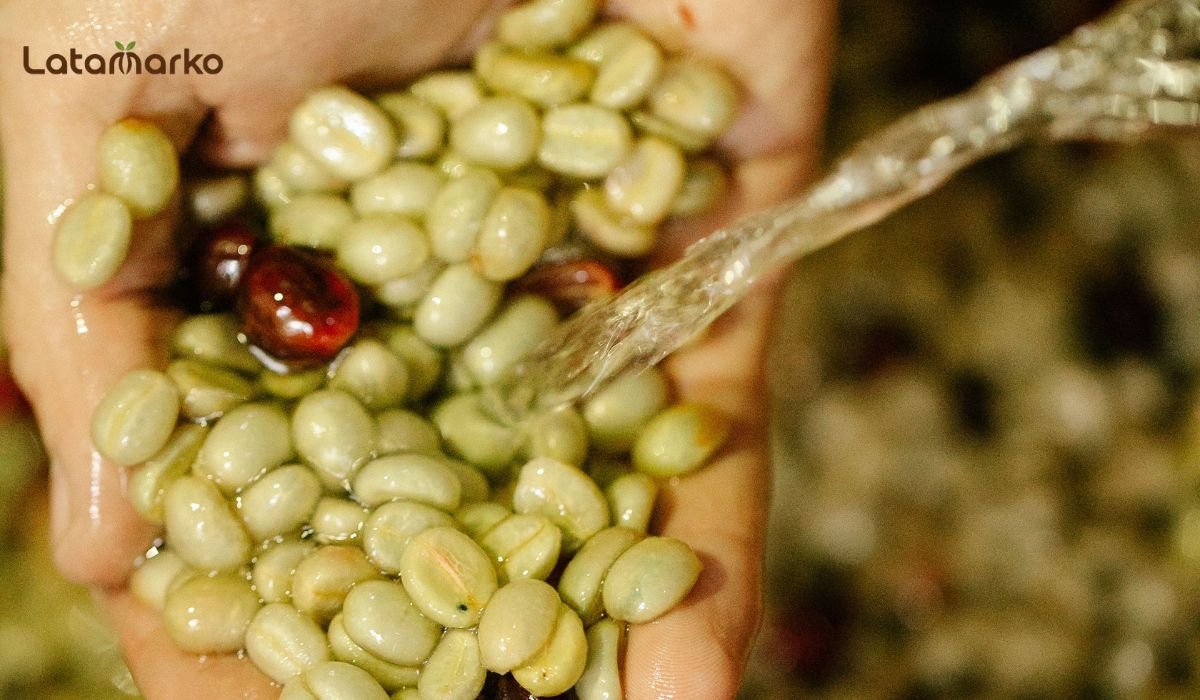
Green Coffee Beans for Roasters
For a professional roaster, buying green coffee beans is not simply a raw-material purchase. It is the foundation of every product that will later carry the roaster’s name.
The challenge is especially important as a roasting business grows.
A small roaster may begin by purchasing a few bags of an excellent coffee. As sales increase, the requirement may become several pallets, full containers, recurring monthly shipments or an annual green coffee supply program.
At that point, sourcing priorities change.
The question is no longer only:
“Does this sample taste good?”
It becomes:
“Can we buy this coffee repeatedly, at the volume we need, while maintaining the same cup profile, roasting performance and commercial margin?”
For roasters, professional green coffee sourcing should therefore connect:
Cup Quality + Roast Performance + Lot Consistency + Availability + Volume + Price + Supply Continuity
At LATAMARKO, this distinction is particularly important because the right sourcing strategy for a small specialty roaster can be very different from the strategy required by an industrial roasting operation.
Small & Medium Roasters
Small and medium-sized roasters often have one major advantage: flexibility.
They can work with smaller lots, rotate origins more frequently and introduce seasonal coffees without requiring hundreds of tons of continuous availability.
This makes it possible to build a portfolio around coffees such as:
Single Origins • Regional Lots • Specialty Coffees • Premium Commercial Coffees • Seasonal Coffees • Microlots
However, smaller roasters still need to think commercially.
An exceptional coffee is not automatically the right purchase if:
the price is too high for the target customer, the minimum order is unsuitable, the coffee cannot be reordered, or the flavor does not fit the roaster’s core products.
A small or medium roaster should therefore define several points before purchasing:
Application • Target Cup Profile • Roast Level • Required Quantity • Target Green Coffee Cost • Expected Selling Price
This makes it much easier to identify coffees that are both sensory and commercially appropriate.
What Should Small Roasters Buy?
There is no single answer.
A specialty-focused roaster might build its range around:
Ethiopian washed and natural coffees
Colombian regional coffees
Central American Arabicas
Kenyan coffees
Distinctive varieties and processes
A roaster focused primarily on espresso might instead require a dependable core coffee with:
Chocolate + Caramel + Nuts + Sweetness + Good Body
and supplement it with more distinctive coffees for seasonal products.
This can create a commercially balanced portfolio:
Core Espresso
→ consistent, repeatable and scalable
Premium Single Origins
→ differentiated and higher-value
Seasonal Specialty Coffees
→ rotating and discovery-driven
The important point is that not every coffee in the portfolio needs to perform the same commercial role.
Industrial Roasters
Industrial roasters face a different challenge.
When green coffee consumption reaches tens, hundreds or thousands of metric tons, consistency and supply continuity become critical.
An industrial buyer may need to know:
Can this origin support our monthly volume?
Can the same grade be supplied repeatedly?
How stable is the cup profile?
What are the screen and defect tolerances?
Can alternative origins be qualified if supply changes?
How will crop changes affect our formulation?
What is the delivered cost at commercial volume?
For an industrial roaster, an extraordinary 20-bag lot may have very little value if the requirement is 10 containers every month.
The ideal coffee must combine:
Quality + Scalability + Repeatability + Commercial Viability
Green Coffee Specifications for Industrial Roasters
Industrial procurement should ideally move beyond general descriptions such as:
“Brazil Arabica”
or:
“Vietnam Robusta.”
A professional specification can include:
Origin
Species
Commercial Grade
Processing Method
Screen Distribution
Defect Tolerance
Moisture
Crop
Cup Requirements
Packaging
Monthly Volume
Annual Volume
The objective is to create a measurable purchasing standard.
For example, instead of requesting:
Brazil Green Coffee
a buyer might define:
Brazil Arabica + Natural + Screen 17/18 + Defined Defect Specification + Chocolate/Nut Profile + Medium-to-Full Body + Espresso Application
That specification is far more useful for repeated commercial sourcing.
Selecting Consistent Green Coffee Lots
A common mistake in green coffee buying is approving a coffee based on one excellent sample.
The sample matters, but professional roasters should think beyond it.
The real test is whether the commercial lot—and subsequent shipments—can continue meeting the agreed target.
Consistency can be evaluated through:
Cup Profile • Moisture • Screen Distribution • Defect Level • Density • Physical Appearance • Roast Performance
For repeated purchases, these parameters can become reference points.
If the first shipment performs perfectly but the second requires a completely different roast profile and the third tastes noticeably different, the coffee may not be suitable for a permanent product.
Why Lot Consistency Matters to the Roaster
Consumers do not normally know that a roaster has changed crop, lot or supplier.
They simply know how their favorite coffee tasted last time.
If they purchase the same product again, they expect a similar experience.
This means inconsistency at the green-coffee level can become inconsistency at the brand level.
For a successful core product, maintaining:
Flavor + Aroma + Body + Acidity + Roast Color + Extraction Behavior
within an acceptable range can be more commercially valuable than occasionally receiving an exceptional lot.
This is particularly important for:
Café Chains • Private Labels • Supermarkets • Hotel & Restaurant Supply • Large Espresso Brands • Industrial Coffee Manufacturers
Maintaining the Same Cup Profile
Coffee is an agricultural product, so maintaining exactly the same raw material forever is unrealistic.
Crop characteristics change.
Weather changes.
Harvest conditions change.
Availability changes.
Prices change.
Professional roasters therefore focus on maintaining the target cup profile, rather than expecting every crop to be physically and sensorially identical.
Suppose a core espresso is designed around:
Chocolate + Hazelnut + Caramel + Full Body + Moderate Sweetness + Low-to-Medium Acidity
That sensory target becomes the reference.
If one component changes between crops, the roaster can evaluate whether another lot or adjusted blend can maintain the same overall profile.
This is one of the major advantages of defining coffee by performance, rather than purchasing only by origin name.
Using Blends to Protect Cup Consistency
Blending can provide professional roasters with additional flexibility.
Suppose an espresso contains three components:
Base Coffee
Chocolate, nuts and sweetness.
Balance Coffee
Caramel, fruit and acidity.
Structure Coffee
Body, intensity and crema.
If the characteristics of one component shift slightly, the blend can potentially be adjusted without completely changing the finished product.
This is especially useful for products intended to remain on the market throughout the year.
The objective becomes:
Keep the consumer experience stable even when agricultural raw materials naturally change.
Sample Approval Is Only the Beginning
For commercial green coffee buying, approving the first sample should be viewed as the beginning of quality control—not the end.
A professional process can include:
Green Coffee Requirement
↓
Supplier Recommendation
↓
Representative Sample
↓
Physical Evaluation
↓
Sample Roasting
↓
Cupping
↓
Commercial Approval
↓
Pre-Shipment Verification
↓
Commercial Shipment
↓
Arrival Evaluation
↓
Production Performance
This allows the roaster to compare what was offered, what was shipped and what actually performs in production.
Scaling from Samples to Commercial Volumes
One of the most important stages in professional green coffee sourcing is moving from sample approval to commercial volume.
A 300-gram sample can taste excellent.
But a roaster buying 20,000 kg needs additional answers.
Is the sample representative of the commercial lot?
How much of that lot is actually available?
Can another container be supplied?
Can the specification be repeated next month?
Can supply increase if our sales grow?
This is the difference between sample sourcing and commercial sourcing.
For growing roasters, this distinction should be considered before a coffee becomes central to the brand.
From One Bag to One Container
A growing roaster may move through several purchasing stages:
Sample
→
Bags
→
Pallets
→
Partial Commercial Lots
→
Full Container Loads
→
Recurring Containers
→
Annual Supply Program
Each stage changes the sourcing priorities.
At smaller volumes, flexibility and discovery may dominate.
At container volume, factors such as:
Logistics • Inventory • Financing • Lead Time • Quality Consistency • Supply Security
become increasingly important.
At annual contract volume, green coffee purchasing becomes part of the company’s strategic supply chain.
The Risk of Scaling Too Quickly
Suppose a roaster approves an excellent coffee and immediately builds a major product around it.
Sales grow rapidly.
Then the roaster discovers that the supplier cannot provide sufficient volume.
The company may have to:
Change Origin • Reformulate the Blend • Modify Roast Profiles • Accept Higher Prices • Change the Finished Cup
This can be avoided by discussing scalability before launch.
Professional buyers should ask suppliers:
Current Available Volume?
Monthly Supply Capacity?
Remaining Crop Availability?
Next Crop Timing?
Alternative Equivalent Lots?
Potential Annual Volume?
A coffee should fit not only today’s production—but also the expected growth of the product.
Scaling Without Losing Quality
Growth should not require abandoning quality.
Instead, specifications should become more structured as volume increases.
A small roaster may initially buy based largely on cupping.
As consumption grows, the purchasing standard can incorporate:
Target Cup Profile
Acceptable Sensory Range
Moisture Tolerance
Screen Specification
Defect Tolerance
Processing Method
Approved Origin
Packaging
Lot Approval Procedure
This creates a quality framework that can support larger purchases.
Green Coffee for Growing Roasters
A particularly important sourcing strategy is to distinguish between core coffees and rotating coffees.
Core coffees should prioritize:
Availability + Consistency + Scalability + Commercial Value
Rotating coffees can prioritize:
Uniqueness + Seasonality + Variety + Processing + Exceptional Cup Character
This allows a roaster to grow without sacrificing innovation.
The core range provides stability.
The specialty range provides differentiation.
Together they can create a stronger commercial portfolio.
Container-Level Green Coffee Buying
Once a roaster begins purchasing full containers, even small commercial differences become significant.
For a 20 MT shipment, a difference of:
USD 0.05/kg = USD 1,000
USD 0.10/kg = USD 2,000
USD 0.25/kg = USD 5,000
per container.
But the lowest price should still not be evaluated independently.
A cheaper coffee that creates greater defects, sorting losses or cup inconsistency may erase those savings.
At container scale, professional buyers should compare:
Delivered Cost + Quality + Usable Yield + Consistency + Supply Reliability
rather than price alone.
Annual Green Coffee Supply Programs
For established roasters, purchasing can eventually move from individual containers toward annual supply planning.
Instead of requesting prices every time stock becomes low, the buyer can estimate:
Monthly Consumption
Annual Consumption
Core Origins
Required Specifications
Seasonal Requirements
Safety Stock
Expected Growth
This creates the foundation for a more structured sourcing relationship.
For example:
Monthly Requirement: 80 MT
Annual Requirement: 960 MT
Application: Espresso
Species: Arabica + Robusta
Core Profile: Chocolate, caramel, nuts, full body
Priority: Year-round consistency
Purchasing: Scheduled commercial shipments
This tells a supplier far more than:
“Please send your best green coffee price.”
Why Annual Volume Matters to the Supplier
When a professional buyer communicates realistic annual volume, the supplier can better understand the scale of the opportunity and evaluate suitable sourcing options.
A requirement of:
1 container
is different from:
1 container every month
and very different from:
5,000 MT annually.
Longer-term visibility can support better planning around:
Origin Selection • Lot Allocation • Crop Planning • Logistics • Inventory • Quality Matching
For serious B2B relationships, discussing annual requirements early can therefore benefit both buyer and supplier.
Green Coffee Beans for Roasters with LATAMARKO
At LATAMARKO, green coffee sourcing for roasters can be structured according to the scale and objective of the business.
A small specialty roaster may require:
Selected Lots + Distinctive Cup Profiles + Flexible Quantities
A growing roaster may require:
Core Coffees + Repeatable Quality + Increasing Volume
A commercial roaster may require:
Container Shipments + Stable Specifications + Competitive Pricing
An industrial roaster may require:
Recurring Monthly Volumes + Defined Quality Parameters + Long-Term Supply Planning
The objective is not simply to sell the same green coffee to every roaster.
It is to identify the coffee specification that fits the buyer’s product, equipment, market, volume and growth plan.
Tell Us Your Roasting Requirement
Professional roasters looking for green coffee beans can make the sourcing process significantly faster by providing a few key details:
Application: Espresso / Filter / Blend / Commercial Roast
Species: Arabica / Robusta / Both
Target Flavor: Chocolate / Nutty / Caramel / Fruity / Floral / Full-Bodied
Quality Segment: Commercial / Premium Commercial / Specialty
Required Volume: Bags / Pallets / Containers
Monthly Consumption: Estimated requirement
Annual Consumption: Estimated requirement
Destination: Delivery market
With this information, green coffee sourcing can move from simply quoting available products toward identifying the most commercially appropriate options.
From First Sample to Long-Term Green Coffee Supply
A good green coffee supplier should be useful when a roaster needs its first sample.
But the real value appears when that same roaster grows.
Sample → First Order → Container → Monthly Shipments → Annual Program
At every stage, the priorities evolve.
LATAMARKO’s commercial approach to green coffee beans for roasters is built around that progression: identifying suitable origins and specifications while keeping cup profile, consistency, availability and commercial volume in focus.
Because a growing roaster should not have to choose between quality and scalability.
The right green coffee program should taste right in the first sample, perform correctly in production, remain consistent across commercial shipments and have the capacity to grow with the roaster’s business.
Wholesale Green Coffee Beans
For professional buyers, wholesale green coffee beans are not simply about purchasing larger quantities at a lower price. Wholesale sourcing is about building the right combination of quality, volume, logistics, price and supply continuity.
A coffee roaster purchasing 500 kg has different requirements from a distributor purchasing one container. A manufacturer consuming 200 metric tons per month needs an entirely different sourcing structure from both.
This is why wholesale green coffee should be approached as a B2B supply program, not simply as a bulk version of retail purchasing.
At LATAMARKO, wholesale green coffee requirements can be structured around:
Origin + Arabica/Robusta + Grade + Screen Size + Processing + Cup Profile + Quantity + Packaging + Destination + Delivery Schedule
Whether the buyer needs commercial green coffee, premium commercial lots or specialty green coffee, the objective is to match the product and purchasing model to the buyer’s actual business.
How Wholesale Green Coffee Works
Wholesale green coffee typically involves purchasing unroasted coffee in commercial quantities for:
Roasting • Manufacturing • Distribution • Private Label • Blending • Industrial Processing
The process usually begins with a commercial inquiry.
Instead of simply asking:
“What is your green coffee price?”
a professional buyer should ideally provide:
Required Origin: Brazil, Colombia, Ethiopia, Vietnam, India, etc.
Species: Arabica / Robusta
Quality: Commercial / Premium Commercial / Specialty
Processing: Natural / Washed / Honey / Other
Screen: If required
Application: Espresso / Filter / Blend / Industrial
Quantity: Bags / Pallets / FCL / Annual Volume
Destination: Country, port or delivery location
Once these parameters are known, suitable coffees can be identified and commercially compared.
The process can then move through:
Inquiry → Specification → Offer → Sample → Evaluation → Commercial Approval → Contract → Shipment → Repeat Supply
For larger buyers, this may ultimately develop into scheduled monthly or annual deliveries.
Wholesale vs Retail Green Coffee
The difference between wholesale and retail green coffee goes far beyond quantity.
Retail green coffee is generally designed for:
Home Roasters • Hobby Buyers • Very Small Roasters • Sample Purchases
Wholesale green coffee is designed for professional businesses such as:
Coffee Roasters • Importers • Distributors • Coffee Manufacturers • Private-Label Producers • Industrial Buyers
Retail buyers may purchase a few kilograms.
Wholesale buyers may purchase:
Bags → Pallets → Multiple Pallets → Full Containers → Multiple Containers → Annual Contracts
As volume increases, buyers become more focused on:
Price per kg or MT • Consistency • Freight • Packaging • Lead Time • Documentation • Supply Continuity • Payment Terms
At wholesale scale, even a small difference in price can have a significant financial impact.
For example, a difference of only:
USD 0.10/kg
equals:
USD 100/MT
At 100 MT:
USD 10,000
At 1,000 MT:
USD 100,000
This is why wholesale purchasing requires much more structured commercial evaluation.
MOQ for Wholesale Green Coffee Beans
MOQ — Minimum Order Quantity refers to the smallest quantity a supplier is prepared to sell under a particular commercial offer.
There is no universal MOQ for green coffee.
It depends on factors such as:
Origin • Coffee Type • Warehouse Location • Packaging • Availability • Delivery Terms • Supplier Structure
A wholesale supplier may work with:
Bag-Level Orders
Pallet-Level Orders
Minimum Tonnage
Full Container Loads
For international origin shipments, larger quantities are often commercially more efficient because freight, documentation, handling and other fixed costs are distributed across more kilograms.
For warehouse-based supply, smaller wholesale quantities may be possible.
Therefore, buyers should not ask only:
“What is the MOQ?”
They should also ask:
“At which quantity does this green coffee become commercially efficient for my destination?”
The minimum quantity and the optimal purchasing quantity are not always the same.
Green Coffee Bag Sizes
Green coffee is commonly traded in export bags, but bag weight varies by origin, supplier and packaging specification.
Buyers may encounter formats such as:
60 kg bags
69 kg bags
70 kg bags
and other origin-specific or specialty packaging formats.
Coffee may be packed in traditional jute/sisal bags, while selected coffees can also use protective inner packaging such as hermetic liners.
For a wholesale buyer, bag size matters because it affects:
Number of Bags • Warehouse Handling • Inventory Planning • Loading • Cost per Unit • Customer Resale Format
Before confirming a wholesale order, buyers should verify:
Net Weight per Bag + Number of Bags + Total Net Weight + Packaging Type
rather than assuming that every origin uses the same bag format.
Pallet Quantities
For warehouse distribution and smaller wholesale orders, pallet purchasing can offer an effective middle ground between individual bags and full containers.
Palletized supply can be attractive for:
Small and Medium Roasters • Regional Distributors • Private Labels • Buyers Testing a New Origin
The exact number of bags and kilograms per pallet depends on:
Bag Size • Pallet Dimensions • Warehouse Configuration • Transport Requirements • Maximum Safe Loading
Therefore, there should not be one universal statement such as:
“One pallet of green coffee always equals X kilograms.”
The correct pallet configuration should be confirmed for each offer.
Commercially, pallet purchasing can allow a growing buyer to access wholesale pricing and professional supply without immediately committing to an entire container.
Full Container Loads of Green Coffee
For larger international buyers, Full Container Load (FCL) purchasing is one of the most important forms of wholesale green coffee trade.
FCL shipments are particularly relevant for:
Importers • Large Roasters • Distributors • Industrial Coffee Manufacturers
A full container can offer advantages such as:
Better Freight Economics per kg
Larger Commercial Volume
Simplified Supply Planning
Direct Origin Sourcing Opportunities
Potentially Stronger Price Negotiation
However, container payload should never be assumed from a generic number alone.
Actual loading depends on:
Bag Weight • Bag Count • Container Type • Origin • Shipping Requirements • Weight Restrictions • Packaging Configuration
A professional quotation should therefore state the actual:
Number of Bags + Net Weight + Gross Weight + Container Configuration
When Does FCL Buying Make Sense?
Buying a full container does not automatically mean the buyer is receiving the best commercial solution.
FCL becomes particularly attractive when the company has:
Predictable Consumption
Sufficient Working Capital
Adequate Warehousing
Reliable Sales
Inventory Management Capability
Enough Consumption to Maintain Fresh Stock Rotation
A roaster using relatively small monthly quantities may be better served by pallet-level purchases.
A company consuming several tons every week may benefit significantly from container sourcing.
The correct purchasing model depends on consumption speed, not simply company size.
Buying Multiple Green Coffees in Commercial Volumes
Professional roasters often need more than one origin.
An espresso manufacturer, for example, might require:
Brazil Arabica as a base.
Colombia Arabica for sweetness and balance.
Ethiopia Arabica for aromatic complexity.
India or Vietnam Robusta for body, intensity or crema.
As purchasing volume increases, each component can eventually become its own pallet, container or recurring supply program.
This is why professional green coffee procurement should consider the entire blend requirement, not simply individual offers.
A buyer consuming 100 MT per month may not need 100 MT of one origin.
The requirement might instead be:
50 MT Brazil + 25 MT Colombia + 25 MT Robusta
depending on the formulation.
Contract Supply
For buyers with predictable consumption, contract supply can be more appropriate than repeatedly purchasing coffee on the spot market.
A supply agreement may define commercial parameters such as:
Coffee Specification
Contract Quantity
Delivery Period
Shipment Schedule
Pricing Mechanism
Quality Approval
Packaging
Delivery Terms
Payment Terms
The exact structure depends on the transaction and parties involved.
For a roaster consuming significant annual volume, contract purchasing can support better planning.
Instead of searching for replacement coffee every month, procurement can be organized around expected production.
Why Contract Supply Matters
Imagine a manufacturer requiring:
100 MT of green coffee every month.
Buying only when inventory becomes low exposes the company to several risks:
Availability Risk
Price Volatility
Quality Variation
Logistics Delays
Emergency Purchasing
A structured supply program can help the buyer plan requirements ahead of time.
For example:
Annual Requirement: 1,200 MT
Monthly Call-Off: approximately 100 MT
Target Specification: defined
Delivery Schedule: planned
The objective is not simply to secure quantity.
It is to secure the right quantity at the right specification when production needs it.
Spot Purchases
A spot purchase involves buying coffee that is available for relatively immediate commercial sale rather than committing to a longer supply program.
Spot purchasing can be useful when:
A buyer needs coffee quickly
A roaster wants to test a new origin
Additional inventory is required
A market opportunity appears
A particular lot becomes commercially attractive
Spot availability can provide flexibility.
However, buyers relying entirely on spot purchases may face greater variation in:
Availability • Price • Origin • Crop • Lot Characteristics
This can be acceptable for rotating coffees.
It can be much more difficult for a company trying to maintain the same core espresso profile throughout the year.
Spot Purchase vs Contract Supply
The right purchasing model depends on the product.
For a rotating specialty coffee:
Spot purchasing can make perfect sense.
For a core commercial espresso consumed every month:
Contract or scheduled supply may provide greater stability.
Many professional buyers can benefit from combining both.
For example:
Core Coffees → Planned / Contract Supply
Seasonal & Opportunity Coffees → Spot Purchases
This provides stability without eliminating purchasing flexibility.
Buying Direct vs Buying from a Supplier
One of the biggest decisions for wholesale buyers is whether to purchase directly from origin or through an established green coffee supplier/importer.
Both models can be valuable.
The right choice depends on the buyer’s size, expertise, infrastructure and risk tolerance.
Buying Green Coffee Direct from Origin
Direct purchasing can be attractive to larger and more experienced buyers.
Potential advantages include:
Closer Origin Relationship
Greater Lot-Level Visibility
Potential Access to Specific Producers
Direct Commercial Negotiation
Possibility of Larger Origin Programs
However, direct purchasing can also require the buyer to manage more of the transaction.
This may include:
Export Coordination • International Freight • Documentation • Customs • Insurance Depending on Incoterm • Quality Claims • Financing • Lead Times • Inventory Planning
The apparent FOB price should therefore never be confused with the true landed cost.
Buying from a Green Coffee Supplier
Purchasing through a professional supplier can simplify the process, particularly when the supplier can provide multiple origins, commercial documentation and recurring availability.
This model can be attractive for buyers who want:
Multiple Origins from One Commercial Relationship
Smaller Wholesale Quantities
Warehouse Availability
Faster Replenishment
Simplified Procurement
Commercial and Logistics Support
The buyer may pay a supplier margin, but that margin should be evaluated against the services and risks being managed.
The relevant comparison is not simply:
Origin Price vs Supplier Price
It is:
Total Cost + Risk + Time + Flexibility + Supply Reliability
Is Direct Buying Always Cheaper?
No.
This is a common misconception.
A direct-origin quotation may initially appear lower, but the buyer should calculate:
Coffee Price
Origin Charges
Freight
Insurance where applicable
Port Charges
Customs / Import Costs
Inland Transport
Financing Cost
Warehouse Cost
Potential Quality or Delay Risk
=
Real Landed Cost
For large, experienced importers, direct sourcing can be extremely efficient.
For smaller roasters, buying from available supplier stock may sometimes provide better overall economics.
The answer depends on volume and infrastructure.
Wholesale Green Coffee Pricing
There is no single global price for wholesale green coffee beans.
Prices depend on:
Arabica vs Robusta
Origin
Grade
Screen Size
Defect Specification
Cup Quality
Processing
Crop
Quantity
Packaging
Market Conditions
Incoterm
Destination
A quote for:
Brazil Arabica Screen 17/18
cannot be fairly compared with:
Ethiopia Specialty Washed
simply by looking at price per ton.
They are different raw materials designed for potentially different markets.
Professional buyers should compare like with like.
Why Monthly and Annual Volume Matter
One of the most useful pieces of information a wholesale buyer can provide is expected consumption.
There is a major difference between:
1 MT one time
20 MT per month
100 MT per month
2,000 MT per year
Knowing the volume allows sourcing to be structured more effectively around:
Available Origins • Lot Size • Logistics • Pricing • Supply Planning
For serious B2B inquiries, buyers should therefore communicate both:
Initial Order Quantity
and, where possible:
Expected Monthly / Annual Requirement
This makes it possible to evaluate the relationship beyond the first shipment.
From First Wholesale Order to Annual Supply
A successful wholesale relationship may develop gradually:
Sample
→
Trial Order
→
Pallet
→
Full Container
→
Recurring Containers
→
Annual Supply Program
The first order proves the product.
Repeated shipments prove consistency.
Long-term supply proves the relationship.
For a growing coffee business, the ideal supplier should therefore be capable of supporting not only the first purchase, but also the buyer’s future volume.
Wholesale Green Coffee Beans from LATAMARKO
LATAMARKO works with professional green coffee requirements across different origins, species, qualities and commercial applications.
Wholesale sourcing can be structured for:
Coffee Roasters
Coffee Manufacturers
Importers
Distributors
Private-Label Coffee Companies
Industrial Buyers
Depending on the requirement, buyers can define coffees by:
Origin + Arabica/Robusta + Processing + Grade + Screen + Cup Profile + Commercial Volume
The goal is not simply to provide a generic green coffee quotation.
It is to identify the product and supply structure that make commercial sense for the buyer.
Request a Wholesale Green Coffee Quote
If your company is looking to purchase wholesale green coffee beans, a detailed inquiry allows us to evaluate your requirement much more effectively.
Send LATAMARKO:
1. Origin: Brazil / Colombia / Ethiopia / Vietnam / India / Other
2. Species: Arabica / Robusta
3. Required Quality: Commercial / Premium Commercial / Specialty
4. Screen or Grade: If specified
5. Processing: Natural / Washed / Other
6. Quantity: Bags / Pallets / FCL / Multiple Containers
7. Monthly or Annual Volume: If recurring
8. Destination: Country / Port
9. Application: Espresso / Filter / Blend / Manufacturing / Instant
10. Target Cup Profile: If required
If the exact specification is not yet known, the inquiry can begin with the final product and required commercial volume.
Tell us what you produce, how much green coffee you require and where you need it delivered. LATAMARKO can help identify the appropriate green coffee specification for your business.
For wholesale buyers, the objective should not be merely to secure the lowest price for today’s shipment.
It should be to build a reliable, scalable and commercially competitive green coffee supply that can support the business from its first wholesale order to recurring container and annual purchasing programs.
Bulk Green Coffee Beans
For professional roasters, importers, distributors and coffee manufacturers, purchasing bulk green coffee beans is fundamentally different from buying coffee in small quantities.
At bulk scale, the decision is no longer based only on origin, flavor or price per kilogram. Packaging, loading efficiency, container utilization, storage, handling, quality protection and continuity of supply all become part of the real cost of the coffee.
A professional bulk buyer may purchase:
Pallet Quantities → Full Container Loads → Multiple Containers → Recurring Monthly Shipments → Annual Supply Programs
At LATAMARKO, bulk green coffee sourcing can be structured around the buyer’s required:
Origin + Arabica/Robusta + Grade + Screen + Processing + Packaging + Volume + Destination + Delivery Schedule
The objective is not simply to move more kilograms.
It is to create an efficient green coffee supply structure from origin or warehouse to the buyer’s roasting or manufacturing facility.
Buying Green Coffee in Bulk
Buying green coffee beans in bulk generally becomes relevant when consumption is large enough that bag-by-bag or small wholesale purchasing is no longer commercially efficient.
Typical bulk buyers include:
Coffee Roasters • Industrial Roasters • Coffee Manufacturers • Importers • Distributors • Private-Label Producers • Instant Coffee Manufacturers
The purchasing quantity can range from several metric tons to thousands of tons annually.
As volume increases, procurement teams need to evaluate much more than the initial quotation.
The real commercial equation becomes:
Green Coffee Price + Packaging + Freight + Handling + Storage + Financing + Quality Loss + Supply Reliability
This is why the cheapest FOB coffee is not necessarily the cheapest coffee by the time it reaches production.
Why Buy Green Coffee in Bulk?
Bulk purchasing can offer several commercial advantages when the buyer has sufficient consumption.
These may include:
Better Purchasing Economics
Larger quantities can provide stronger commercial negotiating power.
Lower Logistics Cost per Kilogram
Efficient container loading can distribute transportation costs across a greater quantity of coffee.
Production Security
Holding sufficient green coffee inventory can reduce the risk of production interruptions.
Lot Consistency
Larger allocations can allow the roaster to work with the same or closely matched coffee for a longer production period.
Supply Planning
Recurring bulk purchases can be scheduled around monthly or annual consumption.
However, buying more coffee than the business can efficiently consume creates additional inventory and financing costs.
The best bulk quantity is therefore not necessarily the largest possible order.
It is the quantity that provides the best balance between price, stock rotation and supply security.
30 kg Green Coffee Bags
30 kg bags can be useful where easier handling or smaller unit sizes are preferred.
They can be attractive for:
Specialty Coffee • Premium Lots • Smaller Roasters • Manual Warehouse Handling • Higher-Value Coffees
A smaller bag can be easier for warehouse teams to move and allows buyers to divide inventory into smaller units.
For premium or specialty coffees, this can be commercially useful because individual bags represent a smaller quantity and value.
However, using smaller bags means more packaging units for the same total tonnage.
For example:
600 kg in 30 kg bags = 20 bags
whereas:
600 kg in 60 kg bags = 10 bags
At industrial scale, this difference can affect packaging, loading and handling efficiency.
60 kg Green Coffee Bags
60 kg bags are one of the most recognizable formats in international green coffee trade.
They can provide a practical balance between:
Commercial Quantity + Handling + Storage + Export Logistics
For example:
1 MT ≈ 16.7 × 60 kg bags
12 MT = 200 × 60 kg bags
18 MT = 300 × 60 kg bags
19.2 MT = 320 × 60 kg bags
The actual number of bags in a shipment should always be based on the agreed net shipment weight rather than assumed from generic container capacities.
For roasters and distributors, 60 kg packaging can also make stock management relatively straightforward.
69/70 kg Green Coffee Bags
Larger 69 kg and 70 kg bags are also encountered in international green coffee trade depending on origin and supplier.
They can be particularly efficient for large commercial shipments because fewer individual bags are required for the same total net weight.
For example:
19,600 kg ÷ 70 kg = 280 bags
whereas the same 19,600 kg packed in 60 kg bags would require approximately:
327 bags
This reduction in bag count can simplify certain handling and loading operations.
However, buyers should consider warehouse practices and manual handling requirements before choosing larger bag formats.
For industrial buyers purchasing full containers, packaging efficiency may be more important than the convenience of handling individual bags.
Which Green Coffee Bag Size Is Best?
There is no universally superior bag size.
The correct format depends on the operation.
A specialty roaster may prefer smaller units because inventory is consumed slowly and individual lots are more valuable.
A medium-sized commercial roaster may prefer standard export bag formats that work efficiently with warehouse operations.
An industrial manufacturer may prioritize maximum loading and handling efficiency.
Therefore, packaging should be selected around:
Coffee Value + Order Volume + Warehouse Equipment + Labor + Transportation + Inventory Turnover
—not simply tradition.
GrainPro Packaging for Green Coffee Beans
For buyers concerned with protecting green coffee during transportation and storage, GrainPro-type hermetic inner liners or similar protective packaging can be used inside the outer coffee bag.
The outer bag provides physical handling and identification, while the inner protective liner creates an additional barrier between the green coffee and the surrounding environment.
This can be particularly valuable for:
Long International Transit
High-Value Arabica
Specialty Coffee
Longer Storage Periods
Markets with Challenging Humidity Conditions
Buyers Requiring Better Quality Preservation
For a professional buyer, packaging is not merely cosmetic.
Green coffee is hygroscopic and its condition can be affected by the environment throughout the supply chain.
Protective inner packaging can therefore form part of the buyer’s quality-preservation strategy.
Is GrainPro Necessary for Every Green Coffee?
Not necessarily.
Using enhanced protective packaging creates additional cost.
For a high-value specialty coffee traveling over a long distance, that additional cost may be easily justified.
For certain high-volume commercial coffees with rapid stock turnover, the buyer may choose a different packaging strategy.
The decision should consider:
Coffee Value
Transit Duration
Expected Storage Period
Humidity Exposure
Required Quality Stability
Additional Packaging Cost
The commercial question should therefore be:
Does the additional protection provide enough value for this coffee and supply chain to justify its cost?
Palletized Green Coffee Beans
Palletized green coffee can provide significant operational advantages after the coffee reaches a warehouse or roasting facility.
Potential benefits include:
Faster Forklift Handling • Easier Warehouse Organization • Simplified Inventory Movement • Reduced Individual Bag Handling
For domestic or regional distribution, palletization can be particularly practical.
A supplier can prepare pallet quantities for roasters that do not require an entire container.
This creates a useful purchasing step between:
Individual Bags
and:
Full Container Loads
For growing roasters, pallet purchasing can therefore provide access to professional wholesale quantities without requiring excessive inventory.
Non-Palletized Green Coffee Beans
Green coffee can also be loaded non-palletized, with bags loaded directly into the container.
This configuration can improve utilization of available container space because pallet dimensions and pallet weight do not consume part of the payload.
For international bulk shipments, this can be commercially attractive.
More of the container’s capacity can potentially be dedicated to the actual product rather than transport packaging.
The trade-off is handling.
At destination, individual bags may require more labor or suitable unloading systems compared with palletized cargo.
The correct decision therefore depends on:
Freight Economics vs Handling Efficiency
Palletized vs Non-Palletized Green Coffee
For bulk buyers, the comparison can be summarized commercially:
| Factor | Palletized | Non-Palletized |
|---|---|---|
| Warehouse Handling | Easier | More Labor Intensive |
| Forklift Movement | Excellent | Requires Re-Palletizing or Bag Handling |
| Container Space Efficiency | Lower | Higher |
| Pallet Cost | Additional | None |
| Loading Flexibility | More Structured | High |
| Typical Advantage | Handling | Payload Efficiency |
| Best Suited For | Warehouse Distribution | Bulk International Shipments |
Neither configuration is automatically better.
A buyer with high warehouse labor costs may value palletization.
A buyer importing large quantities over long distances may place greater importance on maximizing container payload.
The best configuration should be calculated based on total landed and handling cost.
Container Loading for Green Coffee Beans
Container loading is one of the most important logistics considerations in bulk green coffee trade.
Professional buyers should not assume that every container carries exactly the same quantity.
Actual loading can vary according to:
Container Type • Bag Weight • Palletization • Shipping Line Limits • Origin • Road Weight Restrictions • Port Regulations • Packaging Configuration
For this reason, commercial offers should clearly state where possible:
Container Type
Number of Bags
Net Weight
Gross Weight
Palletized / Non-Palletized
Packaging Type
For example, a commercial specification might state:
Packaging: 70 kg bags with protective inner liner
Loading: Non-palletized
Container: FCL
Net Weight: According to confirmed loading plan
Bag Quantity: According to confirmed shipment weight
This is much more precise than simply writing:
“1 container green coffee.”
Why Container Utilization Matters
Suppose two suppliers offer the same green coffee at exactly the same price per metric ton.
Supplier A can load the container efficiently.
Supplier B uses a configuration that reduces net coffee payload.
The coffee price may be identical, but the freight cost per kilogram is not.
For example, if ocean freight is USD 4,000 per container:
At 16 MT, freight equals:
USD 0.25/kg
At 20 MT, freight equals:
USD 0.20/kg
That difference is:
USD 50/MT
At 1,000 MT annual volume, that represents:
USD 50,000
This illustrates why industrial buyers should evaluate container utilization, not just product price.
Bulk Supply for Industrial Buyers
Industrial buyers require a different green coffee sourcing model from small roasters.
A manufacturer consuming:
200 MT/month
does not simply need 200 MT of coffee.
It needs:
200 MT of the required specification, delivered at the required time, repeatedly.
This makes supply continuity essential.
An industrial green coffee program should therefore consider:
Monthly Consumption
Annual Volume
Approved Origins
Alternative Origins
Arabica/Robusta Requirements
Physical Specifications
Cup Profile
Packaging
Shipment Frequency
Safety Stock
Lead Time
Destination
The objective is to prevent the roasting or manufacturing line from becoming dependent on unpredictable spot purchases.
Bulk Green Coffee for Espresso Manufacturers
Large espresso manufacturers may require multiple green coffees simultaneously.
For example, a monthly production program might require:
Brazilian Arabica for chocolate, nuts and sweetness.
Colombian Arabica for balance and acidity.
Indian or Vietnamese Robusta for body, intensity and crema.
The bulk purchasing strategy should therefore reflect the actual blend.
If a manufacturer consumes 300 MT/month, that does not necessarily mean purchasing 300 MT from one origin.
The requirement could theoretically be structured as:
150 MT Base Arabica
90 MT Secondary Arabica
60 MT Robusta
depending entirely on the approved formulation.
This allows procurement to plan supply around production rather than purchasing each origin independently.
Bulk Green Coffee for Instant Coffee Manufacturers
Instant coffee manufacturing can require substantial and continuous raw-material volumes.
Depending on the product, manufacturers may source:
Commercial Robusta
Commercial Arabica
or:
Arabica–Robusta Combinations
At this scale, small differences in green coffee cost become extremely significant.
If a factory purchases 10,000 MT/year, a difference of:
USD 0.01/kg = USD 100,000/year
USD 0.05/kg = USD 500,000/year
USD 0.10/kg = USD 1,000,000/year
But procurement cannot optimize price while ignoring quality.
Extraction performance, defects, consistency and the sensory characteristics of the final instant coffee still matter.
Industrial sourcing must therefore optimize cost per usable and commercially acceptable output, rather than simply cost per purchased kilogram.
Bulk Green Coffee for Importers and Distributors
Importers and distributors face another challenge: they are not purchasing only for their own roasting operation.
They need products that can be resold to different customers.
A useful bulk portfolio may include:
Commercial Arabica
Premium Arabica
Commercial Robusta
Fine Robusta
Espresso-Oriented Coffees
Selected Specialty Origins
The importer can then divide bulk purchases into smaller commercial quantities for local roasters.
This creates a bridge between origin-scale purchasing and local wholesale distribution.
For distributors, the right question is therefore not only:
“Which coffee can we buy?”
but:
“Which coffee can we repeatedly sell to multiple professional customers?”
From One Container to Multiple Containers
Growing buyers can gradually move from individual FCL purchases toward recurring bulk programs.
For example:
1 FCL Trial
↓
2–3 FCL Repeat Orders
↓
Monthly Container Program
↓
Multiple Containers per Month
↓
Annual Supply Contract
At each stage, pricing remains important—but planning becomes increasingly important.
A company purchasing ten containers per month cannot manage procurement in exactly the same way as a company occasionally purchasing one container.
Forecasting and allocation become essential.
Contracting Bulk Green Coffee Supply
For buyers with predictable consumption, a bulk supply program can define:
Product Specification
Expected Total Volume
Shipment Schedule
Quality Parameters
Packaging
Commercial Terms
Delivery Basis
Sample Approval Procedures
For example:
Product: Green Coffee Arabica
Application: Commercial Espresso
Volume: 1,200 MT/year
Monthly Requirement: approximately 100 MT
Packaging: Agreed export bags
Quality: Defined specification
Supply: Scheduled shipments
This provides a much stronger basis for procurement planning than repeatedly requesting availability after inventory is already low.
Bulk Price vs Total Landed Cost
A professional bulk buyer should always separate:
Product Price
from:
Total Landed Cost
The real calculation can include:
Green Coffee Price
Packaging
Origin Charges
Ocean / Road Freight
Insurance where applicable
Port & Handling Charges
Customs and Import Costs
Inland Transportation
Warehousing
Financing Cost
=
Real Landed Cost
Two suppliers quoting different FOB prices can reverse position once the complete landed cost is calculated.
This is why serious bulk procurement should compare coffee at the point where the buyer actually needs it.
Bulk Green Coffee Beans from LATAMARKO
At LATAMARKO, bulk green coffee sourcing can be structured for professional buyers requiring anything from commercial wholesale quantities to recurring container programs.
Requirements can be built around:
Brazil • Colombia • Ethiopia • Vietnam • India • Indonesia • Uganda • Central America • Africa and other origins
with selections across:
Arabica • Robusta • Commercial • Premium Commercial • Specialty
depending on availability and required specification.
For bulk buyers, the sourcing discussion can include:
Bag Size
Protective Inner Packaging
Palletized or Non-Palletized Loading
FCL Requirements
Monthly Consumption
Annual Volume
Destination
Required Cup Profile
Physical Specification
The objective is to align the coffee itself with the logistics required to move it efficiently.
Request a Bulk Green Coffee Quote
For a precise bulk green coffee beans quotation, professional buyers should provide as much of the following information as possible:
Product: Arabica / Robusta
Origin: Required origin or open to recommendation
Grade: Required specification
Screen: If applicable
Processing: Natural / Washed / Other
Packaging: 30 kg / 60 kg / 69–70 kg / Other
Inner Protection: Required / Not Required
Loading: Palletized / Non-Palletized
Quantity: MT / FCL / Multiple FCL
Monthly Requirement: If recurring
Annual Requirement: If available
Destination: Port / Country
Application: Espresso / Commercial Roasting / Instant / Distribution
If you do not know the exact origin or grade, start with:
Application + Target Quality + Monthly Volume + Destination
and LATAMARKO can evaluate suitable green coffee options around the requirement.
From pallet quantities to full containers and recurring industrial supply, bulk green coffee should be purchased as a complete commercial system—not simply as a price per kilogram.
For large-volume buyers, the right combination of green coffee quality, bag configuration, container utilization, shipment planning and supply continuity can have as much impact on profitability as the purchase price of the beans themselves.
Green Coffee Beans Price
For buyers searching for green coffee beans price, one of the first things to understand is that there is no single price for green coffee.
Two offers may both be described as Brazilian Arabica green coffee beans, yet their commercial values can be significantly different. The same applies to Colombian Arabica, Ethiopian coffee, Vietnamese Robusta, Indian coffee and virtually every other origin.
Why?
Because green coffee is not a standardized product defined only by country.
Its commercial value is influenced by a combination of:
Species + Origin + Region + Quality + Grade + Processing + Screen Size + Defects + Cup Profile + Crop + Availability + Logistics + Market Conditions
For professional roasters, manufacturers, importers and distributors, understanding these variables is much more useful than simply searching for the lowest green coffee price.
The right question is:
What specification of green coffee am I comparing—and what commercial value does it provide to my business?
What Determines Green Coffee Prices?
The price of green coffee beans is formed through multiple layers.
At the broadest level, international coffee markets influence the underlying commercial environment.
But the actual price offered for a particular shipment may also reflect:
Arabica or Robusta
Country of Origin
Region
Variety
Processing Method
Grade
Screen Size
Defect Level
Cup Quality
Certification or Traceability Requirements
Crop Availability
Packaging
Order Volume
Freight and Logistics
Currency Movements
Delivery Terms
This means that asking:
“What is the price of green coffee beans?”
without specifying the coffee is similar to asking:
“What is the price of a car?”
There is no commercially meaningful answer until the specification is defined.
A more professional inquiry would be:
Brazil Arabica + Natural + Screen 17/18 + Defined Grade + Espresso Application + FCL + Required Destination
or:
Vietnam Robusta + Defined Grade + Screen + Commercial Roasting + Multiple Containers + Required Destination
Now the coffees can be evaluated on a comparable basis.
Arabica Green Coffee Price
Arabica green coffee beans represent a broad international market covering everything from large-volume commercial coffees to rare specialty microlots.
The value of Arabica can differ significantly depending on what is being purchased.
A commercial Brazilian Arabica intended for a high-volume espresso blend operates in a very different market segment from a traceable Ethiopian specialty lot or a rare Geisha/Gesha coffee.
Arabica pricing can be influenced by:
Origin
Regional Reputation
Variety
Altitude
Processing
Physical Preparation
Screen Size
Defect Count
Cup Quality
Traceability
Availability
Market Demand
For this reason:
“Arabica price” is not a product specification.
Professional buyers should first identify the Arabica they actually require.
For example, a commercial roaster may prioritize:
Chocolate + Nuts + Body + Consistency + Scalable Availability
while a specialty roaster may prioritize:
Floral Aromatics + Fruit + Acidity + Traceability + Distinctiveness
Both are Arabica.
But they should not be expected to have the same commercial value.
Robusta Green Coffee Price
The same principle applies to Robusta green coffee beans.
Robusta is sometimes incorrectly treated as one homogeneous commodity.
In reality, Robusta coffees can differ significantly according to:
Origin • Processing • Screen • Defects • Cleanliness • Cup Quality • Preparation
Major Robusta-producing origins include countries such as:
Vietnam • India • Uganda • Indonesia • Brazil
and the commercial characteristics of these coffees can differ considerably.
A standard commercial Robusta intended for industrial production should not be compared directly with a carefully prepared higher-quality Robusta selected for a premium espresso blend.
Professional espresso roasters may pay greater attention to:
Clean Cup + Body + Crema + Low Defects + Consistency
while an industrial buyer may prioritize:
Volume + Standardized Specification + Supply Continuity + Commercial Efficiency
Therefore, when requesting a Robusta green coffee price, the required grade and application should always be specified.
Origin Premiums
Origin can have a significant influence on the commercial value of green coffee.
Certain countries, regions and producing areas have established strong reputations for particular sensory characteristics or quality levels.
However, buyers should understand an important distinction:
Origin reputation and actual coffee quality are related—but they are not the same thing.
A famous origin does not guarantee that every coffee produced there is exceptional.
Likewise, an origin with less international marketing recognition may offer excellent commercial value.
Origin premiums can reflect factors such as:
Reputation
Production Costs
Availability
Demand
Cup Characteristics
Traceability
Production Scale
Logistics
This is why professional buyers should evaluate the actual lot rather than purchasing purely on the strength of a country or region name.
Quality Differentials
Quality is one of the most important reasons green coffee prices differ.
But quality itself has several dimensions.
Physical Quality
Buyers may evaluate:
Defect Count
Foreign Matter
Broken Beans
Screen Uniformity
Moisture
Density
Physical Appearance
Sensory Quality
Cupping can evaluate characteristics such as:
Cleanliness
Sweetness
Acidity
Body
Balance
Aftertaste
Flavor Complexity
Commercial Quality
For a large roaster, another form of quality is equally important:
Consistency.
A coffee that performs well once but changes significantly between shipments may be less valuable to an industrial roaster than a slightly less complex coffee that performs predictably throughout the year.
Therefore:
Quality should always be evaluated in relation to the intended application.
Commercial vs Premium vs Specialty Price Positioning
Green coffee buyers can broadly encounter different commercial positions:
Commercial Green Coffee
generally emphasizes scalability, standardized quality and competitive sourcing.
Premium Commercial Green Coffee
can offer improved preparation and cup characteristics while retaining commercially meaningful availability.
Specialty Green Coffee
places greater emphasis on sensory quality, traceability, differentiation and often smaller or more distinctive lots.
Moving upward in quality can increase raw-material cost.
But paying more is commercially justified only when the finished product can capture that additional value.
A premium coffee shop may be able to communicate and monetize an exceptional single origin.
A high-volume manufacturer producing a dark-roasted mainstream blend may gain little from paying for delicate sensory characteristics that its roasting process and target consumer do not require.
Processing Premium
The method used to process coffee cherries can also influence commercial value.
Common processing methods include:
Washed
Natural
Honey
Pulped Natural
Wet-Hulled
as well as more specialized controlled-fermentation methods.
Processing can affect:
Labor Requirements • Water Use • Drying • Risk • Production Time • Flavor • Lot Differentiation
Certain experimental or labor-intensive processes may command premiums, particularly in specialty coffee.
However, a more expensive process does not automatically mean the coffee is better for every application.
An intensely fermented specialty coffee may be highly attractive for a limited-edition filter product but unsuitable for a large commercial espresso program.
Again, the commercial value depends on the final application.
Screen Size and Green Coffee Price
Screen size is another factor frequently considered in green coffee purchasing.
Buyers may encounter specifications such as:
Screen 15
Screen 16
Screen 17
Screen 18
Screen 17/18
Larger and more uniform beans can sometimes command a premium within certain origins and grades.
But:
Larger bean size does not automatically mean better cup quality.
Screen size is primarily a physical characteristic.
It can matter for roasting uniformity, product appearance and certain commercial classifications, but professional buyers should not evaluate coffee by screen alone.
A smaller-screen coffee with excellent cup characteristics may be more valuable for a particular product than a larger-screen coffee with weaker sensory performance.
When Is Paying for Larger Screen Size Worth It?
The answer depends on the finished product.
For premium whole-bean coffee, visual uniformity may be commercially important because consumers see the roasted beans.
For ground coffee, bean appearance becomes much less visible to the consumer.
For industrial production, roast consistency and process performance may matter more than paying a premium purely for larger beans.
The buyer should therefore ask:
Does this specification improve my final product enough to justify the difference?
That question should guide not only screen selection, but almost every green coffee purchasing decision.
Freight & Logistics
Green coffee may be produced thousands of kilometers away from the roasting facility.
Therefore, the cost of getting the coffee from origin to destination can materially influence its final commercial value.
Depending on the transaction, logistics can involve:
Origin Inland Transportation
Export Handling
Port Charges
Ocean Freight
Insurance
Destination Charges
Customs Procedures
Inland Delivery
Warehousing
The delivery term also matters.
An FOB quotation should not be compared directly with a CIF quotation or a warehouse-delivered offer without adjusting for the services and costs included.
Professional buyers should therefore compare:
Comparable delivered cost—not simply the number shown on the supplier’s quotation.
Why Container Utilization Affects Green Coffee Cost
At bulk scale, container efficiency matters.
If the same freight cost is distributed over a larger net quantity of green coffee, the logistics cost per kilogram can decrease.
Factors affecting container utilization include:
Bag Size
Palletized vs Non-Palletized Loading
Container Type
Gross Weight Restrictions
Shipping Line Requirements
Origin and Destination Regulations
This is particularly important for importers and industrial buyers purchasing multiple containers.
A small improvement in logistics efficiency can become financially significant across a large annual volume.
Currency and Green Coffee Prices
International green coffee transactions can involve several currencies across the supply chain.
Coffee may be internationally referenced or contracted in one currency, while:
Farm Costs
Processing Costs
Local Transportation
Export Expenses
Freight
Buyer Revenue
may be denominated in others.
Currency movements can therefore affect both sellers and buyers.
A roaster operating in Europe, for example, may ultimately sell its roasted coffee in euros while purchasing internationally traded raw materials under a different currency exposure.
For large-volume procurement, currency management can become an important part of green coffee purchasing strategy.
Commodity Market Influence
International commodity markets play an important role in green coffee pricing.
Arabica and Robusta have their own international market dynamics, and movements in benchmark markets can influence physical coffee negotiations.
However, the price of an actual physical coffee shipment is not determined by a benchmark alone.
Physical coffee can trade relative to market references through differentials or premiums/discounts, depending on factors such as:
Origin
Quality
Availability
Demand
Grade
Cup Characteristics
Timing
Therefore, a change in the broader coffee market does not necessarily mean every physical coffee will change by exactly the same amount.
Professional buyers need to understand both:
Commodity Market Direction
and:
Physical Coffee Differentials
Supply and Demand
Coffee prices are ultimately influenced by global and regional supply-demand conditions.
Factors that can affect supply include:
Harvest Size
Weather
Drought
Excessive Rain
Frost
Crop Disease
Labor Availability
Production Costs
Export Conditions
At the same time, demand can change across:
Roasting Markets
Producing Countries
Instant Coffee
Specialty Coffee
Emerging Consumer Markets
Because coffee is an agricultural product, changes in one major producing region can influence buying behavior far beyond that country.
Crop Year and Availability
The crop year can also affect commercial decisions.
Buyers often evaluate whether coffee comes from a current crop, previous crop or another available stock position.
But crop year should not be evaluated alone.
Storage conditions and actual physical and sensory quality remain important.
A professional buyer should evaluate:
Crop + Moisture + Physical Condition + Cup Quality + Storage History where relevant
rather than assuming that one date alone determines quality.
Why Two Coffees from the Same Country Can Have Different Prices
This is one of the most important concepts for buyers searching online for green coffee beans price.
Imagine two coffees both described as:
Brazilian Arabica Green Coffee
Coffee A might be:
Commercial Grade + Smaller Screen + Higher Defect Tolerance + Standard Cup
Coffee B might be:
Screen 17/18 + Better Physical Preparation + Lower Defects + Cleaner Chocolate/Nut Profile
They come from the same country.
They are both Arabica.
They may even come from the same crop.
But they are not the same product.
Now consider Colombia.
One offer might simply be commercial Colombian Arabica.
Another could be:
Colombia Supremo + Larger Screen + Defined Regional Origin + Improved Cup Quality
Again, comparing only the country name would be misleading.
Never Compare Green Coffee Prices Without Comparing Specifications
When evaluating two green coffee offers, compare at least:
| Specification | Offer A | Offer B |
|---|---|---|
| Origin | ? | ? |
| Species | ? | ? |
| Region | ? | ? |
| Processing | ? | ? |
| Grade | ? | ? |
| Screen | ? | ? |
| Defect Specification | ? | ? |
| Moisture | ? | ? |
| Crop | ? | ? |
| Cup Profile | ? | ? |
| Packaging | ? | ? |
| Quantity | ? | ? |
| Incoterm | ? | ? |
| Destination | ? | ? |
Only after these factors are understood does a price comparison become commercially meaningful.
This prevents buyers from selecting an apparently cheaper coffee that is actually based on a lower specification.
Green Coffee Price for Small Roasters vs Industrial Buyers
Purchase volume can also change the commercial structure.
A small roaster purchasing several bags requires a different logistics and distribution model from an importer purchasing multiple full containers.
Likewise, a manufacturer requiring thousands of metric tons annually may need:
Contract Supply
Scheduled Shipments
Quality Specifications
Alternative Origins
Inventory Planning
Long-Term Procurement Strategy
This is why wholesale green coffee pricing should ideally be evaluated together with:
Initial Quantity + Monthly Consumption + Annual Volume
For professional buyers, annual requirements can be just as important as the first order.
The Lowest Green Coffee Price Is Not Always the Lowest Cost
Consider two coffees.
One has a lower purchase cost but produces:
More Defects
Greater Sorting Loss
Inconsistent Roasting
Higher Production Variation
Less Consistent Cup Quality
Another costs more but provides:
Cleaner Preparation
Better Uniformity
Stable Roasting
Repeatable Cup Profile
The first coffee may be cheaper on the purchase invoice but more expensive in production.
Professional buyers should therefore think in terms of:
Cost per Usable Kilogram
and ultimately:
Cost per Acceptable Finished Product
This becomes increasingly important as production volume grows.
Do Not Pay for Quality You Cannot Monetize
The opposite is equally important.
The most expensive green coffee is not automatically the most profitable.
A company should not pay a significant premium for:
Rare Variety
Exceptional Traceability
Experimental Processing
Highly Complex Acidity
Limited-Lot Exclusivity
unless those characteristics create value in the finished product.
For a premium specialty brand, they may.
For a high-volume commercial product, they may not.
The best purchasing decision sits at the intersection of:
Required Quality + Consumer Expectation + Finished Selling Price + Green Coffee Cost + Margin
How Professional Buyers Evaluate Green Coffee Value
Instead of asking only:
“How much does green coffee cost?”
professional procurement teams should ask:
What exactly are we receiving for that cost?
The evaluation should move through:
Specification
↓
Cup Performance
↓
Roast Performance
↓
Consistency
↓
Availability
↓
Logistics
↓
Commercial Terms
↓
Total Landed Cost
↓
Finished Product Margin
This converts price comparison into commercial value analysis.
Green Coffee Price and Annual Purchasing Strategy
For larger buyers, the objective should extend beyond obtaining the best quotation for one shipment.
Suppose a roaster requires green coffee every month.
Its exposure includes:
Coffee Market Movements
Currency
Freight
Crop Changes
Origin Availability
Inventory Levels
Production Forecasts
A structured procurement strategy can therefore combine:
Contract Purchases
Scheduled Shipments
Spot Opportunities
Multiple Approved Origins
Alternative Specifications
rather than depending entirely on one coffee at one moment in the market.
This can make procurement more resilient.
Requesting a Green Coffee Quotation from LATAMARKO
For buyers looking for green coffee beans, LATAMARKO can evaluate requirements based on the exact product and commercial application rather than providing a generic price without context.
For a more accurate quotation, buyers should provide:
Origin: Brazil / Colombia / Ethiopia / Vietnam / India / Other
Species: Arabica / Robusta
Grade: If known
Screen: If required
Processing: Natural / Washed / Other
Application: Espresso / Filter / Blend / Instant / Industrial
Quantity: Bags / Pallets / FCL / Multiple FCL
Monthly Volume: If recurring
Annual Volume: If available
Destination: Country / Port
Incoterm: If required
If the exact green coffee specification is not known, start with:
Your application + desired cup profile + required volume + destination.
From there, suitable green coffee options can be evaluated.
Looking for the Right Green Coffee Price? Start with the Right Specification.
There is no meaningful answer to:
“What is the cheapest green coffee?”
until the buyer defines what the coffee needs to accomplish.
A commercial espresso manufacturer and a specialty filter roaster should not be purchasing green coffee according to the same criteria.
A distributor purchasing multiple containers and a micro-roaster purchasing several bags should not expect the same supply structure.
And two coffees carrying the same country name should never be assumed to have the same commercial value.
At LATAMARKO, the focus is therefore on matching:
Quality + Origin + Specification + Application + Volume + Logistics
before evaluating the commercial offer.
The right green coffee price is not simply the lowest number. It is the most competitive cost for the specification, consistency and performance your business actually needs.
How to Buy Green Coffee Beans
Buying green coffee beans professionally is very different from simply choosing an origin and asking for a price.
For a roaster, coffee manufacturer, importer, distributor or private-label producer, every purchasing decision can affect:
Cup Quality • Roasting Performance • Product Consistency • Production Cost • Inventory • Logistics • Profit Margin
The most effective purchasing process is therefore systematic:
Define Requirement → Select Coffee → Review Specification → Request Sample → Evaluate → Compare Commercial Terms → Confirm Packaging & Logistics → Place Order
Whether you are purchasing a few wholesale bags or arranging recurring container shipments, following this process can significantly reduce the risk of buying the wrong coffee.
At LATAMARKO, buyers can begin with an exact green coffee specification—or simply explain the product they want to manufacture and allow suitable options to be evaluated around that requirement.
Define Your Required Origin
The first step is deciding whether you already require a specific green coffee origin.
Major sourcing options include:
Brazil • Colombia • Ethiopia • Vietnam • India • Indonesia • Uganda • Honduras • Peru • Guatemala • Kenya • Costa Rica • Nicaragua • Rwanda • Burundi • Tanzania and other producing countries.
But professional buyers should avoid choosing an origin simply because it is famous.
Start with the final product.
For example, a roaster looking for:
Chocolate + Nuts + Caramel + Good Body
may consider selected Brazilian coffees.
A buyer seeking:
Floral + Citrus + Fruit + Complex Acidity
may explore selected Ethiopian coffees.
An espresso manufacturer looking for:
Body + Intensity + Crema
may consider suitable Robustas from origins such as India, Vietnam or Uganda.
If you do not know which origin you need, define the target cup profile and application first.
A professional supplier should be able to work backward from those requirements.
Select Arabica or Robusta
The next major decision is choosing between Arabica green coffee beans, Robusta green coffee beans or both.
Choose Arabica When You Need
Sweetness • Aromatic Complexity • Acidity • Fruit • Floral Character • Premium Positioning
Arabica is commonly used for:
Specialty Coffee • 100% Arabica Espresso • Filter Coffee • Premium Blends • Single Origins
Choose Robusta When You Need
Body • Intensity • Crema • Higher Caffeine • Strong Coffee Character
Robusta can be particularly important for:
Espresso Blends • Commercial Roasting • Instant Coffee • Industrial Coffee Production
Some manufacturers deliberately combine both.
For example:
Arabica → Aroma + Sweetness + Complexity
Robusta → Body + Intensity + Crema
The decision should therefore be based on the role the coffee needs to perform—not simply the species name.
Define Grade & Screen
Once the species and potential origin have been identified, the buyer should define the required grade and screen size where applicable.
Depending on the origin, commercial descriptions may include specifications such as:
Screen 15
Screen 16
Screen 17
Screen 18
Screen 17/18
as well as country-specific grading terminology.
However, buyers should remember:
Screen size is not the same as coffee quality.
Larger beans may provide advantages in physical uniformity and appearance, but they do not automatically guarantee a better cup.
The required grade should be evaluated together with:
Defects • Moisture • Physical Uniformity • Processing • Cup Quality
For a premium whole-bean product, visual uniformity may be highly important.
For an industrial ground-coffee product, paying a large premium purely for bean size may offer less commercial value.
Buy the specification your finished product actually needs.
Select the Processing Method
Processing can significantly influence the characteristics of green coffee.
Buyers may encounter:
Washed
Natural
Honey
Pulped Natural
Wet-Hulled
Anaerobic / Controlled Fermentation
Washed coffees can be attractive when the target is:
Clarity + Clean Acidity + Defined Origin Character
Natural coffees can provide:
Fruit + Sweetness + Body
Honey and pulped-natural processes can offer different balances of:
Sweetness + Fruit + Body + Acidity
Wet-hulled coffees can provide distinctive:
Body + Spice + Earthy/Herbal Complexity
while controlled-fermentation coffees can deliver unusual and intense sensory profiles for specialty applications.
The most fashionable process is not necessarily the correct process.
Choose processing according to the coffee you intend to sell.
Request the Green Coffee Specifications
Before making a commercial decision, request the technical specification of the coffee.
Depending on the product, useful information can include:
Origin
Species
Region
Variety
Processing Method
Grade
Screen Size / Screen Distribution
Defect Specification
Moisture
Crop Year
Cup Profile
Packaging
Available Quantity
For specialty coffees, additional information may include:
Farm / Producer • Altitude • Lot • Traceability • Detailed Sensory Notes
Specifications allow buyers to compare coffees professionally.
Without them, two offers carrying the same origin name may actually represent very different products.
Request a Sample
For professional roasting purchases, a sample can be one of the most important steps before commercial approval.
A specification tells you what the coffee should be.
The sample allows you to evaluate what the coffee actually is.
Before purchasing significant commercial quantities, buyers can request a representative green coffee sample for:
Physical Analysis
Sample Roasting
Cupping
Blend Testing
Production Suitability Evaluation
This is particularly important when purchasing a new origin, grade, supplier or significant volume.
Evaluate the Sample
Do not evaluate a green coffee sample based only on appearance.
A professional evaluation can include:
Physical Evaluation
Check:
Bean Uniformity
Screen Distribution
Defects
Broken Beans
Foreign Matter
Moisture
Density where relevant
General Physical Condition
Sample Roasting
Evaluate how consistently the beans respond to roasting.
Observe:
Roast Development • Color Uniformity • Bean Expansion • Roast Behavior
Cupping
Then evaluate:
Aroma • Flavor • Sweetness • Acidity • Body • Balance • Aftertaste • Cleanliness
Finally, ask the most important commercial question:
Does this coffee perform correctly for our intended product?
An excellent filter coffee is not necessarily an excellent commercial espresso component.
Evaluation should always be application-specific.
Test the Coffee in Your Actual Product
Cupping alone may not be enough.
If the coffee will be used for espresso, test it as espresso.
If it will be used in an Arabica–Robusta blend, test the intended blend.
If it will be sold as filter coffee, evaluate it with the intended roast and brewing style.
If it will be used for an industrial product, evaluate how it performs under conditions relevant to that production.
The objective is not simply to determine whether the coffee tastes good.
It is to determine:
Whether the coffee is right for the product you intend to sell.
Request a Commercial Offer
Once the coffee has passed technical and sensory evaluation, request the commercial offer.
A professional quotation should clearly identify the product and transaction.
Important information can include:
Product Description
Origin
Grade / Screen
Quantity
Packaging
Delivery Term
Shipment or Delivery Period
Payment Terms
Offer Validity
Do not compare quotations only by the headline cost.
First make sure the offers represent comparable specifications and delivery conditions.
Confirm Availability Before Building a Product Around the Coffee
This is particularly important for professional roasters.
A sample may be excellent, but how much coffee is actually available?
Ask:
What quantity is currently available?
Can we reorder the same specification?
Can monthly shipments be supported?
What is the expected crop availability?
Are alternative equivalent lots available?
If your company expects to purchase several containers every month, availability should be evaluated before the coffee becomes part of a permanent product.
A coffee suitable for a limited edition does not necessarily make sense for a year-round espresso.
Confirm Packaging
Before placing the order, confirm exactly how the green coffee beans will be packed.
Possible configurations may include:
30 kg Bags
60 kg Bags
69/70 kg Bags
or other agreed export formats.
Also confirm whether protective inner packaging such as GrainPro-type hermetic liners is required.
The commercial confirmation should ideally define:
Net Weight per Bag
Total Number of Bags
Total Net Weight
Outer Bag Type
Inner Liner if applicable
Private Label / Bag Marking if required
For large shipments, also confirm:
Palletized or Non-Palletized
Packaging affects not only product protection but also warehouse handling, container utilization and logistics cost.
Confirm the Incoterm
Before confirming the purchase, both parties must clearly understand where the seller’s responsibility and cost obligations end.
Common Incoterms encountered in international green coffee trade may include:
EXW • FCA • FOB • CFR • CIF
depending on the transaction.
For example, comparing an FOB offer with a CIF offer solely by the quoted amount would be misleading because the included logistics are different.
Professional buyers should understand:
Where is delivery considered complete?
Who arranges the main freight?
Which costs are included?
Who handles insurance where required by the selected term?
Which destination costs remain with the buyer?
This makes the commercial comparison much more accurate.
Calculate the Real Landed Cost
Before placing the order, calculate what the green coffee will actually cost when it reaches the point where you need it.
Depending on the Incoterm and destination, this may involve:
Coffee
Origin Charges
Freight
Insurance where applicable
Destination Handling
Customs / Import Costs
Inland Transportation
Warehousing
=
Landed Cost
A lower origin quotation does not necessarily result in a lower landed cost.
For importers and industrial buyers, this calculation can be just as important as cup quality.
Place the Order
Once the buyer has approved:
Coffee
Specification
Sample
Quantity
Packaging
Commercial Terms
Incoterm
Shipment Schedule
the order can proceed to commercial confirmation.
For larger transactions, the sales contract or purchase agreement should clearly reflect the agreed terms and product specification.
The buyer should avoid relying on vague descriptions such as:
“Good Quality Brazil Coffee.”
A stronger commercial description identifies the agreed coffee as precisely as practical.
From Trial Order to Repeat Supply
The first successful shipment should not necessarily be the end of the sourcing process.
For professional buyers, it can be the beginning.
A purchasing relationship may develop from:
Sample
→ Trial Purchase
→ Pallet / Commercial Order
→ Full Container
→ Recurring Containers
→ Annual Green Coffee Supply Program
After the first commercial shipment, buyers can evaluate:
Was the shipment consistent with the approved sample?
Did it roast as expected?
Was the cup profile correct?
Did packaging perform properly?
Was delivery reliable?
If the answers are positive, the coffee can become a candidate for recurring purchasing.
How to Buy Green Coffee Beans in Large Volumes
Industrial buyers should add another dimension to this process:
scalability.
If your business requires substantial quantities, communicate expected volume early.
For example:
Initial Requirement: 1 FCL
Monthly Requirement: Multiple FCL
Annual Requirement: Estimated MT/year
This allows the sourcing strategy to be built around coffees capable of supporting the required volume.
For large buyers, it may also be useful to qualify more than one acceptable origin or specification.
This can reduce dependence on a single supply source and provide greater flexibility when crops, availability or market conditions change.
What Information Should You Send to a Green Coffee Supplier?
A professional inquiry does not need to be long.
It needs to be precise.
A strong green coffee beans inquiry can include:
Origin: Brazil / Colombia / Ethiopia / Vietnam / India / Other
Species: Arabica / Robusta
Grade: If known
Screen: If required
Processing: Natural / Washed / Other
Application: Espresso / Filter / Blend / Instant / Industrial
Target Flavor: Chocolate / Nutty / Fruity / Floral / Full-Bodied
Quantity: Bags / Pallets / FCL
Recurring Volume: Monthly / Annual if applicable
Packaging: Standard / GrainPro / Other
Destination: Country / Port
Incoterm: If required
If you do not know all of these specifications, that should not prevent you from requesting coffee.
Provide the information you do know—especially your application, target profile, volume and destination.
Buy Green Coffee Beans from LATAMARKO
For professional buyers looking to buy green coffee beans, LATAMARKO can work with requirements across different origins and commercial applications, subject to product availability and specification.
Green coffee requirements can be developed for:
Coffee Roasters
Industrial Roasters
Coffee Manufacturers
Importers
Distributors
Private-Label Producers
Specialty Coffee Businesses
Whether the requirement is Arabica, Robusta, commercial coffee, premium commercial coffee or selected specialty green coffee, the sourcing process should begin with the buyer’s actual production requirement.
Request Green Coffee Beans for Your Business
You do not need to begin with a perfectly prepared technical specification.
If you already know exactly what you need, send the complete requirement.
If you do not, tell LATAMARKO:
What you manufacture
What flavor profile you want
How much green coffee you need
Where the coffee needs to be delivered
From there, suitable origins and specifications can be evaluated.
For example:
Application: Espresso
Target Profile: Chocolate, caramel, nuts, full body
Requirement: Arabica or Arabica–Robusta options
Volume: Recurring container supply
Destination: Buyer’s required port
This is enough to begin a professional sourcing discussion.
The objective is not simply to buy green coffee beans.
It is to purchase a coffee that meets your quality target, performs correctly in roasting, fits your commercial model and remains available as your business grows.
From sample evaluation to full-container and recurring supply, LATAMARKO helps professional buyers turn a green coffee requirement into a structured sourcing program.
How to Choose a Green Coffee Supplier
Choosing the right green coffee supplier can be just as important as choosing the right green coffee beans.
A professional roaster may find an excellent coffee today, but long-term success depends on much more than one attractive sample or one competitive offer.
Can the supplier provide the required quality again?
Can they support higher volumes as your business grows?
Can they offer alternatives when an origin becomes unavailable?
Are specifications, samples and documentation clear?
Can they support international shipments?
And most importantly:
Does the supplier understand what your business actually needs—or simply what coffee they currently have available?
For roasters, manufacturers, importers, distributors and private-label companies, a strong green coffee supplier should contribute to three areas simultaneously:
Product + Supply Chain + Commercial Support
This is also the approach behind LATAMARKO: green coffee sourcing should begin with the buyer’s application and requirements, then connect those needs with suitable origins, specifications and supply options.
Product Portfolio
The first thing to evaluate is the supplier’s green coffee portfolio.
A broad portfolio gives buyers more flexibility to select coffee according to:
Application • Flavor Profile • Quality • Volume • Commercial Position
A supplier focused exclusively on specialty microlots may be excellent for a boutique roaster but unsuitable for an industrial manufacturer requiring recurring container volumes.
Likewise, a supplier offering only basic commercial grades may not satisfy a specialty roaster looking for distinctive lots.
A professional portfolio may include different categories such as:
Arabica Green Coffee
Robusta Green Coffee
Commercial Coffee
Premium Commercial Coffee
Specialty Coffee
This allows the buyer to build different products without necessarily changing the entire sourcing relationship.
Multiple Green Coffee Origins
Access to multiple origins is particularly valuable for professional roasters.
Coffee is an agricultural product.
Harvests change.
Availability changes.
Market conditions change.
Freight conditions change.
And sometimes a coffee that worked commercially last year may no longer be the best choice.
A supplier capable of working across origins such as:
Brazil • Colombia • Ethiopia • Vietnam • India • Indonesia • Uganda • Central America • Africa
can potentially provide greater sourcing flexibility.
This is particularly useful for companies producing blends.
If a buyer requires:
Chocolate + Caramel + Nuts + Full Body
there may be more than one sourcing solution capable of helping achieve that target.
The supplier should therefore understand both origin and function.
Why Multiple Origins Reduce Purchasing Risk
Suppose a roaster builds its main espresso around one specific origin.
If that origin experiences:
Reduced Availability
Crop Problems
Logistics Disruption
Significant Market Changes
the roaster may suddenly face a sourcing problem.
A broader sourcing strategy allows professional buyers to qualify potential alternatives before an emergency occurs.
This does not mean changing coffee constantly.
It means having options.
For large buyers, a strong supplier should be able to discuss:
Primary Origin + Alternative Origin + Equivalent Commercial Specification
where appropriate.
That can become increasingly valuable as annual consumption grows.
Traceability
Green coffee traceability can range from basic origin information to detailed lot-level identification.
Depending on the coffee, buyers may want information such as:
Country
Region
Producer / Cooperative
Variety
Processing Method
Crop
Lot
Export Information
The required level depends on the application.
A specialty roaster selling a premium single-origin coffee may require detailed producer and lot information.
An industrial manufacturer may focus more heavily on:
Origin + Grade + Crop + Specification + Shipment Identification
Both are forms of traceability, but they serve different commercial purposes.
A supplier should be clear about what traceability is actually available rather than presenting every coffee as if it has the same level of origin detail.
Quality Control
A green coffee supplier should be able to communicate quality in measurable terms.
Statements such as:
“Excellent coffee”
or:
“Premium quality”
are not enough for professional procurement.
Depending on the coffee, quality evaluation can include:
Physical Inspection
Defect Analysis
Screen Analysis
Moisture
Density where relevant
Sample Roasting
Cupping
Lot Comparison
The purpose is not simply to create technical paperwork.
Quality control helps answer a much more important question:
Does the coffee being supplied correspond to the coffee the buyer approved?
For recurring business, this becomes especially important.
Documentation
International green coffee trade requires appropriate commercial and shipment documentation.
Requirements vary according to origin, destination, Incoterm and applicable regulations, so buyers should confirm the exact documents required for each transaction.
Depending on the shipment, documentation may include commercial and transport documents as well as certificates required by the relevant authorities or contract.
Before ordering, professional buyers should therefore confirm:
Which documents will be provided?
Which documents are required at destination?
Who is responsible for arranging them?
Documentation should be discussed before shipment—not after the container reaches the destination port.
For importers, this can prevent unnecessary delays and unexpected costs.
Consistency
One of the strongest indicators of a reliable green coffee supplier is not how good the first sample is.
It is how consistently the supplier can perform afterward.
Professional buyers should evaluate consistency across:
Cup Profile
Physical Quality
Moisture
Screen
Defect Levels
Packaging
Commercial Specification
Shipment Performance
This matters especially for roasters producing the same product throughout the year.
Consumers do not know that a supplier changed lots.
They simply notice that their usual coffee tastes different.
Therefore:
Consistency at the supplier level protects consistency at the brand level.
Samples
A professional supplier should understand the importance of green coffee samples.
For new products or significant commercial purchases, a sample allows buyers to evaluate the coffee before making a larger commitment.
A sample can be used for:
Physical Inspection → Sample Roasting → Cupping → Blend Testing → Product Evaluation
However, buyers should also confirm an important point:
Is this sample representative of the commercial lot being offered?
An excellent sample has limited value if the commercial shipment is materially different.
For larger purchases, sample approval should therefore connect directly with the commercial lot and agreed specification.
Flexible Volumes
Not every professional buyer needs the same quantity.
A growing roaster may initially require smaller wholesale volumes.
Later, that same company may need:
Pallets
then:
Full Containers
and eventually:
Recurring Monthly Containers
An industrial manufacturer may begin the conversation at a completely different scale.
A useful supplier should therefore understand the buyer’s current volume while also considering future growth.
The purchasing relationship may develop as:
Sample → Trial Order → Wholesale Quantity → FCL → Multiple FCL → Annual Supply Program
This scalability can be particularly valuable because a roaster should not have to completely rebuild its sourcing network every time its business grows.
International Logistics
For international buyers, supplying green coffee is not finished when the coffee leaves the warehouse.
Professional sourcing needs to consider:
Packaging
Container Configuration
Palletized vs Non-Palletized Loading
Export Handling
Incoterm
Freight
Transit Time
Shipment Documentation
Destination Requirements
A competitive green coffee offer can quickly become unattractive if the logistics are inefficient.
For this reason, buyers should evaluate both:
Product Cost
and:
Supply Cost
The relevant question is not simply:
“What is the coffee price?”
It is:
“What does it take to get the correct coffee to our production facility reliably?”
Technical & Commercial Support
One of the clearest differences between a transactional seller and a professional green coffee supplier is the quality of the questions they ask.
A seller may ask:
“How many tons do you need?”
A sourcing-oriented supplier should also want to understand:
What are you producing?
What flavor profile are you targeting?
What roast style do you use?
Do you need Arabica, Robusta or a blend?
What quality segment are you targeting?
What is your monthly consumption?
What is your annual requirement?
Where does the coffee need to be delivered?
These questions allow the commercial offer to be built around the buyer rather than around whatever stock happens to be available.
A Green Coffee Supplier Should Understand Your Application
Different customers need different coffees.
A specialty roaster may prioritize:
Traceability + Cup Quality + Distinctive Origins
An espresso manufacturer may prioritize:
Chocolate + Body + Crema + Consistency
A commercial roaster may prioritize:
Stable Quality + Volume + Competitive Cost
An instant coffee manufacturer may prioritize:
Industrial Scale + Consistency + Appropriate Raw-Material Economics
An importer or distributor may prioritize:
Multiple Origins + Resalable Grades + Reliable Availability
A supplier that understands these differences can provide more useful options than one offering exactly the same product to every customer.
Should You Choose the Supplier with the Lowest Offer?
Not necessarily.
The lowest quotation may be attractive, but professional procurement should evaluate what is included behind that number.
Consider:
Specification
Cup Quality
Defects
Consistency
Packaging
Available Volume
Documentation
Incoterm
Logistics
Reliability
Commercial Support
A small difference in purchasing cost may be justified if it reduces quality variation, production problems or supply interruptions.
At the same time, buyers should not pay unnecessary premiums for services or specifications they do not require.
The goal is commercial value, not simply the lowest or highest offer.
Choosing a Supplier for Long-Term Green Coffee Supply
The criteria become more demanding when the buyer requires recurring volumes.
For a one-time purchase, the buyer primarily needs the correct coffee delivered successfully.
For an annual program, additional questions become important:
Can the supplier support our monthly volume?
Can quality remain within specification?
Can future crop changes be managed?
Can alternative coffees be proposed when necessary?
Can shipment schedules support our inventory planning?
Can supply increase as our business grows?
A company purchasing significant quantities should therefore evaluate suppliers not only according to today’s offer, but according to their ability to support tomorrow’s production.
Where LATAMARKO Fits into the Sourcing Process
The role of LATAMARKO in green coffee sourcing is not to claim that one origin or one coffee is right for every buyer.
Different customers require different solutions.
A roaster may need Brazil Santos for a core espresso.
Another may require Colombia Supremo for a premium Arabica range.
Another may be looking for Ethiopian coffees for specialty roasting.
An industrial buyer may require commercially scalable Robusta from Vietnam, India or another suitable origin.
The sourcing process therefore starts with:
Buyer Requirement
↓
Application
↓
Target Cup Profile
↓
Origin & Species Options
↓
Technical Specification
↓
Sample Evaluation
↓
Commercial Volume
↓
Logistics
↓
Repeat Supply
LATAMARKO can participate in this process by connecting the buyer’s commercial requirement with suitable green coffee options, subject to origin, crop, specification and availability.
Questions to Ask Before Choosing a Green Coffee Supplier
Before establishing a commercial relationship, buyers should be able to answer these questions:
- Does the supplier offer the origins and coffee types we actually need?
- Can they provide clear product specifications?
- Is appropriate traceability available for the selected coffee?
- Can we evaluate a representative sample before commercial approval?
- Can quality remain consistent across repeat shipments?
- Can the supplier support our required monthly and annual volume?
- Are packaging, Incoterms and logistics clearly defined?
- Can the required commercial and shipment documentation be provided?
- Can alternative origins or specifications be considered if supply conditions change?
- Does the supplier understand our product—or only their inventory?
If a supplier performs well across these areas, the relationship has the potential to move beyond individual transactions.
From Green Coffee Supplier to Supply Partner
For professional coffee businesses, the greatest value often appears when the relationship evolves from:
“What coffee do you have available?”
to:
“This is the coffee profile and volume our business needs. How do we supply it consistently?”
That change is significant.
The conversation moves from selling available stock toward building a green coffee sourcing program.
For buyers working with LATAMARKO, the starting point can therefore be straightforward:
Tell us your application, preferred origin if any, Arabica or Robusta requirement, target cup profile, monthly or annual volume and destination.
If the exact specification is already known, it can be sourced accordingly.
If it is not, suitable options can be evaluated around the buyer’s requirements.
The right green coffee supplier should not simply help you buy your next shipment. The relationship should help you secure the quality, consistency and supply structure your coffee business needs as it grows.
Green Coffee Beans
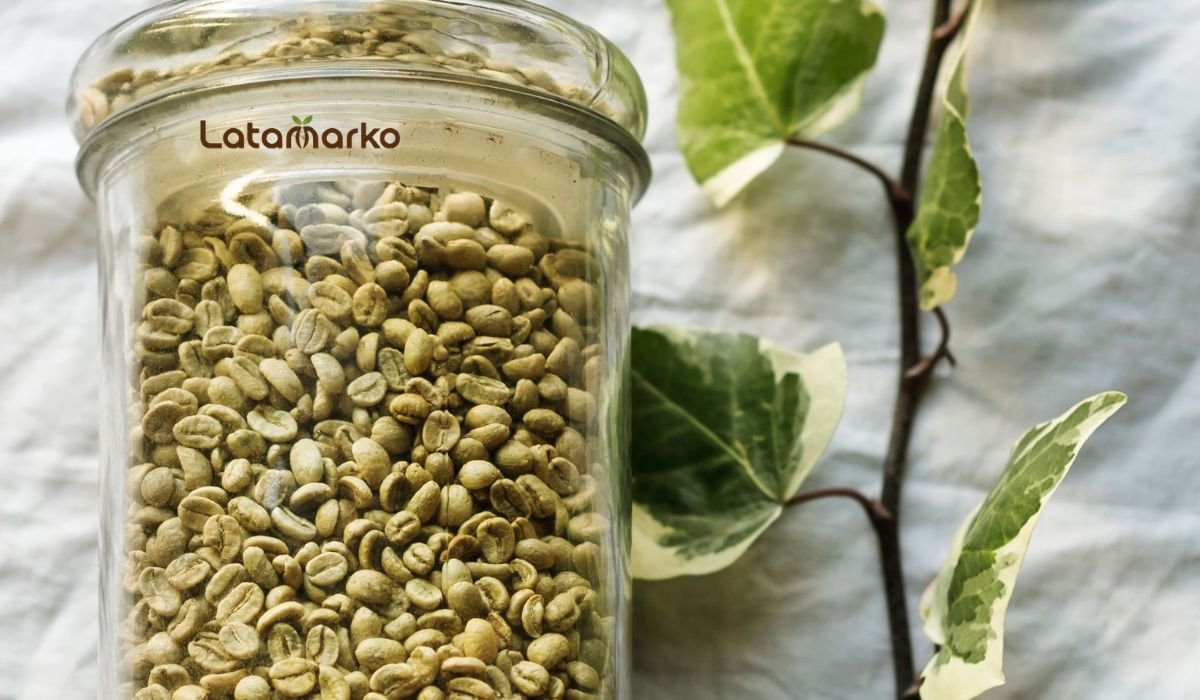
Green Coffee Samples Before Bulk Purchase
For professional buyers, purchasing green coffee beans in bulk should rarely begin with the commercial shipment itself.
A specification sheet can describe the origin, grade, screen size, processing method, moisture and other technical parameters. A supplier can also describe a coffee as chocolatey, fruity, floral or full-bodied.
But ultimately, the buyer needs to answer one question:
Will this green coffee actually work in our product?
That is why green coffee samples before bulk purchase are an essential part of professional sourcing.
For roasters, importers, distributors and coffee manufacturers, sample evaluation provides an opportunity to examine the coffee before committing to pallets, full containers, multiple containers or recurring supply programs.
At LATAMARKO, the sample should not be treated merely as a sales presentation. It should become a quality reference connecting the initial offer to the commercial coffee ultimately supplied.
The process can follow a simple path:
Requirement → Sample → Physical Evaluation → Sample Roasting → Cupping → Comparison → Approval → Commercial Shipment
Why Professional Buyers Request Samples
Buying green coffee based only on an origin name or specification can create unnecessary risk.
Two coffees may both be described as:
Brazil Arabica Screen 17/18
yet perform differently in the roaster and cup.
Likewise, two Colombian coffees with similar commercial descriptions may differ in:
Sweetness • Acidity • Body • Aroma • Uniformity • Defects • Roast Behavior
A sample allows the buyer to investigate these differences before making a larger financial commitment.
This becomes increasingly important as purchasing volume increases.
A mistake on several bags is inconvenient.
A mistake on a full container is expensive.
A mistake repeated across several containers can become a serious production and commercial problem.
For this reason:
The larger the intended purchase, the more important representative sample approval becomes.
What Should Be Confirmed Before Requesting a Sample?
Sampling becomes much more useful when the buyer first defines what they are looking for.
Instead of requesting:
“Please send your best green coffee sample.”
a professional buyer can specify:
Application: Espresso
Species: Arabica
Target Profile: Chocolate, caramel, nuts
Body: Medium to full
Acidity: Low to moderate
Quality: Premium commercial
Volume: Multiple containers per year
Or:
Application: Filter
Species: Arabica
Target Profile: Floral, citrus, fruit
Quality: Specialty
Volume: Smaller recurring lots
Now the supplier can select a sample based on the buyer’s actual commercial requirement.
Sample Evaluation
The first stage is evaluating the green coffee sample itself.
Professional buyers may examine:
Color
Odor
Bean Uniformity
Screen Distribution
Defects
Broken Beans
Foreign Matter
Moisture
Density where relevant
General Physical Condition
The purpose is not simply to find visually attractive beans.
Physical evaluation can provide information about how consistently the coffee has been prepared and whether it corresponds to the expected specification.
For example, if a coffee is offered according to a defined screen specification, the sample should be evaluated against that requirement.
If defect limits have been agreed, the sample provides an opportunity to examine physical preparation before commercial approval.
Why Appearance Alone Is Not Enough
Beautiful green beans do not guarantee an excellent cup.
Likewise, a coffee that looks less visually impressive may perform very well in the intended application.
This is why professional evaluation should combine:
Physical Quality + Roasting Performance + Sensory Quality
rather than relying on only one of them.
A premium whole-bean brand may place significant importance on visual uniformity.
An espresso manufacturer may care more about:
Roasting Consistency + Body + Flavor + Extraction Performance
The sample should therefore be judged according to the final product.
Sample Roasting
After physical evaluation, the green coffee should be sample roasted.
Sample roasting allows the buyer to evaluate how the coffee develops under controlled roasting conditions.
Professional roasters may observe:
Heat Response
Roast Development
Color Uniformity
Bean Expansion
Aroma Development
Consistency
This stage is especially important when comparing coffees with different:
Origins • Densities • Processing Methods • Bean Sizes • Species
Two green coffees that appear similar on paper may behave differently when heat is applied.
That difference can become important at commercial production scale.
Sample Roast vs Production Roast
A sample roast is primarily an evaluation tool.
It does not necessarily represent the exact roast profile that will later be used for the finished commercial product.
Once the coffee has passed initial evaluation, the roaster can test it using a profile closer to the intended application.
For example:
Espresso Coffee
→ Test under an espresso-oriented roast profile.
Filter Coffee
→ Evaluate using the intended lighter development.
Commercial Blend Component
→ Roast and test it within the actual blend.
This moves evaluation from:
“Is this a good coffee?”
to the commercially more useful question:
“Is this the right coffee for our product?”
Cupping
Cupping is one of the most important stages in green coffee sample evaluation.
It allows buyers to evaluate sensory characteristics systematically.
Depending on the coffee and evaluation protocol, attention may be given to:
Aroma
Flavor
Aftertaste
Acidity
Body
Sweetness
Balance
Cleanliness
Overall Character
For specialty coffees, the buyer may be looking for distinctive characteristics such as:
Jasmine • Bergamot • Berries • Stone Fruit • Citrus
For commercial espresso, the target may instead be:
Chocolate • Caramel • Nuts • Full Body • Controlled Acidity
The second coffee does not need to taste like the first to be commercially successful.
They are designed for different applications.
Cup Score Is Not the Only Buying Decision
For specialty coffee, sensory scoring can be extremely important.
But professional procurement should not reduce every purchasing decision to a single number.
Suppose Coffee A has greater sensory complexity but limited availability and a significantly higher cost.
Coffee B has a simpler profile but delivers:
Excellent Consistency + Required Flavor + Scalable Availability + Better Commercial Economics
For a high-volume espresso manufacturer, Coffee B may be the better purchase.
Professional evaluation therefore combines:
Cup Quality + Application + Availability + Consistency + Cost
The best sample is not necessarily the coffee with the most impressive sensory description.
It is the coffee that best meets the buyer’s objective.
Comparing Green Coffee Origins
Samples become particularly valuable when buyers are uncertain which origin is best suited to their product.
Instead of choosing by reputation, several candidate coffees can be evaluated side by side.
For example, an espresso roaster could compare:
Brazil Arabica
Colombia Arabica
India Arabica
Selected Central American Arabica
The coffees can then be evaluated for:
Chocolate Character
Sweetness
Acidity
Body
Aroma
Aftertaste
Roast Performance
Commercial Suitability
The result may be very different from what the buyer expected based purely on origin names.
Compare Samples Blind Where Possible
For technical evaluation, comparing samples without allowing price or origin reputation to dominate the first sensory judgment can be useful.
A buyer may believe that the most expensive or famous origin should taste best.
Blind or coded comparison can reduce that bias.
The evaluation can then proceed in two stages:
Stage 1 — Sensory & Technical Evaluation
Which coffee performs best?
Stage 2 — Commercial Evaluation
Which coffee provides the best combination of performance, availability and cost?
This creates a much stronger purchasing decision.
Comparing Samples for Espresso Blends
Sample evaluation becomes even more powerful when developing blends.
Suppose the target espresso is:
Chocolate + Caramel + Hazelnut + Full Body + Strong Crema
A buyer might test:
Brazil Arabica
for chocolate, nuts and base sweetness.
Colombia Arabica
for caramel, balance and acidity.
India Robusta
for body, intensity and crema.
Rather than evaluating each coffee only in isolation, the roaster can create trial formulations.
For example:
Blend A
Blend B
Blend C
Each can then be roasted, extracted and evaluated.
The winning formulation can become the basis for commercial purchasing.
This means green coffee samples can help buyers design products, not merely approve raw materials.
From Approved Sample to Commercial Shipment
This is one of the most important stages in the entire process.
Approving an excellent sample is valuable only if the commercial coffee corresponds to what was approved.
Professional buyers should therefore clarify:
Is the sample representative of the commercial lot?
How much of that lot is available?
Will the commercial shipment correspond to the agreed specification?
How will repeat shipments be controlled?
For significant purchases, the approved sample and agreed specification can become important quality references.
The process should connect:
Approved Sample
↓
Agreed Specification
↓
Commercial Lot
↓
Shipment
↓
Arrival Evaluation
The sample should not exist independently from the product eventually delivered.
Pre-Shipment Samples
Depending on the transaction and quality-control arrangement, a buyer may also evaluate a pre-shipment sample before the commercial cargo is shipped.
This can be particularly useful for:
Large Orders
New Suppliers
Higher-Value Coffees
Sensitive Quality Specifications
Recurring Commercial Programs
The purpose is straightforward:
Confirm that the coffee prepared for shipment remains within the agreed quality expectations.
The exact sampling and approval procedure should be agreed commercially between buyer and supplier.
Arrival Samples
Quality control can continue after the coffee reaches its destination.
An arrival sample can be compared with:
Original Approved Sample
Pre-Shipment Sample
Agreed Technical Specification
The buyer can examine whether:
Physical Quality Remains Acceptable
Moisture Remains Within Specification
Cup Profile Remains Consistent
Transportation Has Affected the Coffee
For repeat supply programs, keeping records from these evaluations can help identify trends across shipments.
Samples and Commercial Consistency
For a one-time specialty purchase, the buyer may be primarily concerned with one particular lot.
For a commercial roaster purchasing repeatedly, the challenge is different.
The buyer may need the same product profile across:
Shipment 1 → Shipment 2 → Shipment 3 → Shipment 10
The exact agricultural material will naturally vary over time.
Therefore, professional buyers can define an acceptable quality and sensory range rather than expecting every bean to be identical forever.
For example, a core espresso requirement may specify a target around:
Chocolate + Caramel + Nuts + Full Body + Controlled Acidity
Future lots can then be evaluated against that target.
Scaling from a Sample to One Container
A common commercial mistake is assuming that because a sample has been approved, large-scale supply is automatically available.
Before scaling up, buyers should ask:
What is the total available quantity?
Is this sample representative of that quantity?
Can one full container be supplied?
Can additional containers be supplied from comparable quality?
What happens when this lot is finished?
This is particularly important when the coffee will become part of a permanent product.
A limited lot may be excellent for:
Seasonal Coffee
but unsuitable for:
Year-Round Core Espresso
if the required supply cannot be maintained.
Scaling from One Container to Annual Supply
For industrial buyers, the next step is even more important.
Suppose the trial container performs successfully.
The requirement may then grow to:
2 FCL/month
then:
5 FCL/month
and eventually:
significant annual tonnage.
At this stage, sample approval needs to evolve into a structured quality-control and supply program.
The buyer and supplier can work around:
Defined Specification
Reference Cup Profile
Acceptable Quality Range
Shipment Evaluation
Monthly Volume
Alternative Approved Lots
Annual Requirement
This transforms sampling from a one-time purchasing activity into part of long-term procurement.
What Happens If a Sample Is Not Approved?
A rejected sample does not necessarily mean the sourcing process has failed.
It may simply mean the first coffee was not the right match.
The buyer should explain why.
For example:
“We need more body.”
“Acidity is too high for our espresso.”
“We need stronger chocolate characteristics.”
“The profile is good, but the commercial position is too high for this product.”
“We need a cleaner Robusta.”
This feedback allows the supplier to search for a more suitable option.
The process becomes:
Sample → Feedback → Alternative → Evaluation → Approval
This is much more efficient than repeatedly requesting random coffee samples.
Green Coffee Samples with LATAMARKO
At LATAMARKO, sample evaluation can be approached as part of the commercial sourcing process rather than as an isolated step.
The buyer first defines:
Application
Desired Cup Profile
Arabica / Robusta
Preferred Origin if applicable
Quality Segment
Required Commercial Volume
Destination
Suitable options can then be considered around those requirements, subject to availability.
For a specialty roaster, the objective may be finding a distinctive lot.
For an espresso manufacturer, it may be identifying coffees that deliver:
Chocolate + Caramel + Body + Consistency
For an industrial buyer, the sample must represent something even more important:
a quality that can potentially be reproduced at commercial scale.
Request a Green Coffee Sample for Your Business
If your company is evaluating green coffee beans before a bulk purchase, provide as much information as possible about the intended requirement:
Application: Espresso / Filter / Blend / Instant / Commercial Roasting
Species: Arabica / Robusta / Both
Origin: Preferred origin or open to recommendation
Target Profile: Chocolate / Nutty / Caramel / Fruity / Floral / Full-Bodied
Quality: Commercial / Premium Commercial / Specialty
Required Volume: Bags / Pallets / FCL / Multiple FCL
Monthly Requirement: If recurring
Annual Requirement: If available
Destination: Country / Port
This allows the sample to be selected for the commercial opportunity behind it, rather than simply sending a coffee that may not fit the buyer’s needs.
A green coffee sample should answer more than “Is this coffee good?” It should answer “Is this the right coffee for our product, can it be supplied at the volume we need, and can the commercial shipment deliver the quality we approved?”
For professional buyers, that is the real purpose of sampling before bulk purchase.
Green Coffee Packaging
Green coffee packaging is far more than a bag used to transport coffee from one country to another. For professional roasters, importers and distributors, packaging is part of the quality-control system that protects the coffee between origin, export warehouse, international transportation, destination storage and final roasting.
Green coffee is an agricultural product that can be affected by its surrounding environment. During a long international supply chain, exposure to moisture, excessive humidity, odors, contamination and unsuitable storage conditions can influence physical and sensory quality.
This becomes especially important when coffee travels across different climates or remains in storage for extended periods.
Depending on the coffee’s value, destination and intended application, packaging options may range from traditional jute bags to hermetic liners, GrainPro-type protective bags and vacuum packaging for selected specialty lots.
For professional buyers, the objective should be simple:
Choose packaging according to the value of the coffee, the transportation conditions and the level of quality protection required.
Jute Bags
Jute bags are among the most traditional and widely recognized packaging formats for green coffee beans.
They are practical for international coffee trade because they provide:
Physical Protection • Stackability • Relatively Easy Handling • Identification & Marking • Established Export Format
Jute bags may be used in different net-weight configurations depending on the producing country and commercial agreement.
Common commercial formats can include:
30 kg • 60 kg • 69/70 kg
although bag sizes should always be confirmed for the specific origin and shipment rather than assumed.
For high-volume commercial green coffee, jute bags remain an important packaging solution.
However, jute itself is not hermetic.
That distinction matters.
What Jute Bags Do—and Do Not—Protect Against
A jute bag provides an outer physical layer around the coffee, but it does not completely isolate the beans from the surrounding atmosphere.
During transportation and storage, green coffee can experience changing:
Temperature • Relative Humidity • Environmental Conditions
This is why the outer jute bag and the inner protective packaging should be considered separately.
For some commercial coffees and relatively straightforward supply chains, conventional export packaging may be appropriate.
For more sensitive or valuable coffees, buyers may prefer additional protection inside the outer bag.
GrainPro Bags
GrainPro bags are widely recognized in the coffee industry as protective inner packaging used inside an outer export bag.
The basic concept is straightforward:
Outer Jute Bag
Protective Inner Liner
Green Coffee Beans
The outer bag provides physical handling and identification, while the inner liner provides an additional barrier between the coffee and its surrounding environment.
This can be particularly useful for:
Specialty Coffee
Premium Arabica
Long International Shipments
Longer Storage Periods
Humid Destinations
Quality-Sensitive Green Coffee
For buyers purchasing higher-value green coffee, the additional packaging cost may represent a relatively small proportion of the total product value while providing greater protection throughout the supply chain.
Why Use GrainPro-Type Packaging?
Green coffee can interact with the surrounding environment during storage and transportation.
Protective liners are designed to reduce this exposure and help preserve the condition of the coffee during the supply chain.
For a professional buyer, the potential value is not merely having a more sophisticated package.
The real objective is protecting:
Moisture Stability
Physical Condition
Sensory Characteristics
Consistency
until the coffee reaches the roaster.
This becomes particularly important when coffee spends weeks moving from origin to destination.
Hermetic Packaging
Hermetic packaging refers more broadly to packaging systems designed to create a highly protective barrier between green coffee and the external environment.
GrainPro-type solutions fall within this broader quality-preservation approach, but buyers may encounter different hermetic packaging products depending on the supplier, origin and application.
Hermetic protection can be especially relevant when:
Transit Is Long
Humidity Exposure Is a Concern
Coffee Has High Commercial Value
Coffee Will Be Stored Before Roasting
Sensory Stability Is Important
The appropriate packaging should be selected according to the specific coffee and supply chain.
Does Every Green Coffee Need Hermetic Packaging?
No.
The decision should be commercial as well as technical.
Imagine two very different products:
Coffee A: High-value specialty microlot
Coffee B: High-volume commercial coffee with rapid inventory turnover
The additional protection may have much greater economic justification for Coffee A.
Professional buyers should consider:
Coffee Value
Quality Sensitivity
Transit Time
Storage Time
Destination Climate
Inventory Turnover
Packaging Cost
The objective is not to use the most expensive packaging possible.
It is to use the appropriate level of protection for the coffee being purchased.
Vacuum Packaging for Specialty Lots
For selected high-value specialty coffees, vacuum packaging may provide an even higher level of environmental isolation.
This format is more commonly associated with coffees where:
Lot Value Is High
Quantity Is Limited
Sensory Preservation Is Critical
Traceability Is High
The Coffee Has Premium or Rare Positioning
Examples could include selected:
Microlots • Competition Coffees • Rare Varieties • Geisha/Gesha Lots • Experimental Process Coffees
Vacuum packaging is generally not the logical solution for every high-volume commercial coffee because the additional packaging and handling need to make economic sense.
For an exceptional specialty lot, however, the value of preserving quality may outweigh the additional packaging cost.
Jute vs GrainPro vs Vacuum Packaging
The appropriate packaging depends heavily on the commercial position of the coffee.
| Packaging | Typical Application | Protection Level | Commercial Consideration |
|---|---|---|---|
| Jute Bag | Commercial / General Export | Basic | Cost-efficient and widely used |
| Jute + Hermetic Liner | Premium / Specialty / Long Transit | Higher | Additional quality protection |
| GrainPro-Type System | Quality-Sensitive Green Coffee | Higher | Useful for transport and storage protection |
| Vacuum Packaging | Selected High-Value Specialty Lots | Very High | Higher cost; suited to valuable coffees |
Packaging should therefore follow the value and sensitivity of the coffee, rather than applying one solution to every shipment.
Green Coffee Bag Marking
For international trade, the outside of the coffee bag can carry important identification and traceability information.
The exact marking varies according to origin, exporter, buyer requirements and applicable regulations, but commercial bag markings may include information such as:
Product Description
Country of Origin
Net Weight
Lot / Reference Number
Crop Information
Exporter / Producer Information
Importer or Buyer Information where required
Other Required Identification
For professional buyers, accurate bag marking can make warehouse identification and lot traceability much easier.
This becomes particularly important when a warehouse contains multiple:
Origins • Grades • Crops • Customers • Lots
A bag should be identifiable without requiring warehouse staff to guess what is inside it.
Why Lot Identification Matters
Imagine a roaster has three Colombian coffees in its warehouse.
All three bags simply say:
COLOMBIA GREEN COFFEE
That is not enough for effective inventory control.
One coffee may be:
Colombia Supremo – Lot A
another:
Colombia Excelso – Lot B
and another may be a regional specialty lot.
Clear identification helps connect:
Physical Bag → Lot → Specification → Quality Records → Commercial Documents
For larger operations, this can become an important part of traceability and quality management.
Private Label Green Coffee Bags
Professional importers, distributors and coffee companies may also request private label bags.
Instead of using only the exporter or producer’s standard bag design, the packaging may carry the buyer’s or brand’s identity, subject to the commercial agreement and applicable marking requirements.
Private-label green coffee bags can include:
Brand Logo
Brand Name
Product Name
Origin
Coffee Type
Net Weight
Lot Information
Required Legal or Commercial Information
For companies distributing green coffee to other professional roasters, this can be particularly valuable.
The green coffee arrives at the customer’s warehouse already carrying the distributor’s brand identity.
Private Label Is More Than Putting a Logo on the Bag
A professional private-label program should consider both branding and traceability.
A visually attractive bag is useful.
But the bag must still communicate the information required for correct product identification.
A strong private-label design therefore combines:
Brand Identity
Product Identification
Traceability
Commercial / Regulatory Marking
The objective is to create packaging that works equally well in:
Marketing + Logistics + Warehouse Management + Quality Control
Green Coffee Packaging for Wholesale Buyers
Packaging requirements can change according to purchasing volume.
A smaller specialty roaster may prioritize:
Smaller Bag Sizes + Hermetic Protection + Lot Identification
A wholesale distributor may prioritize:
Standardized Bags + Clear Branding + Easy Warehouse Handling
An industrial roaster may prioritize:
High Loading Efficiency + Consistent Bag Weight + Fast Unloading + Low Packaging Cost
This is why green coffee packaging should ideally be discussed together with the buyer’s volume and application.
Palletized Green Coffee Packaging
Green coffee bags can be arranged on pallets when the supply chain benefits from easier mechanical handling.
Palletization can offer advantages such as:
Faster Forklift Handling
Simpler Warehouse Movement
Organized Storage
Easier Regional Distribution
This can be particularly attractive when coffee is being distributed from a warehouse to multiple professional customers.
However, pallets occupy space and add weight.
For international container shipments where maximum payload efficiency is important, buyers may prefer another loading configuration.
Non-Palletized Green Coffee Bags
In non-palletized container loading, green coffee bags are loaded directly into the container.
This can improve utilization of container space and reduce the weight associated with pallets.
For large international shipments, the potential advantage is straightforward:
More of the available container capacity can be used for coffee.
The trade-off appears at destination.
Unloading individual bags can require more labor and handling compared with moving complete pallets using forklifts.
Therefore, buyers should compare:
Container Efficiency
against:
Destination Handling Efficiency
before selecting the loading method.
Protecting Green Coffee During International Transportation
Good packaging alone cannot compensate for poor logistics.
Quality preservation should be considered across the entire journey:
Origin Warehouse
↓
Container Loading
↓
Port Handling
↓
Ocean Transportation
↓
Destination Port
↓
Customs / Bonded Warehouse
↓
Buyer Warehouse
↓
Roasting Facility
At every stage, the coffee should be protected from conditions that could compromise quality.
Important considerations can include:
Moisture Exposure
Excessive Humidity
Water Ingress
Strong Odors
Contamination
Poor Storage Conditions
Unnecessary Delays
Packaging therefore forms only one part of a broader green coffee quality-preservation system.
Container Condition Matters
Before loading green coffee, the condition of the container itself deserves attention.
A suitable container should be appropriately inspected for issues that could affect the cargo, including obvious:
Moisture
Water Entry
Contamination
Strong Residual Odors
Physical Damage
Green coffee can remain inside the container for an extended international journey.
A packaging investment can lose much of its value if the cargo is placed into an unsuitable transportation environment.
Protecting Green Coffee from Moisture
Moisture management is particularly important because green coffee is hygroscopic.
The objective is to keep the coffee within an appropriate and stable condition throughout transportation and storage.
Protective packaging, suitable container preparation and appropriate warehouse conditions can all contribute to this objective.
For higher-value coffees, buyers may choose more protective packaging precisely because the potential financial impact of quality deterioration is greater.
A small quality loss on a low-value commercial lot and the same deterioration on an exceptional specialty microlot do not represent the same commercial risk.
Packaging Should Match Transportation Time
A coffee traveling a relatively short and controlled supply chain does not necessarily face the same risks as a coffee moving through:
Origin Inland Transport → Export Port → Long Ocean Transit → Transshipment → Destination Port → Bonded Warehouse → Inland Delivery
The longer and more complex the journey, the more important packaging and logistics planning can become.
This is why professional buyers should discuss packaging before shipment, not after the coffee arrives.
Packaging and Container Economics
Packaging decisions can also affect the final landed cost of green coffee.
For bulk buyers, relevant factors include:
Bag Cost
Inner Liner Cost
Pallet Cost
Number of Bags
Container Utilization
Loading Labor
Destination Unloading
Warehouse Handling
The best packaging option is therefore not automatically the cheapest bag.
Nor is it automatically the most sophisticated packaging.
It is the configuration that provides the required protection while remaining commercially efficient for the buyer.
Green Coffee Packaging with LATAMARKO
For professional LATAMARKO green coffee requirements, packaging can be discussed as part of the overall sourcing specification rather than treated as an afterthought.
Depending on the origin, supplier, product and agreed commercial requirements, buyers may define elements such as:
Bag Size
Outer Bag
Protective Inner Packaging
Bag Marking
Private Label Requirements
Palletized / Non-Palletized Loading
Container Configuration
This is particularly relevant for importers and distributors that want their green coffee supply to arrive under a consistent commercial presentation.
Private-label requirements should be discussed before production and shipment so that design, dimensions, required markings and technical feasibility can be confirmed in advance.
What to Specify When Ordering Green Coffee Packaging
When requesting a commercial green coffee quotation, buyers can define packaging together with the coffee itself:
Coffee: Arabica / Robusta
Origin: Required origin
Grade & Screen: Required specification
Bag Size: 30 kg / 60 kg / 69–70 kg / Other
Outer Packaging: Required bag type
Inner Protection: Hermetic / GrainPro-type / Other if required
Branding: Standard / Private Label
Bag Marking: Required information
Loading: Palletized / Non-Palletized
Quantity: MT / FCL / Multiple FCL
Destination: Country / Port
This avoids discovering after the order has been placed that the supplier’s standard packaging does not meet the buyer’s operational or branding requirements.
Packaging Protects More Than Green Coffee
A buyer may spend considerable time selecting:
The right origin.
The right grade.
The right screen.
The right processing method.
The right cup profile.
The right commercial lot.
It makes little sense to complete all of that work and then treat packaging and transportation as unimportant.
For commercial coffee, packaging helps protect an industrial raw material.
For specialty coffee, it can help protect a unique sensory profile.
For an importer or distributor, private-label packaging can additionally protect and strengthen brand identity.
And for every professional buyer, clear bag marking supports traceability and inventory control.
The purpose of green coffee packaging is not simply to contain the beans. It is to help the coffee that was selected and approved at origin reach the roaster in the condition the buyer expects.
Green Coffee Storage & Shelf Life
Proper green coffee storage is one of the most important—and sometimes underestimated—parts of maintaining coffee quality.
A buyer may carefully select the right origin, approve the sample, choose the correct grade and screen size, invest in protective packaging and arrange international transportation. But if the coffee is stored incorrectly after arrival, part of that quality can gradually be lost before the beans ever reach the roaster.
Unlike roasted coffee, green coffee beans are relatively stable when properly handled. However, they are still an agricultural product and continue to interact with their environment.
Over time, unsuitable conditions can influence:
Moisture • Aroma • Physical Condition • Roasting Behavior • Cup Quality
For professional roasters, importers, distributors and manufacturers, storage should therefore be considered part of the complete quality chain:
Origin → Packaging → Transportation → Warehouse → Roasting
The objective is not simply to keep green coffee safe enough to use.
The objective is to preserve as much as possible of the quality that was originally purchased.
How Long Do Green Coffee Beans Last?
One of the most common questions from buyers is:
How long do green coffee beans last?
There is no single shelf-life number that applies to every green coffee.
The useful storage life depends on factors such as:
Initial Coffee Quality
Moisture Condition
Water Activity
Processing Method
Packaging
Temperature
Relative Humidity
Warehouse Conditions
Exposure to Odors
Length of Storage
Stability of the Storage Environment
Well-stored green coffee can remain commercially usable for an extended period, but “usable” and “at peak sensory quality” are not necessarily the same thing.
This distinction is especially important for specialty coffee.
A coffee may still be physically acceptable while gradually losing some of the brightness, sweetness, aroma or distinctive character that originally made it valuable.
Green Coffee Does Not Suddenly Expire
Green coffee quality usually does not work like a switch where the coffee is excellent one day and unusable the next.
Quality can change progressively.
Depending on the coffee and storage conditions, prolonged or unsuitable storage may contribute to characteristics commonly associated with aging, such as:
Reduced Aromatic Intensity
Lower Flavor Clarity
Loss of Freshness
Flatter Cup Character
Changes in Roasting Behavior
For this reason, professional inventory management should focus not only on a printed shelf-life period but also on quality evolution over time.
Crop Year vs Actual Coffee Condition
Buyers frequently use crop year as an indicator of freshness.
It is useful information—but it should not be considered alone.
Two coffees from the same crop can reach the buyer in very different conditions if one has been:
properly dried, protected, packaged and stored
while the other has experienced:
poor storage, excessive environmental exposure or unsuitable transportation conditions.
Professional buyers should therefore consider:
Crop Year + Physical Condition + Moisture + Storage History + Cup Quality
rather than making purchasing decisions based solely on harvest date.
Ideal Storage Conditions for Green Coffee Beans
The ideal green coffee warehouse should provide a clean, dry, stable and controlled environment.
The main priorities are:
Stable Temperature
Controlled Humidity
Protection from Water
Protection from Strong Odors
Clean Storage Conditions
Suitable Air Management
Protection from Direct Sunlight and Excessive Heat
Proper Stock Rotation
Consistency matters.
Repeated environmental fluctuations can be undesirable because green coffee can exchange moisture with its surroundings.
A professional warehouse should therefore aim to minimize unnecessary changes in storage conditions.
Temperature
Temperature is an important part of green coffee storage.
Green coffee should generally be protected from:
Excessive Heat
Direct Sunlight
Heat Sources
Large Temperature Fluctuations
The goal is not necessarily to make a normal commercial green coffee warehouse extremely cold.
Instead, the objective is to maintain a moderate and reasonably stable storage environment appropriate for the coffee and packaging system.
High temperatures can accelerate quality deterioration, while major temperature changes can also interact with humidity and condensation risk.
For this reason, warehouse design should consider temperature and moisture together rather than treating them as completely separate variables.
Humidity
Humidity management is especially important because green coffee is hygroscopic.
In simple terms, green coffee can exchange moisture with the surrounding air.
If storage conditions are excessively humid, the beans may absorb moisture.
If conditions are excessively dry, they may lose moisture.
Neither extreme is desirable.
Changes in moisture condition can influence:
Physical Stability
Roasting Behavior
Bean Condition
Sensory Quality
and, under sufficiently poor storage conditions, can contribute to more serious quality problems.
This is one reason protective inner packaging can become valuable for coffees traveling through or stored in challenging climates.
Moisture Content vs Warehouse Humidity
These two concepts should not be confused.
Moisture content describes the water contained within the green coffee itself.
Relative humidity describes moisture conditions in the surrounding air.
They interact.
A buyer may receive green coffee at an appropriate moisture condition, but if the bags are subsequently stored for a long period in an unsuitable environment, that condition may change.
Professional quality management should therefore consider both:
Coffee Condition
and:
Storage Environment
Water Activity and Storage Stability
For more advanced quality-control programs, water activity can provide additional information beyond moisture percentage alone.
Moisture content tells us how much water is present.
Water activity helps indicate how available that water is within the product system.
For professional green coffee evaluation, using moisture information together with water activity can provide a more complete picture of the coffee’s condition and storage stability.
This can be particularly useful for:
Quality-Sensitive Coffees • Long-Term Storage • Specialty Lots • Structured QC Programs
Protect Green Coffee from Water and Condensation
Direct water exposure represents a much more obvious risk.
Green coffee should be protected from:
Roof Leaks
Wet Floors
Container Water Ingress
Condensation
Wet Walls
Improper Cleaning Practices
Other Sources of Moisture
Coffee bags should not be treated as if the outer packaging makes the product immune to warehouse conditions.
This is particularly important for conventional jute packaging because the outer material itself is not a complete moisture barrier.
Odor Protection
Green coffee should be protected from strong and foreign odors.
This is especially important because coffee can be sensitive to its surrounding storage environment.
A green coffee warehouse should therefore avoid inappropriate proximity to strongly odorous materials such as certain:
Chemicals
Fuels
Cleaning Products
Spices
Perfumed Materials
or other products capable of contaminating the storage environment.
The basic rule is simple:
If a warehouse smells strongly of something other than coffee, investigate before storing valuable green coffee there.
For high-quality coffee, protecting sensory integrity should begin long before roasting.
Warehouse Conditions
A professional green coffee warehouse should be designed and managed around product protection and traceability.
Important considerations include:
Cleanliness
Dry Conditions
Pest Management
Temperature and Humidity Monitoring
Protection from Direct Sunlight
Separation from Contaminants
Proper Bag Handling
Lot Identification
Inventory Rotation
The warehouse should also make it possible to identify different:
Origins • Lots • Grades • Crops • Customers • Arrival Dates
without confusion.
Storage is therefore both a quality-control function and an inventory-management function.
Avoid Direct Floor Contact
Green coffee bags should be stored in a way that helps protect them from warehouse floors and potential moisture exposure.
Pallets or other suitable warehouse systems can provide separation from the floor and improve handling.
The storage layout should also allow appropriate inspection and warehouse management.
This becomes particularly important for importers holding multiple lots for extended periods.
A well-organized warehouse makes it easier to detect problems early rather than discovering them when the coffee reaches production.
FIFO and Green Coffee Inventory Rotation
For commercial green coffee inventory, a FIFO — First In, First Out approach can often be useful:
Earlier Appropriate Stock → Used Before Later Stock
provided lot specifications and production requirements allow it.
However, professional roasters should not apply FIFO blindly if different lots have different quality requirements or applications.
Inventory management should consider:
Arrival Date + Crop + Lot + Quality + Application
For example, a specialty microlot and a commercial espresso component should not necessarily be managed according to exactly the same strategy.
Maintaining Quality During Long-Term Storage
When green coffee must remain in storage for longer periods, quality preservation becomes increasingly important.
The storage strategy can include:
Appropriate Protective Packaging
Stable Warehouse Conditions
Humidity Monitoring
Temperature Monitoring
Regular Physical Inspection
Moisture Checks
Periodic Cupping
Lot-Level Inventory Control
The longer the intended storage period, the stronger the argument for active monitoring rather than simply placing bags in a warehouse and waiting until they are needed.
Periodic Cupping During Storage
For valuable or strategically important lots, periodic cupping can be particularly useful.
Imagine an importer receives a large lot intended to supply customers over several months.
The coffee may be evaluated:
At Arrival
↓
During Storage
↓
Before Major Customer Release
This allows the quality team to detect sensory changes over time.
For a large roaster, the same principle can help determine whether stored coffee continues to match the target profile of a core product.
Packaging and Shelf Life Work Together
Storage quality cannot be separated from green coffee packaging.
Traditional jute packaging provides practical physical containment but limited environmental isolation.
Adding suitable hermetic protective packaging can reduce the coffee’s exposure to external conditions.
For selected high-value specialty coffees, more protective systems such as vacuum packaging may also be considered where commercially appropriate.
The correct approach depends on:
Coffee Value + Expected Storage Time + Transportation Conditions + Warehouse Environment + Required Quality Stability
There is little commercial logic in paying a premium for exceptional green coffee and then failing to protect that investment during months of transportation and storage.
Commercial Coffee vs Specialty Coffee Storage
The economic logic of storage can differ by segment.
For high-volume commercial green coffee, priorities may include:
Efficient Inventory Turnover + Clean Warehousing + Consistent Conditions + Cost Control
For specialty green coffee, greater emphasis may be placed on:
Sensory Preservation + Protective Packaging + Lot Separation + Detailed Quality Monitoring
Neither approach means quality is unimportant in commercial coffee.
Rather, the level of storage investment should be appropriate to the value, sensitivity and intended application of the product.
Storage Planning for Industrial Buyers
Large manufacturers face an additional challenge.
They need enough inventory to protect production from supply interruptions, but excessive inventory can increase:
Working Capital
Warehouse Costs
Storage Duration
Quality Risk
A professional industrial buyer should therefore balance:
Safety Stock
with:
Inventory Turnover
For example, a company consuming large monthly volumes may benefit more from a structured shipment schedule than from receiving an unnecessarily large quantity at once.
The objective is:
Enough green coffee to protect production—but not so much that inventory remains unnecessarily long in storage.
Storage Should Be Considered Before Purchasing
Buyers often calculate:
Coffee Price + Freight + Import Costs
but overlook the effect of storage.
Before placing a large bulk order, ask:
How quickly will we consume this coffee?
Do we have sufficient warehouse capacity?
Can the warehouse maintain appropriate conditions?
Do we need hermetic packaging?
How much safety stock is actually necessary?
How will lots be rotated?
This is particularly important when moving from:
1 FCL → Multiple FCL → Monthly Container Programs
As purchasing volume grows, warehouse management becomes part of green coffee procurement strategy.
Protecting Green Coffee Quality from Origin to Roaster
The complete quality chain can be viewed as:
Harvest
↓
Processing
↓
Drying
↓
Green Coffee Preparation
↓
Packaging
↓
Origin Storage
↓
International Transportation
↓
Destination Warehouse
↓
Roasting
Every stage matters.
Excellent storage cannot restore quality that was already lost before arrival.
But poor storage can reduce the value of coffee that arrived in excellent condition.
This is why professional sourcing should evaluate the complete journey—not only the product at origin.
Green Coffee Storage and LATAMARKO Supply
For professional buyers sourcing green coffee beans through LATAMARKO, storage requirements can be considered together with packaging, shipment size and expected consumption.
A buyer planning rapid stock turnover may have different packaging and inventory requirements from a distributor holding coffee for several months.
Likewise, a specialty roaster purchasing a sensitive premium lot may require a different protection strategy from an industrial buyer receiving recurring high-volume shipments.
The commercial discussion can therefore include:
Coffee Type
Packaging
Protective Inner Liner
Shipment Quantity
Expected Storage Duration
Monthly Consumption
Delivery Frequency
Destination Conditions
This allows sourcing and logistics to be planned around how the coffee will actually be used after arrival.
A Practical Rule for Green Coffee Buyers
Do not ask only:
“How long can green coffee beans be stored?”
Ask:
“How long can this particular coffee be stored under our specific conditions while maintaining the quality level required for our product?”
That is the more useful question.
A commercial coffee intended for high-volume production, a premium Arabica for a branded espresso and an exceptional specialty microlot should not necessarily be managed according to exactly the same storage strategy.
For professional buyers, green coffee shelf life is ultimately a quality-management issue—not simply a date on a bag.
Protect the coffee from excessive heat, moisture fluctuations, water, contamination and foreign odors. Maintain a clean and stable warehouse. Rotate inventory intelligently. Monitor valuable lots over time.
Because the quality of green coffee is not determined only by where it was grown and how it was processed.
It is also determined by how well that quality is protected until the moment the coffee enters the roaster.
Green Coffee Logistics & International Trade
International trade is one of the most important parts of the green coffee beans business.
A buyer can select the right origin, approve an excellent sample and negotiate suitable commercial terms—but the transaction is not complete until the coffee moves successfully from the producing country to the buyer’s warehouse.
For professional roasters, importers, distributors and coffee manufacturers, green coffee logistics can involve:
Origin Warehouse → Inland Transportation → Export Procedures → Port or Terminal → International Freight → Destination Customs → Warehouse → Roasting Facility
Every stage can influence cost, delivery time, documentation and ultimately the condition of the green coffee.
This is why professional green coffee procurement should evaluate two things together:
The Coffee + The Supply Chain
At LATAMARKO, international green coffee sourcing can therefore be approached not simply as finding a coffee, but as defining how the required coffee can move from origin to the buyer under an appropriate commercial and logistics structure.
Exporting Green Coffee
Green coffee exporting begins well before a container is loaded.
The exporter or responsible supply-chain parties may need to coordinate activities such as:
Coffee Preparation
Quality Confirmation
Packaging
Bag Marking
Export Documentation
Inland Transportation
Container Booking
Customs Procedures
Port Delivery
Shipment
The exact process varies according to the exporting country, destination, contract and applicable regulations.
For the buyer, one of the most important questions is:
Who is responsible for each stage of the journey?
This is where the agreed Incoterm becomes essential.
Importing Green Coffee
For the importer, the process begins before the vessel reaches the destination.
Professional buyers should confirm the import requirements applicable to their country and shipment in advance.
Depending on the destination, this can involve:
Importer Requirements
Customs Classification
Required Certificates
Original or Electronic Documents
Customs Procedures
Port Handling
Food or Plant-Health Controls where applicable
Duties and Taxes where applicable
Inland Transportation
Import requirements vary significantly between countries.
A document accepted in one market may not be sufficient in another.
For this reason, buyers should ideally confirm requirements with their customs broker or relevant authorities before shipment, rather than discovering a missing requirement after the coffee arrives.
Incoterms in Green Coffee Trade
Incoterms help define important responsibilities between seller and buyer for the delivery of goods.
In international green coffee transactions, buyers may encounter terms such as:
FCA • FOB • CFR • CIF
These terms are not simply shipping abbreviations.
They influence:
Where Delivery Occurs
Who Arranges Transportation
Which Costs Are Included
When Risk Transfers
Who Arranges Insurance where required
Understanding the Incoterm is essential when comparing two green coffee quotations.
A lower quotation under one delivery term may ultimately result in a higher landed cost than another offer that includes more of the transportation chain.
FOB — Free on Board
FOB is commonly encountered in international commodity trade for sea shipments.
Under an FOB structure, the seller handles the agreed responsibilities up to loading the goods on board the vessel at the named port of shipment, while the buyer generally arranges the main ocean transportation from that point.
A green coffee quotation might therefore identify:
FOB + Named Port of Shipment
For the buyer, the important commercial consideration is that the FOB value does not represent the final cost of having the coffee at destination.
Additional costs may include:
Ocean Freight
Insurance if arranged by the buyer
Destination Charges
Customs Costs
Inland Transportation
Warehousing
FOB can be attractive to experienced importers that already manage their own international freight and have strong relationships with shipping lines or freight forwarders.
FCA — Free Carrier
FCA can be particularly relevant when delivery is made to a carrier or another agreed point rather than using an onboard-vessel delivery structure.
The named place is critical.
For example, FCA could refer to delivery at an agreed:
Warehouse
Terminal
Logistics Facility
or another named location.
Professional buyers should never evaluate an FCA quotation without asking:
FCA where?
The exact named place determines how much transportation remains to be arranged after delivery.
For containerized shipments, FCA can also be a commercially appropriate structure depending on how the cargo is handed over and transported.
CFR — Cost and Freight
Under CFR, the seller arranges and pays the cost of ocean freight to the named destination port, while risk transfer follows the rules of the applicable Incoterm.
This distinction is important:
The party paying for freight and the point where risk transfers are not necessarily the same thing.
A buyer receiving a CFR offer should therefore understand both:
What transportation is included
and:
Where risk transfers under the agreed term.
The buyer should also evaluate destination-side expenses that may not be included in the quoted CFR value.
CIF — Cost, Insurance and Freight
CIF includes the seller’s obligation to arrange the main freight to the named destination port and obtain the insurance required under the applicable CIF rules.
For buyers, CIF can simplify part of the international transportation process because the seller arranges:
Cost + Insurance + Freight
to the named destination port.
However, CIF should not be interpreted as:
“Everything is paid until our warehouse.”
Destination charges, customs clearance, duties, taxes, inland transportation and other costs may remain outside the seller’s responsibility depending on the transaction.
Therefore, buyers should always examine the complete commercial structure.
FOB vs FCA vs CFR vs CIF
For green coffee buyers, the basic commercial distinction can be summarized as follows:
| Term | Main Freight Arranged By | Typical Buyer Consideration |
|---|---|---|
| FCA | Usually Buyer after agreed delivery point | Flexibility from named place |
| FOB | Buyer | Buyer controls ocean freight |
| CFR | Seller | Freight included to named destination port |
| CIF | Seller | Freight + required insurance arranged by seller |
This is only a simplified commercial overview.
The exact responsibilities, costs and risk transfer should always be interpreted according to the applicable Incoterms rules and named place/port stated in the contract.
Which Incoterm Should a Green Coffee Buyer Choose?
There is no single best Incoterm for every buyer.
An experienced importer with strong freight contracts may prefer greater control over transportation.
Another buyer may prefer the supplier to arrange more of the international freight.
The decision can depend on:
Import Experience
Freight Purchasing Power
Destination
Shipping Route
Order Volume
Insurance Strategy
Internal Logistics Team
Commercial Preference
Instead of asking:
“Which Incoterm is cheapest?”
ask:
“Which Incoterm gives our company the best combination of cost, control and operational simplicity?”
Container Shipping for Green Coffee Beans
For bulk international trade, container shipping is one of the principal ways green coffee moves between producing and consuming markets.
Green coffee may be loaded:
Palletized
or:
Non-Palletized / Floor Loaded
depending on the commercial and logistics requirements.
The loading plan can be influenced by:
Bag Size
Number of Bags
Net Weight
Gross Weight
Container Type
Palletization
Shipping Line Restrictions
Road and Port Weight Limits
The exact payload should therefore be confirmed for each shipment rather than assumed from a generic container capacity.
Why Container Loading Efficiency Matters
For bulk buyers, container utilization can directly affect the logistics cost per kilogram.
If two shipments have similar freight costs but one container carries less net coffee because of its loading configuration, its transportation cost per kilogram can be higher.
This becomes particularly significant for companies importing:
Multiple Containers per Month
or:
Thousands of Metric Tons per Year
Professional buyers should therefore evaluate:
Coffee Cost + Freight + Container Utilization + Destination Handling
together.
Small logistics improvements can become meaningful savings at industrial scale.
Protecting Green Coffee Inside the Container
The container is not simply a transportation box.
It becomes the coffee’s environment for part of an international journey that may last weeks.
Before loading, appropriate checks should be made to ensure that the container is suitable for the cargo.
Green coffee should be protected from risks such as:
Water Ingress
Excessive Moisture
Contamination
Strong Foreign Odors
Unsuitable Container Condition
Packaging can provide another level of protection.
Depending on the coffee and buyer’s requirements, this may include:
Jute Bags
Protective Hermetic Liners
GrainPro-Type Packaging
Specialized Packaging for Higher-Value Lots
The objective is to preserve the approved quality during transportation.
Green Coffee Shipping Documentation
Documentation is a critical component of international green coffee trade.
The exact document set varies according to origin, destination, Incoterm, regulatory requirements and contract, but shipments may involve documents such as:
Commercial Invoice
Packing List
Bill of Lading / Sea Waybill or Other Transport Document
Certificate of Origin where required
Phytosanitary Certificate where required
Fumigation Certificate where required
Quality / Weight Documentation where applicable
Insurance Documentation where applicable
Other Destination-Specific Certificates
Not every document is required for every shipment.
That is precisely why the documentation list should be confirmed before loading.
Why Documentation Errors Can Become Expensive
A small documentation error can create a large logistics problem.
Possible consequences include:
Customs Delays
Port Storage
Demurrage
Additional Inspection
Document Amendment Costs
Delayed Production
The cost of the document itself may be insignificant.
The cost created by a missing or incorrect document may not be.
Professional green coffee logistics therefore requires close coordination between:
Seller + Buyer + Freight Forwarder + Customs Broker + Carrier + Relevant Authorities
where applicable.
Traceability in International Green Coffee Trade
Traceability should continue throughout the logistics chain.
The buyer should ideally be able to connect the physical coffee with its commercial and quality records.
For example:
Origin
↓
Producer / Exporter where applicable
↓
Lot
↓
Bag Marking
↓
Commercial Documents
↓
Container / Shipment
↓
Destination Warehouse
↓
Buyer Inventory
For specialty coffee, traceability may extend to:
Farm + Producer + Variety + Altitude + Processing + Lot
For commercial coffee, the structure may focus more on:
Origin + Grade + Crop + Lot + Shipment
The level differs, but the principle remains the same:
The buyer should know which coffee is physically connected to which specification and shipment.
Bag Marking and Logistics Traceability
Correct green coffee bag marking can support traceability after the shipment reaches the destination warehouse.
Depending on requirements, markings can identify:
Product
Origin
Net Weight
Lot
Crop
Exporter / Supplier Information
Buyer or Importer Information where applicable
Other Required Identification
This becomes especially valuable when a distributor has many green coffees stored simultaneously.
A warehouse may contain several Brazilian Arabicas, Colombian coffees and Robustas.
Clear lot identification reduces the risk of mixing products or shipping the wrong coffee to a customer.
From Origin Warehouse to Buyer
The complete journey of international green coffee can involve many stages.
1. Coffee Selection
The buyer defines:
Origin + Species + Grade + Screen + Processing + Cup Profile
2. Sample Approval
The coffee is evaluated through:
Physical Inspection + Sample Roasting + Cupping
3. Commercial Agreement
The parties confirm:
Quantity + Packaging + Incoterm + Commercial Terms + Shipment Period
4. Export Preparation
Coffee is prepared, packed and marked according to the agreed requirements.
5. Inland Movement at Origin
The cargo moves toward the agreed warehouse, terminal or export port depending on the transaction.
6. Export Procedures
Required export formalities and documentation are completed.
7. International Transportation
The coffee moves to the destination under the agreed logistics structure.
8. Destination Procedures
The importer and its customs/logistics partners complete the applicable destination procedures.
9. Warehouse Delivery
The coffee is transferred to the buyer’s or distributor’s storage facility.
10. Quality Verification
Where appropriate, the buyer can compare the arrival coffee against the:
Approved Sample + Specification + Shipment Documents
Only then has the sourcing cycle truly reached the buyer.
Lead Time Matters
Professional buyers should not wait until inventory is almost empty before ordering internationally sourced green coffee.
Total lead time can involve:
Commercial Negotiation
Sample Approval
Coffee Preparation
Packaging
Booking
Origin Transportation
Export Procedures
International Transit
Destination Customs
Final Delivery
Unexpected delays can occur at several points.
For a company consuming significant quantities each month, green coffee purchasing should therefore be connected to inventory forecasting and safety-stock planning.
Logistics for Industrial Green Coffee Buyers
Industrial buyers face an even larger challenge because supply must match continuous production.
Suppose a manufacturer consumes:
500 MT/month.
The procurement objective is not simply:
“Buy 500 MT.”
It is:
Ensure that the required quantity and quality arrive according to a schedule that keeps production supplied without creating excessive inventory.
This may require:
Multiple Origins
Multiple Shipments
Rolling Delivery Schedules
Safety Stock
Forward Purchasing
Alternative Approved Coffees
Annual Volume Planning
At this scale, logistics becomes part of production management.
From Spot Shipment to Annual Supply Program
As purchasing volume grows, international green coffee logistics can evolve from:
Single Spot Purchase
↓
1 FCL
↓
Recurring FCL Shipments
↓
Multiple FCL per Month
↓
Scheduled Supply Program
↓
Annual Procurement Program
At the beginning, the buyer may manage each shipment individually.
At larger scale, forecasting becomes much more important.
A professional supply program may consider:
Monthly Consumption
Shipment Frequency
Transit Time
Warehouse Capacity
Safety Stock
Crop Calendar
Alternative Origins
Annual Requirement
This allows logistics to support growth rather than becoming a bottleneck.
Green Coffee Logistics with LATAMARKO
For international buyers working with LATAMARKO, green coffee sourcing can include the commercial and logistics requirements needed to move the selected coffee toward the buyer’s market.
Depending on the transaction, requirements can be discussed around:
Origin
Arabica / Robusta
Grade & Screen
Packaging
Bag Size
GrainPro or Protective Inner Packaging where required
Private Label Bag Requirements
Palletized / Non-Palletized Loading
Shipment Quantity
Incoterm
Destination Port / Country
Monthly or Annual Volume
This allows the logistics structure to be considered while the product itself is being selected.
For a buyer, that is important because an excellent coffee that cannot be delivered efficiently is not necessarily an excellent commercial solution.
What to Include in an International Green Coffee Inquiry
For faster evaluation, an international buyer can provide:
Product: Green Coffee Beans
Origin: Preferred origin or open to options
Species: Arabica / Robusta
Grade & Screen: If required
Processing: Natural / Washed / Other
Packaging: Required bag format
Inner Protection: If required
Quantity: MT / FCL / Multiple FCL
Monthly Volume: If recurring
Annual Volume: If available
Destination: Port + Country
Preferred Incoterm: FCA / FOB / CFR / CIF where applicable
Application: Espresso / Filter / Blend / Industrial / Instant
This information allows the supplier to understand not only what coffee the buyer needs, but also how the coffee needs to reach them.
International Green Coffee Trade Is More Than Moving a Container
A successful green coffee transaction connects several systems:
Coffee Quality
Commercial Agreement
Packaging
Documentation
Transportation
Customs
Traceability
Warehouse Management
If one part fails, the commercial impact can extend far beyond logistics.
For professional buyers, the objective should therefore be to create an uninterrupted chain from:
Approved coffee at origin → correctly documented shipment → protected international transportation → traceable arrival → buyer’s warehouse → roasting production.
That is the real meaning of professional green coffee logistics and international trade.
And as purchasing grows from individual shipments to recurring containers and annual supply programs, the strength of that supply chain becomes just as important as the quality of the green coffee itself.
Green Coffee Documentation & Quality Specifications
In international trade, buying the right green coffee beans is only one part of a successful transaction. The coffee must also travel with the correct commercial, transport, origin and—where applicable—plant-health and quality documentation.
For professional roasters, importers, distributors and coffee manufacturers, documentation is not simply administrative paperwork. It connects the physical shipment to its:
Seller + Buyer + Origin + Quantity + Lot + Quality Specification + Transport Details
A documentation problem can delay customs clearance even when the coffee itself is perfectly acceptable.
That can lead to:
Port Storage • Demurrage • Additional Inspections • Document Amendments • Delayed Production • Additional Logistics Costs
For this reason, documentation requirements should ideally be confirmed before the green coffee is shipped, especially in international transactions.
A typical document flow may involve:
Commercial Invoice → Packing List → Origin Documentation → Required Plant-Health Documents → Quality Documentation → Shipping Documents
The exact document set, however, depends on the origin, destination, contract, Incoterm and applicable import regulations.
Commercial Invoice
The Commercial Invoice is one of the fundamental documents in an international green coffee transaction.
It identifies the commercial relationship between seller and buyer and typically contains information such as:
Seller
Buyer
Invoice Number & Date
Product Description
Country of Origin where applicable
Quantity
Unit Price
Total Invoice Value
Currency
Incoterm and Named Place/Port
Payment Terms where applicable
For green coffee, the product description should be sufficiently clear to identify what is being sold.
Instead of a vague description such as:
Coffee
a more useful commercial description could identify:
Green Coffee Beans – Arabica – Brazil – Santos – Screen 17/18
where those characteristics form part of the actual contracted specification.
Consistency between the invoice and other shipment documents is important.
Packing List
The Packing List describes how the green coffee shipment is physically packed.
While the Commercial Invoice focuses primarily on the commercial transaction, the Packing List helps explain the physical cargo.
Information may include:
Product
Number of Bags
Net Weight per Bag
Total Net Weight
Gross Weight
Packaging Type
Marks / Lot References
Pallet Information if applicable
Container Information where available
For example, if a shipment contains coffee packed in 70 kg bags, the packing list should allow the buyer, carrier, warehouse and customs parties to understand how the total shipment weight relates to the number of bags.
This becomes particularly important for containerized green coffee.
Why Invoice and Packing List Must Match
A simple discrepancy can create unnecessary questions.
Suppose the Commercial Invoice indicates one total net weight while the Packing List indicates another.
Or the invoice describes:
Colombia Supremo
while another document refers to a different commercial grade.
Even when the discrepancy is an administrative mistake, it may create complications during document review or customs procedures.
Professional exporters and importers should therefore check important data across the document set before shipment, including:
Product Description
Bag Quantity
Net Weight
Gross Weight where applicable
Origin
Consignee / Buyer Details
Container or Shipment References where applicable
Document consistency is a basic but important part of international trade control.
Certificate of Origin
A Certificate of Origin is used to certify or declare the country of origin of the goods according to the applicable framework.
For green coffee, origin is particularly important because it is both:
a commercial characteristic
and potentially:
a customs / trade-related characteristic.
The document may identify information such as:
Exporter
Consignee
Product
Country of Origin
Quantity / Weight
Shipment Information
The exact format, issuing procedure and requirement depend on the countries involved and the applicable trade rules.
Buyers should therefore verify whether a Certificate of Origin is required for their specific destination and what form is accepted.
Phytosanitary Certificate
A Phytosanitary Certificate is a plant-health document issued within the applicable official phytosanitary framework.
Because green coffee is an agricultural commodity, phytosanitary requirements may apply depending on the destination country and the nature of the shipment.
The certificate can provide official information concerning the consignment and its compliance with relevant plant-health requirements.
Importantly:
A Phytosanitary Certificate should never be assumed to be universally required—or universally unnecessary.
Requirements differ between importing countries and can change according to product condition, origin and applicable regulation.
Before shipment, the importer should confirm requirements with the relevant authorities and/or its customs and plant-health specialists.
Why Phytosanitary Requirements Should Be Checked Before Loading
Waiting until the container arrives to investigate whether a phytosanitary document is required can create significant risk.
If a required document is missing, incorrect or cannot be properly verified, the shipment may face:
Clearance Delays
Additional Controls
Storage Costs
Potential Treatment Requirements
or other actions under the destination country’s rules.
The safest workflow is:
Destination Requirements Checked
↓
Required Certificate Confirmed
↓
Certificate Arranged at Origin
↓
Document Details Verified
↓
Shipment Proceeds
For international green coffee buyers, this should form part of the pre-shipment checklist.
Fumigation Certificate
A Fumigation Certificate provides information concerning fumigation or pest-control treatment when such treatment has been performed and documentation is required.
Depending on the shipment and applicable requirements, it may contain information concerning:
Cargo Identification
Treatment
Date
Method / Fumigant
Treatment Parameters
Responsible Service Provider
or other relevant details.
However, fumigation requirements vary.
Not every green coffee shipment necessarily requires the same treatment or certificate.
Professional buyers should therefore determine:
Is fumigation required for this shipment?
Is the certificate required by the destination?
Are there specific treatment requirements?
Who is authorized to perform and certify the treatment?
These questions should be resolved before export.
Do Not Confuse Phytosanitary and Fumigation Certificates
These two documents are related to plant-health and pest-control contexts, but they are not interchangeable.
A:
Phytosanitary Certificate
and a:
Fumigation Certificate
serve different documentary purposes.
The existence of one should not automatically be interpreted as satisfying a requirement for the other.
This distinction is particularly important for importers preparing customs and plant-health documentation.
Quality Certificate / COA
A Certificate of Analysis (COA) or other agreed quality certificate can connect the commercial shipment to measurable product characteristics.
Depending on the green coffee and supplier’s quality system, it may include parameters such as:
Moisture
Screen Distribution
Defect Information
Physical Characteristics
Grade
Cup Evaluation
Lot Identification
Other Agreed Quality Parameters
Not every green coffee COA will contain the same information.
The useful parameters should reflect the actual specification agreed between buyer and seller.
For example, if the buyer specifically purchases:
Screen 17/18
then screen information becomes commercially relevant.
If moisture is part of the specification, the quality documentation should allow that parameter to be verified according to the agreed method.
Specification Sheet vs COA
These documents serve different purposes and should not automatically be treated as the same thing.
A Product Specification generally describes what the product is intended or required to meet.
A COA generally reports analytical or quality information associated with a particular lot or batch, depending on the supplier’s system.
In simplified terms:
Specification = What the coffee should meet
COA = What was reported for the relevant lot
For professional bulk purchasing, using both can provide stronger quality control.
What Should a Green Coffee Specification Include?
The appropriate specification depends on the product, but professional buyers may define:
Product Name
Species — Arabica / Robusta
Country of Origin
Region where applicable
Variety where applicable
Processing Method
Grade
Screen Size / Distribution
Defect Requirements
Moisture
Crop
Cup Requirements
Packaging
Net Weight
Lot / Traceability Requirements
For specialty coffee, the specification may go further and include:
Producer • Farm • Altitude • Variety • Detailed Process • Sensory Profile
For industrial green coffee, emphasis may instead be placed on:
Consistency + Physical Specification + Commercial Grade + Repeatability
ICO Documentation Where Applicable
The International Coffee Organization (ICO) operates within the international coffee sector, and ICO-related identification or documentation may be relevant in particular export contexts.
Buyers may encounter ICO-related information in connection with coffee exports, shipment identification or bag markings depending on the origin and applicable procedures.
However, professional buyers should not assume that the same ICO documentation requirements apply to every transaction.
The relevant requirements should be confirmed according to:
Exporting Country + Shipment + Applicable Coffee Export Procedures
For buyers, the practical priority is ensuring that any required ICO-related references are consistent with the rest of the shipment documentation.
Shipping Documents
The transport document is another critical component of the shipment.
For ocean transportation, buyers may encounter documents such as:
Bill of Lading
or, depending on the arrangement:
Sea Waybill
These documents are not identical in their legal and operational function, so the appropriate format should be confirmed according to the shipment arrangement.
Transport documentation may contain information such as:
Shipper
Consignee
Notify Party
Port of Loading
Port of Discharge
Vessel / Voyage Information
Container Number
Seal Number
Cargo Description
Package / Bag Count
Weight
The information should be checked carefully against the commercial and logistics instructions before final documents are issued.
Bill of Lading Details Matter
For a green coffee importer, small mistakes in transport documentation can create large operational problems.
Before final issuance, important information should be reviewed carefully:
Company Names
Consignee
Notify Party
Ports
Container Number
Seal Number
Number of Bags
Cargo Description
Weights
The buyer should also confirm the required document arrangement before shipment rather than assuming that every transaction will use the same type of Bill of Lading.
Green Coffee Documentation and Traceability
The strongest documentation systems connect the paperwork directly to the physical coffee.
For example:
Green Coffee Lot
↓
Bag Marking
↓
Quality Specification
↓
COA / Quality Records
↓
Packing List
↓
Commercial Invoice
↓
Transport Document
↓
Container
↓
Destination Warehouse
This creates a traceable chain from the commercial contract to the physical bags received by the buyer.
For a distributor holding many origins simultaneously, this is especially important.
Documents for Private Label Green Coffee
When green coffee is supplied in private-label bags, documentation and physical bag marking should still remain consistent.
The buyer may request branding such as:
Company Logo
Brand Name
Product Name
while the bag may also need appropriate commercial or regulatory identification.
Private label should never create confusion about:
Origin
Lot
Product Identity
Net Weight
Required Export / Import Information
A strong private-label program combines:
Branding + Traceability + Documentation
rather than treating them as separate systems.
Documentation for Full Container Loads
For a bulk FCL green coffee shipment, the buyer should ideally create a document checklist before loading.
A typical transaction might require review of items such as:
Commercial Invoice
Packing List
Certificate of Origin where required
Phytosanitary Certificate where required
Fumigation Certificate where required
Quality Certificate / COA where agreed
Applicable ICO-Related Documentation
Bill of Lading / Sea Waybill
Insurance Document where applicable
Additional Destination-Specific Documents
The important phrase is “where required.”
There is no universal green coffee document package suitable for every country.
Pre-Shipment Document Control
A strong international purchasing process can include a draft-document approval stage.
Before final issuance, the buyer or its customs/logistics team can review relevant drafts for:
Company Details
Product Description
HS Classification where applicable
Origin
Quantity
Bag Count
Weights
Incoterm
Ports
Consignee / Notify Party
Required References
This can be especially valuable for new trade routes or first-time suppliers.
Correcting a draft before shipment is generally far easier than trying to correct documentation after the cargo reaches destination.
Green Coffee Document Checklist
For practical purchasing, the documentation process can be organized into four groups:
| Category | Examples |
|---|---|
| Commercial | Commercial Invoice, Packing List |
| Origin & Regulatory | Certificate of Origin, Phytosanitary Certificate where required |
| Quality | Specification, COA / Quality Certificate |
| Transportation | Bill of Lading, Sea Waybill, applicable insurance/shipping documents |
Additional documentation can then be added according to the specific transaction.
This is a much safer approach than assuming that the documents used for one country will automatically work for another.
Documentation for Industrial Buyers
For an industrial buyer purchasing recurring volumes, documentation should become standardized wherever possible.
If a company receives multiple containers every month, repeatedly correcting:
Product Descriptions
Buyer Names
Bag Information
Weights
Document Instructions
creates unnecessary risk.
A master shipping instruction can help establish consistent information for repeat transactions, while shipment-specific details are updated for each consignment.
The goal is:
Repeat Coffee + Repeat Quality + Repeat Logistics + Repeat Documentation
with as little avoidable variation as possible.
Green Coffee Quality Specifications with LATAMARKO
For professional buyers working with LATAMARKO, the commercial discussion can begin by defining not only the coffee but also the required quality and documentation framework.
A green coffee requirement can include:
Origin
Arabica / Robusta
Grade
Screen
Processing
Moisture Requirement
Crop
Cup Profile
Packaging
Bag Marking
Required Commercial Documents
Destination-Specific Documents
Incoterm
Destination
This is particularly important for importers purchasing green coffee across different countries because documentation requirements can change from market to market.
The appropriate document set should therefore be confirmed for the actual transaction rather than promised generically.
Before Ordering Green Coffee, Confirm Both Product and Paperwork
Professional buyers should never separate these two questions:
“Is this the right coffee?”
and:
“Can this coffee be imported correctly into our market?”
Both need to be answered before the shipment moves.
The ideal sequence is:
Define Coffee Specification
→ Approve Sample
→ Confirm Commercial Terms
→ Confirm Destination Import Requirements
→ Agree Required Documents
→ Review Relevant Drafts
→ Prepare Shipment
→ Issue Final Documents
→ Ship
→ Verify at Destination
This turns documentation from an administrative task into part of the buyer’s risk-management and quality-control system.
In professional green coffee trade, the product, specification, lot, packaging and documents should tell the same story—from the first approved sample at origin to the bags received in the buyer’s warehouse.
Green Coffee Sustainability & Traceability
Sustainability and traceability have become increasingly important in the international green coffee beans supply chain.
For many professional buyers, knowing only:
“Brazil Arabica”
or:
“Vietnam Robusta”
is no longer sufficient.
Depending on the market and product, buyers may want to understand where the coffee comes from, how clearly its origin can be traced, what sustainability requirements apply and whether the supplier can provide the documentation needed to support those claims.
This is particularly important for:
Coffee Roasters • International Brands • Importers • Private-Label Manufacturers • Retail Programs • Industrial Coffee Buyers
However, sustainability should not become a collection of vague marketing claims.
Terms such as sustainable, responsible, traceable and ethical should be supported by meaningful information.
For LATAMARKO, the commercially useful approach is therefore not to make broad sustainability promises about every coffee, but to identify the traceability, certification and sourcing requirements of each buyer and match them with suitable supply options where available.
Farm-Level Traceability
Farm-level traceability provides one of the most detailed forms of origin information.
Depending on the supply chain and coffee, information may extend to:
Country → Region → Cooperative / Producer → Farm → Lot
Additional information may include:
Variety
Altitude
Processing Method
Harvest / Crop
Producer
Lot Identification
This level of detail is particularly valuable for specialty coffee businesses because the producer and farm can become part of the finished product’s identity.
Instead of selling simply:
Ethiopian Arabica
a roaster may be able to communicate a much more specific story around:
Region + Producer + Variety + Process + Lot
For premium consumer products, that information can contribute directly to differentiation.
Does Every Green Coffee Have Farm-Level Traceability?
No.
This is an important distinction.
Large-volume commercial coffees may be assembled through supply chains involving many farms, producers, cooperatives or collection points.
In these cases, traceability may operate at a different level.
A commercial lot might be traceable to:
Country + Region + Exporter + Lot
rather than one individual farm.
That does not automatically make the coffee unsuitable.
The appropriate traceability level depends on:
Product Segment + Supply Chain + Buyer Requirements + Available Documentation
A professional supplier should clearly communicate the level of traceability that can actually be supported.
Origin Traceability
Origin traceability means maintaining a reliable connection between the coffee and its declared source through the supply chain.
Depending on the coffee, this could include:
Country of Origin
Region
Producer / Cooperative
Exporter
Lot
Crop
Processing
Shipment
For professional buyers, the important principle is continuity.
The information should connect:
Coffee at Origin
↓
Lot Identification
↓
Bag Marking
↓
Quality Documentation
↓
Commercial Documents
↓
Shipment
↓
Destination Warehouse
A traceability system becomes commercially useful when the buyer can connect the physical coffee in the warehouse to the documentation and specification associated with that coffee.
Traceability Is More Than a Story
Coffee traceability is often discussed in marketing terms.
But for professional buyers, it also has a very practical function.
Traceability can support:
Quality Control
Lot Identification
Supplier Management
Inventory Control
Customer Requirements
Certification Programs
Regulatory Compliance where applicable
Investigation of Quality Problems
Suppose a manufacturer detects an unexpected difference in one production batch.
If the coffee is properly identified, the company can trace the affected material back through:
Production Batch → Warehouse Lot → Shipment → Supplier Lot
That makes traceability an operational tool—not simply a consumer-facing story.
Sustainable Green Coffee Sourcing
Sustainable sourcing can involve environmental, social and economic considerations across the coffee supply chain.
Depending on the program and buyer requirements, areas of interest may include:
Agricultural Practices
Soil and Water Management
Biodiversity
Deforestation Risk
Farm Resilience
Working Conditions
Producer Livelihoods
Supply-Chain Transparency
Long-Term Commercial Relationships
However, the word “sustainable” by itself is extremely broad.
Professional buyers should ask:
What exactly does sustainable mean for this coffee, and what evidence supports the claim?
That question is much more useful than accepting a generic sustainability statement.
Sustainability Requirements Differ by Buyer
A small specialty roaster and a multinational industrial buyer may approach sustainability very differently.
A specialty roaster might prioritize:
Producer Relationships + Farm-Level Traceability + Environmental Practices
A private-label customer may require:
Specific Certification + Chain-of-Custody Documentation
An industrial buyer may require:
Supplier Due Diligence + Traceability Data + Compliance Documentation + Large-Volume Availability
Therefore, sustainability requirements should ideally be defined during the sourcing process.
This prevents a supplier from proposing a coffee that performs well technically but cannot satisfy the buyer’s commercial or compliance requirements.
Green Coffee Certifications
Certifications can provide structured frameworks for particular sustainability, production, traceability or market requirements.
Depending on origin and availability, buyers may encounter certified green coffees under different recognized programs.
The important point is that certification should be verified rather than assumed.
Professional buyers should confirm:
Which certification applies?
Who is certified?
Is the certificate currently valid?
Does it cover the product or supply chain being offered?
What claims can the buyer legitimately make?
Is chain-of-custody documentation required?
A supplier being able to source certified coffee is not automatically the same as every coffee in its portfolio being certified.
This distinction should remain clear.
Certified Coffee vs Traceable Coffee
These terms should not be used interchangeably.
A coffee can be highly traceable without necessarily carrying a particular sustainability certification.
Likewise, a certified supply chain still needs appropriate records and controls to support the relevant claim.
Think of them as related but different concepts:
Traceability
→ Where did this coffee come from and how can we follow it?
Certification
→ Does this coffee or supply chain comply with the requirements of a defined certification program?
For professional procurement, buyers may require one, the other or both.
Organic Green Coffee Beans
Organic green coffee is an important segment for buyers targeting certified organic consumer products.
But the word organic should not be used simply because a coffee was grown using certain traditional or low-input farming practices.
For coffee to be commercially sold and marketed as certified organic in a particular market, the relevant certification and supply-chain requirements must be satisfied.
Professional buyers sourcing organic green coffee beans should therefore verify:
Certification Status
Certification Scope
Applicable Market Requirements
Chain of Custody
Documentation
Lot Identification
Segregation where required
This becomes especially important for importers and private-label companies because the finished product may ultimately carry an organic claim.
Organic Does Not Automatically Mean Better Cup Quality
Another important distinction:
Organic certification and sensory quality measure different things.
An organic coffee can have exceptional cup quality.
It can also have ordinary cup quality.
Likewise, a high-scoring specialty coffee is not automatically organic.
Professional buyers should evaluate these characteristics independently:
Certification
Physical Quality
Cup Quality
Commercial Suitability
A roaster requiring both specialty quality and organic certification needs a coffee that satisfies both sets of requirements.
Responsible Supply Chains
A responsible green coffee supply chain should increasingly focus on understanding the journey of the product rather than treating coffee as an anonymous commodity.
This can involve better visibility across:
Producer
↓
Collection / Cooperative
↓
Processor
↓
Exporter
↓
Importer / Supplier
↓
Roaster / Manufacturer
The exact structure differs by origin.
The goal is not necessarily to remove intermediaries.
Intermediaries can perform essential functions such as:
Aggregation • Quality Control • Financing • Processing • Exporting • Logistics
The more important question is whether the supply chain provides sufficient transparency, accountability and documentation for the buyer’s requirements.
Direct Trade Is Not Automatically Sustainable
A common marketing assumption is:
Fewer intermediaries = More sustainable coffee.
Reality can be more complex.
Buying directly from a producer can create excellent relationships in some supply chains.
But direct purchasing also requires capabilities in:
Quality Control
Financing
Export Logistics
Documentation
Consolidation
Risk Management
International Transportation
A well-managed exporter, cooperative or supplier can add significant value.
Therefore, buyers should evaluate the quality and transparency of the supply chain, rather than assuming that one sourcing structure is automatically superior.
Why Traceability Matters to Industrial Buyers
Traceability is sometimes associated mainly with specialty coffee.
In reality, it can be extremely important for industrial green coffee buyers.
Consider a manufacturer purchasing:
500 MT per month
or:
6,000 MT per year.
At that scale, the company may have:
Multiple Origins
Multiple Suppliers
Multiple Containers
Multiple Lots
Different Production Lines
Different Finished Products
Without effective traceability, quality and inventory management become much more difficult.
Traceability from Container to Production
For an industrial buyer, a practical traceability chain could look like:
Supplier
↓
Origin
↓
Commercial Lot
↓
Container
↓
Warehouse Lot
↓
Production Batch
↓
Finished Coffee Product
If a quality issue appears in the finished product, the manufacturer can investigate which green coffee lots were involved.
This can help determine whether the issue originated from:
Raw Material
Storage
Roasting
Blending
or another stage of production.
That makes traceability part of industrial quality assurance and risk management.
Traceability and Consistency
Traceability also helps buyers understand why coffee quality changes.
Suppose a roaster receives ten shipments during the year.
Nine perform consistently.
One behaves differently during roasting.
Without detailed lot records, investigating the difference becomes difficult.
With traceability, the buyer can compare:
Origin
Lot
Crop
Processing
Moisture
Screen
Quality Results
Shipment
Storage Conditions
Traceability therefore helps transform a vague complaint such as:
“This shipment tastes different.”
into a structured quality investigation.
Sustainability and Long-Term Supply Security
For industrial buyers, sustainability also has a strategic dimension:
Can the supply chain continue providing the coffee we need in the future?
Coffee production can be affected by:
Climate Conditions
Agricultural Productivity
Producer Economics
Labor Availability
Environmental Pressure
Changing Regulations
Market Volatility
For buyers dependent on significant annual volumes, long-term sourcing resilience becomes commercially important.
Sustainability is therefore not only about corporate communication.
It can also relate directly to:
future availability of raw materials.
Sustainability, Traceability and Price
More traceable or certified coffee can sometimes involve additional costs.
These may result from:
Certification
Segregation
Documentation
Auditing
Smaller Lot Sizes
Additional Supply-Chain Controls
Higher Production Requirements
But buyers should evaluate the commercial value created by those requirements.
If a retailer specifically requires certified coffee, certification may be essential.
If a premium brand is built around producer transparency, traceability may support its market positioning.
If an industrial buyer requires supply-chain data for compliance purposes, traceability becomes part of market access and risk management.
The correct question is therefore not:
“Is traceable coffee more expensive?”
It is:
“What level of traceability does our business require, and what value does it create?”
Ask for Evidence, Not Just Sustainability Claims
Professional buyers should be cautious with vague statements such as:
“100% Sustainable Coffee”
“Ethically Sourced”
“Environmentally Friendly”
unless the supplier can explain what those claims mean and what supports them.
A stronger sourcing conversation asks:
What is the origin?
What level of traceability is available?
Is certification required?
Which certification?
What supporting documentation is available?
Can the commercial lot be connected to that documentation?
This approach protects both buyer and supplier from unsupported claims.
Building a Traceability Specification
Large buyers can include traceability directly within their purchasing requirements.
For example:
Product: Green Coffee Arabica
Origin: Defined
Grade: Defined
Crop: Defined
Lot Identification: Required
Origin Traceability: Required
Certification: If applicable
Packaging Identification: Required
Shipment Traceability: Required
Quality Documentation: Required
Traceability then becomes part of the product specification, rather than information requested after the coffee has already shipped.
Sustainable & Traceable Green Coffee with LATAMARKO
Within a LATAMARKO green coffee sourcing program, sustainability and traceability requirements can be defined according to the buyer’s actual market needs.
A buyer may require:
Country-Level Origin
or:
Regional Traceability
or:
Producer / Farm-Level Traceability
or:
Specific Certified Coffee
depending on the product and available supply.
The correct approach is not to describe every LATAMARKO coffee with the same sustainability claim.
Instead, the requirement can be defined first:
Origin
Quality
Application
Volume
Traceability Level
Certification Requirement
Destination Market
and suitable supply options can then be evaluated accordingly.
This is particularly important for international buyers because certification and regulatory requirements may differ between destination markets.
What to Include in a Sustainable Green Coffee Inquiry
If sustainability or traceability is important to your purchasing program, include it in the initial green coffee inquiry:
Origin: Required / Open
Species: Arabica / Robusta
Quality: Commercial / Premium / Specialty
Volume: MT / FCL / Annual Requirement
Traceability: Country / Region / Cooperative / Farm
Certification: Required certification, if any
Organic: Required / Not Required
Application: Espresso / Filter / Private Label / Industrial
Destination: Country / Market
This helps avoid evaluating coffees that cannot meet the final customer’s requirements.
From Origin Transparency to Industrial Supply
Traceability does not need to end when green coffee moves from a farm to an exporter.
A strong system continues throughout the commercial journey:
Farm / Producer where applicable
↓
Region / Origin
↓
Processing
↓
Exporter
↓
Commercial Lot
↓
Bag Identification
↓
Container
↓
Shipping Documents
↓
Importer Warehouse
↓
Roaster / Manufacturer
↓
Production Batch
The level of detail will vary between a specialty microlot and a high-volume commercial coffee.
But the principle remains the same:
A professional green coffee supply chain should be able to explain what the coffee is, where it came from and how the physical product relates to its commercial and quality records.
For specialty roasters, that information can help tell the story behind the cup.
For premium brands, it can support product differentiation.
For importers, it can strengthen supplier and inventory control.
And for industrial buyers purchasing hundreds or thousands of tons of green coffee beans, traceability can become something even more important:
a practical system for quality control, compliance, risk management and long-term supply security.
Green Coffee Trends & What Buyers Are Looking For
The global green coffee beans market is evolving beyond the traditional conversation of origin, grade and price.
Professional buyers increasingly evaluate coffee through a wider commercial lens:
Where does it come from?
Can its quality be repeated?
Is the supply scalable?
Can we trace the product?
Does it create enough differentiation for our brand?
Can the supplier support us consistently throughout the year?
This creates an important shift in green coffee procurement.
The market is not moving exclusively toward specialty coffee, nor is commercial coffee disappearing. Instead, buyers are becoming more sophisticated about choosing the right level of quality, differentiation, traceability and consistency for each product they manufacture.
For suppliers such as LATAMARKO, this means the future of green coffee is less about offering one universally “best” coffee and more about building a portfolio capable of serving different buyers—from specialty roasters seeking distinctive lots to industrial manufacturers requiring repeatable, scalable green coffee supply.
Demand for Traceable Coffee
Green coffee traceability is becoming increasingly important across different segments of the coffee industry.
Historically, a commercial description such as:
Brazil Arabica
or:
Vietnam Robusta
might have provided sufficient information for many transactions.
Today, some buyers want significantly more visibility.
Depending on the segment, they may request information relating to:
Country
Region
Producer or Cooperative
Farm
Lot
Variety
Processing Method
Crop
Supply-Chain Documentation
The required level of traceability varies substantially.
A specialty roaster may want farm-level information to communicate the story of a single-origin coffee.
A large manufacturer may be more interested in traceability for:
Quality Assurance + Compliance + Supplier Management + Risk Control
This is an important trend:
Traceability is moving from being primarily a specialty-coffee story toward becoming a broader supply-chain requirement.
Growth of Specialty Coffee
The development of the specialty coffee segment has changed how both consumers and professional buyers think about green coffee.
Coffee is increasingly differentiated by characteristics such as:
Origin
Region
Farm
Variety
Altitude
Processing
Flavor Profile
rather than being treated only as a generic commodity.
This has created greater commercial opportunities for coffees with distinctive sensory characteristics.
A specialty roaster may specifically search for:
Ethiopia Yirgacheffe
Kenya SL28
Panama Geisha
Colombia Pink Bourbon
or other differentiated coffees because those characteristics can become part of the finished product’s identity.
But specialty coffee is only one part of the market.
For many larger roasters, the more interesting development may actually be happening between conventional commercial coffee and specialty coffee.
The Rise of Premium Commercial Coffee
There is an important middle segment between basic commercial coffee and high-end specialty lots:
Premium Commercial Green Coffee.
This segment can be highly attractive to professional roasters because it aims to combine:
Better Physical Preparation
Cleaner Cup Quality
More Defined Flavor
Good Consistency
Commercially Scalable Volumes
without necessarily carrying the positioning or economics of rare specialty lots.
Consider a roaster producing a premium espresso for supermarkets, hotels, restaurants or coffee shops.
It may not need:
Rare Geisha + Experimental Fermentation + Microlot Traceability
But it may want something clearly better than an entry-level commercial coffee.
The target might instead be:
Chocolate + Hazelnut + Caramel + Sweetness + Full Body + Clean Finish
with enough volume to support continuous production.
That is where premium commercial coffee becomes strategically important.
Why Premium Commercial Coffee Matters to Industrial Buyers
For larger coffee businesses, the best green coffee is not necessarily the coffee with the highest sensory score.
It is often the coffee that achieves the best balance between:
Quality
Consistency
Availability
Cost
Scalability
Consumer Acceptance
A beautiful specialty lot available in limited quantity may be ideal for a seasonal release.
It may be unsuitable for a brand selling the same espresso across hundreds of locations.
Industrial buyers therefore increasingly need coffees that can deliver a recognizable quality level at commercially meaningful scale.
This creates an attractive space for well-selected premium commercial coffees.
Fine Robusta
Another important development is the increasing attention given to higher-quality Robusta, often discussed under concepts such as Fine Robusta.
Robusta has historically been associated primarily with:
Strength
Caffeine
Body
Crema
Commercial Blends
and industrial coffee applications.
But Robusta quality can vary considerably.
Better cultivation, harvesting, processing, sorting and quality control can produce Robustas with much cleaner and more interesting sensory characteristics than conventional low-grade material.
This is changing the conversation from:
“Arabica is quality; Robusta is cheap.”
to the much more useful question:
“What quality of Arabica or Robusta does this particular product require?”
Why Roasters Are Interested in Better Robusta
For espresso, selected high-quality Robusta can offer valuable functional characteristics.
Depending on the coffee and formulation, roasters may use it to contribute:
Body
Intensity
Crema
Chocolate / Cocoa Character
Lower Perceived Acidity
Blend Structure
A premium espresso blend might therefore use carefully selected Robusta not simply to reduce cost, but because the roaster intentionally wants the characteristics it contributes.
This creates opportunities for better-prepared Robustas from origins such as:
India • Vietnam • Uganda • Indonesia • Brazil
depending on the target profile and available lots.
Experimental Processing
At the other end of the market, experimental coffee processing continues to create new flavor possibilities.
Buyers may encounter coffees involving approaches such as:
Anaerobic Fermentation
Controlled Fermentation
Extended Fermentation
Carbonic Maceration-Inspired Techniques
and other producer-specific processing protocols.
These methods can create highly distinctive sensory profiles.
Depending on the coffee, buyers may encounter characteristics reminiscent of:
Tropical Fruit
Berries
Wine-Like Notes
Spices
Intense Sweetness
Fermentation-Derived Aromatics
For specialty roasters, these coffees can provide powerful product differentiation.
Novelty Has Commercial Value—but Also Limits
An unusual coffee can generate attention.
It can become:
A Limited Edition
A Competition Coffee
A Signature Release
A Social-Media Product
A High-End Retail Offering
But novelty alone does not make a coffee commercially successful.
An experimental coffee may be:
More Expensive
Available in Smaller Quantities
Harder to Reproduce
More Polarizing to Consumers
Less Suitable for Large-Scale Blends
Therefore, professional buyers should distinguish between:
Coffee Designed to Attract Attention
and:
Coffee Designed to Build Repeat Sales
Both can be valuable.
They simply serve different purposes.
Consistency Over Novelty
For many commercial and industrial buyers, consistency is more valuable than novelty.
Imagine a customer purchases the same espresso every morning because they expect:
Chocolate + Caramel + Nuts + Full Body
If the flavor changes dramatically every few months because the roaster continually replaces coffees with more unusual lots, the product may lose its identity.
This creates one of the central challenges of professional green coffee sourcing:
Agricultural products naturally change, while successful brands often need to taste consistent.
The role of sourcing is therefore not always to find exactly the same coffee forever.
It may be to find coffees capable of maintaining the same target product profile.
The Future May Be Profile-Based Sourcing
Traditionally, a buyer might say:
“I need this exact origin.”
A more flexible professional approach can sometimes be:
“I need this exact performance.”
For example:
Chocolate
Caramel
Hazelnut
Medium Acidity
Full Body
Good Crema
Stable Commercial Availability
If one specific origin becomes difficult to source, alternative approved coffees may potentially help maintain the target blend profile.
This creates a sourcing strategy built around:
Target Cup Profile + Technical Performance + Commercial Availability
rather than origin name alone.
For industrial buyers, this can provide significant flexibility.
Buyers Want Consistency Between Shipments
The first sample is important.
The tenth shipment may be even more important.
Professional buyers increasingly need suppliers capable of supporting consistency across:
Sample
↓
First Commercial Shipment
↓
Repeat Shipment
↓
Monthly Supply
↓
Annual Program
The challenge becomes greater as purchasing volume increases.
A small roaster may need several bags of a particular coffee.
An industrial manufacturer may need hundreds or thousands of metric tons annually.
At that scale, the question changes from:
“Can you supply this coffee?”
to:
“Can you supply this quality repeatedly?”
Demand for Direct and Transparent Supply Chains
Professional buyers are also placing greater emphasis on supply-chain transparency.
However, transparency should not automatically be confused with eliminating every intermediary.
Coffee supply chains can involve:
Farmers
Cooperatives
Collectors
Processors
Dry Mills
Exporters
Importers
Suppliers
Roasters
Many of these participants perform necessary functions.
The important issue is whether the buyer can understand the structure of the supply chain sufficiently for its quality, traceability and compliance requirements.
Therefore, the more meaningful trend is not necessarily:
“Remove all intermediaries.”
It is:
“Make the supply chain more transparent and accountable.”
Buyers Want Fewer Surprises
Behind many current purchasing trends lies a very simple commercial objective:
reduce uncertainty.
Professional buyers increasingly value suppliers that can provide clarity regarding:
Specification
Quality
Origin
Lot
Availability
Packaging
Documentation
Shipment
Delivery
A slightly more attractive coffee may not compensate for an unreliable supply chain.
For large manufacturers especially, predictability has economic value.
Buyers Are Looking Beyond Price per Kilogram
Price will always matter in green coffee purchasing.
But professional buyers increasingly evaluate total value rather than only raw-material price.
That can include:
Purchase Cost
Quality
Roasting Performance
Consistency
Availability
Logistics
Documentation
Supply Reliability
A cheaper coffee that creates high roast variation, inconsistent flavor or repeated supply problems may ultimately become more expensive for the buyer.
Conversely, paying a specialty premium that cannot be reflected in the finished product may also reduce profitability.
The strongest purchasing decision lies between these two extremes.
Different Buyers Are Looking for Different Things
The future green coffee market is not moving in one direction.
It is becoming increasingly segmented.
| Buyer | Increasingly Important Priorities |
|---|---|
| Specialty Roaster | Traceability, distinctive cup, variety, processing |
| Premium Roaster | Quality, consistency, recognizable flavor |
| Espresso Roaster | Body, sweetness, crema, repeatability |
| Commercial Roaster | Consistency, scalable supply, commercial value |
| Industrial Manufacturer | Specification, volume, continuity, logistics |
| Private-Label Producer | Repeatability, multiple options, documentation |
| Importer / Distributor | Portfolio, availability, logistics, competitive positioning |
This is why a green coffee supplier cannot successfully approach every buyer with exactly the same product.
What Green Coffee Buyers Will Increasingly Expect from Suppliers
The supplier’s role is also changing.
Simply sending a product list may no longer be enough for sophisticated buyers.
A strong green coffee supplier should increasingly be capable of discussing:
What are you producing?
What cup profile are you targeting?
What quality segment do you serve?
What is your current monthly volume?
What could your annual requirement become?
Do you need traceability or certification?
Do you require a specific origin—or are alternatives possible?
What destination and logistics structure do you need?
This transforms the relationship from:
Seller → Product → Buyer
into:
Buyer Requirement → Sourcing Strategy → Coffee Solution
What These Trends Mean for LATAMARKO
For LATAMARKO, these trends support a portfolio-based approach to green coffee rather than positioning one coffee as suitable for every customer.
A specialty buyer may be searching for:
Traceable Origins + Distinctive Varieties + Unique Processing
A premium roaster may need:
Brazil or Colombia + Defined Screen + Clean Cup + Consistent Profile
An espresso producer may need:
Arabica + Selected Robusta + Body + Crema + Chocolate Character
An industrial manufacturer may prioritize:
Commercial Specification + Multiple Origins + Recurring FCL Supply + Documentation + Logistics
The objective is therefore to understand the buyer first and then evaluate the appropriate green coffee.
This is a stronger commercial position than simply presenting a long list of origins.
From Selling Green Coffee to Building Supply Programs
One of the most important trends for professional green coffee suppliers is the movement from individual transactions toward structured supply relationships.
A new customer might begin with:
Sample
then move to:
Trial Order
then:
1 FCL
then:
Recurring Containers
and eventually:
Annual Supply Program
As this relationship develops, the buyer’s priorities can shift.
Initially:
“Does this coffee taste good?”
Later:
“Can you supply it consistently?”
And eventually:
“Can you help us maintain this product profile while our volume grows?”
That final question is where a supplier can create considerably more value.
The Future of Green Coffee Buying
The future of green coffee beans purchasing is unlikely to be defined by a single trend.
Different parts of the market will continue moving simultaneously toward:
More Traceability
More Specialty Differentiation
Better Robusta
Stronger Premium Commercial Segments
More Processing Innovation
Greater Supply-Chain Transparency
while large professional buyers will continue demanding:
Consistency
Scalability
Reliable Documentation
Competitive Commercial Structure
Supply Continuity
The most successful sourcing strategy will therefore not necessarily chase every new trend.
It will identify which trends create value for the specific product and customer being served.
For LATAMARKO, that creates a clear role:
Not every buyer needs the rarest coffee. Not every buyer needs the cheapest coffee. The objective is to connect each customer with the origin, quality, profile and supply structure that makes commercial sense for their business.
Because ultimately, the green coffee market may become more sophisticated, traceable and differentiated—but professional buyers will continue asking one fundamental question:
Can you supply the coffee my business needs, at the quality I expect, consistently and at the scale at which I operate?
Why Buy Green Coffee Beans from LATAMARKO?
Choosing where to buy green coffee beans is not simply a question of finding a supplier with coffee available today.
For professional roasters, coffee manufacturers, importers and distributors, the more important questions are:
Can the supplier offer the right coffee for our product?
Can we compare different origins and specifications?
Can we start with samples before committing to commercial quantities?
Can supply grow from an initial order to full containers and recurring volumes?
Can the supplier support the commercial and logistics side of international sourcing?
This is where LATAMARKO positions its green coffee business.
Rather than approaching every customer with the same origin or specification, LATAMARKO focuses on understanding the buyer’s application, target cup profile, quality level, required volume and destination before identifying suitable green coffee options.
The objective is straightforward:
Help professional buyers source the right green coffee—not simply any green coffee available in the market.
Multi-Origin Green Coffee Portfolio
Different origins perform different roles in a coffee portfolio.
A roaster looking for a chocolate-forward espresso base may have very different requirements from a specialty roaster searching for floral and fruit-driven coffees.
For this reason, LATAMARKO’s sourcing approach is built around access to multiple green coffee origins, with availability depending on crop, grade, specification and season.
Potential sourcing origins can include major coffee-producing markets across:
South America
Central America
Africa
Asia-Pacific
This allows buyers to evaluate coffees from origins such as:
Brazil • Colombia • Ethiopia • Vietnam • India • Indonesia • Uganda • Honduras • Peru • Guatemala • Kenya and other producing countries, subject to current availability.
The advantage of a multi-origin approach is not simply having a longer product list.
It gives buyers options.
Why Multiple Origins Matter
Coffee is an agricultural product.
Availability, crop conditions, quality and market dynamics change.
A buyer dependent on one specific origin or lot may therefore face challenges when conditions change.
A multi-origin sourcing strategy can provide greater flexibility.
For example, a buyer may have:
Primary Coffee: Preferred origin and specification
Alternative Coffee: Approved option with a similar functional role
For a commercial roaster or industrial manufacturer, this can help support continuity without losing sight of the target product profile.
The objective is not to replace origins unnecessarily.
It is to avoid having only one possible solution.
Arabica & Robusta Green Coffee Options
LATAMARKO works with green coffee requirements across both major commercial species:
Arabica Green Coffee Beans
Arabica may be selected when buyers are looking for characteristics such as:
Sweetness
Aromatic Complexity
Chocolate & Caramel
Fruit
Floral Notes
Balanced Acidity
Depending on origin and quality, Arabica can be suitable for:
Espresso • Filter Coffee • 100% Arabica Products • Premium Blends • Specialty Coffee
Robusta Green Coffee Beans
Robusta can provide characteristics such as:
Body
Intensity
Crema
Strong Coffee Character
and can play an important role in:
Espresso Blends • Commercial Coffee • Industrial Roasting • Instant Coffee Production
LATAMARKO can also evaluate Arabica and Robusta together when the buyer is developing a blend.
Not Arabica or Robusta—But the Right Arabica or Robusta
Simply choosing between Arabica and Robusta is not enough.
Within both categories there can be substantial differences in:
Origin
Grade
Screen Size
Processing
Defect Level
Cup Quality
Commercial Position
For example, a buyer searching for Robusta for a premium espresso should not necessarily evaluate the same specification as a manufacturer sourcing high-volume coffee for another industrial application.
Likewise, an Arabica selected for specialty filter coffee may be commercially inappropriate for a large-scale espresso blend.
LATAMARKO’s product-selection process therefore begins with what the coffee needs to do.
Commercial & Premium Green Coffees
Not every customer needs specialty coffee.
And not every customer should purchase the lowest commercial grade available.
Between these two extremes is an important segment:
Premium Commercial Green Coffee.
For many professional roasters, this can provide an attractive balance between:
Cup Quality + Physical Quality + Consistency + Availability + Commercial Viability
LATAMARKO can evaluate green coffee requirements across different market positions:
Commercial Green Coffee
for buyers prioritizing scalable supply and commercially appropriate specifications.
Premium Commercial Green Coffee
for roasters looking for improved physical preparation and cup performance while maintaining meaningful commercial volumes.
Selected Specialty Green Coffee
for applications where differentiation, origin character and sensory quality are central to the finished product.
The objective is not to push every buyer toward the highest-priced segment.
It is to identify the quality level that makes sense for the product being manufactured.
Green Coffee for Professional Roasters
A roaster does not buy green coffee simply to own green beans.
The coffee must eventually perform inside a roasting and product system.
LATAMARKO can therefore approach green coffee selection according to the buyer’s intended application, including:
Espresso
Espresso Blends
100% Arabica
Filter Coffee
Commercial Roasting
Premium Coffee
Private Label
Specialty Products
A buyer can begin with an exact specification—or simply describe the target product.
For example:
We need a green coffee for espresso with chocolate, caramel and nutty characteristics, good body, controlled acidity and consistent availability.
That information can be more commercially useful than simply requesting:
“Send us your Arabica list.”
Green Coffee for Industrial Buyers
Industrial coffee manufacturers operate under different requirements.
At larger production volumes, an excellent cup is not enough.
The coffee must also support:
Consistent Specification
Repeatable Performance
Commercially Relevant Volume
Supply Continuity
Efficient Logistics
Documentation
An industrial buyer may require hundreds or thousands of metric tons over the course of a year.
At that level, the conversation changes from:
“Do you have this coffee?”
to:
“Can this specification become part of a reliable supply program?”
LATAMARKO’s role is therefore particularly relevant where buyers need to connect green coffee selection with commercial-scale sourcing.
Bulk Green Coffee Beans
LATAMARKO is positioned for professional wholesale and bulk green coffee requirements rather than only consumer-size purchases.
Depending on the product and availability, requirements can be discussed for:
Wholesale Quantities
Pallet Quantities
Full Container Loads (FCL)
Multiple Containers
Recurring Monthly Requirements
Annual Supply Programs
This gives growing buyers a pathway from initial product evaluation toward larger commercial volumes.
From Sample to Container
A professional sourcing relationship does not need to begin with a large commitment.
It can develop progressively:
Requirement
↓
Product Selection
↓
Sample
↓
Sample Roasting & Cupping
↓
Approval
↓
Commercial Offer
↓
Trial Order
↓
FCL
↓
Recurring Supply
This allows buyers to evaluate the coffee technically before scaling their purchasing volume.
For LATAMARKO, the purpose of the sample is therefore not simply to introduce the product.
It is to determine whether the coffee deserves to move to the next commercial stage.
From One Container to Recurring Supply
For larger buyers, the next question is scalability.
A successful first container may lead to:
2 FCL per month
then:
5 FCL per month
or eventually a structured annual requirement.
At this stage, LATAMARKO can evaluate the sourcing requirement around factors such as:
Monthly Consumption
Annual Forecast
Preferred Origins
Required Specifications
Alternative Approved Options
Shipment Frequency
Destination
Packaging
The objective is to move from individual transactions toward a more predictable supply structure where commercially feasible.
Quality-Focused Sourcing
LATAMARKO’s approach to green coffee is not based only on country names.
A professional green coffee requirement can involve:
Origin
Species
Grade
Screen
Processing
Moisture
Defects
Crop
Cup Profile
Packaging
Traceability
The relative importance of these parameters depends on the application.
For a premium whole-bean coffee, physical appearance may be particularly important.
For espresso, the buyer may prioritize:
Body + Sweetness + Chocolate + Crema + Consistency
For specialty filter coffee, the focus may shift toward:
Clarity + Acidity + Aromatics + Origin Character
Quality therefore needs to be defined according to the customer’s product—not by one universal standard.
International Green Coffee Supply
Green coffee is an international business, and product selection is only part of the transaction.
Professional buyers also need to consider:
Packaging
Bag Marking
International Transportation
Incoterms
Shipping Documentation
Destination Requirements
Container Configuration
LATAMARKO can structure commercial discussions around the buyer’s required destination and delivery basis.
Depending on the transaction, this may involve agreed Incoterms such as:
FCA • FOB • CFR • CIF
where appropriate.
The exact structure depends on the origin, destination, shipment and commercial agreement.
Packaging Options for Professional Buyers
Packaging requirements can also be discussed according to the coffee and buyer.
Depending on the origin and available supply, considerations may include:
Standard Export Bags
Different Commercial Bag Sizes
Protective Inner Packaging / GrainPro-Type Solutions
Private Label Requirements
Bag Marking
Palletized or Non-Palletized Loading
For importers and distributors, private-label packaging may be particularly valuable because the coffee can enter the destination market with the buyer’s or brand’s commercial identity, where feasible and agreed.
Samples & Product Selection Support
One of the most useful ways to begin a new green coffee relationship is through sample evaluation.
But sending random samples is inefficient.
Before selecting samples, LATAMARKO can begin by understanding:
What are you producing?
Which flavor profile are you targeting?
Do you prefer Arabica, Robusta or a blend?
Do you require a particular origin?
What quality segment are you targeting?
What is your expected volume?
This allows samples to be selected around a real commercial opportunity.
The process becomes:
Tell Us What You Need → Evaluate Suitable Coffees → Sample → Test → Select → Scale
What If You Don’t Know Which Green Coffee You Need?
A buyer does not necessarily need to know every technical parameter before contacting LATAMARKO.
You may not know whether you need:
Brazil Santos Screen 17/18
or:
Colombia Supremo
or a particular Robusta grade.
Instead, tell us:
What you manufacture
How you roast
What flavor you want
What market segment you target
How much coffee you expect to purchase
Where you need delivery
From that starting point, suitable origins and specifications can be evaluated.
This makes the sourcing conversation considerably easier for companies developing a new coffee product.
Why Professional Buyers Work with a Multi-Origin Supplier
Buying directly from a single origin can make sense for certain businesses.
But working with a multi-origin supplier can provide another advantage:
one commercial relationship can potentially support multiple coffee requirements.
A buyer may need:
Brazil for Espresso
Colombia for Premium Arabica
Ethiopia for Specialty
Vietnam or India for Robusta
Instead of treating each requirement as a completely separate sourcing project, a multi-origin portfolio can help simplify product evaluation and commercial coordination.
For importers and distributors building their own green coffee portfolio, this can be particularly useful.
LATAMARKO for Importers & Distributors
LATAMARKO’s green coffee offering is also relevant for companies that do not roast coffee themselves.
An importer or distributor may require a portfolio covering:
Commercial Arabica
Premium Arabica
Commercial Robusta
Higher-Quality Robusta
Selected Specialty Origins
The objective is to create products that can subsequently be offered to different customer segments.
Packaging, private-label requirements, commercial volumes and destination logistics can then be considered as part of the sourcing program.
What LATAMARKO Does Not Assume
A professional supplier should not assume:
The most expensive coffee is automatically the best coffee for your business.
Nor should it assume:
The cheapest coffee will generate the highest margin.
The right coffee sits at the intersection of:
Quality
Application
Consistency
Availability
Commercial Cost
Logistics
That is the point at which green coffee becomes commercially useful.
Start Your Green Coffee Requirement with LATAMARKO
Professional buyers can begin by providing a simple sourcing brief:
| Requirement | Information to Provide |
|---|---|
| Application | Espresso / Filter / Blend / Industrial / Instant |
| Species | Arabica / Robusta / Both |
| Origin | Preferred origin or open to options |
| Quality | Commercial / Premium / Specialty |
| Grade & Screen | If known |
| Processing | Natural / Washed / Other |
| Target Profile | Chocolate / Nutty / Caramel / Fruity / Floral / Full-Bodied |
| Quantity | Bags / Pallets / FCL / Multiple FCL |
| Monthly Volume | If recurring |
| Annual Volume | If available |
| Packaging | Standard / Protective / Private Label |
| Destination | Country / Port |
| Incoterm | If preferred |
If you already have a complete specification, send it.
If you do not, begin with your application, target flavor, expected volume and destination.
From Green Coffee Requirement to Long-Term Supply
The goal of LATAMARKO’s green coffee business is not simply to complete one transaction.
For professional buyers, greater value can come from building a sourcing structure that develops with their business:
Sample
→ Product Approval
→ First Commercial Order
→ Full Container
→ Recurring Containers
→ Multi-Origin Purchasing
→ Annual Supply Program
As the buyer grows, requirements may change.
Volumes increase.
New origins may be needed.
New blends may be developed.
Different quality segments may be introduced.
LATAMARKO’s multi-origin approach is designed to make that development possible without forcing every customer into the same coffee specification.
LATAMARKO connects professional coffee buyers with green coffee selected around their application, quality requirements, commercial volume and destination—from initial samples to bulk and recurring international supply.
Looking for green coffee beans for your roasting or manufacturing business? Start with your requirement—not a generic product list.
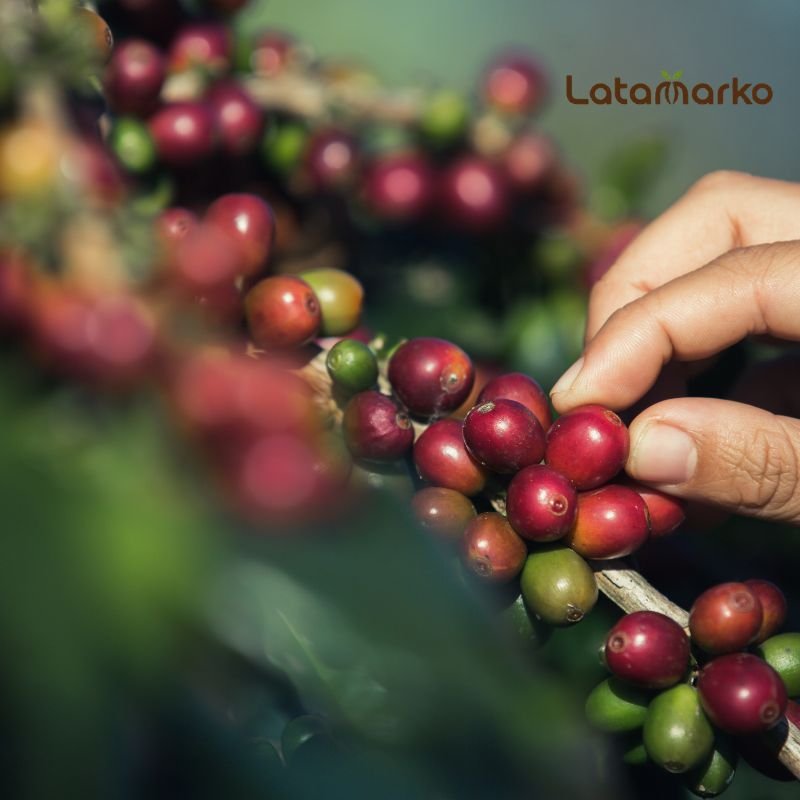
Green Coffee Beans
Request Green Coffee Beans from LATAMARKO
If you are looking to buy green coffee beans for professional roasting, distribution, private label or industrial production, the sourcing process should begin with your requirements—not with a generic product list.
At LATAMARKO, we work with professional buyers to identify suitable green coffee beans according to their target quality, application, volume and destination.
Whether you need a specific origin and grade or would like support selecting the right coffee for your product, the first step is simple:
Tell us what you need. We will evaluate suitable green coffee options for your business.
What Green Coffee Are You Looking For?
LATAMARKO can evaluate requirements across a multi-origin portfolio of Arabica and Robusta green coffee beans, subject to origin, crop and current availability.
Your request may be as specific as:
Brazil Santos Fine Cup Screen 17/18
Colombia Supremo Screen 17/18
India Robusta Cherry AA
Vietnam Robusta
or you may simply tell us:
“We need a chocolate-forward Arabica for our espresso blend.”
Both approaches are welcome.
If you already know the exact specification, send it.
If you do not, provide your target product and cup profile so suitable options can be evaluated.
Green Coffee for Your Application
Different coffee businesses require different raw materials.
LATAMARKO can evaluate green coffee for applications including:
Espresso
Espresso Blends
100% Arabica Coffee
Filter Coffee
Commercial Roasting
Premium Coffee
Specialty Coffee
Private Label Coffee
Industrial Coffee Manufacturing
Instant Coffee Production
The objective is to match the green coffee with the finished product you intend to manufacture and sell.
Tell Us Your Target Cup Profile
If you are developing a coffee rather than purchasing an exact existing specification, tell us the sensory profile you want.
For example:
Chocolate & Cocoa
Nutty
Caramel
Sweet
Fruity
Floral
Citrus
Low Acidity
Full Body
Strong Espresso Character
High Crema Performance
You can also provide an existing coffee or blend as a reference and explain what you would like to maintain, improve or change.
This allows the sourcing process to begin from the desired result in the cup.
Request Green Coffee Samples
Professional buyers may request green coffee samples for evaluation before moving to larger commercial quantities, subject to availability and commercial evaluation.
Samples can be used for:
Physical Inspection
Sample Roasting
Cupping
Origin Comparison
Blend Development
Quality Approval
The process can then move from:
Sample Request
→ Sample Evaluation
→ Coffee Selection
→ Commercial Offer
→ Order
→ Bulk / Container Supply
For a new supplier relationship, this provides a practical way to evaluate the coffee before scaling purchasing volumes.
Wholesale & Bulk Green Coffee Beans
LATAMARKO focuses on B2B green coffee supply for professional buyers.
Requirements can be evaluated for:
Wholesale Orders
Commercial Quantities
Full Container Loads (FCL)
Multiple Containers
Recurring Monthly Supply
Annual Procurement Programs
For buyers with ongoing requirements, providing estimated monthly or annual consumption allows the sourcing team to evaluate not only current availability but also the potential structure for continued supply.
Request a Full Container Load
For FCL green coffee inquiries, provide as much information as possible regarding:
Origin
Arabica / Robusta
Grade
Screen Size
Processing
Required Quantity
Bag Size
Packaging
Destination Port
Preferred Incoterm
Required Shipment Period
If your company requires multiple containers per month, include the expected monthly volume in your inquiry.
This helps distinguish a one-time spot requirement from a potential recurring supply program.
Private Label Green Coffee
Importers and distributors may also discuss private-label green coffee packaging, subject to origin, supplier capabilities and agreed requirements.
Depending on the program, requirements may include:
Your Brand
Logo
Custom Bag Design
Product Identification
Origin
Bag Marking
Lot Information
Required Commercial Information
Private-label requirements should be communicated early so packaging feasibility, artwork, dimensions and required markings can be reviewed before shipment.
International Delivery
For international green coffee inquiries, please specify your:
Destination Country
and preferably:
Destination Port / Delivery Location
Depending on the transaction, commercial offers may be evaluated under appropriate delivery terms such as:
FCA • FOB • CFR • CIF
where available and commercially applicable.
Providing the destination from the beginning allows transportation and commercial requirements to be considered together with the coffee itself.
What Information Should You Send?
For the fastest evaluation, send your inquiry in the following format:
| Requirement | Your Information |
|---|---|
| Product | Green Coffee Beans |
| Origin | Brazil / Colombia / Ethiopia / Vietnam / India / Other / Open |
| Species | Arabica / Robusta |
| Grade | If known |
| Screen Size | If required |
| Processing | Natural / Washed / Other |
| Target Cup Profile | Chocolate / Nutty / Fruity / Floral / Other |
| Application | Espresso / Filter / Blend / Industrial / Instant |
| Quantity | MT / FCL / Multiple FCL |
| Monthly Requirement | If applicable |
| Annual Requirement | If available |
| Packaging | Standard / Protective / Private Label |
| Destination | Port + Country |
| Incoterm | FCA / FOB / CFR / CIF / Open |
| Sample | Required / Not Required |
You do not need to complete every field.
Even four pieces of information can be enough to begin:
What coffee do you need?
What will you use it for?
How much do you need?
Where do you need it delivered?
Don’t Know Which Green Coffee to Choose?
That is not a problem.
Instead of specifying an origin, tell LATAMARKO about your business.
For example:
“We are an industrial roaster producing espresso blends. We need a chocolate and nutty profile with good body and crema. Our requirement is approximately 2 FCL per month, delivered to our market.”
From there, appropriate Arabica, Robusta or blend components can be evaluated according to the target product and commercial requirements.
This approach is particularly useful for buyers developing a new coffee product or looking for an alternative to their existing green coffee.
Already Buying Green Coffee from Another Supplier?
You can also send the specification of the coffee you currently purchase.
Useful information may include:
Origin
Grade
Screen
Processing
Moisture
Defect Specification
Cup Profile
Current Packaging
Monthly Volume
LATAMARKO can then evaluate whether suitable options are available for comparison.
For procurement teams, this can be more efficient than restarting the sourcing process from zero.
From First Inquiry to Long-Term Supply
A green coffee relationship can begin with one sample and develop progressively:
Your Requirement
↓
Coffee Selection
↓
Sample
↓
Roasting & Cupping
↓
Approval
↓
Commercial Offer
↓
First Order
↓
FCL Supply
↓
Recurring Containers
↓
Annual Supply Program
The objective is not simply to sell one shipment.
It is to identify green coffee that can continue making commercial sense as the buyer’s volume grows.
Request Your Green Coffee Beans
If you are a:
Coffee Roaster • Coffee Manufacturer • Importer • Distributor • Private-Label Producer • Industrial Buyer
and are looking for green coffee beans in wholesale, bulk or container quantities, send LATAMARKO your requirements.
You can request:
Specific Origins
Arabica or Robusta
Commercial or Premium Quality
Defined Grades & Screen Sizes
Samples
Bulk Quantities
FCL Supply
Recurring Monthly Shipments
Private-Label Options
International Supply
Tell LATAMARKO what you want to produce, the green coffee profile you need, your required volume and your destination. We will evaluate suitable sourcing options for your business.
Request Green Coffee Beans from LATAMARKO
Start with a sample. Evaluate the coffee. Select the right specification. Scale to commercial volume.
From origin to your roastery or production facility, LATAMARKO is built for professional green coffee sourcing.
Green Coffee Beans FAQ
Below are answers to the most frequently searched questions about green coffee beans, covering quality, origins, grading, storage, wholesale purchasing, bulk supply and international trade.
1. What are green coffee beans?
Green coffee beans are coffee seeds that have been processed and dried after harvesting but have not yet been roasted. They are the raw material used by coffee roasters and coffee manufacturers to produce roasted coffee.
Before becoming green coffee, coffee cherries are harvested and processed using methods such as washed, natural, honey or wet-hulled processing. The beans are then dried, prepared, graded and packed for commercial use or export.
2. Are green coffee beans unroasted?
Yes. Green coffee beans are unroasted coffee beans.
They have not undergone the roasting process that develops the familiar brown color, aroma and flavor associated with roasted coffee.
Green coffee is therefore primarily purchased by:
Coffee Roasters • Coffee Manufacturers • Importers • Distributors • Private-Label Producers
who roast or supply the beans for further processing.
3. What are the main types of green coffee beans?
The two most commercially important types of green coffee are:
Arabica (Coffea arabica)
Known for greater aromatic complexity, sweetness, acidity and diverse flavor profiles.
Robusta (Coffea canephora)
Known for stronger body, intensity, higher caffeine and its important role in espresso blends, commercial coffee and instant coffee.
Other coffee species, including Liberica and Excelsa, are also available but represent a much smaller share of global commercial coffee production.
4. Which country produces the best green coffee?
There is no single country that produces the best green coffee beans for every application.
Different origins are suitable for different products.
Brazil is widely used for balanced, chocolate, nutty and caramel-oriented coffees.
Colombia is known for balanced and versatile Arabica.
Ethiopia can offer highly aromatic, floral and fruity profiles.
Kenya is known for distinctive acidity and complex fruit characteristics.
Vietnam is a major source of Robusta.
India offers both Arabica and Robusta, including coffees widely used in espresso blends.
The right question is therefore:
Which green coffee origin is best for the product you want to produce?
5. What is the difference between Arabica and Robusta green coffee?
The main differences between Arabica and Robusta green coffee beans involve sensory profile, caffeine, growing conditions, commercial positioning and application.
Arabica is generally associated with:
Sweetness • Aromatic Complexity • Acidity • Fruit • Floral Notes
Robusta is commonly associated with:
Body • Intensity • Higher Caffeine • Stronger Character • Crema
Many premium coffees use 100% Arabica, while many espresso blends intentionally combine Arabica and selected Robusta to achieve a specific balance of aroma, body, intensity and crema.
Neither should be selected by name alone. Origin, grade, processing and actual quality also matter.
6. What does Screen 17/18 mean in green coffee?
Screen 17/18 describes the physical size classification of green coffee beans.
It generally indicates relatively large beans that have been sorted using calibrated screens during green coffee preparation.
Screen size is important because greater size uniformity can help roasters achieve more consistent roasting behavior.
However:
A larger green coffee bean does not automatically mean a better coffee.
Screen size should be evaluated together with defects, density, moisture, processing and cup quality.
7. How are green coffee beans graded?
Green coffee grading differs between producing countries, but professional evaluation can include:
Screen Size
Defect Count
Bean Uniformity
Density
Moisture
Physical Appearance
Processing Quality
Cup Quality
Different origins also use their own commercial terminology.
Examples include:
Supremo and Excelso in Colombia
AA and AB in certain origins
and various screen, defect and quality classifications in other producing countries.
Professional buyers should therefore interpret a grade according to the grading system of its origin, rather than assuming that all countries use the same standard.
8. What is the best green coffee for espresso?
The best green coffee for espresso depends on the target espresso profile.
For a classic chocolate-forward espresso, buyers may look for characteristics such as:
Chocolate • Cocoa • Caramel • Nuts • Sweetness • Full Body
Brazilian Arabicas are commonly considered for this style.
For stronger espresso blends requiring more body, intensity and crema, selected Robustas from origins such as India, Vietnam or Uganda may also be considered.
The best approach is to define the desired cup profile first and then select the green coffee or blend components capable of producing it.
9. What is specialty green coffee?
Specialty green coffee generally refers to higher-quality coffee distinguished through physical and sensory evaluation and typically associated with greater attention to origin, processing and traceability.
Information may include:
Country
Region
Producer or Farm
Variety
Altitude
Processing Method
Lot
Sensory Profile
Specialty coffee should not be confused with a marketing label alone. Professional buyers should evaluate the actual coffee through physical inspection, sample roasting and cupping.
10. What is the difference between specialty and commercial green coffee?
Specialty green coffee generally emphasizes distinctive sensory quality, traceability and differentiation.
Commercial green coffee generally places greater emphasis on scalable availability, consistent specification and commercial viability.
Between these categories is another important segment:
Premium Commercial Green Coffee
This can be particularly attractive for professional roasters looking for better cup and physical quality while still requiring commercially meaningful volumes.
The right segment depends on the buyer’s product positioning, target consumer, required volume and cost structure.
11. How long can green coffee be stored?
There is no single storage period that applies to every green coffee.
The ability of green coffee to maintain its quality depends on:
Initial Quality
Moisture
Water Activity
Packaging
Temperature
Humidity
Warehouse Conditions
Processing Method
Length of Storage
Green coffee may remain commercially usable for an extended period under suitable conditions, but commercial usability and peak sensory quality are not necessarily the same thing.
Professional buyers should monitor the condition of important lots rather than relying only on a fixed shelf-life number.
12. How should green coffee beans be stored?
Green coffee beans should be stored in a clean, dry and stable environment and protected from:
Water
Excessive Humidity
Excessive Heat
Direct Sunlight
Contamination
Strong Foreign Odors
Because green coffee can exchange moisture with the surrounding environment, stable warehouse conditions are important.
For premium, specialty or longer-term inventory, protective inner packaging such as hermetic or GrainPro-type solutions may also be considered.
13. How much does green coffee cost per kg?
There is no single universal green coffee price per kg.
The commercial value can change according to:
Arabica or Robusta
Country of Origin
Region
Grade
Screen Size
Processing Method
Crop
Physical Quality
Cup Quality
Certification
Order Volume
Market Conditions
Freight and Incoterm
This explains why two green coffees from the same country can have significantly different commercial values.
For professional buyers, the most accurate approach is to request an offer based on the exact specification, quantity and destination.
14. Where can I buy green coffee beans wholesale?
Professional buyers can purchase wholesale green coffee beans from green coffee exporters, importers, traders, specialized suppliers and multi-origin sourcing companies.
When choosing a wholesale supplier, buyers should evaluate more than availability.
Important factors include:
Origin Portfolio • Quality • Specifications • Samples • Consistency • Documentation • Packaging • Logistics • Volume Capability
LATAMARKO works with professional buyers looking for multi-origin green coffee for wholesale and commercial requirements, subject to product and origin availability.
15. Can I buy green coffee directly by container?
Yes. Professional buyers can purchase green coffee beans in full container load quantities (FCL).
Container purchasing is commonly used by:
Industrial Roasters
Large Coffee Roasters
Importers
Distributors
Coffee Manufacturers
Depending on the supply program, buyers may purchase a single FCL, multiple containers or establish recurring monthly shipments.
The actual quantity loaded into a container depends on factors such as bag size, packaging, palletization, container limitations and shipment requirements.
16. What is the MOQ for green coffee?
The minimum order quantity (MOQ) for green coffee depends on the supplier, origin, product, packaging and commercial arrangement.
Some suppliers may work with smaller wholesale quantities, while origin-based export programs may be structured around pallet, lot or full-container quantities.
For industrial buyers, MOQ should also be considered together with future volume.
A customer requiring one initial shipment but expecting significant monthly consumption should communicate that forecast when requesting an offer.
17. What documents are required to import green coffee?
The required documents vary according to the origin, destination country and applicable import regulations.
A green coffee shipment may involve documents such as:
Commercial Invoice
Packing List
Certificate of Origin
Phytosanitary Certificate where required
Fumigation Certificate where required
Quality Certificate / COA where applicable
Bill of Lading or Sea Waybill
Insurance Documentation where applicable
Other Destination-Specific Documents
Importers should confirm the exact documentation requirements for their destination before shipment.
18. How many kilograms are in a bag of green coffee?
There is no universal green coffee bag weight.
Common commercial formats can include:
30 kg
60 kg
69 kg
70 kg
and other formats depending on the producing country, supplier and commercial agreement.
For bulk purchasing, buyers should confirm both:
Net Weight per Bag
and:
Total Number of Bags
before shipment.
19. What is GrainPro packaging for green coffee?
GrainPro-type packaging is a protective inner packaging solution used for green coffee to provide additional separation between the beans and the surrounding environment.
It can be particularly useful for:
Premium Arabica
Specialty Coffee
Long International Shipments
Longer Storage
Quality-Sensitive Lots
The protective liner is typically used together with an outer export bag.
Whether this type of packaging is necessary depends on the value of the coffee, storage period, transportation conditions and buyer requirements.
20. Can I request a green coffee sample before ordering?
Yes. Professional buyers commonly request green coffee samples before placing bulk orders, subject to supplier and product availability.
Samples can be evaluated through:
Visual Inspection
Moisture Analysis
Sample Roasting
Cupping
Blend Testing
Comparison with Existing Coffee
This is particularly important when considering a new origin, supplier or specification.
The ideal process is:
Sample → Roast → Cup → Approve → Commercial Order
21. How do I choose a green coffee supplier?
A professional green coffee supplier should be evaluated on more than price.
Consider:
Product Portfolio
Available Origins
Arabica & Robusta Options
Quality Control
Traceability
Specification Accuracy
Sample Availability
Consistency Between Shipments
Documentation
Packaging
International Logistics
Ability to Support Your Required Volume
For industrial buyers, another important question is whether the supplier can support the business when demand increases.
A supplier suitable for a small trial order may not necessarily be suitable for a recurring multi-container program.
22. Should I buy green coffee directly from origin or from a supplier?
Both approaches can be appropriate.
Direct sourcing from origin can provide advantages for companies with sufficient purchasing volume, quality-control capability and international logistics experience.
Working with a multi-origin green coffee supplier can provide greater flexibility when a buyer needs several origins, different specifications or alternative coffees through one commercial relationship.
The best sourcing model depends on:
Volume • Internal Expertise • Number of Origins • Logistics Capability • Quality Requirements • Supply Strategy
23. What information should I provide when requesting green coffee?
A professional inquiry should ideally include:
Origin: Preferred origin or open to alternatives
Species: Arabica / Robusta
Grade: If known
Screen: If required
Processing: Natural / Washed / Other
Application: Espresso / Filter / Blend / Industrial / Instant
Quantity: MT / FCL / Multiple FCL
Packaging: Standard / Protective / Private Label
Destination: Port + Country
Incoterm: If preferred
If you do not know the exact specification, provide your target cup profile, application, required volume and destination.
A suitable coffee can then be evaluated around those requirements.
24. Can green coffee be supplied in private-label bags?
Depending on the origin, supplier capabilities and commercial agreement, private-label green coffee bags may be possible.
Private-label packaging can include elements such as:
Buyer or Brand Logo
Product Name
Origin
Net Weight
Lot Identification
Required Bag Marking
This can be particularly valuable for green coffee importers and distributors building their own branded product portfolio.
Private-label requirements should be discussed before shipment so that packaging specifications and required markings can be confirmed.
25. Does LATAMARKO supply green coffee beans in bulk?
Yes. LATAMARKO focuses on B2B green coffee sourcing and supply for professional buyers, including roasters, manufacturers, importers and distributors.
Requirements can be evaluated for:
Arabica Green Coffee Beans
Robusta Green Coffee Beans
Commercial Coffee
Premium Commercial Coffee
Selected Specialty Coffees
Wholesale Quantities
Full Container Loads
Multiple Containers
Recurring Supply Programs
Availability depends on the origin, crop, specification and current supply conditions.
Professional buyers can provide their required origin, quality, application, quantity and destination to identify suitable options.
26. Can LATAMARKO help me choose the right green coffee?
Yes. Buyers do not necessarily need to begin with an exact origin or grade.
You can provide LATAMARKO with information such as:
Your Product
Target Flavor Profile
Roasting Application
Required Quality Level
Monthly Volume
Destination
For example:
“We need green coffee for a premium espresso with chocolate and nutty notes, full body, good crema and consistent commercial availability.”
Suitable Arabica, Robusta or blend components can then be evaluated according to those requirements.
27. Can LATAMARKO supply recurring container quantities?
For buyers requiring regular commercial volumes, recurring green coffee supply can be evaluated according to the product, origin, availability and purchasing forecast.
A professional program may progress from:
Sample
→ Trial Order
→ First FCL
→ Recurring FCL Shipments
→ Multiple Origins
→ Annual Supply Program
For buyers planning regular purchases, providing the expected monthly and annual volume from the beginning makes it easier to evaluate an appropriate sourcing structure.
Still Have Questions About Green Coffee Beans?
Choosing green coffee becomes much easier when the purchasing requirement is clearly defined.
Instead of beginning only with:
“What green coffee do you have?”
professional buyers can begin with:
What are we producing? What flavor profile do we need? What quality level are we targeting? How much will we purchase? Where should the coffee be delivered?
From there, the right origin, Arabica or Robusta option, grade, screen size, processing method, packaging and commercial supply structure can be evaluated.
For buyers looking for wholesale green coffee beans, bulk green coffee, full-container quantities or recurring international supply, LATAMARKO can evaluate suitable sourcing options based on the specific requirements of the business.