Cocoa Powder Manufacturer in Spain
September 11, 2026
Bulk Cocoa Powder from Spain for Industrial Buyers
September 16, 2026
Choosing the right cocoa powder for biscuit & wafer production can significantly influence the color, cocoa flavor, aroma, appearance, and consistency of the finished product. In industrial biscuit and wafer manufacturing, cocoa powder is not simply added to make a product “chocolate flavored.” It becomes part of the product’s visual and sensory identity.
A cocoa biscuit may require a rich dark-brown appearance. A wafer sheet may need a lighter, balanced cocoa tone. A sandwich biscuit may combine a dark shell with a contrasting cream filling, while another manufacturer may be developing an intensely black biscuit designed to stand out immediately on the shelf.
Each of these products requires a different approach to cocoa selection.
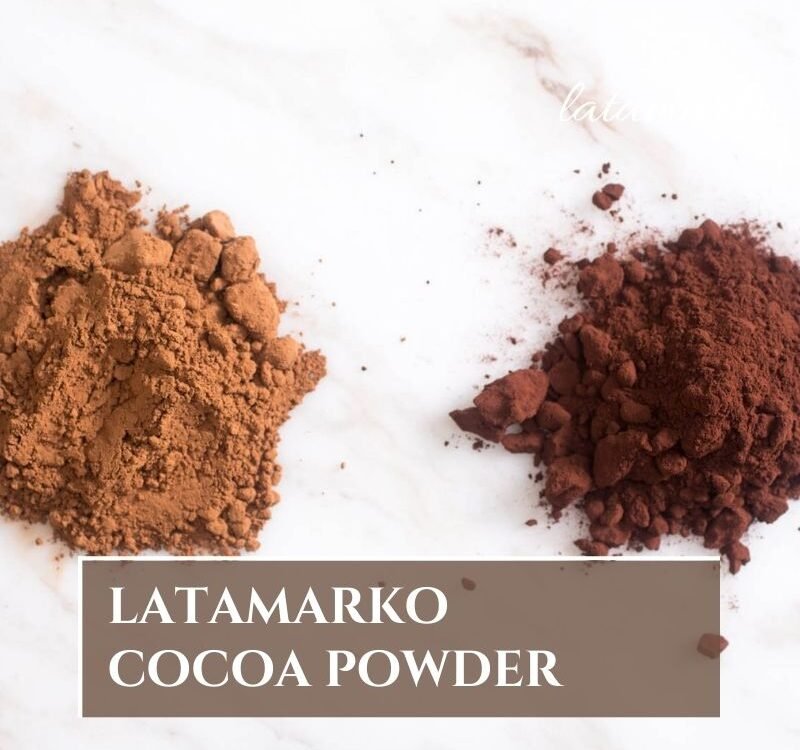
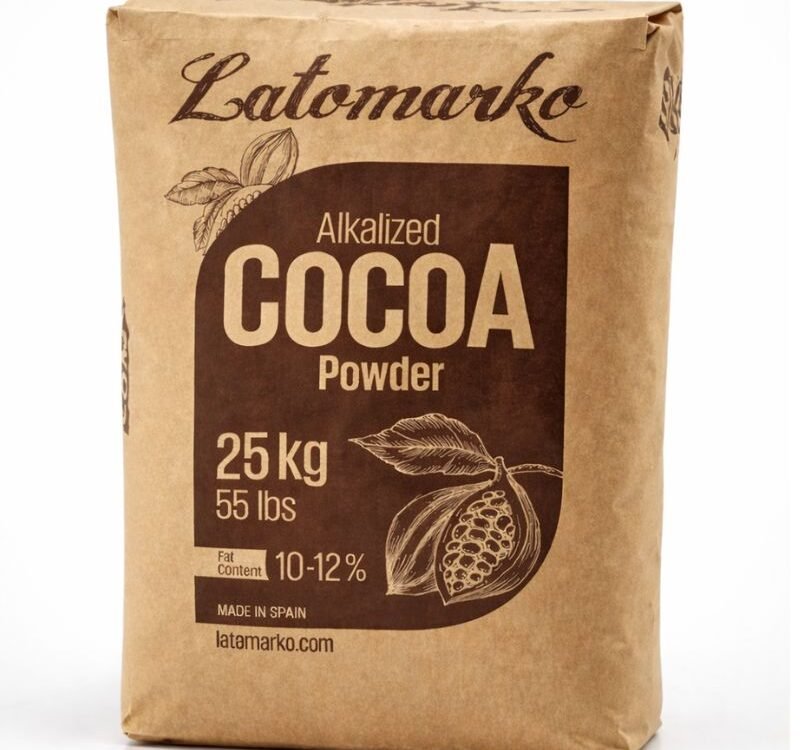
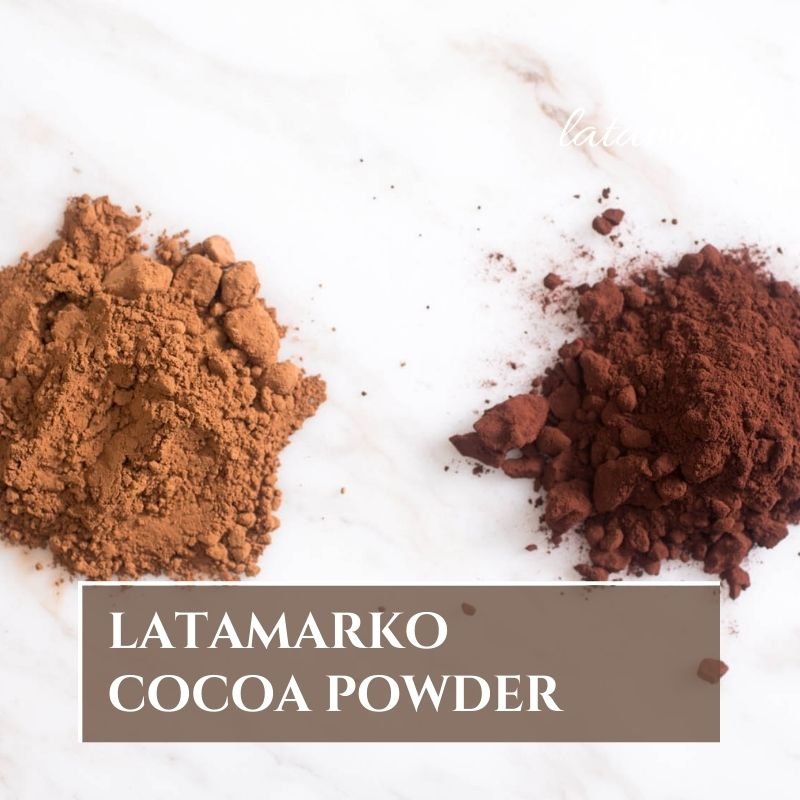
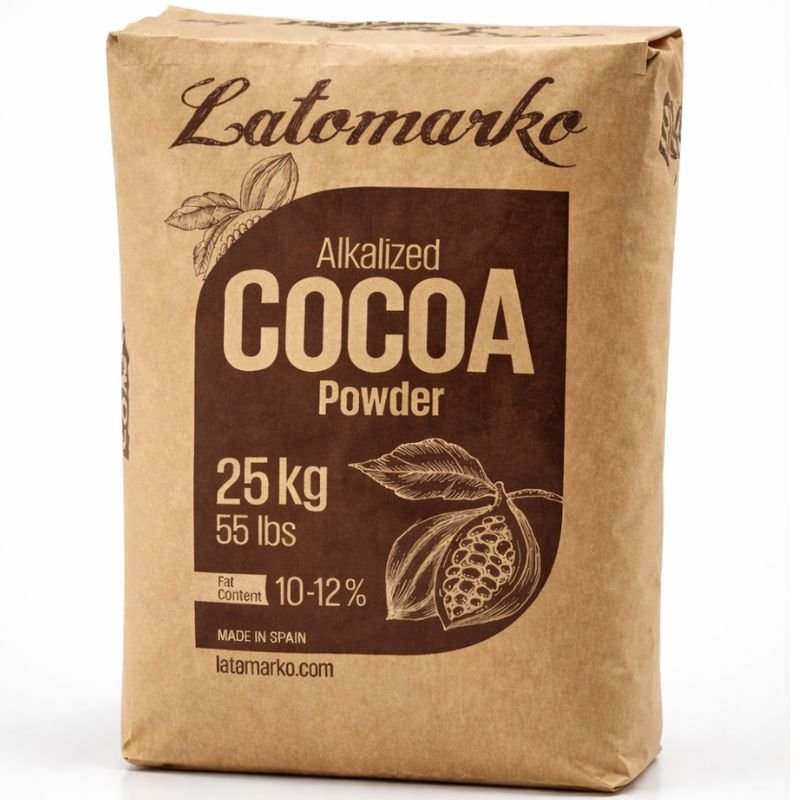
At LATAMARKO, cocoa powder selection starts with the application. The portfolio includes Natural Cocoa Powder, Alkalized Brown Cocoa Powder, Light Alkalized Cocoa Powder, Dark Brown Cocoa Powder LM60, Black Cocoa Powder, and Cocoa Powder for Dairy Applications, allowing manufacturers to evaluate different cocoa profiles according to the biscuit, wafer, filling, or cream they want to produce.
The right cocoa powder should not only look good in the bag. It should deliver the desired color, cocoa character, and consistency in the finished biscuit or wafer.
Cocoa Powder for Biscuit
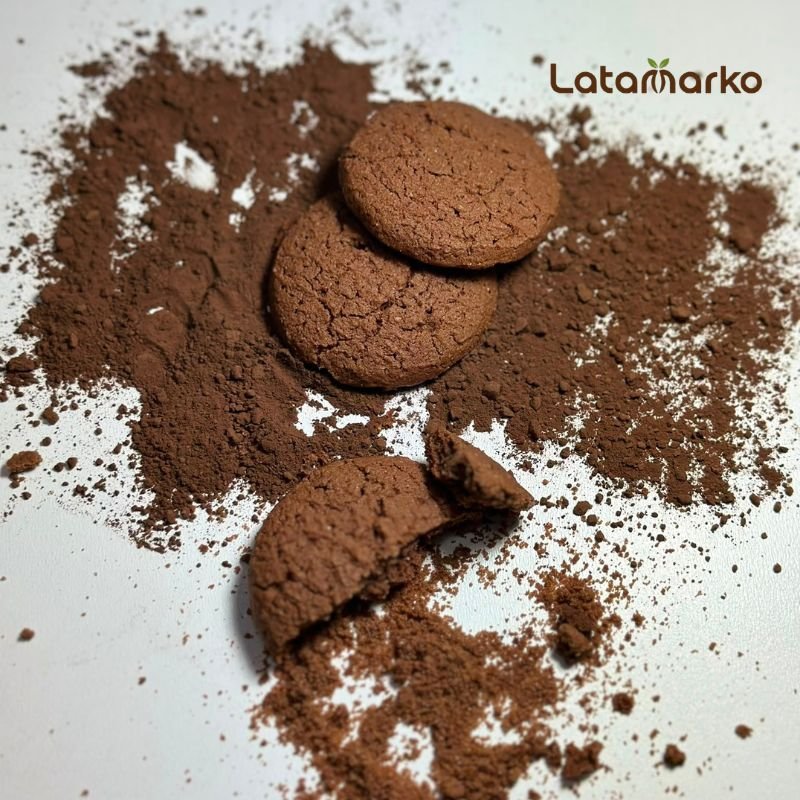
Why Cocoa Powder Matters in Biscuit & Wafer Manufacturing
Biscuits and wafers are complex formulations.
Cocoa powder must perform alongside ingredients such as:
Flour • Sugar • Vegetable Fat • Milk Ingredients • Starch • Leavening Agents • Emulsifiers • Flavors
The final cocoa impression is therefore influenced by much more than the cocoa powder itself.
Depending on the formulation, cocoa powder can contribute to:
Color
Cocoa Flavor
Aroma
Bitterness
Roasted Character
Contrast Between Layers
Overall Product Appearance
This is particularly important in industrial production because consumers expect a branded biscuit or wafer to have essentially the same appearance and flavor every time they purchase it.
A cocoa powder that changes significantly between batches can create unwanted variation in the finished product.
Cocoa Powder for Chocolate Biscuits
For chocolate and cocoa biscuits, color is often one of the first characteristics consumers notice.
A light brown biscuit communicates something very different from a deep dark-brown or black biscuit.
Manufacturers may therefore select cocoa powder according to the visual positioning of the product:
Classic Cocoa Biscuit
Milk-Style Cocoa Biscuit
Dark Cocoa Biscuit
Premium Chocolate Biscuit
Black Cocoa Biscuit
But the darkest cocoa is not automatically the best choice.
The desired color must work together with the required cocoa flavor, sweetness, texture, and overall recipe.
For a mainstream cocoa biscuit, a balanced brown cocoa powder may be more suitable than an extremely dark option.
For a premium dark product, the opposite may be true.
Natural Cocoa Powder for Biscuits & Wafers
LATAMARKO Natural Cocoa Powder can be considered for manufacturers seeking the characteristic profile of non-alkalized cocoa.
Natural cocoa retains its naturally more acidic cocoa character and generally provides a different color and sensory direction compared with alkalized cocoa powders.
Depending on the formulation, it can be evaluated for:
Cocoa Biscuits
Wafer Applications
Biscuit Fillings
Cocoa Creams
Selected Bakery Products
However, natural cocoa should not be selected simply because it is “natural.”
In biscuit production, its interaction with the complete recipe—particularly the leavening system—should be considered during formulation and industrial testing.
Alkalized Brown Cocoa Powder
LATAMARKO Alkalized Brown Cocoa Powder provides a classic brown cocoa profile suitable for manufacturers looking for a recognizable chocolate appearance without moving toward an extremely dark finished product.
It can be evaluated for applications such as:
Chocolate Biscuits
Cocoa Wafer Sheets
Sandwich Biscuits
Wafer Creams
Chocolate Fillings
Coated Biscuit Applications
For high-volume biscuit manufacturers, a balanced brown cocoa can be particularly useful when the product needs to maintain a familiar chocolate identity across continuous production.
The key consideration is not only achieving the desired color once, but reproducing it consistently.
Light Alkalized Cocoa Powder
LATAMARKO Light Alkalized Cocoa Powder provides another formulation option where manufacturers require a controlled alkalized cocoa profile without the deeper appearance of LM60 or Black Cocoa.
This can be useful for products where cocoa should remain clearly visible and recognizable but should not dominate the entire visual identity.
Potential applications include:
Light Cocoa Biscuits
Wafer Sheets
Chocolate-Flavored Wafers
Cocoa Creams
Layered Wafer Products
Confectionery Biscuits
For manufacturers with several product lines, light alkalized cocoa can also help create differentiation between standard, dark, and premium cocoa products.
Dark Brown Cocoa Powder LM60 for Biscuits
For products requiring a deeper visual profile, LATAMARKO LM60 Dark Brown Cocoa Powder can be evaluated.
LM60 is particularly relevant where manufacturers want a rich, deep dark-brown appearance and a stronger cocoa identity in the finished biscuit or wafer application.
Potential applications include:
Dark Cocoa Biscuits
Premium Sandwich Biscuits
Dark Wafer Sheets
Chocolate Wafer Creams
Dark Cocoa Fillings
Premium Biscuit Products
A manufacturer developing a sandwich biscuit, for example, may intentionally use a darker biscuit shell to create visual contrast with a light-colored cream filling.
In this type of product, cocoa powder contributes not only to flavor but also to the visual architecture of the finished biscuit.
Black Cocoa Powder for Black Biscuits
The growth of intensely dark biscuits and confectionery products has made Black Cocoa Powder particularly interesting for manufacturers seeking a distinctive appearance.
LATAMARKO Black Cocoa Powder can be evaluated for products requiring a very dark to black cocoa profile.
Applications can include:
Black Cocoa Biscuits
Dark Sandwich Cookies
Black Wafer Sheets
Very Dark Cocoa Fillings
High-Contrast Cream Biscuits
Specialty Bakery Products
Black cocoa can create a powerful visual identity, particularly when combined with contrasting white, vanilla, milk, or colored fillings.
However, Black Cocoa should be treated as a specialized formulation ingredient.
Its purpose is not simply to make every biscuit darker.
Black Cocoa is most valuable when an intensely dark appearance is an intentional part of the product concept.
Manufacturers should evaluate both the color and sensory performance in the actual recipe before commercial approval.
Cocoa Powder for Wafer Production
Wafer production creates a different application environment from conventional biscuits.
Manufacturers may use cocoa powder in:
Wafer Sheets
Wafer Creams
Chocolate-Flavored Fillings
Multi-Layer Wafers
Coated Wafer Products
In a multilayer wafer, cocoa powder may appear in more than one component.
For example:
Cocoa Wafer Sheet + Chocolate Cream
or:
Plain Wafer Sheet + Dark Cocoa Filling
or:
Dark Wafer Sheet + Milk-Based Cream
This creates opportunities to use cocoa color strategically.
The cocoa powder selected for the wafer sheet does not necessarily need to be identical to the cocoa powder used in the filling.
Each component can be optimized according to its role in the finished product.
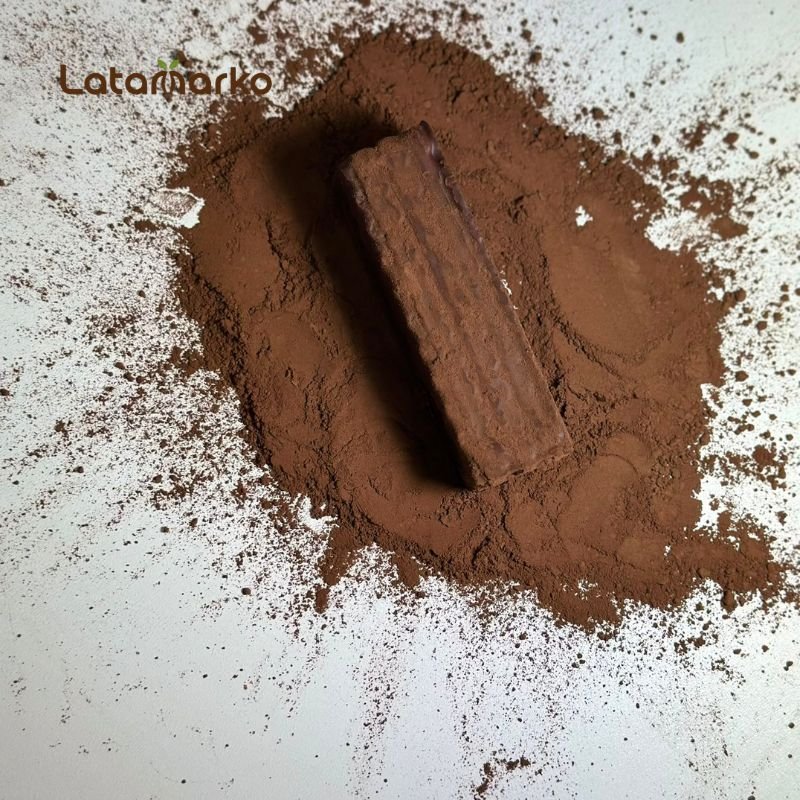
Cocoa Powder for Biscuit
Cocoa Powder for Wafer Creams & Fillings
In wafer creams and biscuit fillings, cocoa powder works together with ingredients such as:
Sugar
Vegetable Fat
Milk Ingredients
Emulsifiers
Flavorings
The manufacturer must achieve the desired relationship between:
Cocoa Intensity + Sweetness + Fat + Color + Texture
For a mainstream chocolate wafer cream, a balanced brown cocoa profile may be appropriate.
For a premium dark wafer, LM60 Dark Brown Cocoa Powder may provide a stronger visual direction.
For highly distinctive dark products, Black Cocoa Powder can be evaluated.
Again, the final decision should be made based on the actual finished cream—not simply the dry powder.
Cocoa Powder for Sandwich Biscuits
Sandwich biscuits provide manufacturers with particularly strong opportunities for cocoa differentiation.
Consider combinations such as:
Dark Cocoa Biscuit + Vanilla Cream
Black Cocoa Biscuit + White Cream
Brown Cocoa Biscuit + Chocolate Cream
Dark Cocoa Biscuit + Milk Cream
Cocoa Biscuit + Hazelnut Filling
The contrast between biscuit and filling can become an important part of product recognition.
This means cocoa powder can contribute directly to shelf impact and brand identity.
For manufacturers developing a new sandwich biscuit, the question should therefore include both:
What should the biscuit taste like?
and:
What should the consumer see when the package is opened?
Color Consistency in Industrial Biscuit Production
For large biscuit and wafer manufacturers, color consistency can be critical.
Imagine a factory producing millions of identical sandwich biscuits.
If one batch appears noticeably lighter than another, consumers may perceive a difference even when the recipe has not intentionally changed.
Variation can also become visible in:
Retail Packaging
Product Photography
Display Trays
Multi-Pack Products
Side-by-Side Production Batches
Professional cocoa procurement should therefore consider the ability to maintain the approved color profile across commercial shipments.
A beautiful laboratory sample has limited value if the commercial supply cannot reproduce the same result reliably.
Cocoa Flavor After Baking
The sensory performance of cocoa powder should be evaluated in the finished baked product.
Heat, sugar, fat, flour, moisture, and other formulation components can influence how cocoa character is ultimately perceived.
This means evaluating dry cocoa powder alone is insufficient.
Manufacturers should conduct:
Laboratory Trials
Pilot Baking
Sensory Evaluation
Finished-Product Color Comparison
Commercial Production Trials
A cocoa powder that smells highly intense in its dry form may not necessarily deliver the preferred result after baking.
The finished biscuit remains the real test.
Cocoa Powder and Leavening Systems
Biscuit formulations can contain different leavening systems, and the characteristics of cocoa powder may interact with the overall recipe.
This is particularly relevant when comparing natural and alkalized cocoa powders, because their acidity and pH characteristics differ.
Manufacturers changing from one cocoa type to another should therefore avoid assuming that a direct one-to-one substitution will always deliver the same result.
The complete formulation may need to be considered, including:
Leavening Agents
pH Balance
Flavor
Color
Texture
Baking Conditions
This is another reason application testing is essential before industrial-scale approval.
Cocoa Powder for Premium Biscuit Products
Premiumization does not necessarily mean using the darkest possible cocoa powder.
A premium biscuit can be differentiated through:
Rich Cocoa Flavor
Distinctive Color
Better Ingredient Positioning
Balanced Sweetness
Premium Filling
Strong Visual Contrast
Consistent Product Quality
For some products, LM60 Dark Brown Cocoa Powder may support the desired premium positioning.
For others, an Alkalized Brown Cocoa Powder may provide a more balanced result.
The cocoa should be selected according to the product concept rather than according to a single parameter.
Cocoa Powder for Dairy-Based Wafer & Biscuit Fillings
LATAMARKO also offers Cocoa Powder for Dairy Applications, which can be relevant when manufacturers work with milk-oriented cocoa systems.
Potential applications can include:
Milk-Cocoa Creams
Dairy-Based Biscuit Fillings
Milk Chocolate-Style Wafer Creams
Dairy Confectionery Fillings
The interaction between cocoa, milk ingredients, sugar, and fat can significantly influence the final flavor and appearance.
For these formulations, an application-oriented cocoa selection can help manufacturers achieve the desired cocoa impact without losing the intended dairy character.
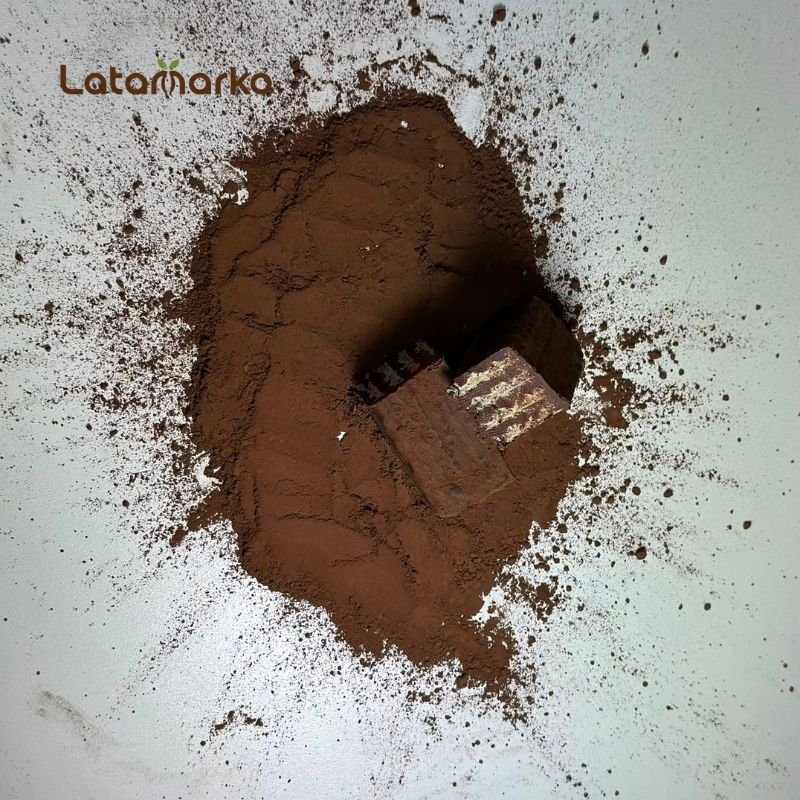
Cocoa Powder for Biscuit
Which LATAMARKO Cocoa Powder Is Suitable for Your Product?
LATAMARKO’s portfolio allows biscuit and wafer manufacturers to evaluate several cocoa directions:
| LATAMARKO Cocoa Powder | General Profile | Potential Applications |
|---|---|---|
| Natural Cocoa Powder | Natural cocoa character | Biscuits, wafers and selected bakery formulations |
| Alkalized Brown Cocoa Powder | Classic brown cocoa | Biscuits, wafer sheets, creams and fillings |
| Light Alkalized Cocoa Powder | Controlled alkalized profile | Light cocoa biscuits, wafers and confectionery |
| Dark Brown Cocoa Powder – LM60 | Deep dark-brown appearance | Dark biscuits, sandwich cookies, wafers and fillings |
| Black Cocoa Powder | Very dark to black appearance | Black biscuits, dark sandwich products and specialty applications |
| Cocoa Powder for Dairy Applications | Dairy-focused cocoa application | Milk-based creams, fillings and dairy-oriented products |
This allows manufacturers to select cocoa according to the specific component and desired finished result.
How Professional Biscuit Manufacturers Select Cocoa Powder
Before requesting cocoa powder, a manufacturer should ideally define:
Product Type
Biscuit, sandwich biscuit, wafer, wafer sheet, cream, filling, or coating.
Desired Color
Natural, brown, light alkalized profile, dark brown, or black.
Target Cocoa Character
Balanced, smooth, intense, roasted, or dark.
Current Cocoa Powder
An existing specification or reference sample can make comparison easier.
Technical Requirements
Fat content, pH, moisture, microbiological requirements, and other parameters where applicable.
Production Volume
Monthly and annual consumption.
Destination
Important for commercial supply and logistics planning.
These details make product selection much more precise.
Sample Testing Before Bulk Purchase
For professional manufacturers, the ideal sourcing process is:
Define Application
→ Select Cocoa Powder Options
→ Receive Samples
→ Laboratory Testing
→ Produce Trial Biscuits or Wafers
→ Compare Finished Products
→ Approve Specification
→ Commercial Order
→ Recurring Supply
If a manufacturer already uses another cocoa powder, a direct comparative test can be particularly useful.
Use the same recipe and processing conditions for both powders, then compare:
Color
Flavor
Aroma
Texture
Baking Performance
Overall Product Appearance
This provides far more meaningful information than comparing specifications alone.
Cocoa Powder Price vs Finished-Product Performance
For large biscuit and wafer factories, cocoa powder price naturally matters.
However, procurement should evaluate more than price per kilogram.
The commercial calculation should consider:
Purchase Cost
Dosage
Color Performance
Cocoa Impact
Processing Compatibility
Consistency
Supply Reliability
A lower-priced cocoa powder may not provide better economics if more product is required to achieve the desired color or cocoa intensity.
Likewise, inconsistency can create hidden costs through formulation adjustments, rejected batches, or variations in finished-product appearance.
For industrial manufacturers, cost-in-use can therefore be more meaningful than ingredient price alone.
LATAMARKO Cocoa Powder for Biscuit & Wafer Manufacturers
LATAMARKO supplies a diversified cocoa powder portfolio for professional food manufacturers seeking different cocoa colors and application profiles.
For biscuit and wafer production, manufacturers can evaluate:
Natural Cocoa Powder
Alkalized Brown Cocoa Powder
Light Alkalized Cocoa Powder
Dark Brown Cocoa Powder – LM60
Black Cocoa Powder
Cocoa Powder for Dairy Applications
Instead of beginning with a generic request for “cocoa powder,” manufacturers can provide LATAMARKO with their actual production requirements.
For example:
“We manufacture dark sandwich biscuits with a light cream filling. We need a deep dark-brown biscuit color, strong cocoa identity, and consistent performance for industrial production.”
Or:
“We manufacture chocolate wafers and require a balanced brown cocoa powder for both wafer and cream applications.”
This gives the sourcing process a clear technical and commercial direction.
Request Cocoa Powder for Biscuit & Wafer Production
If your company manufactures biscuits, sandwich cookies, wafers, wafer sheets, cocoa creams, fillings, or other industrial bakery products, start your cocoa powder request with the finished product.
Tell LATAMARKO:
What do you manufacture?
Where will the cocoa powder be used—biscuit, wafer sheet, cream, or filling?
What color do you need?
What cocoa profile are you targeting?
What cocoa powder are you currently using?
What is your monthly or annual requirement?
Where should the product be delivered?
Suitable options can then be evaluated from the LATAMARKO cocoa powder portfolio.
From Natural and Alkalized Brown to Light Alkalized, LM60 Dark Brown, Black Cocoa, and Dairy Application Cocoa Powder, the objective is to match the cocoa to the product—not force the product to match the cocoa.
For professional biscuit and wafer manufacturers, the right cocoa powder for biscuit & wafer production should deliver more than color.
It should help create the desired cocoa character, visual identity, production consistency, and finished-product performance—batch after batch.