Cocoa Powder for Bakery Fillings & Creams
September 4, 2026
Uganda Green Coffee: Premium Arabica & Robusta Supply
September 5, 2026
Choosing the right cocoa powder for chocolate manufacturing can have a major impact on the color, flavor, aroma, consistency, and overall positioning of the finished product. For professional chocolate manufacturers, cocoa powder is not simply a source of cocoa flavor. It is a functional ingredient that helps define how a chocolate product looks, tastes, and performs.
A chocolate filling may require a balanced brown cocoa profile, while a premium dark chocolate application may need a deeper and more intense appearance. Another manufacturer may be developing an exceptionally dark product where black cocoa is required. Milk-based chocolate products introduce another set of formulation considerations.
This is why selecting cocoa powder should begin with the finished application.
At LATAMARKO, cocoa powder selection follows this principle. With a portfolio ranging from Natural Cocoa Powder and Alkalized Brown Cocoa Powder to Light Alkalized Cocoa Powder, Dark Brown Cocoa Powder LM60, Black Cocoa Powder, and Cocoa Powder for Dairy Applications, manufacturers can evaluate different cocoa solutions according to the characteristics they want to achieve in their finished products.
The objective is not simply to choose a darker cocoa powder.
The objective is to choose the cocoa powder that delivers the right color, cocoa character, consistency, and performance for your chocolate formulation.
Cocoa Powder for Chocolate Manufacturing
Why Cocoa Powder Matters in Chocolate Manufacturing
Cocoa powder plays several roles in chocolate and cocoa-based manufacturing.
Depending on the recipe and application, it can contribute to:
Cocoa Flavor • Color • Aroma • Bitterness • Roasted Character • Product Identity
The characteristics of cocoa powder can also influence how consumers perceive a finished chocolate product.
Before tasting a chocolate filling, spread, coating, or confectionery product, consumers already see its color. A rich brown or intensely dark appearance can create an expectation of stronger cocoa flavor.
But appearance alone is not enough.
Professional manufacturers must balance:
Color + Flavor + Formulation + Consistency + Commercial Performance
This is why two cocoa powders that appear similar when viewed as dry powder may produce noticeably different results when incorporated into the same recipe.
Natural Cocoa Powder for Chocolate Manufacturing
Natural Cocoa Powder is non-alkalized cocoa powder that retains more of the natural characteristics of cocoa.
It typically provides a recognizable cocoa profile and a naturally lighter appearance compared with more intensely processed cocoa powders.
Natural cocoa can be considered for manufacturers looking for:
Traditional Cocoa Character
Natural Cocoa Flavor
Lighter Cocoa Color
Defined Cocoa Acidity
It may be suitable for selected chocolate, confectionery, filling, bakery, and cocoa-based formulations depending on the recipe.
However, manufacturers should not select natural cocoa simply because they want an “authentic” product. The choice between natural and alkalized cocoa should always consider the complete formulation and desired finished result.
Alkalized Brown Cocoa Powder
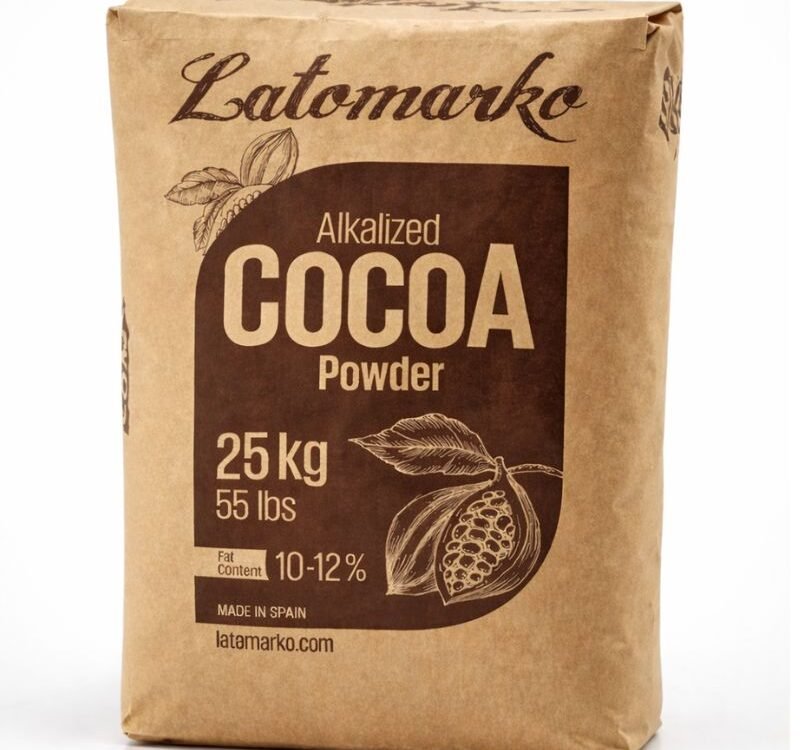
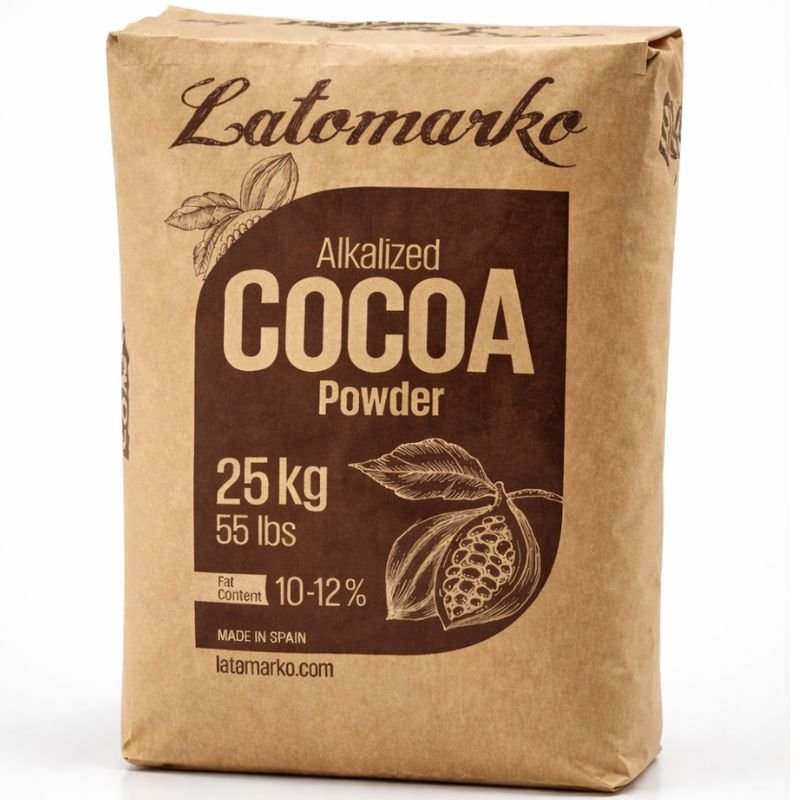
Alkalized Brown Cocoa Powder is an important option for industrial chocolate manufacturers looking for a classic brown cocoa appearance with the sensory characteristics associated with alkalized cocoa.
During alkalization, cocoa is treated under controlled conditions to modify characteristics such as its acidity, color, and flavor profile.
For chocolate manufacturing, this can help create a more controlled cocoa character and a visually attractive brown appearance.
LATAMARKO Alkalized Brown Cocoa Powder can be evaluated for applications such as:
Chocolate Fillings
Chocolate Coatings
Compound Chocolate Products
Chocolate Spreads
Pralines
Confectionery
Cocoa-Based Creams
For high-volume manufacturing, however, the initial color is only part of the evaluation. Consistency between different commercial shipments is equally important.
Light Alkalized Cocoa Powder
LATAMARKO Light Alkalized Cocoa Powder provides another option for manufacturers requiring a controlled balance of cocoa color and alkalized character.
Not every chocolate product should be extremely dark.
For many mainstream and premium products, manufacturers may want an attractive cocoa appearance while maintaining a balanced visual and sensory profile.
Light alkalized cocoa can therefore be evaluated where the target formulation requires a less intense appearance than darker cocoa alternatives.
Potential applications can include:
Chocolate Confectionery
Chocolate Fillings
Chocolate Creams
Coatings
Cocoa-Based Products
The final selection should always be confirmed through application testing because the same cocoa powder can perform differently depending on sugar, fat, milk ingredients, emulsifiers, flavors, and other components of the recipe.
Cocoa Powder for Chocolate Manufacturing
Dark Brown Cocoa Powder – LM60
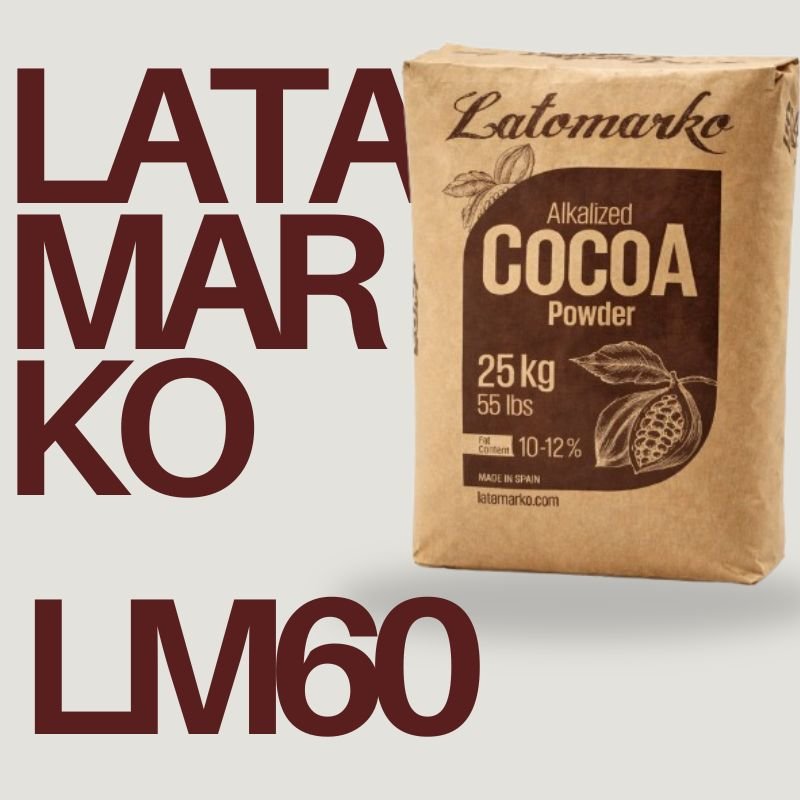
For applications requiring a deeper cocoa appearance, LATAMARKO LM60 Dark Brown Cocoa Powder represents an important option within the portfolio.
LM60 is designed for manufacturers seeking a rich, deep dark-brown cocoa profile that can create stronger visual impact in the finished product.
This makes LM60 particularly relevant for applications such as:
Dark Chocolate Fillings
Chocolate Spreads
Chocolate Coatings
Compound Chocolate
Pralines
Chocolate Confectionery
Dark Cocoa Creams
Premium Cocoa-Based Products
For manufacturers developing premium products, dark brown cocoa can also contribute to product positioning.
A deeper cocoa appearance may help communicate richness and cocoa intensity before the consumer even tastes the product.
However, LM60 should still be evaluated inside the manufacturer’s actual formulation. The objective is not simply to produce the darkest possible result, but to achieve the desired balance between visual intensity and cocoa character.
Black Cocoa Powder
Some products require a visual identity that goes beyond conventional dark brown.
For these applications, LATAMARKO Black Cocoa Powder provides an option for manufacturers seeking an extremely dark or black cocoa appearance.
Black cocoa can be particularly interesting for:
Black Cocoa Confectionery
Very Dark Chocolate Fillings
Dark Creams
Black Cocoa Coatings
High-Contrast Products
Specialty Chocolate Concepts
Premium Visual Applications
Black cocoa should be treated as a specialized formulation ingredient rather than simply as a stronger version of ordinary cocoa powder.
The darkest cocoa is not automatically the best cocoa.
If a manufacturer needs a conventional chocolate-brown product, using black cocoa simply because it is darker may work against the desired product identity.
The application should determine the cocoa powder—not the other way around.
Cocoa Powder for Dairy Applications
Milk-based systems can present different formulation requirements from conventional chocolate products.
For this reason, LATAMARKO also offers Cocoa Powder for Dairy Applications.
This option can be evaluated for products such as:
Chocolate Milk
Flavored Milk
Dairy Beverages
Ice Cream
Dairy Desserts
Chocolate Yogurt Applications
Milk-Based Creams and Fillings
In dairy products, manufacturers should consider how cocoa interacts with the complete formulation, including milk proteins, fats, sugar, stabilizers, and other ingredients.
Color and cocoa flavor remain important, but the overall performance within the dairy system becomes a major part of product selection.
For manufacturers operating across both chocolate and dairy categories, having application-specific cocoa options can therefore be particularly valuable.
Choosing Cocoa Powder by Color
Color is one of the first specifications many buyers discuss when sourcing cocoa powder for chocolate manufacturing.
But instead of simply requesting “brown cocoa” or “dark cocoa,” manufacturers should define the appearance they want in the finished product.
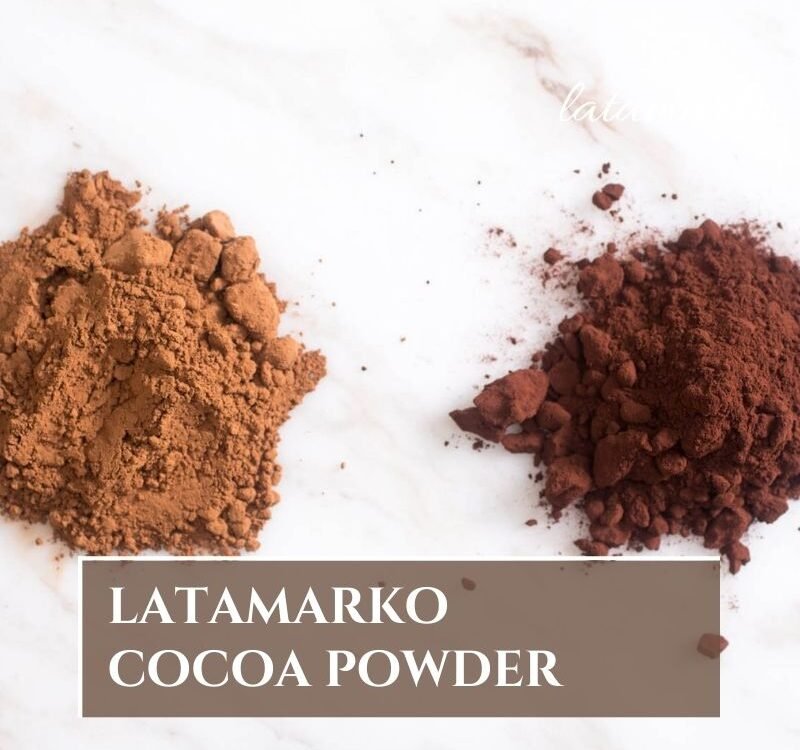
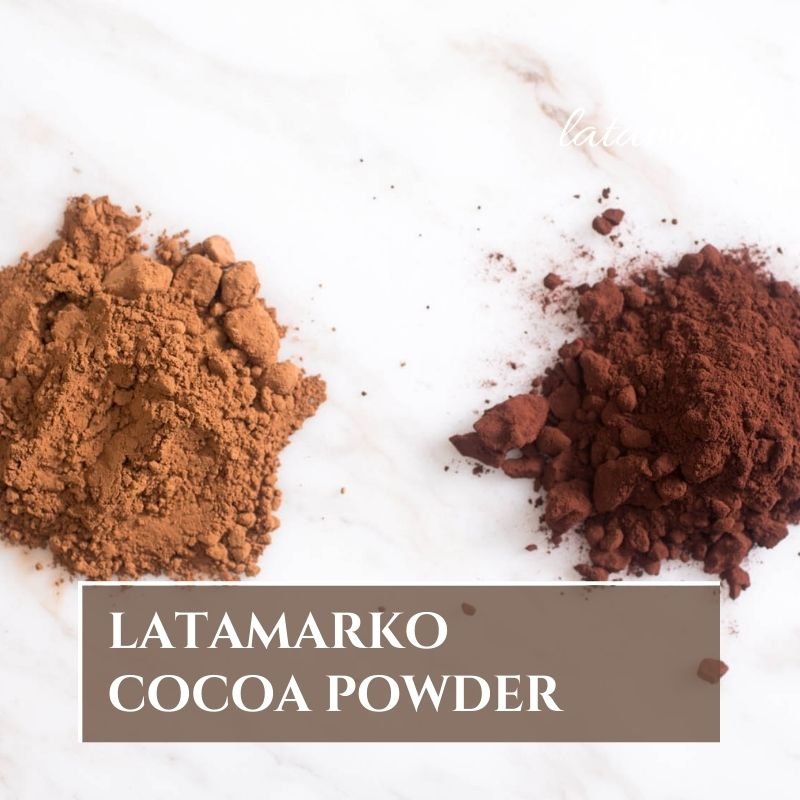
The LATAMARKO portfolio provides different directions:
| Cocoa Powder | General Color Direction | Application Positioning |
|---|---|---|
| Natural Cocoa Powder | Natural cocoa appearance | Traditional cocoa formulations |
| Alkalized Brown Cocoa Powder | Classic brown | Broad chocolate applications |
| Light Alkalized Cocoa Powder | Controlled alkalized cocoa appearance | Balanced chocolate formulations |
| Dark Brown Cocoa Powder – LM60 | Deep dark brown | Rich and premium dark applications |
| Black Cocoa Powder | Very dark / black | Highly dark and specialty products |
| Cocoa Powder for Dairy Applications | Application-specific | Milk and dairy-based products |
This range allows manufacturers to select cocoa according to the visual identity of each product rather than attempting to use one cocoa powder across every formulation.
Cocoa Flavor Is as Important as Cocoa Color
A common sourcing mistake is to focus too heavily on color.
Two powders may both create an attractive brown appearance while delivering different sensory results.
Depending on the cocoa powder, manufacturers may experience differences in:
Cocoa Intensity
Bitterness
Acidity
Roasted Character
Chocolate Notes
Overall Flavor Balance
The correct cocoa powder should therefore satisfy both visual and sensory requirements.
For example, a chocolate spread intended for a broad consumer market may require a smooth, balanced cocoa profile.
A dark premium confectionery product may intentionally require greater cocoa intensity.
A milk-based product may require a profile that remains recognizable after interaction with milk, sugar, and other ingredients.
Each application requires its own evaluation.
Cocoa Powder for Chocolate Fillings
Chocolate fillings are one of the most important applications for industrial cocoa powder.
A filling formulation can contain cocoa powder together with:
Sugar
Vegetable Fat
Milk Ingredients
Emulsifiers
Flavorings
Other Functional Ingredients
The cocoa powder must therefore work as part of a system.
For a conventional filling, Alkalized Brown Cocoa Powder or Light Alkalized Cocoa Powder may be considered depending on the target.
For a richer dark filling, LM60 Dark Brown Cocoa Powder may provide a more suitable visual direction.
For extremely dark concepts, Black Cocoa Powder may be evaluated.
Application testing determines which option performs best.
Cocoa Powder for Chocolate Manufacturing
Cocoa Powder for Chocolate Coatings and Compound Chocolate
Cocoa powder also plays an important role in compound chocolate and cocoa-based coating formulations.
Manufacturers may use cocoa powder alongside vegetable fats to achieve a targeted balance of:
Color
Cocoa Flavor
Texture
Appearance
Commercial Positioning
Because different fat systems and formulations can influence the final result, selecting cocoa powder solely from its dry appearance is not recommended.
The product should be tested in the actual coating or compound formulation.
Cocoa Powder for Chocolate Spreads
For chocolate spreads, consumers expect an attractive relationship between:
Color + Sweetness + Cocoa Flavor + Texture
A very dark cocoa may visually suggest premium intensity, but that profile may not suit every formulation or consumer segment.
Manufacturers should therefore first determine whether the desired spread is:
Classic
Milk-Chocolate Style
Premium Cocoa
Dark Cocoa
Very Dark / Black
and then evaluate the appropriate cocoa powder.
LATAMARKO’s different cocoa profiles allow this selection to be made according to the desired market position.
Technical Specifications Matter
Professional cocoa powder purchasing should never depend on color alone.
Manufacturers may also need to evaluate technical parameters such as:
Fat Content
pH
Moisture
Particle Characteristics
Physical Appearance
Sensory Profile
Microbiological Requirements
Product Documentation
The required parameters depend on the application and manufacturer’s own specification.
For industrial customers, repeatability of these characteristics is especially important because variation in raw materials can influence large quantities of finished product.
Consistency from Sample to Commercial Production
Receiving an excellent sample is only the beginning.
Professional chocolate manufacturers need to know whether the cocoa powder can maintain the required characteristics when purchasing commercial quantities.
The real sourcing process therefore looks more like:
Sample
→ Laboratory Evaluation
→ Application Test
→ Pilot Production
→ Approval
→ Commercial Order
→ Recurring Supply
A successful cocoa supplier should be evaluated not only on the quality of the initial sample but also on the ability to support consistent commercial production.
For industrial buyers, consistency can be just as valuable as the original cocoa profile.
How to Test Cocoa Powder Before Buying in Bulk
Before changing cocoa powder suppliers or approving a new specification, manufacturers should consider comparative application testing.
Instead of evaluating only the dry powders, prepare the same finished formulation using:
Current Cocoa Powder
versus
New Cocoa Powder
Then compare:
Finished Color
Cocoa Aroma
Flavor Intensity
Bitterness
Overall Balance
Processing Behavior
Consumer-Relevant Appearance
This provides a much more realistic understanding of performance.
The question is not:
“Which powder looks better?”
It is:
“Which cocoa powder makes our finished product better?”
Cocoa Powder for Chocolate Manufacturing
Price vs Performance in Cocoa Powder Selection
Price is naturally important when purchasing cocoa powder at industrial scale.
However, the lowest purchase price does not always create the lowest finished-product cost.
Professional manufacturers should consider:
Ingredient Cost
Required Dosage
Color Performance
Flavor Performance
Consistency
Formulation Compatibility
Supply Reliability
If one cocoa powder requires a lower dosage to achieve the manufacturer’s target color or cocoa impact, the commercial comparison may change.
Likewise, an inexpensive powder that causes inconsistency or requires repeated formulation adjustments may create additional production costs.
Professional procurement should therefore evaluate overall performance and cost-in-use, not only the quoted price per kilogram.
LATAMARKO Cocoa Powder Portfolio for Chocolate Manufacturers
LATAMARKO offers professional manufacturers a portfolio designed to address different cocoa applications and product positions:
Natural Cocoa Powder
Alkalized Brown Cocoa Powder
Light Alkalized Cocoa Powder
Dark Brown Cocoa Powder – LM60
Black Cocoa Powder
Cocoa Powder for Dairy Applications
Rather than assuming that one cocoa powder can satisfy every manufacturer, the selection can begin with the customer’s finished-product requirements.
A buyer can provide:
Application
Target Color
Desired Cocoa Profile
Current Cocoa Specification
Required Technical Parameters
Monthly Consumption
Annual Volume
Destination
If the exact technical specification is not yet known, the manufacturer can begin by describing the product it wants to produce.
Request Cocoa Powder for Chocolate Manufacturing
If your company manufactures chocolate, compound chocolate, chocolate fillings, spreads, coatings, pralines, confectionery, or cocoa-based products, the most effective way to select cocoa powder is to start with the finished application.
Tell LATAMARKO:
What do you manufacture?
What color do you want?
What cocoa character are you targeting?
Which cocoa powder do you currently use?
What is your required volume?
Where do you need the product delivered?
From there, suitable options within the LATAMARKO portfolio can be evaluated, from Natural and Alkalized Brown Cocoa Powder to Light Alkalized, LM60 Dark Brown, Black Cocoa, and Cocoa Powder for Dairy Applications.
The right cocoa powder is not simply the one with the right specification on paper. It is the one that delivers the right result in your product—batch after batch.
For professional chocolate manufacturers, that means selecting cocoa powder around application, color, flavor, technical performance, consistency, and commercial supply.
And that is where a carefully structured cocoa portfolio becomes more than a list of products—it becomes a practical tool for developing better chocolate products.