Colombian Green Coffee Beans for Professional Roasters
September 4, 2026
Cocoa Powder for Chocolate Manufacturing
September 4, 2026
The cocoa powder inside a bakery filling has a different job from the cocoa powder used in a biscuit, cake, or coating. In a cream or filling, cocoa must become part of a concentrated system of fat, sugar, milk ingredients, emulsifiers, flavors, and other components—and still deliver the color and chocolate character expected from the finished product.
This is why selecting the right cocoa powder for bakery fillings & creams is not simply about choosing natural or alkalized cocoa.
A hazelnut-cocoa cream may require a warm, balanced brown profile that allows roasted nut notes to remain noticeable. A wafer filling may need stronger cocoa impact at a commercially efficient dosage. A premium dark filling may demand a deep dark-brown appearance, while a black cocoa cream may be developed specifically to create dramatic contrast between layers.
For professional manufacturers, the question is therefore not:
“Which cocoa powder is the darkest?”
It is:
“Which cocoa powder creates the color, flavor, texture, and commercial performance our filling requires?”
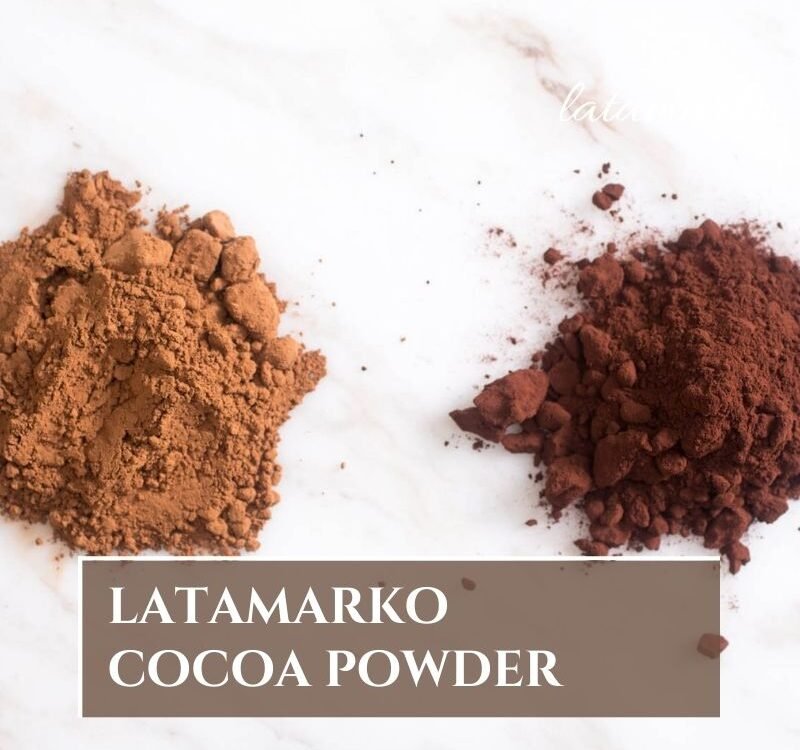
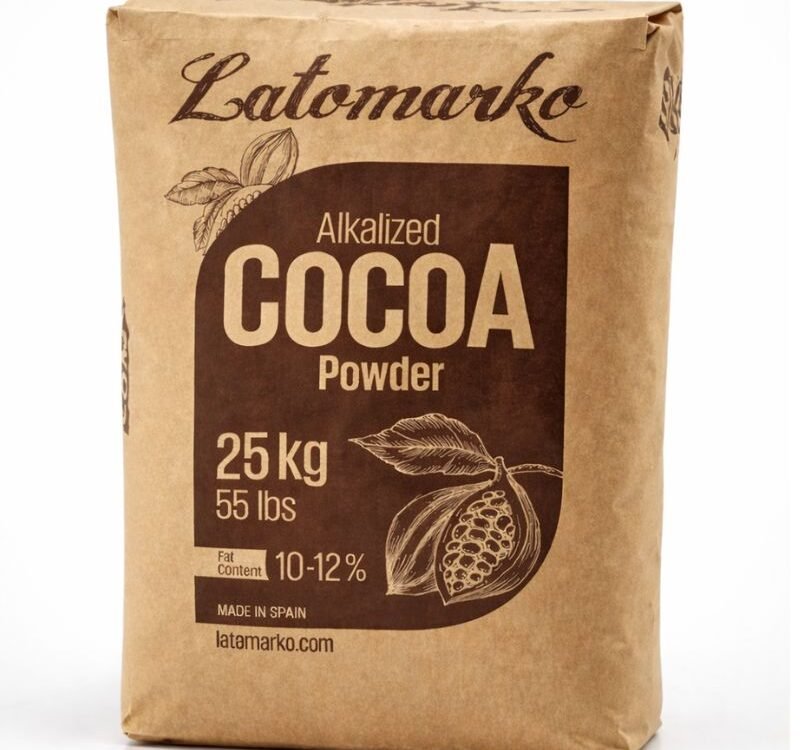
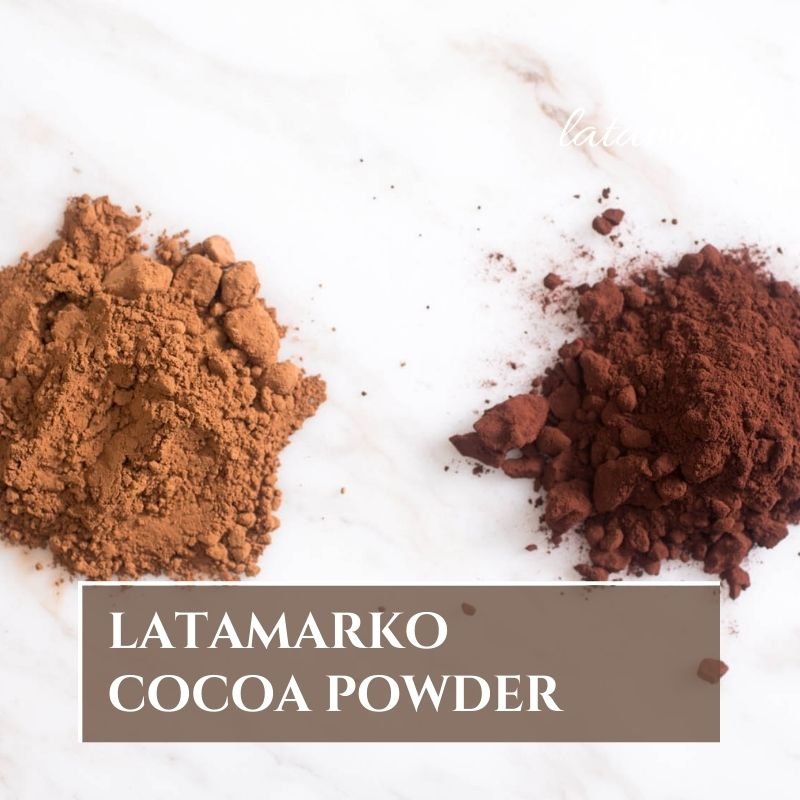
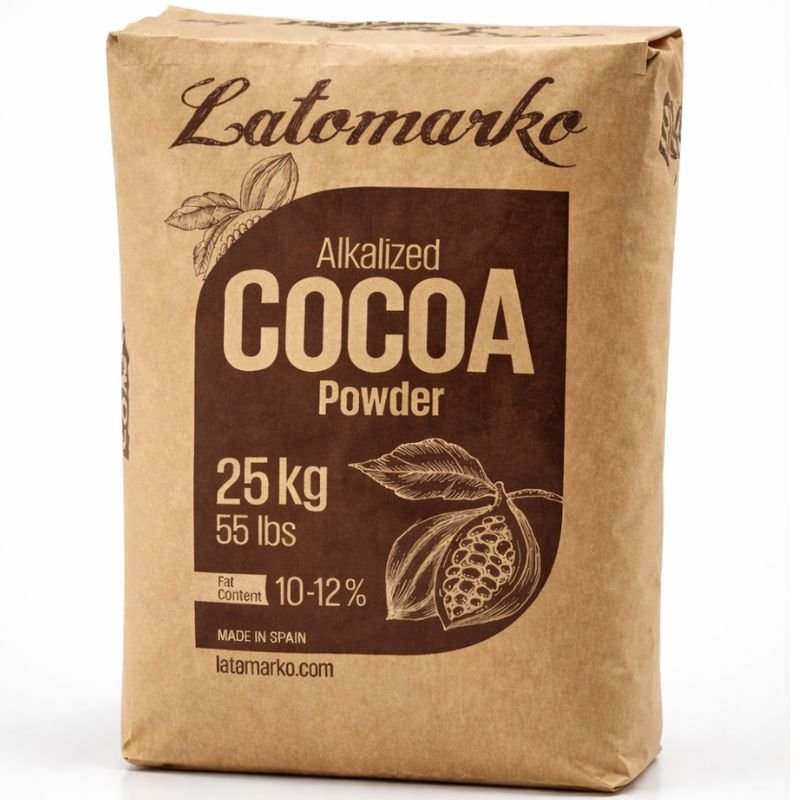
LATAMARKO offers Spanish-origin cocoa powder for industrial food applications, with a portfolio including Natural Cocoa Powder, Alkalized Brown Cocoa Powder, Light Alkalized Cocoa Powder, Dark Brown Cocoa Powder LM60, Black Cocoa Powder, and Cocoa Powder for Dairy Applications.
This range gives bakery, biscuit, wafer, and confectionery manufacturers different directions for developing fillings and creams according to their actual product concepts.
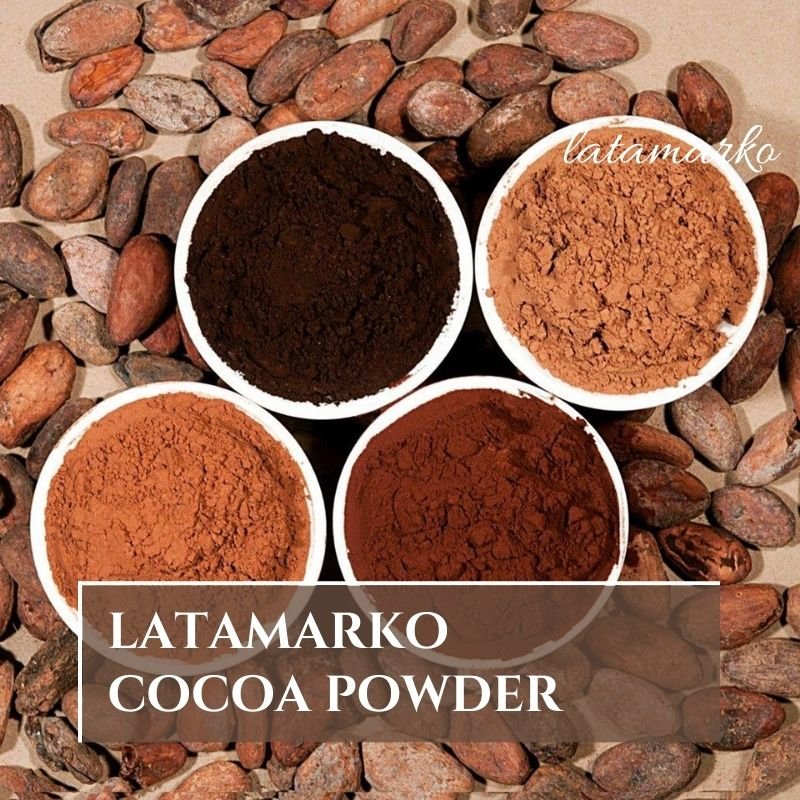
Cocoa Powder for Bakery Fillings
Cocoa Powder Has a Different Role Inside a Filling
Bakery fillings and creams are often highly concentrated formulations.
Depending on the product, cocoa powder may be combined with:
Sugar • Vegetable Fat • Milk Powder • Whey Ingredients • Nuts • Emulsifiers • Flavors • Other Functional Ingredients
Unlike a baked dough, the cocoa may remain directly present in the cream that reaches the consumer.
This makes its sensory contribution particularly noticeable.
Cocoa powder can affect:
- the visual darkness of the filling;
- the intensity of chocolate flavor;
- bitterness and overall flavor balance;
- interaction with milk, vanilla, hazelnut, or other flavors;
- the perceived richness of the finished product;
- formulation economics and required cocoa dosage.
A successful cocoa filling therefore depends on balance.
The strongest cocoa flavor is not necessarily the best. Neither is the darkest color.
The cocoa must support the complete product.
Cocoa Powder for Bakery Creams
Bakery creams appear in an enormous range of industrial products, including:
Filled Biscuits
Wafers
Croissants
Cakes
Pastries
Sandwich Cookies
Filled Cookies
Confectionery Bakery Products
Layered Desserts
Each product creates a different environment for cocoa.
A cocoa cream inside a croissant may need to remain rich and recognizable against a buttery bakery profile.
A wafer cream needs to work with thin, crisp wafer layers.
A sandwich cookie may depend heavily on contrast between a dark shell and a lighter filling—or the opposite.
This means manufacturers should choose cocoa according to the complete eating experience, not only the filling viewed separately.
Natural Cocoa Powder for Bakery Fillings
LATAMARKO Natural Cocoa Powder provides a non-alkalized option for manufacturers seeking a more traditional natural cocoa character.
Depending on the recipe, natural cocoa can contribute a recognizable cocoa profile with characteristics that differ from alkalized alternatives.
It can be evaluated in selected:
Cocoa Fillings
Bakery Creams
Chocolate-Flavored Creams
Nut-Cocoa Formulations
Confectionery Fillings
The decision to use natural cocoa should be based on the sensory direction of the product and the complete formulation.
For example, a manufacturer looking for a traditional cocoa note may find natural cocoa interesting, while a product designed around deeper brown color may require an alkalized alternative.
Alkalized Brown Cocoa Powder for Classic Chocolate Creams
For many bakery products, consumers expect a familiar chocolate-brown filling.
LATAMARKO Alkalized Brown Cocoa Powder can be evaluated for this type of application, particularly where manufacturers want a balanced brown appearance and recognizable cocoa character.
Potential uses include:
Chocolate Wafer Creams
Biscuit Fillings
Croissant Fillings
Cake Creams
Chocolate Bakery Spreads
Sandwich Cookie Creams
Cocoa-Hazelnut Fillings
For mainstream products, balance can be more commercially valuable than extreme intensity.
The cocoa should remain clearly recognizable while allowing sweetness, fat, milk ingredients, nuts, or other flavor components to perform their intended roles.
Light Alkalized Cocoa Powder for Balanced Cream Formulations
Some fillings need cocoa without becoming visually or sensorially too dark.
LATAMARKO Light Alkalized Cocoa Powder gives manufacturers an additional option for creating more controlled cocoa profiles.
This can be particularly useful when the cream is intended to communicate:
Creaminess
Milk Chocolate Character
Balanced Cocoa Flavor
Sweetness
Soft Chocolate Positioning
Consider a multilayer wafer with a light, creamy cocoa filling. An extremely dark powder could move the product away from its intended identity.
In such cases, cocoa selection should protect the balance of the product rather than maximize darkness.
LM60 Dark Brown Cocoa Powder for Rich Bakery Fillings
For manufacturers developing products with a stronger cocoa identity, LATAMARKO LM60 Dark Brown Cocoa Powder offers a deeper color direction.
LM60 can be evaluated for:
Dark Chocolate-Style Fillings
Premium Wafer Creams
Dark Cocoa Biscuit Fillings
Rich Croissant Fillings
Premium Cake Creams
Dark Cocoa Spreads
Confectionery Creams
The deeper dark-brown appearance can be particularly valuable when the filling is visible to the consumer.
Think of a sliced croissant with a rich dark filling, a multilayer wafer where the cocoa cream forms visible lines between the sheets, or a sandwich product where the filling is part of the visual presentation.
Here, color becomes part of the consumer’s expectation of richness.
Black Cocoa Powder for High-Contrast Fillings
LATAMARKO Black Cocoa Powder creates opportunities beyond conventional chocolate-brown creams.
It can be evaluated for manufacturers developing a very dark or black filling as part of a distinctive product concept.
Possible applications include:
Black Cocoa Creams
Very Dark Wafer Fillings
Black Sandwich Cookie Fillings
Specialty Bakery Creams
Decorative Cocoa Layers
High-Contrast Confectionery Products
Black cocoa becomes particularly interesting when paired with contrasting components.
For example:
Black Cocoa Cream + Vanilla Biscuit
Black Cocoa + White Cream
Black Cocoa + Pistachio
Black Cocoa + Strawberry
Black Cocoa + Caramel
Black Cocoa + Coconut
These combinations demonstrate an important point: cocoa powder can become part of the visual design of a bakery product, not merely its flavor system.
Black Cocoa should therefore be used intentionally where an extremely dark appearance supports the product concept.
Cocoa Powder for Wafer Fillings
Wafer fillings are one of the most commercially important applications for cocoa creams.
A wafer product may contain multiple thin layers of cream, meaning the filling influences a substantial part of the overall sensory experience.
Manufacturers need to balance:
Cocoa Flavor
Sweetness
Fat
Wafer Character
Cream Texture
Color
A classic chocolate wafer may require an Alkalized Brown Cocoa Powder.
A premium dark wafer may move toward LM60 Dark Brown Cocoa Powder.
A highly distinctive product could incorporate Black Cocoa.
The choice depends on the target market and desired product identity.
Cocoa Powder for Biscuit & Cookie Fillings
In filled biscuits and sandwich cookies, the relationship between the shell and filling is extremely important.
Manufacturers can create combinations such as:
Plain Biscuit + Cocoa Cream
Cocoa Biscuit + Chocolate Cream
Dark Biscuit + Milk Cocoa Filling
Black Biscuit + Vanilla Filling
Golden Biscuit + Dark Cocoa Cream
Cocoa Biscuit + Hazelnut Cream
The cocoa powder used in the biscuit itself does not necessarily need to be the same as the cocoa used in the filling.
In fact, selecting different cocoa profiles can help manufacturers create deliberate contrast and more distinctive finished products.
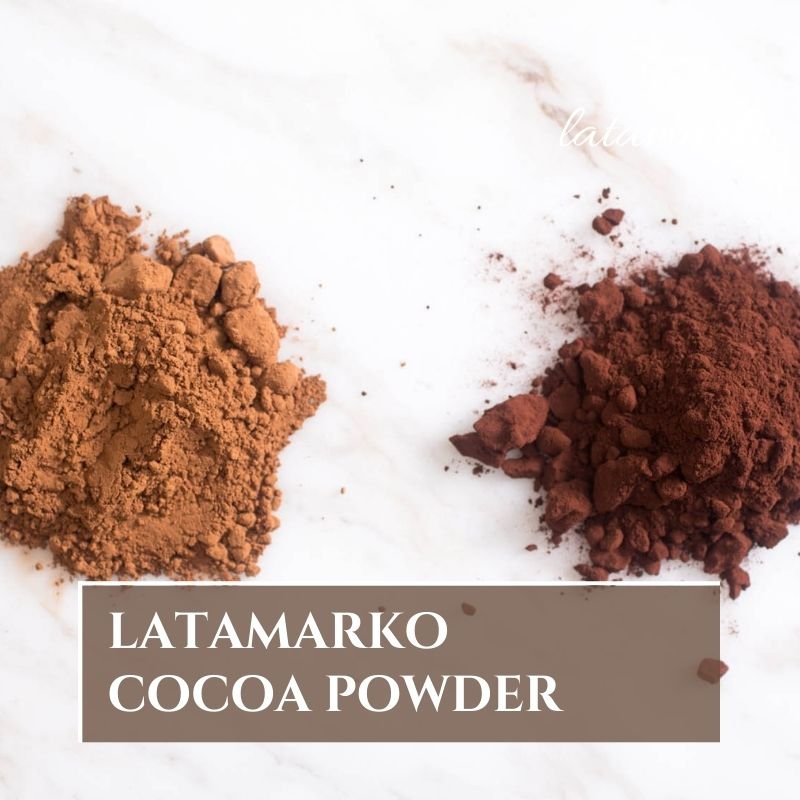
Cocoa Powder for Bakery Fillings
Cocoa Powder for Croissant Fillings
Industrial croissants and filled pastries require a cocoa cream capable of delivering sufficient chocolate character against a relatively rich bakery base.
The filling may contain vegetable fats, sugar, milk ingredients, hazelnut, or other flavor components.
A manufacturer developing a mainstream chocolate-filled croissant may prefer a classic brown cocoa profile.
A premium product may target a deeper color and stronger cocoa identity using a profile such as LM60.
The appropriate cocoa dosage should be established through application trials, particularly because the ratio between pastry and filling strongly affects the consumer’s perception of chocolate intensity.
Cocoa Powder for Hazelnut & Cocoa Creams
Cocoa and hazelnut are a classic combination, but they need to remain in balance.
If cocoa becomes too dominant, the roasted hazelnut character can disappear.
If cocoa is too weak, the product may lose its chocolate identity.
The manufacturer therefore needs to decide whether the finished product should be:
Hazelnut-Forward
Balanced Cocoa-Hazelnut
or
Cocoa-Forward
This decision can influence the choice of cocoa profile and dosage.
For professional formulation, the objective is not to maximize each ingredient individually. It is to make the ingredients work together.
Cocoa Powder for Milk-Based Creams
Many bakery fillings contain significant quantities of milk powder, whey ingredients, or other dairy components.
These ingredients can influence both the appearance and perception of cocoa.
LATAMARKO also offers Cocoa Powder for Dairy Applications, providing another option for manufacturers working on formulations where cocoa must interact closely with a dairy-oriented system.
Potential applications may include:
Milk-Cocoa Fillings
Dairy-Based Bakery Creams
Chocolate-Milk Wafer Fillings
Creamy Cocoa Layers
Milk-Oriented Confectionery Fillings
Application trials remain essential because the amount and type of dairy ingredients can significantly affect the final result.
Cocoa Color Changes Inside a Cream
One of the most important practical considerations is that dry cocoa color is not finished-cream color.
Once cocoa powder is mixed with fat, sugar, milk ingredients, and other components, its visual appearance changes.
Therefore, comparing two cocoa powders as dry samples can only provide preliminary information.
Manufacturers should compare them in the same base formulation.
For example:
Formula A + Current Cocoa Powder
versus
Formula A + New Cocoa Powder
The finished creams can then be compared under identical conditions.
This makes it possible to evaluate the actual difference in:
Color
Cocoa Intensity
Aroma
Bitterness
Sweetness Balance
Texture
Overall Product Appearance
Cocoa Powder and Cream Texture
Texture is fundamental in bakery creams.
Consumers may expect a filling to feel:
Smooth
Creamy
Rich
Soft
Easy-Melting
The final texture is determined by the complete formulation and manufacturing process, including fat system, sugar particle size, refining, mixing, emulsification, and other parameters.
Cocoa powder is one component within this system.
For this reason, changing cocoa powder should be validated through production trials rather than assuming that identical dosage will always produce identical processing and sensory results.
Cocoa Powder and Fat Systems
Many industrial bakery fillings are fat-based.
The manufacturer may therefore need to evaluate cocoa alongside the selected vegetable fat or other fat system.
The relationship between:
Cocoa Powder + Fat + Sugar + Milk Solids + Emulsifier
can influence the overall character of the cream.
This becomes particularly important in high-volume manufacturing, where small formulation differences can have significant commercial consequences.
The right cocoa powder should therefore be evaluated not as an isolated ingredient but as one part of a complete filling system.
How Much Cocoa Powder Should a Filling Contain?
There is no universal cocoa dosage suitable for every bakery filling.
The appropriate amount depends on:
Cocoa Powder Type
Target Color
Target Flavor
Sugar Level
Fat System
Milk Ingredients
Other Flavors
Product Positioning
A black cocoa filling and a mild milk-cocoa cream clearly should not be formulated around the same target.
Manufacturers should determine dosage through trials until the required color, cocoa impact, texture, and formulation economics are achieved.
Cost-in-Use Matters More Than Price Alone
Bakery filling manufacturers often consume cocoa powder at substantial industrial volumes.
Price is therefore important—but price per kilogram alone does not tell the complete commercial story.
A better comparison considers:
Cocoa Purchase Price
Required Dosage
Color Performance
Flavor Contribution
Processing Compatibility
Consistency
Finished-Product Result
Suppose one cocoa powder is cheaper per kilogram but requires a higher dosage to achieve the manufacturer’s desired cocoa color and impact.
Another powder may have a different purchase price but perform effectively at another formulation level.
The correct comparison is therefore based on cost-in-use within the finished cream.
Consistency for Industrial Bakery Manufacturers
For a major wafer, biscuit, or bakery brand, consistency is essential.
Consumers expect the same product each time they purchase it.
A chocolate cream should not be deep brown in one production batch and noticeably lighter in another.
Industrial manufacturers should therefore evaluate cocoa supply according to:
Color Consistency
Sensory Consistency
Technical Specifications
Batch-to-Batch Performance
Commercial Availability
Supply Continuity
The larger the manufacturer’s production volume, the more important these factors become.
Spanish-Origin LATAMARKO Cocoa Powder
LATAMARKO offers Spanish-origin cocoa powder for professional bakery, confectionery, chocolate, biscuit, wafer, and food manufacturers.
The portfolio provides multiple cocoa directions:
| LATAMARKO Cocoa Powder | Profile | Potential Filling & Cream Applications |
|---|---|---|
| Natural Cocoa Powder | Natural cocoa character | Traditional cocoa creams and selected fillings |
| Alkalized Brown Cocoa Powder | Classic chocolate brown | Wafer, biscuit, croissant and bakery creams |
| Light Alkalized Cocoa Powder | Balanced cocoa profile | Creamy and lighter cocoa formulations |
| Dark Brown Cocoa Powder – LM60 | Deep dark-brown profile | Premium dark fillings and rich cocoa creams |
| Black Cocoa Powder | Very dark / black | Specialty and high-contrast fillings |
| Cocoa Powder for Dairy Applications | Dairy-oriented profile | Milk-cocoa creams and dairy-based fillings |
This portfolio allows manufacturers to develop several product concepts while selecting cocoa according to the needs of each formulation.
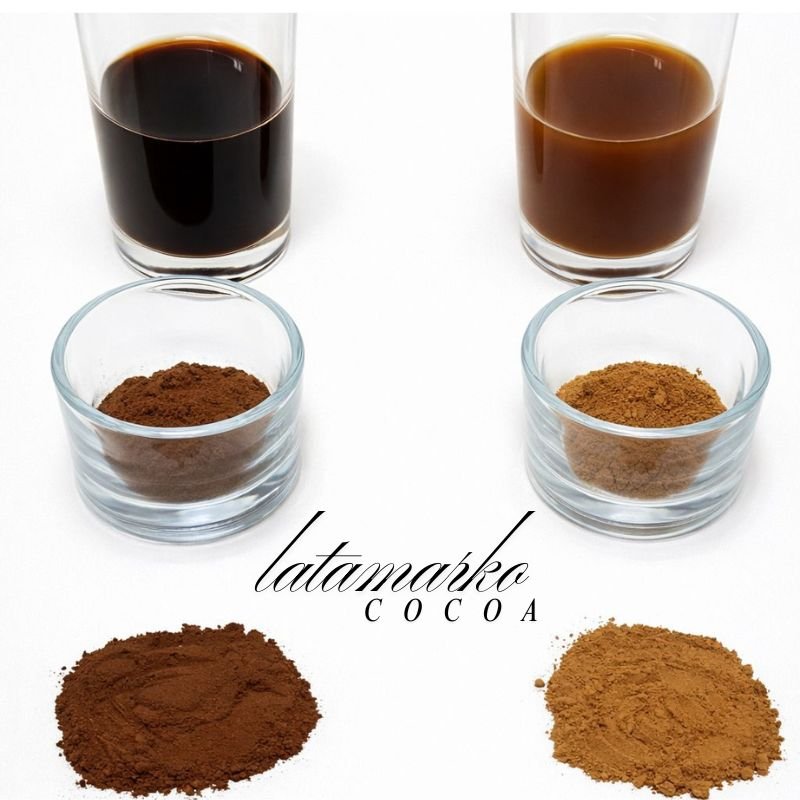
Cocoa Powder for Bakery Fillings
From Cocoa Sample to Finished Cream
For bakery filling manufacturers, a structured evaluation process can reduce sourcing risk:
Define the Product
→ Determine Target Color & Cocoa Profile
→ Select Cocoa Powder
→ Request Sample
→ Prepare the Actual Filling Formula
→ Evaluate Color, Flavor & Texture
→ Conduct Production Trial
→ Approve Specification
→ Move to Commercial Supply
If the objective is to replace an existing cocoa powder, manufacturers can also provide the current specification or reference sample for comparison.
The most meaningful benchmark should remain the finished filling.
What Should Manufacturers Provide When Requesting Cocoa Powder?
A useful commercial inquiry can include:
| Requirement | Example |
|---|---|
| Application | Wafer cream / Biscuit filling / Croissant / Cake cream |
| Cocoa Type | Natural / Alkalized / Open to recommendation |
| Target Color | Brown / Light / Dark Brown / Black |
| Target Flavor | Mild / Balanced / Strong Cocoa |
| Other Main Flavors | Milk / Hazelnut / Vanilla / Caramel |
| Current Cocoa | Specification or reference, if available |
| Required Technical Parameters | If defined |
| Monthly Consumption | Estimated MT |
| Annual Requirement | Estimated volume |
| Destination | Country / Port |
| Sample Requirement | Yes / No |
Even when a manufacturer does not know the exact cocoa specification, describing the finished product provides an effective starting point.
LATAMARKO Cocoa Powder for Bakery Fillings & Creams
A bakery filling is often only one component of a product, but it can be the component consumers remember most.
It is the chocolate center discovered inside a croissant.
The cocoa layer between crisp wafer sheets.
The dark cream between two biscuits.
The cocoa-hazelnut filling that defines the flavor of a confectionery product.
This is why selecting cocoa powder for bakery fillings & creams deserves more attention than simply comparing cocoa colors or quotations.
With Spanish-origin cocoa powder, LATAMARKO provides manufacturers with different options across Natural, Alkalized Brown, Light Alkalized, LM60 Dark Brown, Black Cocoa, and Cocoa Powder for Dairy Applications.
The selection can begin with a very practical description:
“We produce wafer cream and need a rich brown cocoa color, balanced chocolate character, compatibility with our fat-based formulation, and consistent quality for continuous industrial production.”
Or:
“We are developing a premium croissant with a visibly dark cocoa filling and need a deeper cocoa profile for application testing.”
From there, suitable cocoa options can be evaluated through samples and actual formulation trials.
For professional manufacturers, the right cocoa powder is ultimately not the one that performs best by itself.
It is the one that performs best when surrounded by fat, sugar, milk, nuts, wafer, biscuit, pastry, and every other element that makes the consumer experience the finished product.