Uganda Green Coffee: Premium Arabica & Robusta Supply
September 5, 2026
Brazil Green Coffee: From Origin to Roastery
September 6, 2026
In compound chocolate, cocoa powder is not simply responsible for creating a chocolate flavor. It works inside a formulation built around vegetable fat, sugar, milk ingredients, emulsifiers, and other components, where the balance between cocoa intensity, color, sweetness, fat, texture, and cost-in-use determines the success of the finished product.
This makes selecting the right cocoa powder for compound chocolate an important formulation decision.
A manufacturer producing a standard chocolate coating may need a classic brown cocoa profile. A wafer producer may require a deeper cocoa color for a compound coating. A confectionery company may want an intense dark-brown compound for premium positioning, while another manufacturer may be developing a visually striking black cocoa product.
These applications should not automatically use the same cocoa powder.
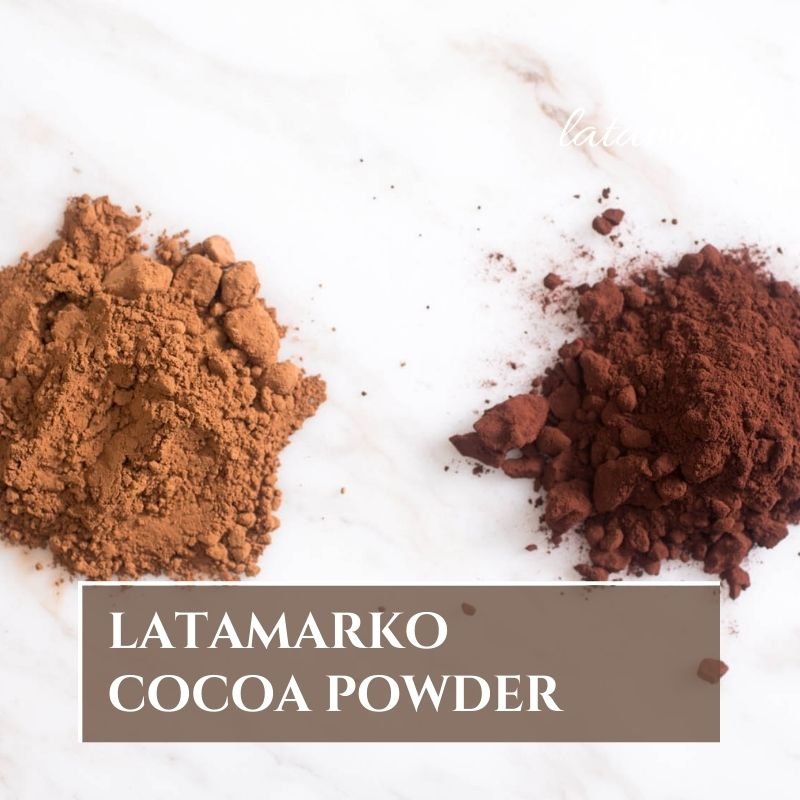
LATAMARKO offers Spanish-origin cocoa powder for professional food manufacturers across different color and application profiles, including Natural Cocoa Powder, Alkalized Brown Cocoa Powder, Light Alkalized Cocoa Powder, Dark Brown Cocoa Powder LM60, Black Cocoa Powder, and Cocoa Powder for Dairy Applications.
For compound chocolate manufacturers, this range makes it possible to begin with the desired finished product and work backward toward the appropriate cocoa profile.
In compound chocolate, the right cocoa powder is the one that creates the required cocoa identity while working successfully with the selected fat system and complete formulation.
Cocoa Powder for Compound Chocolate
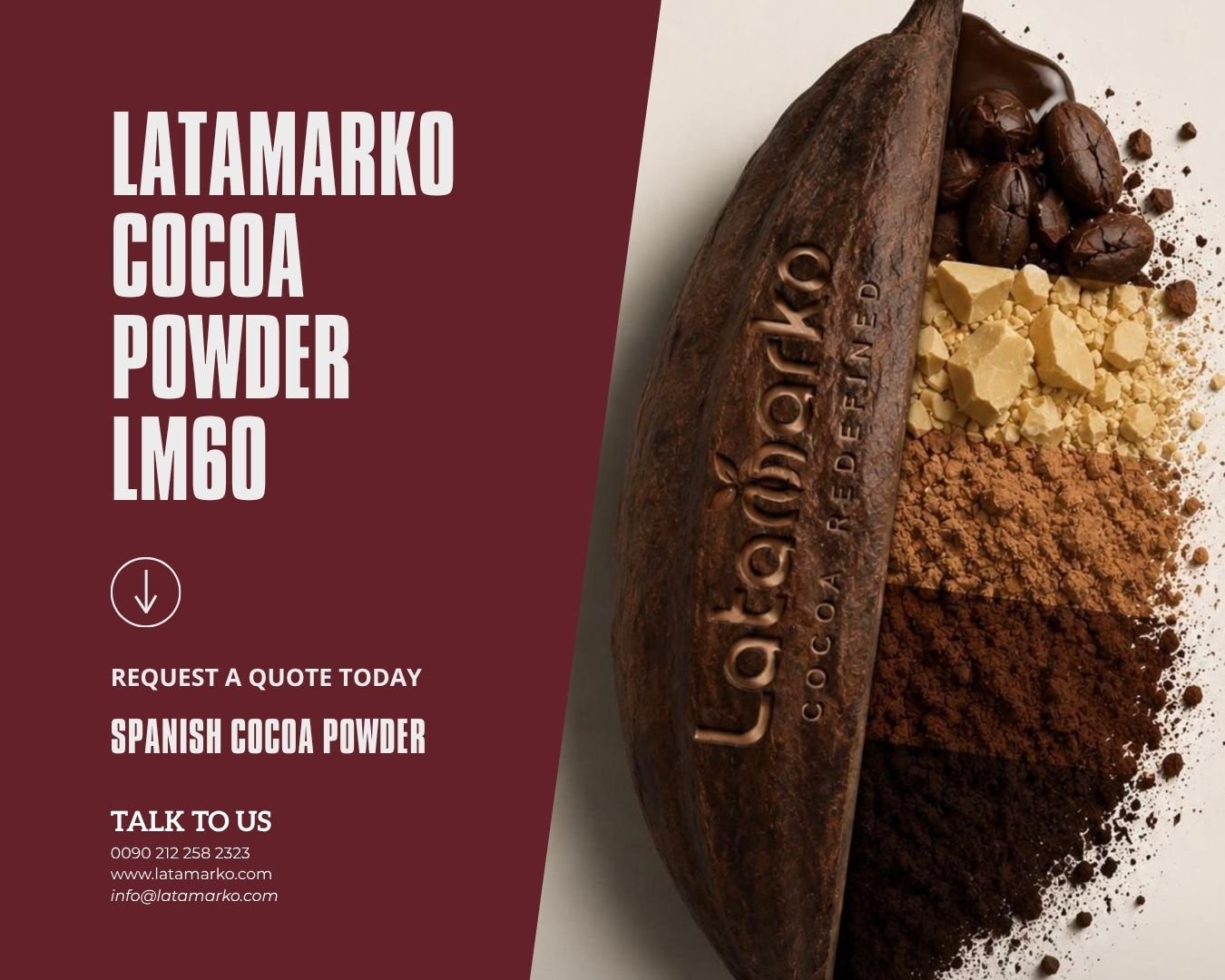
What Is Compound Chocolate?
Compound chocolate is a cocoa-based confectionery product in which vegetable fats are typically used instead of, or in formulations distinct from, cocoa butter-based conventional chocolate systems.
Depending on the product and market, a compound formulation can contain ingredients such as:
Sugar • Vegetable Fat • Cocoa Powder • Milk Ingredients • Emulsifiers • Flavors
This structure makes compound chocolate highly versatile for industrial food production.
It is widely used in products such as:
Wafer Coatings
Biscuit Coatings
Confectionery
Chocolate-Flavored Coatings
Molded Products
Bakery Applications
Fillings and Creams
Ice Cream Coatings
For manufacturers, compound systems can offer practical processing and commercial advantages depending on the formulation and intended application.
But because cocoa powder becomes one of the principal sources of cocoa color and flavor, its selection deserves careful attention.
Why Cocoa Powder Is So Important in Compound Chocolate
In many compound chocolate formulations, cocoa powder has a direct influence on how consumers perceive the finished product.
It contributes to three particularly important dimensions:
Visual Identity
Consumers see the coating or confectionery before tasting it.
The cocoa powder can help determine whether the finished compound appears:
Light Brown • Classic Chocolate Brown • Deep Dark Brown • Very Dark • Black
Cocoa Character
Cocoa powder contributes the sensory profile that helps differentiate a cocoa-based compound from a simple sweet fat-based coating.
Product Positioning
A classic brown compound may suit a mainstream wafer, while a deep dark-brown compound may support a premium product concept.
This means cocoa powder can influence not only formulation but also how the finished product is positioned in the market.
Cocoa Powder and Vegetable Fat Systems
One of the defining characteristics of compound chocolate is its fat system.
Depending on the formulation, manufacturers may work with different types of specialty vegetable fats, including systems commonly classified as CBS, CBR, or CBE-type fats, depending on the product design and applicable formulation.
The cocoa powder must function within this complete system.
Manufacturers need to consider the relationship between:
Cocoa Powder
Vegetable Fat
Sugar
Milk Ingredients, if used
Emulsifiers
Flavor System
The final result should deliver the desired color, cocoa impact, texture, processing behavior, and sensory balance.
For this reason, cocoa powder should be tested directly in the manufacturer’s actual compound formulation.
Natural Cocoa Powder for Compound Chocolate
LATAMARKO Natural Cocoa Powder offers manufacturers a non-alkalized cocoa option with a more naturally characteristic cocoa profile.
Depending on the formulation, natural cocoa may be considered when manufacturers want to maintain a more traditional cocoa character rather than create the deeper appearance associated with more strongly colored cocoa powders.
It can be evaluated in selected:
Compound Chocolate Formulations
Cocoa-Based Fillings
Coatings
Confectionery Applications
However, natural cocoa should not be selected simply because it is less processed.
The manufacturer should consider the required color, pH, flavor direction, fat system, and finished-product performance before deciding between natural and alkalized options.
Alkalized Brown Cocoa Powder for Compound Chocolate
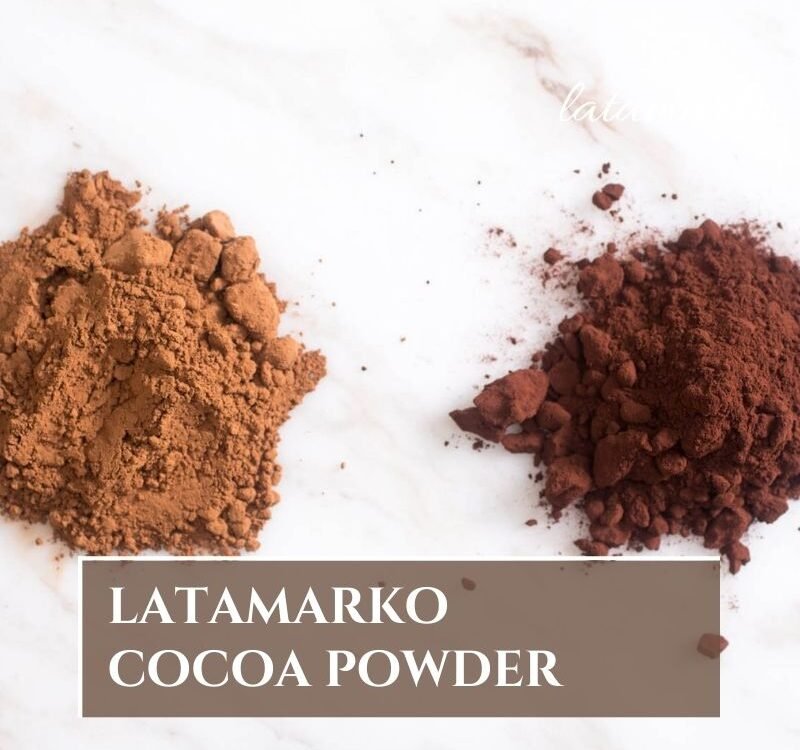
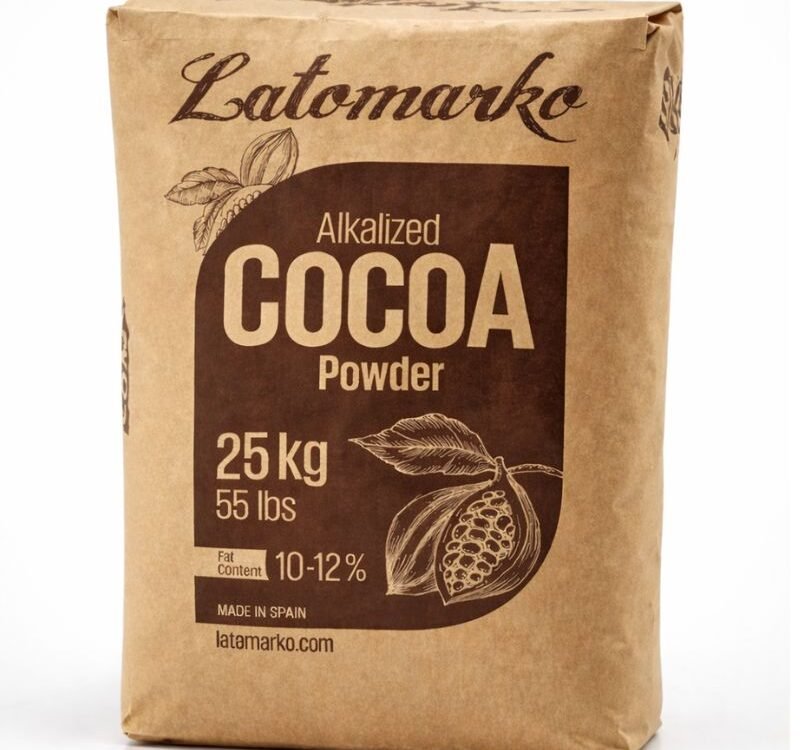
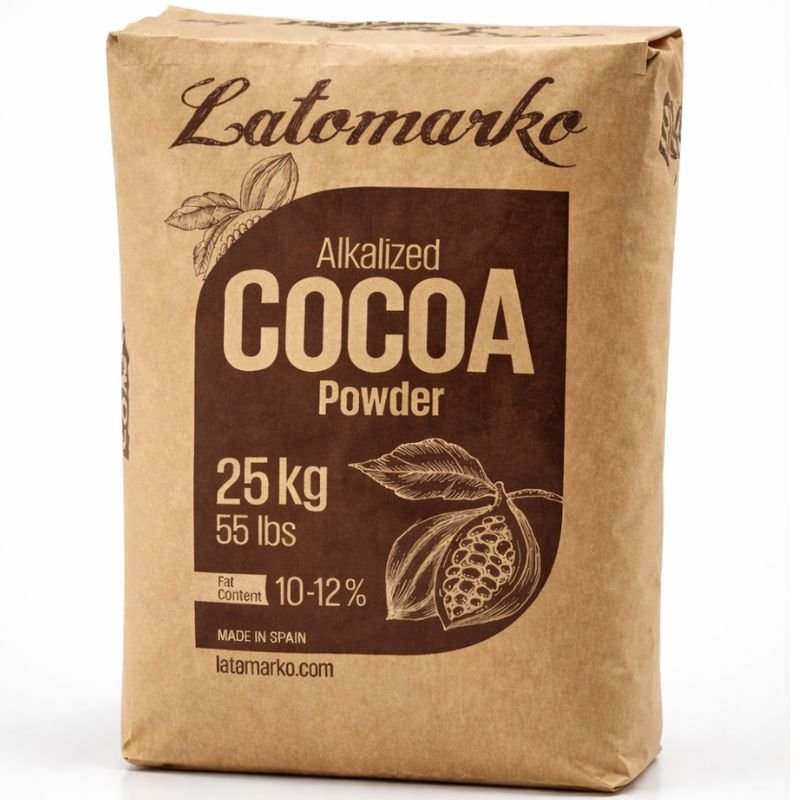
For manufacturers looking for a recognizable chocolate-brown appearance, LATAMARKO Alkalized Brown Cocoa Powder provides an important option.
Alkalization modifies characteristics of cocoa such as color, acidity, and sensory profile, allowing manufacturers to work toward a different cocoa expression than natural powder.
A classic alkalized brown cocoa can be particularly suitable for compound products intended to communicate a familiar chocolate identity.
Potential applications include:
Wafer Coatings
Biscuit Coatings
Compound Chocolate Bars
Confectionery Coatings
Chocolate-Flavored Fillings
Bakery Compounds
For mainstream products, the objective may be a balanced combination of brown color, recognizable cocoa character, sweetness, and commercial efficiency.
Light Alkalized Cocoa Powder for Balanced Compound Formulations
LATAMARKO Light Alkalized Cocoa Powder provides another direction for manufacturers that do not require an intensely dark compound chocolate.
This can be useful when the desired finished product should retain a balanced cocoa appearance while allowing other characteristics—such as milkiness, sweetness, creaminess, or additional flavors—to remain prominent.
Potential product concepts include:
Milk-Style Compound Coatings
Light Cocoa Wafer Coatings
Confectionery Compounds
Cream-Focused Cocoa Products
Balanced Chocolate-Flavored Applications
For these formulations, increasing darkness is not necessarily an advantage.
The ideal cocoa is the one that supports the intended consumer experience and product positioning.
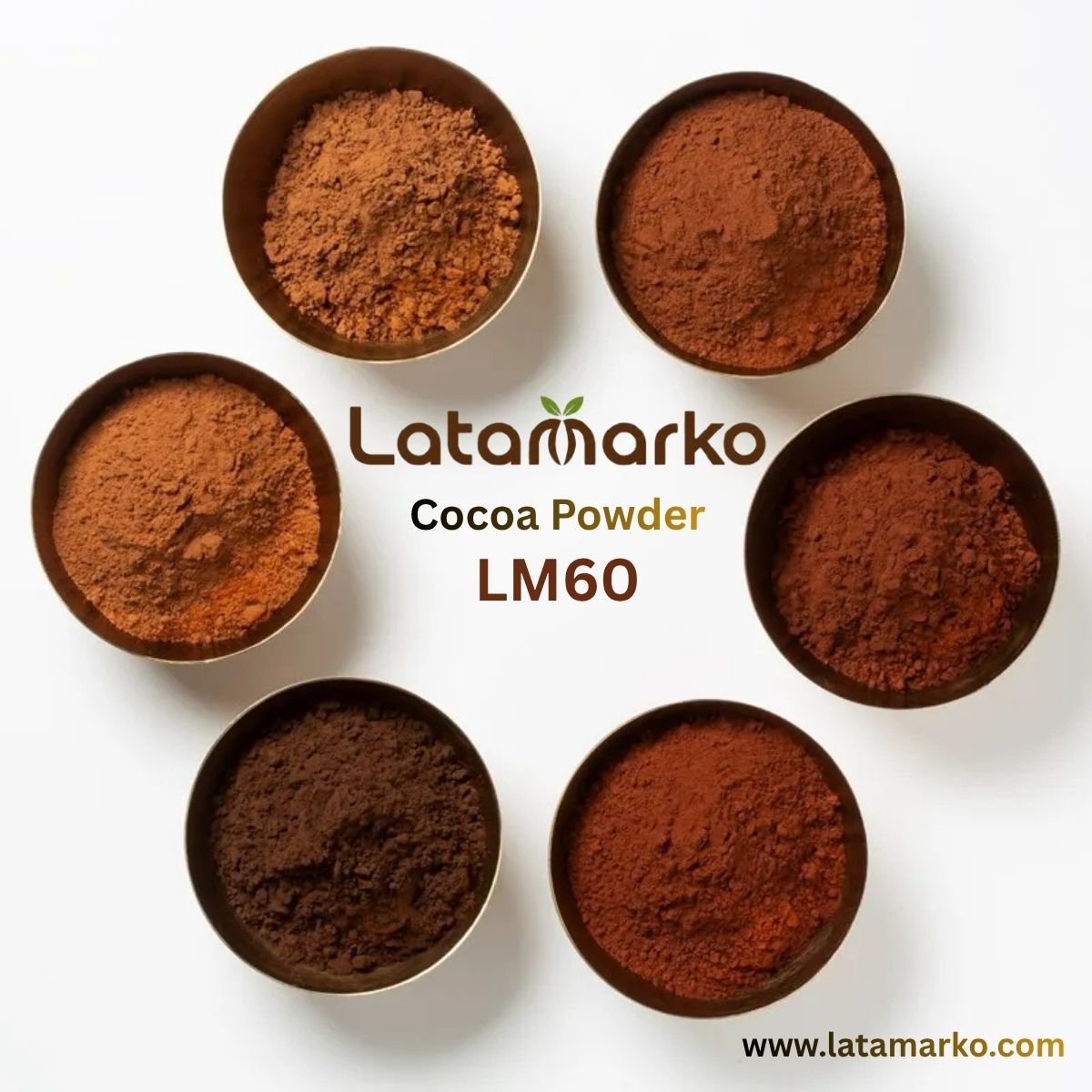
Dark Brown Cocoa Powder LM60 for Compound Chocolate
When the product concept calls for a stronger visual cocoa identity, LATAMARKO LM60 Dark Brown Cocoa Powder becomes particularly relevant.
LM60 provides a deeper dark-brown cocoa direction for manufacturers developing products where a rich appearance is important.
It can be evaluated for:
Dark Compound Chocolate
Premium Wafer Coatings
Dark Biscuit Coatings
Chocolate Confectionery
Dark Cocoa Fillings
Premium Compound Products
Dark Bakery Coatings
A manufacturer may use the deeper color to differentiate a premium SKU from its standard chocolate product.
For example:
Classic Chocolate Compound
versus
Dark Chocolate-Style Compound
The two products can be visually differentiated before the consumer even tastes them.
LM60 can help manufacturers explore this deeper color direction while application trials determine the appropriate dosage and formulation balance.
Black Cocoa Powder for Black Compound Chocolate
Some product concepts are designed to stand out immediately.
For these applications, LATAMARKO Black Cocoa Powder provides manufacturers with an opportunity to create a very dark or black compound chocolate appearance.
Possible concepts include:
Black Compound Coatings
Black Wafer Coatings
Black Cocoa Confectionery
Very Dark Biscuit Coatings
Black Cocoa Decorations
High-Contrast Confectionery
Black compound can be particularly effective when paired with contrasting components:
Black Cocoa + White Cream
Black Cocoa + Vanilla
Black Cocoa + Caramel
Black Cocoa + Strawberry
Black Cocoa + Pistachio
Black Cocoa + White Chocolate-Style Decoration
Here, cocoa powder becomes part of the product’s visual design.
Black cocoa should nevertheless be used intentionally. If the target is a conventional chocolate-brown compound, extreme darkness may not deliver the desired consumer perception.
Cocoa Powder for Milk-Style Compound Chocolate
Compound chocolate is also widely used in products designed around a softer, milk-oriented chocolate profile.
These formulations may contain milk powder or other dairy ingredients that influence:
Color
Sweetness
Creaminess
Cocoa Perception
In such products, manufacturers often need cocoa to remain clearly recognizable without overwhelming the milk character.
Depending on the formulation, Alkalized Brown, Light Alkalized, or an application-appropriate cocoa profile may be evaluated.
LATAMARKO’s Cocoa Powder for Dairy Applications can also be considered where the broader formulation has specific dairy-oriented requirements.
The final selection should be based on trials within the actual compound system.
Cocoa Powder for Compound Chocolate
Cocoa Powder for Wafer Compound Coatings
Wafers are one of the major applications for compound chocolate.
The compound coating must complement the wafer’s:
Texture
Sweetness
Filling
Flavor
Appearance
A standard chocolate wafer may require a classic brown coating.
A premium wafer may benefit from a darker LM60-based cocoa direction.
A visually distinctive sandwich wafer might use a black cocoa compound combined with a light-colored filling.
This allows manufacturers to create several product tiers from related formulations simply by changing the intended cocoa profile and other formulation variables.
Cocoa Powder for Biscuit Coatings
Biscuits and cookies are another important application.
Compound coatings may cover:
Entire Biscuits
Half-Coated Biscuits
Sandwich Biscuits
Cookie Bases
Decorated Bakery Products
The color of the compound coating can strongly influence the finished product’s shelf appearance.
For example, a deep dark-brown coating against a golden biscuit creates a different visual identity from a standard brown coating.
A black cocoa coating creates an even stronger contrast.
This makes cocoa selection particularly relevant for manufacturers developing products where appearance is part of differentiation.
Cocoa Powder for Ice Cream Compound Coatings
Compound coatings are widely used in frozen confectionery, including ice cream bars and coated frozen desserts.
These systems have their own formulation and processing requirements.
Manufacturers may develop:
Classic Chocolate-Style Coatings
Dark Cocoa Coatings
Nut-Containing Compound Coatings
Black Cocoa Coatings
The cocoa powder should be evaluated alongside the selected fat system and other ingredients under the actual production and consumption conditions.
The desired result is not simply a dark liquid compound in the factory—it is an attractive, flavorful coating on the finished frozen product.
Color vs Cocoa Dosage
A commercially important question for compound manufacturers is:
How much cocoa powder is required to achieve the target result?
This is where evaluating only price per kilogram can become misleading.
Imagine two cocoa powders with different purchasing prices.
If one delivers the required color and cocoa character at a different dosage than the other, the economics of the complete formulation may change.
Professional manufacturers should therefore consider:
Cocoa Price
Required Dosage
Color Strength
Flavor Contribution
Total Recipe Cost
This leads to a more useful metric:
Cost-in-use rather than cocoa price alone.
For high-volume compound manufacturers, even small formulation differences can become commercially significant across annual production.
Color Should Be Evaluated in the Finished Compound
Comparing cocoa powders side by side is useful, but it does not tell manufacturers exactly how they will perform in compound chocolate.
Once cocoa is mixed with:
Vegetable Fat
Sugar
Milk Powder
Emulsifiers
and other ingredients, the perceived color changes.
Therefore, manufacturers should compare cocoa powders using the same compound recipe and production parameters.
Only then can they meaningfully assess:
Finished Color
Gloss and Appearance
Cocoa Intensity
Bitterness
Flavor Balance
Overall Consumer Impression
The finished compound—not the dry cocoa—is the real commercial benchmark.
Particle Characteristics and Processing
Compound chocolate manufacturing requires attention to physical characteristics as well as sensory performance.
Depending on the process and formulation, manufacturers may consider parameters related to:
Particle Characteristics
Dispersion
Viscosity
Flow Behavior
Mixing
Refining Process
Final Texture
Cocoa powder is only one component influencing these properties, so performance should be evaluated as part of the complete formulation and manufacturing system.
When changing cocoa suppliers, industrial trials can help identify whether adjustments are necessary before full commercial production.
Consistency Is Essential for Industrial Compound Production
A manufacturer producing thousands of kilograms of compound chocolate cannot afford unpredictable cocoa variation.
The approved cocoa powder should support repeatability in:
Color
Cocoa Character
Technical Specification
Physical Properties
Commercial Quality
For branded products, consistency is particularly important.
Consumers should not open two packages of the same coated wafer and see noticeably different shades of chocolate.
This is why cocoa sourcing for industrial compound chocolate is ultimately about more than finding a good sample.
It is about finding a product capable of supporting repeatable commercial manufacturing.
Spanish-Origin LATAMARKO Cocoa Powder
LATAMARKO offers Spanish-origin cocoa powder for professional manufacturers requiring cocoa ingredients for compound chocolate and other industrial food applications.
The portfolio includes:
Natural Cocoa Powder
Alkalized Brown Cocoa Powder
Light Alkalized Cocoa Powder
Dark Brown Cocoa Powder – LM60
Black Cocoa Powder
Cocoa Powder for Dairy Applications
This range allows compound chocolate manufacturers to evaluate different cocoa profiles while maintaining a clear application-focused sourcing strategy.
Spanish origin can also be relevant for international buyers seeking European-origin cocoa powder as part of their ingredient procurement program.
However, origin is only one element of professional cocoa selection.
The ultimate decision should combine:
Origin + Specification + Color + Flavor + Application Performance + Consistency + Commercial Supply
Which LATAMARKO Cocoa Powder for Compound Chocolate?
| LATAMARKO Cocoa Powder | Cocoa Direction | Potential Compound Application |
|---|---|---|
| Natural Cocoa Powder | Natural cocoa profile | Selected compounds and cocoa formulations |
| Alkalized Brown Cocoa Powder | Classic chocolate brown | Mainstream coatings, wafers and confectionery |
| Light Alkalized Cocoa Powder | Balanced cocoa appearance | Milk-style and balanced compound products |
| Dark Brown Cocoa Powder – LM60 | Rich dark brown | Dark and premium compound chocolate |
| Black Cocoa Powder | Very dark / black | Black coatings and specialty confectionery |
| Cocoa Powder for Dairy Applications | Dairy-oriented | Milk-based compound and filling systems |
These are application directions rather than rigid rules.
The manufacturer’s own formulation and industrial testing should determine the final choice.
How to Test Cocoa Powder for Compound Chocolate
When evaluating a new cocoa powder, manufacturers can create a controlled comparison.
Use the same:
Vegetable Fat System
Sugar Level
Milk Ingredients
Emulsifiers
Processing Conditions
and change only the cocoa powder where technically appropriate.
Then evaluate:
Color
Cocoa Aroma
Flavor
Bitterness
Sweetness Balance
Texture
Processing Behavior
Finished Appearance
Required Cocoa Dosage
Overall Formulation Cost
This approach makes the purchasing decision much more meaningful.
A cocoa powder should not win because it looks darkest on a laboratory table.
It should win because it produces the best commercial result in the compound formulation.
From Sample to Full-Scale Compound Production
Professional sourcing can follow a structured process:
Define the Compound Application
→ Determine Target Color & Flavor
→ Select Cocoa Powder Options
→ Request Samples
→ Laboratory Formulation
→ Compare Finished Compounds
→ Pilot Production
→ Technical & Sensory Approval
→ Commercial Order
→ Recurring Industrial Supply
This approach is especially useful when manufacturers are replacing an existing cocoa powder or developing a new product.
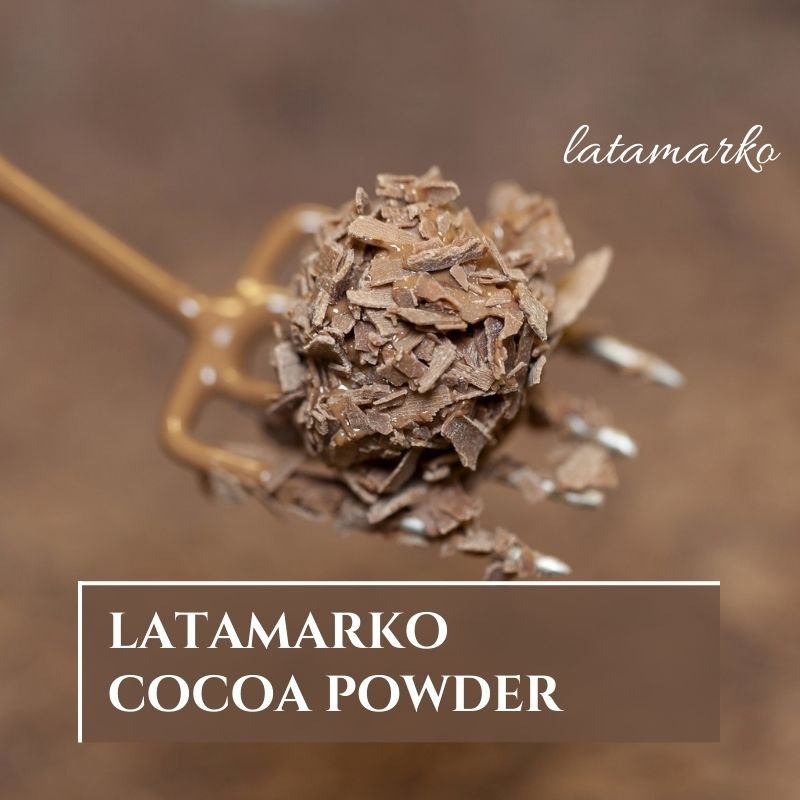
Cocoa Powder for Compound Chocolate
What Should Compound Chocolate Manufacturers Provide?
When requesting cocoa powder, buyers can provide information such as:
| Requirement | Information |
|---|---|
| Application | Compound / Coating / Wafer / Biscuit / Confectionery |
| Fat System | If relevant and available |
| Cocoa Type | Natural / Alkalized / Open to Recommendation |
| Target Color | Brown / Light / Dark Brown / Black |
| Target Profile | Balanced / Strong Cocoa / Dark |
| Current Cocoa | Specification or reference if available |
| Cocoa Dosage | If defined |
| Technical Requirements | Fat, pH or other specifications |
| Monthly Consumption | Required volume |
| Annual Requirement | Estimated volume |
| Destination | Country / Port |
This information allows cocoa selection to move beyond a generic quotation and toward an actual application solution.
LATAMARKO Cocoa Powder for Compound Chocolate Manufacturers
The commercial objective of compound chocolate is rarely to use the darkest cocoa powder or the cheapest cocoa powder available.
The objective is to build a formulation that delivers the required:
Color
Cocoa Flavor
Texture
Processing Performance
Consumer Experience
Cost-in-Use
Consistency
For manufacturers seeking cocoa powder for compound chocolate, LATAMARKO provides Spanish-origin options ranging from Natural and Alkalized Brown Cocoa Powder to Light Alkalized, LM60 Dark Brown, Black Cocoa, and Cocoa Powder for Dairy Applications.
A manufacturer can begin with a simple description:
“We manufacture compound coating for wafers and need a rich dark-brown color, recognizable cocoa character, consistent industrial performance, and reliable supply for recurring production.”
From that point, the appropriate cocoa profile can be evaluated through specification review, samples, formulation trials, and commercial testing.
Because in compound chocolate manufacturing, cocoa powder should not be selected in isolation.
It must work together with the fat system, sugar, dairy ingredients, process, product positioning, and target cost.
When all of these elements are considered together, the right cocoa powder becomes more than a coloring or flavoring component.
It becomes one of the ingredients that defines the commercial identity of the finished compound chocolate.