Industrial Cocoa Processing: From Bean to Cocoa Powder Manufacturing
February 21, 2026
Premium grade cocoa powder for top-tier industrial manufacturers
May 18, 2026
Latamarko as a Cocoa Manufacturer
Defining the Role in the Industrial Supply Chain
Latamarko operates as a manufacturing-oriented cocoa brand positioned at the processing level of the food production chain. The brand exists to transform cocoa from an agricultural raw material into a standardized industrial ingredient suitable for continuous manufacturing environments. Rather than functioning as a trading intermediary, Latamarko serves as a production source whose responsibility is to stabilize material behavior before it enters the customer’s factory.
Industrial food production depends on predictability. Chocolate masses, biscuit dough systems, fillings, coatings, and beverage powders are calibrated around fixed parameters. Even minor variation in cocoa characteristics can alter viscosity, color development, hydration, and flavor balance. For this reason, manufacturers require a processor capable of delivering identical performance across shipments. Latamarko’s position in the supply chain is therefore not simply to provide cocoa powder, but to ensure operational continuity in downstream production.
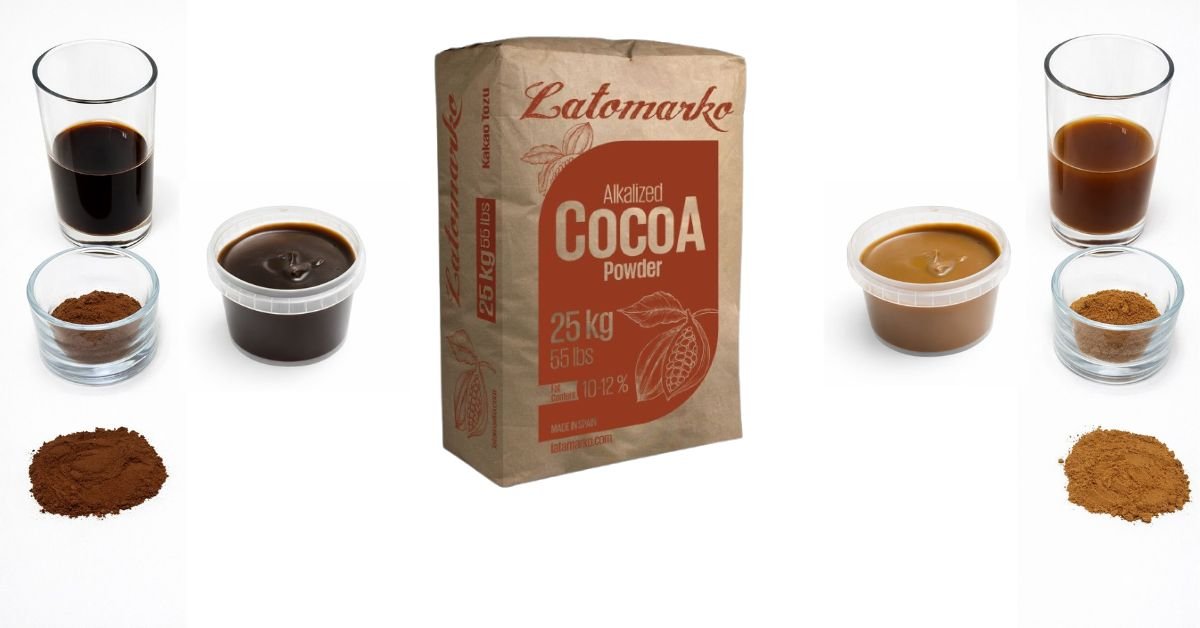
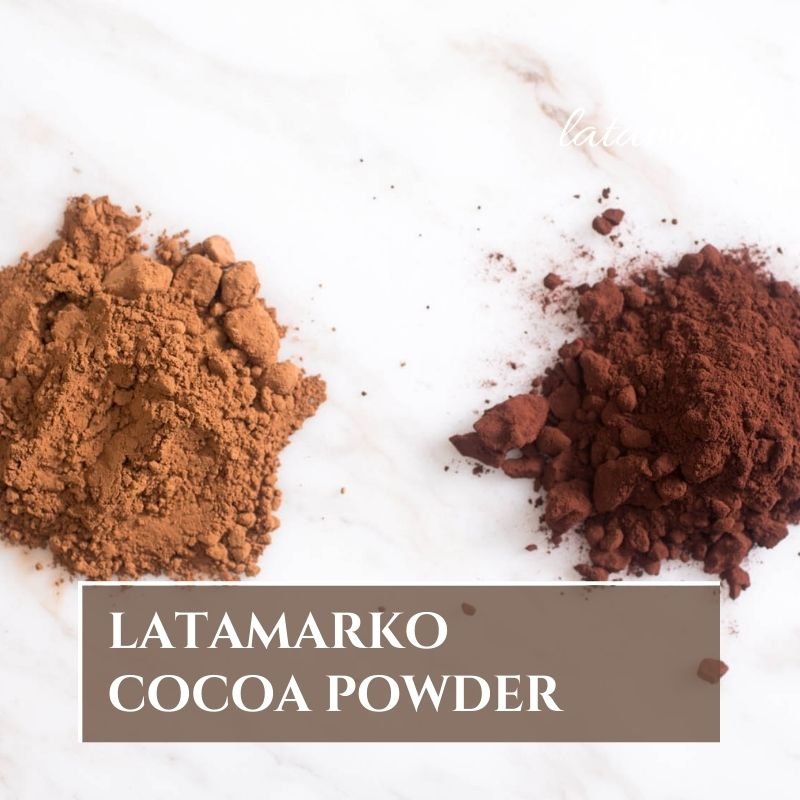
Latamarko Cocoa Powder Manufacturer
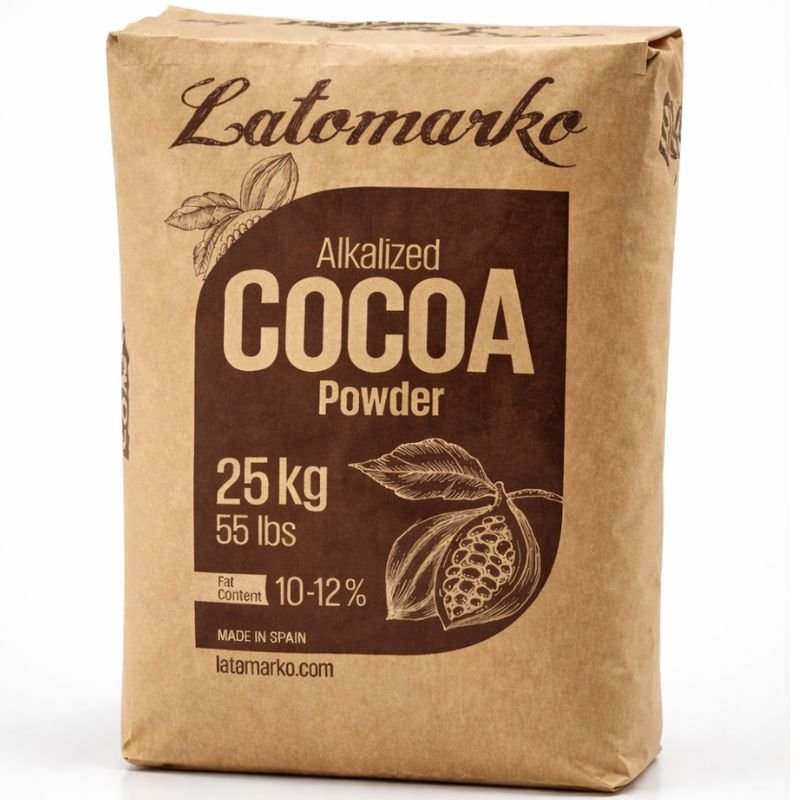
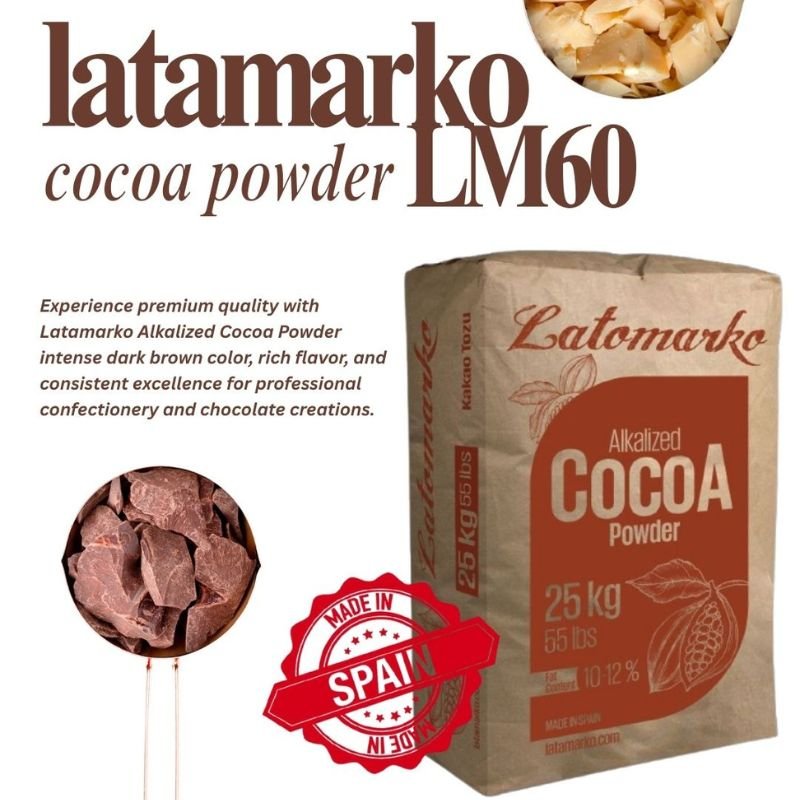
LATAMARKO LM60 – Premium Spanish-Origin Cocoa Powder
Manufacturing Rather Than Distribution
Unlike distribution-based sourcing models where product origin may vary between orders, Latamarko production follows a controlled conversion process. Cocoa beans are selected for processing behavior, transformed through defined thermal and mechanical stages, and standardized into measurable technical profiles. Each batch is produced to meet predetermined functional ranges rather than descriptive marketing categories.
This approach allows customers to operate fixed formulations without repeated recalibration. Production engineers can maintain equipment settings, mixing times, and thermal conditions because the ingredient remains stable over time. The relationship shifts from purchasing a commodity to integrating a controlled input into a manufacturing system.
Process-Driven Consistency
Latamarko treats cocoa powder as a functional component within a larger technical system. The manufacturing objective is to regulate the variables that influence industrial performance:
-
pH stability affecting viscosity and flavor balance
-
Color consistency after baking or heating
-
Dispersion behavior during mixing and hydration
-
Fat compatibility within composite formulations
By managing these factors at the processing stage, variability is removed before the material reaches the production line.
Integration with Industrial Production
Manufacturers operating continuous or high-volume lines require material reliability more than periodic availability. Interruptions caused by inconsistent ingredients lead to downtime, quality deviation, and increased operational cost. Latamarko therefore functions as an upstream production partner aligned with long-term manufacturing cycles.
Direct technical communication enables coordination between cocoa characteristics and factory conditions. The material is produced with awareness of its final processing environment, allowing stable performance across chocolate, biscuit, filling, and beverage systems.
From Agricultural Material to Technical Ingredient
Within this framework, cocoa powder is no longer treated as a variable commodity but as a defined industrial input. The role of the manufacturer is to convert natural variability into controlled functionality. Latamarko’s production model is built around this conversion — ensuring that each delivery behaves identically within the customer’s formulation and equipment.
In practice, the brand becomes part of the manufacturing workflow, supporting predictable output rather than reacting to inconsistencies after they occur.
Why Consistency Matters in Cocoa Production
The Hidden Cost of Variability
In industrial food manufacturing, raw materials are not simply ingredients — they are process variables. Cocoa powder directly influences viscosity, color development, flavor balance, moisture migration, and mixing behavior. When its characteristics change between batches, the effect spreads across the entire production line.
Even small fluctuations in pH or fat content can alter chocolate flow properties, affect biscuit spread during baking, or create sedimentation in beverage systems. As a result, operators must adjust temperatures, mixing times, or formulation ratios. These corrections slow production and introduce uncertainty into quality control.
The primary challenge is not product acceptance, but production stability. A formulation designed for one cocoa profile cannot perform identically with another.
Why Consistency Matters in Continuous Manufacturing
Manufacturing Depends on Repeatable Inputs
Factories are calibrated environments. Equipment settings, dosing systems, and thermal processes are established based on predictable ingredient behavior. Consistency allows machines to run continuously without intervention.
When cocoa powder varies, several issues appear:
-
viscosity drift in chocolate masses
-
uneven coloration after baking
-
filling texture instability
-
inconsistent hydration in drink mixes
Each adjustment consumes time and increases waste. In high-volume production, a few minutes of recalibration per batch can translate into significant operational loss over time.
Consistency therefore becomes a technical requirement rather than a quality preference.
Formulation Stability and Process Efficiency
A stable cocoa powder allows product developers to design fixed recipes. Once validated, the formulation should not require modification with every shipment. This reliability reduces laboratory workload and prevents frequent quality re-approval cycles.
Uniform raw material behavior also protects brand identity. Finished products retain the same color, texture, and sensory profile across production dates. Without this stability, manufacturers risk variation that consumers may notice, even if specifications remain within acceptable limits.
From a process engineering perspective, predictable inputs create predictable outputs.
Upstream Control Creates Downstream Reliability
Consistency must originate at the processing stage, not during final inspection. If variability is corrected only after production begins, the factory absorbs the cost. Controlling parameters before delivery prevents these disruptions entirely.
For this reason, cocoa processing is designed to regulate pH, particle size distribution, and fat range within defined tolerances. Stable upstream processing enables uninterrupted downstream manufacturing.
Operational Continuity as the Real Quality Indicator
In industrial production, the most valuable characteristic of an ingredient is not intensity of flavor but reliability of performance. A cocoa powder that behaves identically in every batch allows manufacturers to maintain steady throughput and predictable scheduling.
Consistency ultimately protects three critical elements:
-
production efficiency
-
product uniformity
-
planning accuracy
When these are maintained, the raw material becomes part of the process rather than a variable within it.
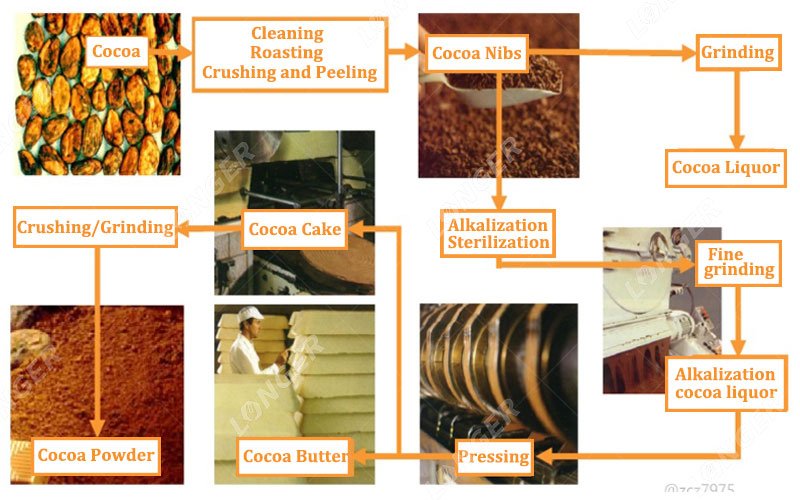
Latamarko Cocoa Powder Manufacturer
Cocoa Bean Selection & Raw Material Preparation
Roasting & Liquor Preparation
Transforming Cocoa into a Functional Processing Material
After raw material preparation, the next critical stage in cocoa processing is roasting and liquor formation. At this point, cocoa moves from an agricultural state toward a controlled industrial ingredient. For a Latamarko Cocoa Powder Manufacturer, roasting is not performed only to develop aroma — it is calibrated to influence how the cocoa behaves during pressing, alkalization, and final application.
The roasting phase determines color stability, grinding efficiency, and the balance between acidity and bitterness. Even small deviations in thermal exposure can change the rheological behavior of cocoa liquor and ultimately affect the viscosity of chocolate masses or dispersion in beverage systems.
The objective is therefore not maximum roasting intensity, but repeatable thermal transformation.
Controlled Thermal Development
Cocoa beans contain moisture, organic acids, and cellular structures that respond differently to heat. A structured roasting profile regulates these reactions within defined limits.
Proper roasting achieves:
-
stabilization of internal moisture
-
development of uniform color precursors
-
controlled reduction of natural acidity
-
improved grinding behavior
If roasting is uneven, some particles may become overdeveloped while others remain underprocessed. This leads to unstable color after baking and unpredictable flavor balance in finished products.
Industrial cocoa processing requires identical thermal history for every batch to maintain formulation stability.
Breaking and Liquor Formation
Following roasting, beans are cracked and separated from their shells. The remaining nibs are then ground into cocoa liquor — a fluid suspension of cocoa solids and cocoa butter. This stage converts discrete particles into a homogeneous mass suitable for controlled pressing.
Uniform liquor preparation is essential because pressing efficiency depends on consistent particle structure. When liquor varies in particle size or temperature, fat separation fluctuates, affecting final powder fat content.
For a Latamarko Cocoa Powder Manufacturer, liquor formation is managed to ensure stable mechanical behavior during the next stage of processing.
Preparing for Downstream Consistency
Roasting and liquor preparation together create the baseline properties of the cocoa system. These steps determine how easily fat can be separated, how alkalization reacts with the material, and how finely the powder can later be milled.
By standardizing thermal treatment and liquor homogeneity, the manufacturing process moves closer to converting natural cocoa into a predictable industrial ingredient — one capable of delivering consistent performance across chocolate, bakery, and beverage applications.
Latamarko Cocoa Powder Manufacturer
Cocoa Pressing & Fat Control
Separating Cocoa into Functional Components
After liquor preparation, cocoa processing enters a decisive mechanical stage: pressing. In this phase, cocoa liquor is separated into cocoa butter and cocoa cake. The remaining cake becomes the basis of cocoa powder, meaning its internal fat content will define how the powder behaves in industrial formulations.
For a Latamarko Cocoa Powder Manufacturer, pressing is not simply extraction — it is the calibration point where rheology, texture, and dispersion characteristics are established.
The fat level retained inside the cocoa cake determines viscosity in chocolate systems, absorption in bakery dough, and mouthfeel in fillings. Too much residual fat may destabilize dry blends, while too little may reduce body and color intensity. Therefore, pressing must be performed within controlled pressure curves rather than a single mechanical setting.
Pressure Curves and Controlled Fat Reduction
Industrial cocoa presses operate under programmed pressure stages designed to achieve a defined fat range. The goal is not maximum butter recovery but predictable powder performance.
Properly controlled pressing provides:
-
stable fat percentage in finished powder
-
consistent particle bonding during milling
-
repeatable flow behavior in mixing systems
-
uniform color expression after heating
If pressing varies from batch to batch, powder density and hydration properties shift accordingly. This results in chocolate viscosity drift, uneven biscuit texture, or irregular suspension in beverages.
For this reason, pressing becomes one of the most critical stabilization steps in cocoa manufacturing.
Influence on Downstream Processing
The characteristics established during pressing directly influence alkalization efficiency and grinding behavior. A cake with controlled fat distribution reacts uniformly to pH adjustment and fractures consistently during milling. Without this control, later stages must compensate for upstream variation, which reduces production predictability.
In practice, the pressing stage defines the structural integrity of the powder before it becomes a powder.
Fat Control as a Performance Parameter
In industrial formulations, cocoa powder is selected not only for flavor but also for functionality. Fat content contributes to lubrication in chocolate masses, influences aeration in bakery systems, and affects mouthfeel in creams and fillings.
By maintaining a consistent fat range, a Latamarko Cocoa Powder Manufacturer ensures that customers can keep equipment settings unchanged across production cycles. The cocoa behaves as a standardized component rather than a variable raw material.
Foundation for Reliable Production
Controlled pressing converts cocoa liquor into a material ready for chemical adjustment and fine milling. The reliability achieved here carries through the remaining manufacturing stages. When fat content remains stable, subsequent alkalization and grinding produce uniform technical results.
Through pressure regulation and continuous monitoring, cocoa powder becomes a predictable processing ingredient — supporting stable manufacturing conditions across chocolate, biscuit, dairy, and beverage applications.
Alkalization Process (Dutch Process)
Adjusting Cocoa for Industrial Performance
After pressing, cocoa cake undergoes alkalization — commonly known as the Dutch process. This stage is one of the most decisive steps in determining how cocoa powder behaves inside a formulation. The purpose is not simply to darken color, but to regulate chemical balance so the ingredient performs consistently in different food systems.
For a Latamarko Cocoa Powder Manufacturer, alkalization is treated as a controlled reaction rather than a visual modification.
Natural cocoa contains organic acids that influence taste, dispersion, and viscosity. If left unchanged, these acids can create instability in chocolate masses, harsh flavor in fillings, and poor integration in dairy mixtures. Through measured alkalization, the pH is adjusted to a defined range, stabilizing the interaction between cocoa solids, fats, and sugars.
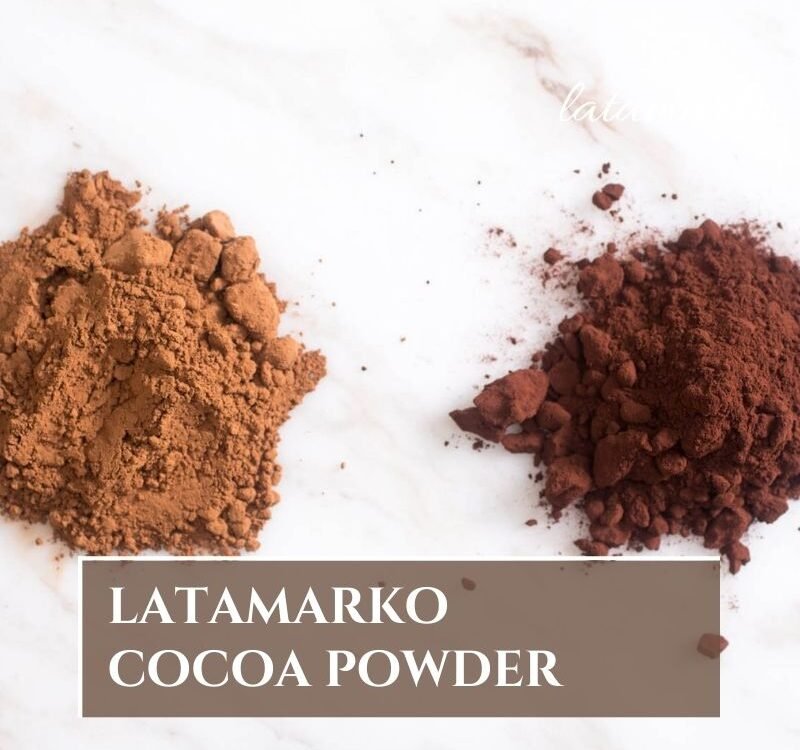
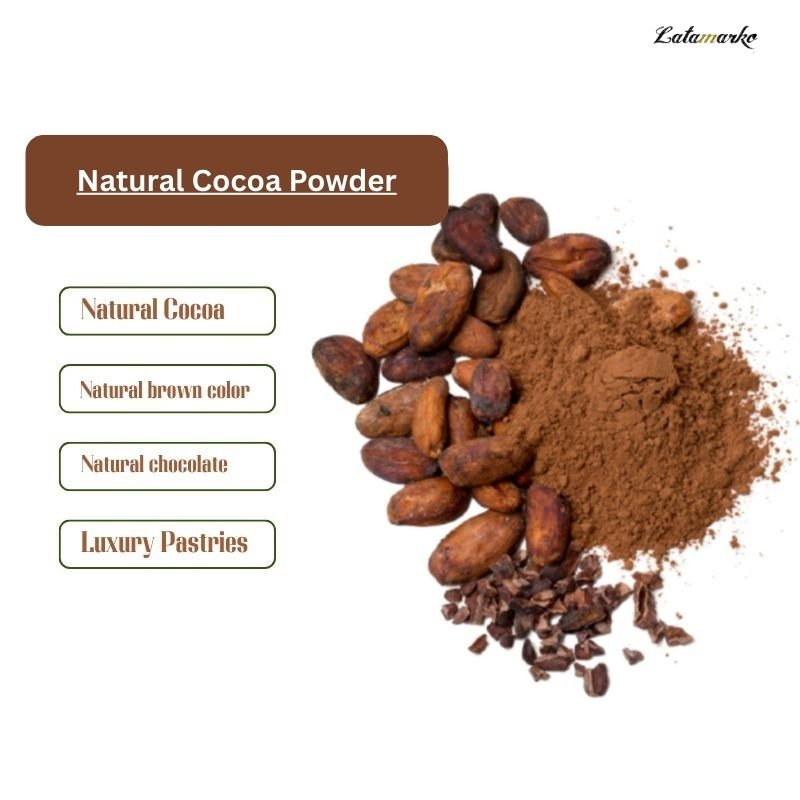
Latamarko non-alkalized Cocoa Powder
Controlled Chemical Transformation
During alkalization, the cocoa cake is treated under regulated moisture, temperature, and alkalizing agents. Each parameter affects the final functional behavior of the powder.
A properly managed process results in:
-
balanced acidity and reduced sharpness
-
deeper and stable color formation
-
improved wettability in mixing systems
-
predictable viscosity in chocolate formulations
If pH varies beyond a narrow range, the cocoa may disperse unevenly or thicken unexpectedly. Industrial manufacturers therefore rely on powders whose alkalization profile remains constant between deliveries.
Color and Flavor Stability
Color development during baking or heating depends strongly on alkalization. Inconsistent treatment leads to shade differences across production batches, especially visible in biscuits, wafers, and cream fillings. By standardizing the reaction conditions, the cocoa maintains uniform appearance in finished products.
Flavor perception is also stabilized. Instead of fluctuating bitterness or acidity, the powder integrates smoothly with sugar and fat matrices. This reduces the need for recipe adjustments and ensures sensory consistency in packaged goods.
Interaction with Downstream Processing
Alkalization prepares cocoa powder for grinding and application. The reaction softens internal structure, allowing more uniform particle size distribution during milling. It also enhances compatibility with milk proteins and emulsified fat systems used in confectionery and beverages.
Because this stage determines both chemical and physical functionality, its control defines whether cocoa behaves as a stable ingredient or a variable additive.
Creating a Predictable Ingredient
By regulating pH, color intensity, and dispersion characteristics, a Latamarko Cocoa Powder Manufacturer converts cocoa cake into a repeatable industrial input. Each batch performs within defined tolerances, enabling manufacturers to operate equipment and formulations without recalibration.
In this way, alkalization transforms cocoa from a naturally variable material into a technically reliable component suitable for continuous production environments.
Grinding, Particle Size & Flow Behavior
Converting Cocoa Cake into a Functional Powder
Following alkalization, cocoa cake enters the milling stage where it is transformed into cocoa powder. Although this step appears mechanical, it strongly influences how the ingredient behaves in mixing, conveying, and final product texture.
For a Latamarko Cocoa Powder Manufacturer, grinding is not simply size reduction — it is the calibration of flow, dispersion, and integration within industrial formulations.
The objective is to produce a powder that moves predictably through dosing systems, blends uniformly with other ingredients, and hydrates consistently without forming agglomerates.
Cocoa Powder Manufacturers Turkiye
Particle Size Distribution
Cocoa powder performance depends not on a single particle size but on a controlled distribution range. Each particle fraction contributes differently to product behavior:
-
fine particles influence color intensity and smoothness
-
medium particles support suspension stability
-
larger particles affect flow and aeration properties
If grinding produces an irregular distribution, the powder may compact in storage or separate during transport. This leads to dosing inaccuracy and inconsistent product texture.
By regulating milling conditions and classification stages, particle distribution remains stable between batches.
Flow Behavior in Industrial Handling
In factory environments, cocoa powder passes through hoppers, screw feeders, and pneumatic conveying systems. Poor flow characteristics cause bridging, clogging, or uneven feeding rates.
Controlled grinding allows:
-
uniform bulk density
-
predictable flow through dosing equipment
-
reduced dust formation
-
consistent blending with sugar and milk powders
Stable flow properties reduce manual intervention and maintain continuous production speed.
Dispersion and Hydration Performance
Particle structure also determines how cocoa interacts with liquids and fats. Uniformly milled powder hydrates gradually and disperses evenly, preventing lumps in beverage or cream applications. In chocolate systems, controlled particle size contributes to smooth mouthfeel and stable viscosity.
An unstable grind may hydrate too quickly or unevenly, producing sedimentation or surface floating. Manufacturers then compensate with additional mixing time or mechanical energy.
Creating a Reliable Processing Ingredient
By controlling milling parameters and classification, a Latamarko Cocoa Powder Manufacturer produces a powder with predictable mechanical behavior. The material flows consistently through equipment and integrates smoothly into formulations.
Grinding therefore finalizes the transformation from cocoa cake to a standardized industrial ingredient — one capable of maintaining uniform performance across chocolate, bakery, dairy, and beverage production lines.
Technical Specifications & Quality Parameters
Defining Cocoa Powder by Measurable Performance
In industrial food production, cocoa powder cannot be evaluated by description alone. Terms such as flavor intensity or color shade are insufficient for process control. Manufacturers require measurable parameters that determine how the ingredient will behave inside equipment and formulations.
For a Latamarko Cocoa Powder Manufacturer, the technical specification sheet functions as an operational guide rather than a marketing document.
Each production batch is produced and verified according to defined tolerance ranges so that downstream processes operate without adjustment.
Core Analytical Parameters
Several measurable characteristics determine the functional behavior of cocoa powder:
-
pH Level – Influences acidity, flavor balance, and viscosity in chocolate systems
-
Fat Content – Affects lubrication, mouthfeel, and flow properties
-
Moisture – Impacts shelf stability and powder flow
-
Particle Size Distribution – Determines dispersion and texture
-
Bulk Density – Controls dosing accuracy and mixing behavior
Maintaining these parameters within consistent limits ensures that the ingredient interacts predictably with sugar, fats, and proteins in composite recipes.
Color and Process Stability
Color is not only a visual attribute but also a process indicator. Uniform color development during baking or heating confirms consistent alkalization and roasting. If shade varies, production settings may need correction.
By controlling processing variables, each batch maintains repeatable color intensity across applications such as biscuits, wafers, fillings, and beverages.
Microbiological & Chemical Safety
In addition to functional parameters, safety indicators are continuously monitored:
-
microbiological load
-
heavy metals
-
contaminants
-
traceability data
These controls ensure compatibility with international food manufacturing requirements and allow integration into regulated supply chains.
From Specification to Operational Reliability
A stable specification allows manufacturers to design fixed formulations and maintain stable equipment settings. When technical parameters remain constant, production efficiency increases and quality deviation decreases.
Through controlled measurement and verification, a Latamarko Cocoa Powder Manufacturer provides cocoa powder as a predictable processing component rather than a variable agricultural material.
Cocoa Powder for Chocolate Manufacturing
Cocoa Powder for Biscuit, Wafer & Bakery
Cocoa Function in Thermal Processing Products
In baked and wafer-based products, cocoa powder is exposed to high temperatures, moisture evaporation, aeration, and structural expansion. Unlike chocolate systems where fat phase dominates, bakery applications depend on the interaction between cocoa solids, starch, sugar, and proteins during heating.
For a Latamarko Cocoa Powder Manufacturer, the powder must therefore maintain stability under thermal stress and mechanical mixing rather than only providing flavor.
The most critical performance factors in bakery production are color retention after baking, controlled moisture absorption, and uniform dispersion within dry blends. When these are stable, manufacturers can maintain fixed baking times and predictable product appearance.
Cocoa Powder in Biscuit Production
Dough Integration and Spread Control
Biscuit dough is a delicate balance between fat, flour, and sugar structure. Cocoa powder affects dough viscosity and spreading behavior during baking. If particle size or pH varies, biscuits may expand unevenly or develop inconsistent surface texture.
A controlled cocoa powder contributes to:
-
uniform dough mixing
-
predictable spread during baking
-
stable crumb structure
-
consistent surface color
When powder absorbs water unevenly, it competes with flour hydration and alters gluten development. Stable moisture interaction allows manufacturers to keep dough parameters unchanged.
Color Development After Baking
Biscuit color is formed during Maillard reactions and caramelization. Cocoa must maintain shade stability after oven exposure. If alkalization fluctuates, finished products may appear lighter or darker between production runs.
Consistent cocoa processing ensures that each batch reaches the same final appearance without adjusting baking temperature.
Cocoa Powder in Wafer Production
Integration in Wafer Sheets
Wafer batter contains high moisture and low viscosity before baking, then rapidly dries in heated plates. Cocoa must disperse quickly without sedimentation and remain evenly distributed during evaporation.
Controlled particle size supports:
-
uniform wafer sheet thickness
-
absence of dark spotting
-
consistent porosity
If dispersion is unstable, sheets may show uneven coloration or structural fragility.
Performance in Wafer Cream Fillings
Cocoa powder is also used in fat-based wafer creams. Here it must blend smoothly into vegetable fat and sugar matrices. Incorrect particle distribution causes grainy texture and inconsistent mouthfeel.
Stable powder characteristics ensure smooth filling and predictable spread between layers.
Cocoa Powder in General Bakery Applications
Cakes and Aerated Products
In cake batters, cocoa influences aeration and moisture retention. A stable powder maintains volume and prevents collapse after baking. Variations in fat content or alkalization may cause density differences in finished cakes.
Fillings and Creams
Bakery creams require uniform dispersion and color stability during storage. Cocoa must remain suspended without separating or forming lumps. Consistent particle structure supports smooth texture and visual uniformity.
Dry Mixes
In powdered bakery mixes, cocoa must blend homogeneously with flour and sugar. Predictable bulk density allows accurate dosing and prevents separation during packaging and transport.
Supporting Stable Production
Biscuit, wafer, and bakery lines operate continuously with fixed oven settings and mixing times. Variability in cocoa forces recalibration and increases waste.
By maintaining consistent pH, particle size distribution, and moisture interaction, a Latamarko Cocoa Powder Manufacturer provides cocoa powder suitable for thermal processing environments. The ingredient performs reliably across baked goods, layered wafers, creams, and mixes, allowing manufacturers to maintain steady throughput and consistent finished products.
Cocoa Powder for Dairy & Beverage Industry
Behavior in Liquid and Emulsified Systems
In dairy and beverage applications, cocoa powder functions inside a liquid environment rather than a solid matrix. The ingredient must hydrate, disperse, and remain suspended over time without forming sediment or surface floating. Unlike bakery systems, where thermal reactions dominate, liquid products depend on particle interaction with water, proteins, and emulsified fats.
For a Latamarko Cocoa Powder Manufacturer, the primary requirement is controlled dispersion and stability throughout the product’s shelf life.
Inconsistent cocoa powder leads to visible separation, uneven color distribution, and unstable mouthfeel. This not only affects sensory perception but also complicates industrial filling and homogenization processes.
Suspension Stability in Beverages
Ready-to-drink beverages and powdered drink mixes require cocoa particles that remain evenly distributed. Particle size distribution and surface characteristics determine whether the powder stays suspended or settles at the bottom.
A controlled cocoa powder provides:
-
gradual hydration without clumping
-
stable suspension after mixing
-
uniform color throughout the liquid
-
reduced sediment formation during storage
When particles are too coarse, they settle rapidly. When too fine, they may float or form foam layers. Balanced distribution ensures predictable behavior during processing and consumption.
Interaction with Milk Proteins
In dairy systems such as flavored milk, cocoa interacts with casein and whey proteins. pH stability is critical; variation may cause protein aggregation or separation during pasteurization and cooling.
By maintaining a defined pH range, the cocoa integrates smoothly into milk matrices and preserves product texture. This stability allows consistent processing through homogenization and heat treatment without formulation correction.
Performance in Powdered Drink Mixes
Instant beverage powders must dissolve rapidly while maintaining uniform appearance. Controlled moisture and particle structure allow cocoa to disperse evenly with sugar and milk powders during dry blending.
Manufacturers benefit from:
-
predictable reconstitution time
-
uniform flavor release
-
minimal residue in packaging or mixing equipment
Stable bulk density also supports accurate dosing in automated filling lines.
Cold and Frozen Dairy Applications
In ice cream and frozen desserts, cocoa must remain stable at low temperatures and within fat emulsions. Properly processed powder maintains color and flavor without forming grainy texture during freezing.
Reliable Liquid Processing
Dairy and beverage production lines rely on continuous mixing, pumping, and filling. Variability in cocoa properties can create blockages, foam instability, or separation in packaged products.
By controlling pH, particle size, and hydration behavior, a Latamarko Cocoa Powder Manufacturer supplies cocoa powder compatible with liquid processing systems. The ingredient behaves consistently during blending, heat treatment, and storage, supporting uniform finished products across batches.
Latamarko Cocoa Powder Manufacturer
Quality Control, Food Safety & Certifications
Consistency Begins with Controlled Verification
In industrial cocoa processing, quality is not defined only by laboratory acceptance but by repeatable performance in production. A cocoa ingredient must behave identically across batches, otherwise downstream manufacturing becomes unpredictable.
For a Latamarko Cocoa Powder Manufacturer, quality control is therefore structured as a continuous verification system rather than a final inspection step.
Monitoring begins during processing and continues through packaging. Each production stage is evaluated to ensure that physical and chemical parameters remain within defined tolerances before the material reaches the customer.
Analytical Quality Parameters
Every batch undergoes controlled measurement to confirm functional stability. The objective is to maintain compatibility with industrial processing conditions.
Key verification points include:
-
pH range stability
-
fat content control
-
moisture limits
-
particle size consistency
-
color uniformity
These parameters directly affect viscosity, dispersion, and final product appearance. Maintaining narrow ranges allows manufacturers to operate fixed production settings without recalibration.
Microbiological Safety
Food safety requirements demand that cocoa powder remains suitable for direct integration into processed foods. Continuous monitoring ensures microbiological compliance within regulated limits.
Testing includes:
-
total plate count
-
yeast and mold levels
-
absence of pathogenic organisms
By verifying safety at production level, the ingredient can enter manufacturing lines without additional corrective treatment.
Chemical Monitoring & Traceability
Chemical safety is equally critical for international distribution. Regular analysis confirms that contaminants remain within accepted regulatory thresholds. Batch traceability links each production lot to processing records and raw material sources, supporting full supply chain transparency.
This traceability enables manufacturers to maintain regulatory documentation and ensures accountability across the production cycle.
Compliance with Food Industry Standards
Production systems are aligned with structured food safety management frameworks commonly required by international food manufacturers. Documentation and monitoring procedures allow integration into audited supply chains and regulated markets.
Certification frameworks serve to verify process discipline rather than replace internal control systems. The emphasis remains on maintaining stable production conditions that ensure both safety and performance.
Supporting Reliable Manufacturing
Quality control ultimately protects operational continuity. When analytical and safety parameters remain stable, manufacturers avoid interruptions caused by non-conforming materials.
Through continuous monitoring and documented verification, a Latamarko Cocoa Powder Manufacturer delivers cocoa powder that meets safety expectations while preserving consistent technical behavior — enabling uninterrupted industrial production.
Bulk Supply & Industrial Logistics
Supply Reliability as a Production Parameter
For food manufacturers, raw material availability is not only a purchasing matter but a production stability factor. A temporary interruption in cocoa supply can stop entire chocolate, biscuit, or beverage lines.
For a Latamarko Cocoa Powder Manufacturer, logistics therefore functions as an extension of production planning — ensuring continuity rather than only transportation.
Industrial buyers require predictable shipment cycles, consistent packaging, and documentation readiness so that incoming materials integrate directly into warehouse and batching systems without delay.
Structured Bulk Supply
Bulk cocoa powder delivery must align with factory consumption rates. Instead of irregular shipments, supply is organized around repeatable dispatch intervals and defined batch volumes.
Typical industrial supply features:
-
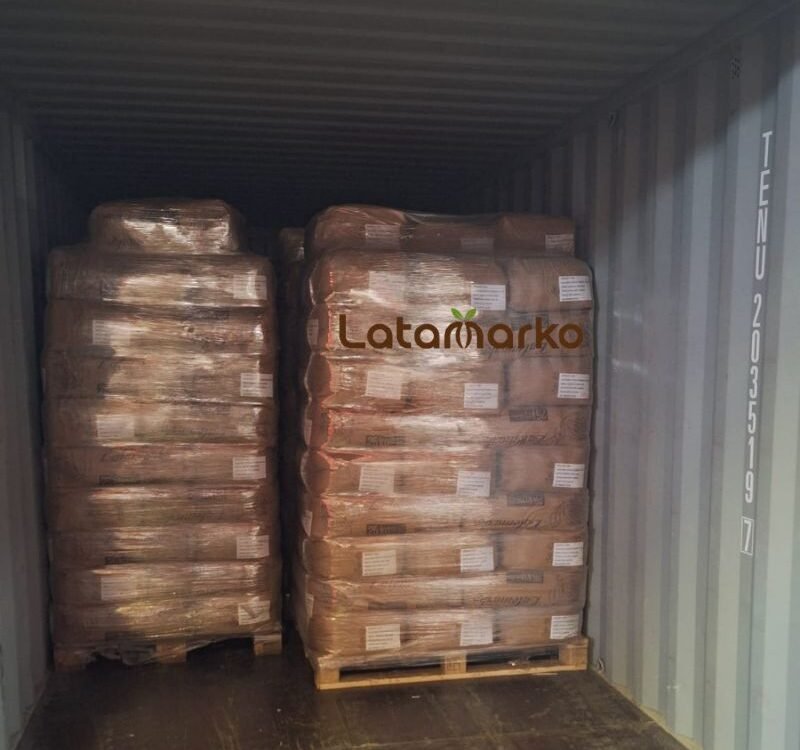
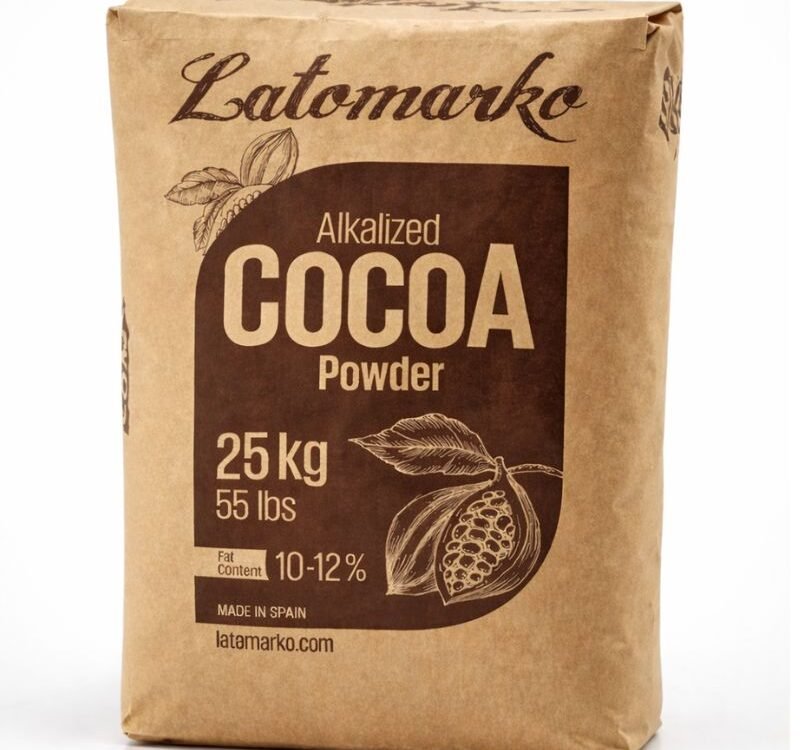
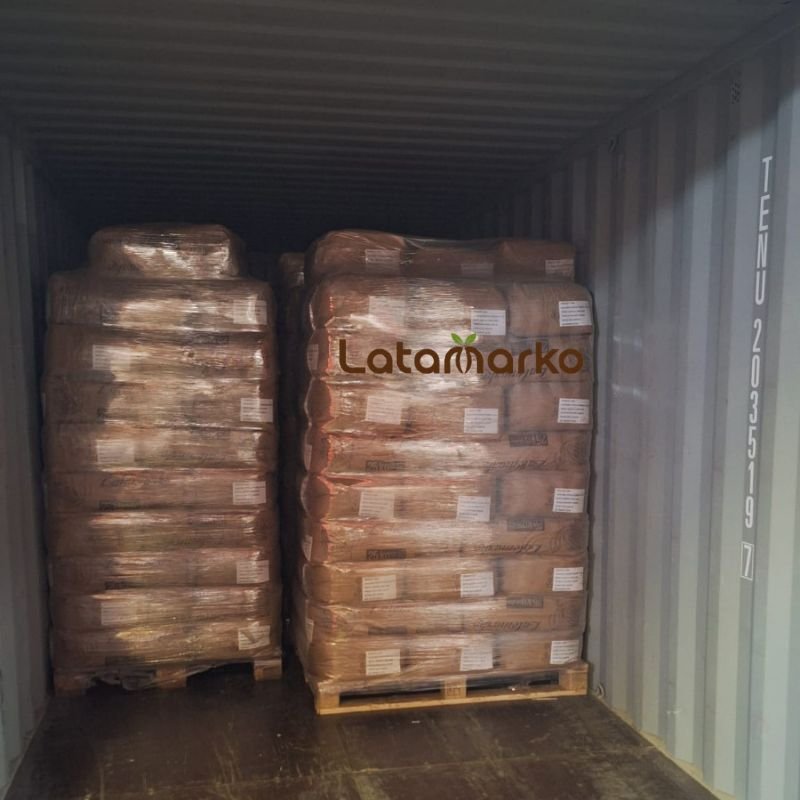
palletized 25 kg multi-layer bags
-
homogeneous batch allocation per shipment
-
consistent lot numbering for traceability
-
standardized loading patterns for containers
Uniform packaging configuration enables automated unloading and storage planning at the customer facility.
Container Optimization & Handling
Transport efficiency depends on stable loading configurations. Controlled pallet height, weight distribution, and moisture protection prevent deformation during long-distance transport.
Proper container preparation ensures:
-
minimal cargo movement during transit
-
reduced packaging damage
-
preserved powder flowability upon arrival
This allows the material to enter production directly without additional conditioning.
Export Documentation & Traceability
Industrial imports require complete documentation accompanying each shipment. Consistent document preparation avoids customs delays and prevents production interruptions at destination.
Standard shipment documentation typically includes:
-
packing list and batch references
-
analytical specifications
-
traceability identification
-
origin documentation
The goal is operational readiness upon arrival rather than post-arrival verification.
Forecast-Based Shipping
Manufacturers operate on scheduled production plans. Supply must therefore follow forecast agreements rather than reactive ordering. Coordinated dispatch planning maintains stable inventory levels at the customer warehouse.
Planned logistics supports:
-
predictable stock rotation
-
reduced emergency purchasing
-
stable procurement pricing structure
Integrated Production Continuity
When logistics is aligned with manufacturing cycles, cocoa powder becomes a controlled input rather than a variable factor. Consistent supply reduces downtime risk and stabilizes production efficiency.
By combining standardized packaging, documented traceability, and planned shipment cycles, a Latamarko Cocoa Powder Manufacturer provides cocoa powder through a logistics structure designed for uninterrupted industrial operation.

Latamarko Cocoa Powder Manufacturer
Choosing a Cocoa Powder Manufacturer Is Choosing Production Stability
In industrial food production, cocoa powder is not simply an ingredient — it is a structural component of the final product.
Flavor profile, color, texture, viscosity, and processing behavior all originate from the consistency of the cocoa material itself.
For this reason, manufacturers do not look for a supplier; they look for a reliable production source.
A true Latamarko Cocoa Powder Manufacturer approach focuses on repeatability rather than occasional performance.
Each batch must behave the same in mixers, refiners, ovens, and tempering systems — regardless of season, origin, or shipment date.
Consistency reduces formulation adjustments.
Stability reduces downtime.
Predictability protects brand quality.
From Raw Material to Production Line Compatibility
Industrial buyers require more than specifications on paper.
They require a cocoa powder that integrates into real manufacturing environments — chocolate molding lines, wafer cream mixers, biscuit dough systems, and beverage dispersion processes.
Production-oriented cocoa powder means:
-
controlled alkalization behavior
-
defined particle size performance
-
stable fat functionality
-
repeatable color and flavor response
When these parameters remain constant, production efficiency increases and product deviation decreases.
Long-Term Manufacturing Partnership
Professional manufacturers build relationships based on production continuity, not only transactions.
The goal is not a shipment — the goal is a stable formulation over years.
Factories that operate with predictable raw materials can scale production, expand SKUs, and maintain sensory identity across markets.
A dedicated cocoa manufacturer supports this stability by maintaining controlled processing, traceable batches, and structured supply cycles.
Technical Communication
Industrial cocoa sourcing usually begins with technical discussion rather than price discussion.
Production teams evaluate compatibility before procurement teams evaluate volume.
For technical inquiries, formulation discussions, or specification review, communication should focus on application requirements and process conditions.
Alkalized Cocoa Powder pH Levels and Dutch Process Control