Effect of Cocoa Fat Content on Industrial Applications
June 10, 2026
Food Safety Standards in Cocoa Manufacturing
June 20, 2026
For industrial food manufacturers, purchasing cocoa powder is not simply a matter of selecting a color or comparing prices. Professional buyers understand that cocoa powder specifications directly affect production stability, product quality, flavor consistency, processing efficiency, and final consumer satisfaction.
In large-scale food manufacturing, even small variations in cocoa powder characteristics can create significant operational challenges. This is why experienced buyers carefully evaluate technical cocoa specifications before approving a supplier.
Understanding cocoa powder specifications helps manufacturers select the right cocoa ingredient for their specific industrial applications while reducing production risks and improving long-term consistency.
LATAMARKO produces premium cocoa powders in Spain according to European manufacturing standards, supplying industrial food manufacturers with stable cocoa solutions developed for chocolate, bakery, beverage, dairy, biscuit, wafer, and confectionery applications.
This guide explains the most important cocoa powder specifications industrial buyers should understand before purchasing cocoa ingredients.
Cocoa Powder Specifications Explained for Buyers
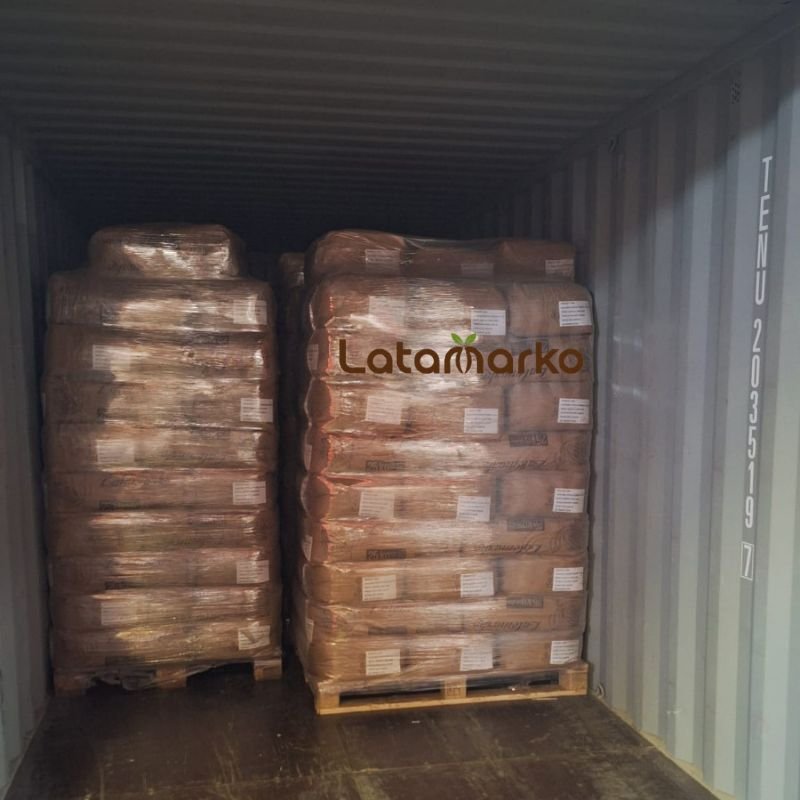
Batch-to-Batch Consistency in Industrial Cocoa Powder Supply
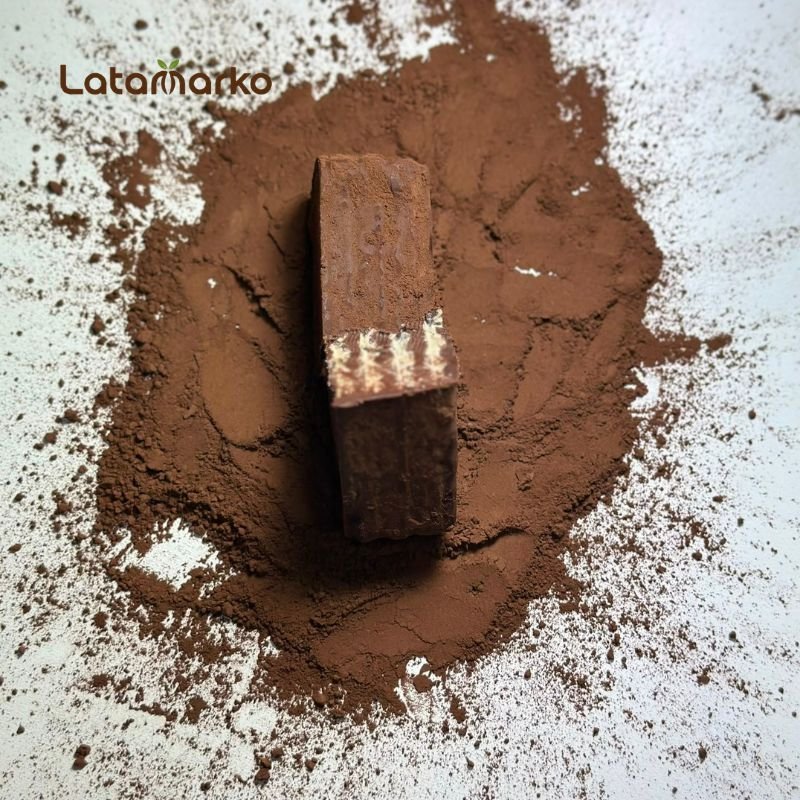
Latamarko Cocoa Powder Manufacturer
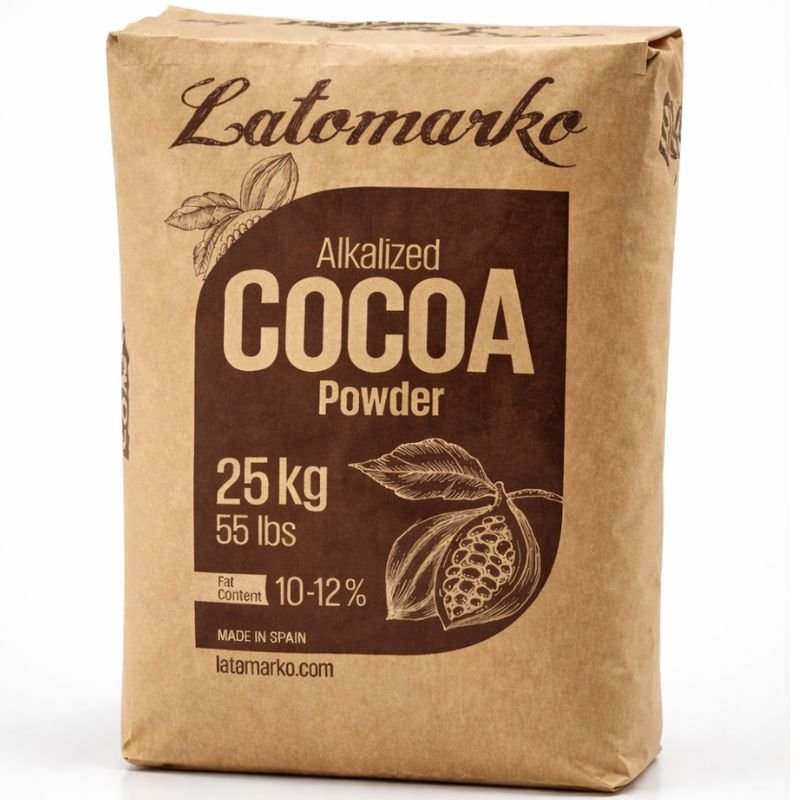
LATAMARKO LM60 – Premium Spanish-Origin Cocoa Powder
Why Cocoa Powder Specifications Matter
Cocoa powder specifications are not just technical numbers on a Certificate of Analysis (COA). They directly influence how cocoa powder behaves during production.
Proper specification control affects:
- Product appearance
- Flavor consistency
- Texture
- Viscosity
- Solubility
- Production stability
- Shelf life
- Consumer perception
For industrial manufacturers operating continuous production systems, stable specifications are essential.
Inconsistent cocoa powder may lead to:
- Formula instability
- Product color variation
- Mixing difficulties
- Production downtime
- Customer complaints
- Increased operational costs
Professional cocoa suppliers focus heavily on specification consistency to support stable industrial manufacturing.
Cocoa Powder pH Value
One of the most important cocoa powder specifications is pH.
The pH level indicates the acidity or alkalinity of the cocoa powder.
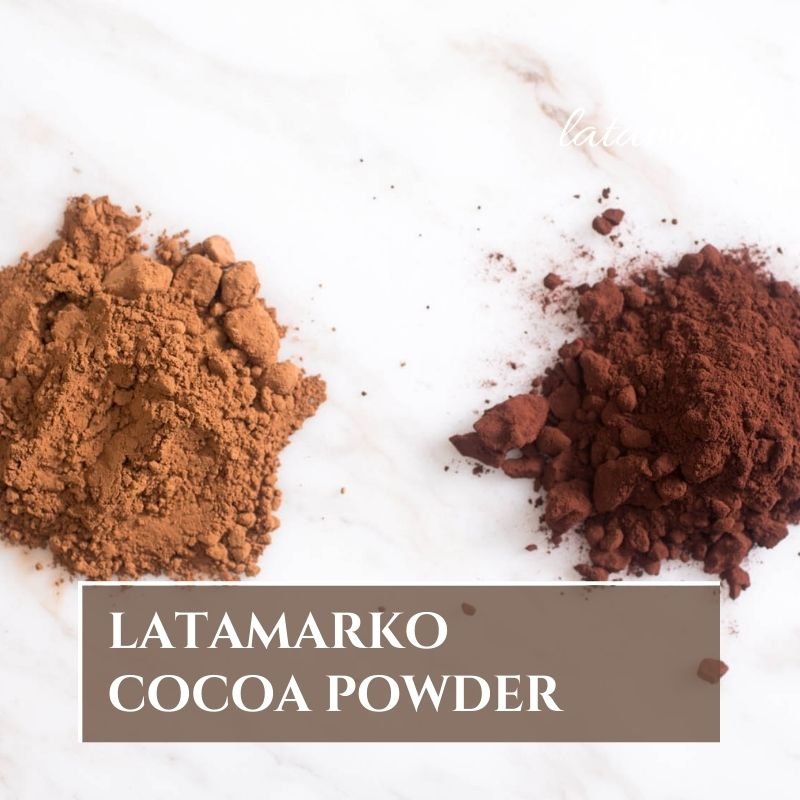
Natural Cocoa Powder
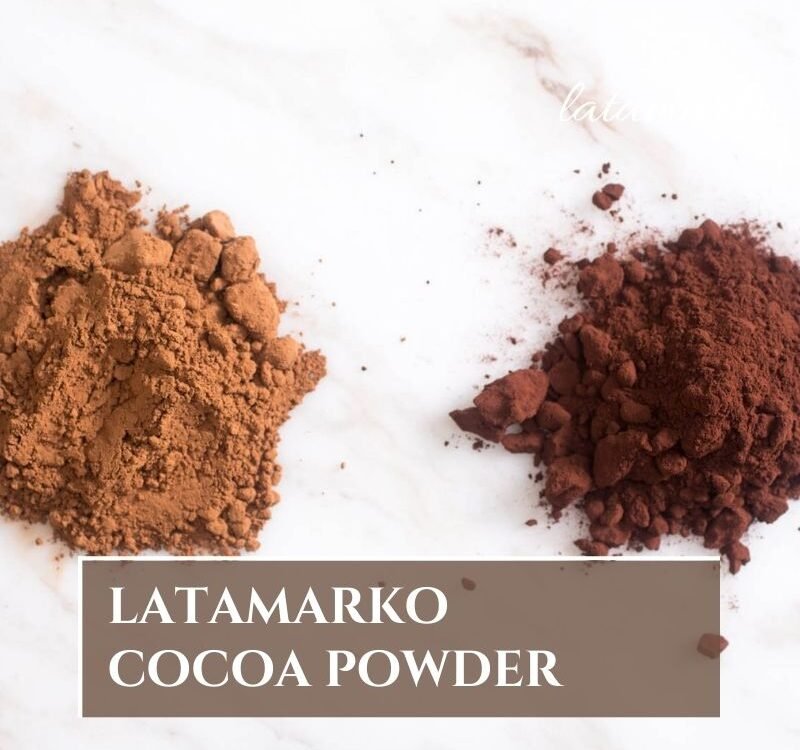
Natural cocoa powders usually have a lower pH and higher natural acidity.
They often provide:
- Lighter brown color
- Sharper cocoa flavor
- More acidic profile
Alkalized Cocoa Powder
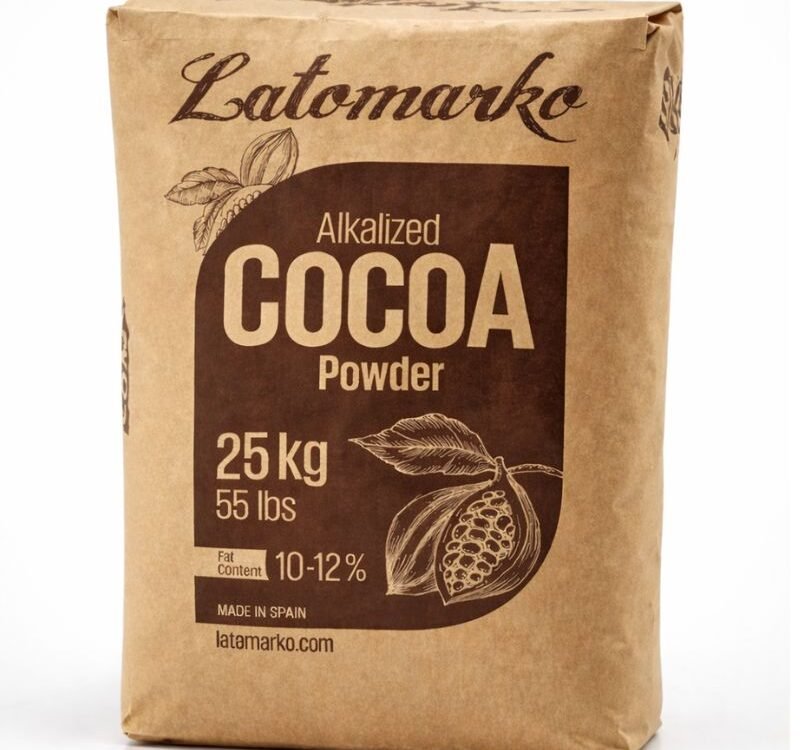
Alkalized cocoa powders undergo Dutch processing to increase pH levels.
Higher pH generally creates:
- Darker color
- Reduced acidity
- Smoother flavor
- Better dispersion
Industrial manufacturers carefully select pH ranges depending on their applications.
For example:
- Bakery applications may require stable color development.
- Beverage systems may require improved solubility.
- Chocolate fillings may prioritize balanced flavor.
Stable pH consistency is extremely important for large-scale industrial production.
Cocoa Fat Content Specification
Fat content refers to the amount of residual cocoa butter remaining inside cocoa powder after pressing.
This specification strongly influences:
- Mouthfeel
- Flavor release
- Viscosity
- Texture
- Processing behavior
Common industrial cocoa fat ranges include:
- Low fat cocoa powder
- Medium fat cocoa powder
- High fat cocoa powder
Different industrial applications require different cocoa fat levels.
Lower Fat Cocoa Powders
Typically used in:
- Bakery products
- Dry beverage mixes
- Biscuits
- Powder blends
Higher Fat Cocoa Powders
Often preferred for:
- Premium chocolate products
- Dairy desserts
- Ice cream
- Luxury bakery items
Stable fat consistency is essential because even small variations can affect industrial production performance.
Cocoa Powder Color Specification
Color is one of the most commercially important cocoa specifications.
Consumers strongly associate dark and rich cocoa colors with premium quality.
Industrial cocoa color is typically evaluated using standardized laboratory systems.
Color consistency affects:
- Product appearance
- Consumer perception
- Batch uniformity
- Brand consistency
Different cocoa powders may offer:
- Light brown color
- Red-brown tones
- Dark brown shades
- Black cocoa appearance
Industrial manufacturers select color specifications depending on their target product characteristics.
LATAMARKO develops cocoa powders with stable color consistency designed for demanding industrial applications.
Particle Size and Fineness
Particle size distribution is another critical specification.
It affects:
- Solubility
- Dispersion
- Mouthfeel
- Texture
- Processing behavior
Finer cocoa powders generally improve:
- Beverage dispersion
- Cream texture
- Smoothness
- Suspension stability
However, different applications require different particle size profiles.
Industrial buyers often evaluate:
- Mesh values
- Micron levels
- Sieving specifications
Stable particle distribution helps improve manufacturing consistency.
Moisture Content Specification
Moisture control is extremely important in cocoa powder production.
Excessive moisture may negatively affect:
- Shelf life
- Powder flowability
- Storage stability
- Microbiological safety
- Processing consistency
Professional cocoa manufacturers carefully control moisture levels throughout production and packaging.
Industrial buyers typically require stable moisture specifications to ensure reliable long-term storage performance.
Cocoa Powder Solubility and Dispersion
Solubility and dispersion characteristics are especially important for beverage and dairy applications.
These specifications influence:
- Mixing performance
- Sedimentation
- Surface stability
- Consumer texture perception
Good dispersion performance is essential for:
- Chocolate drinks
- Dairy beverages
- Protein beverages
- Instant cocoa systems
Professional cocoa manufacturers optimize processing conditions to improve cocoa functionality in liquid systems.
Microbiological Specifications
Food safety is one of the most critical aspects of industrial cocoa purchasing.
Professional cocoa manufacturers continuously test products for microbiological safety.
Common microbiological specifications include:
- Total plate count
- Yeast and mold
- Salmonella
- E. coli
- Coliform levels
Industrial food manufacturers require cocoa ingredients that comply with international food safety standards.
Professional laboratory monitoring helps ensure stable product safety.
Heavy Metal Control
Heavy metal monitoring has become increasingly important in global food manufacturing.
Professional cocoa suppliers monitor elements such as:
- Cadmium
- Lead
- Mercury
Industrial buyers increasingly request heavy metal compliance documentation to support regulatory requirements.
European-standard cocoa manufacturing systems apply strict quality controls for heavy metal management.
Bulk Density Specification
Bulk density refers to the weight-to-volume relationship of cocoa powder.
This specification affects:
- Packaging efficiency
- Mixing systems
- Transportation
- Industrial dosing equipment
Stable bulk density helps improve process consistency in automated production environments.
Flowability and Handling Performance
Industrial cocoa powders must flow consistently during:
- Pneumatic transfer
- Mixing
- Automated dosing
- Packaging operations
Poor flowability may create:
- Production interruptions
- Equipment blockages
- Formula inconsistencies
Professional processing systems help maintain stable handling characteristics.
Shelf Life and Storage Stability
Industrial buyers also evaluate cocoa powder shelf life performance.
Shelf stability depends on factors such as:
- Moisture control
- Packaging quality
- Fat stability
- Storage conditions
Professional suppliers provide cocoa powders designed for stable long-term industrial storage.
Why Specification Consistency Is More Important Than Price
Many buyers initially focus on pricing alone.
However, inconsistent cocoa specifications often create hidden production costs such as:
- Product rejection
- Formula adjustments
- Production downtime
- Consumer complaints
- Waste increase
Professional industrial manufacturers understand that stable cocoa performance is far more valuable than short-term price advantages.
Reliable cocoa suppliers focus heavily on maintaining batch-to-batch consistency.
Understanding Certificate of Analysis (COA)
A Certificate of Analysis (COA) provides technical specification details for a cocoa powder batch.
A professional COA may include:
- pH
- Fat content
- Moisture
- Color values
- Microbiological data
- Heavy metal analysis
- Particle size information
Industrial buyers use COA documents to verify specification compliance before production approval.
LATAMARKO Cocoa Powder Quality Standards
LATAMARKO produces premium cocoa powders developed for demanding industrial food applications.
Produced in Spain according to European manufacturing standards, LATAMARKO cocoa powders are designed to provide:
- Stable color consistency
- Controlled pH performance
- Reliable fat specifications
- Consistent particle size
- Strong industrial functionality
- Stable batch-to-batch quality
The LATAMARKO product range includes:
- Natural Cocoa Powder
- Alkalized Cocoa Powder
- Dark Brown Cocoa Powder
- Black Cocoa Powder
These products are widely used in:
- Chocolate manufacturing
- Bakery production
- Beverage systems
- Dairy applications
- Biscuit and wafer industries
- Confectionery production
How Buyers Should Evaluate Cocoa Powder Suppliers
Professional industrial buyers should evaluate suppliers based on:
- Specification consistency
- Quality control systems
- Laboratory capability
- Manufacturing standards
- Food safety procedures
- Supply reliability
- Technical support
Reliable suppliers provide far more than cocoa powder alone. They provide stable industrial performance and long-term production security.
The Future of Cocoa Powder Specifications
As food manufacturing standards continue evolving, buyers increasingly prioritize:
- Stable functionality
- Technical consistency
- Food safety compliance
- Traceability
- Functional optimization
Modern cocoa production is becoming increasingly specification-driven and application-focused.
For industrial food manufacturers, understanding cocoa powder specifications is essential for selecting ingredients capable of supporting stable, high-quality, large-scale production.